FORTUNE+ VIDEO SPONSORED CONTENTS ADVERTORIALS FORTUNE AUDIO Fortune Careers TRADE AFRICA Election 2026 New TIME REMAINING UNTIL ETHIOPIA’S NATIONAL ELECTION 0Days 0Hours 0Minutes 0Seconds

The Lost Art of Collaboration

At a time of rising international tensions and deep polarisation in many countries, trust-building and cooperation seem like forgotten arts. To reconnect with them and devise creative solutions to shared challenges, it is worthwhile to seek insights from artists themselves.

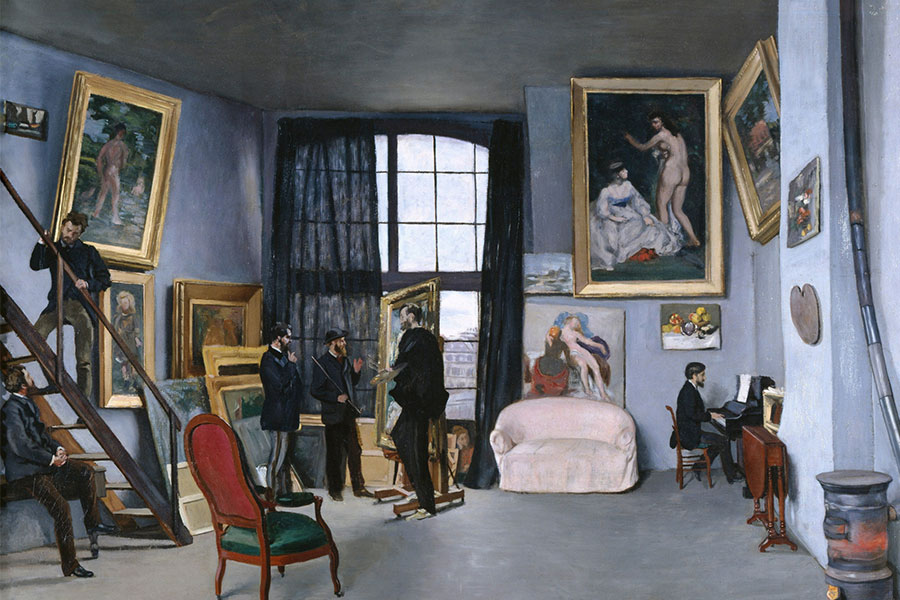
In his 1870 work “L’Atelier de Bazille,” the 28-year-old French impressionist painter Jean Frédéric Bazille depicts the Paris studio on Rue de la Condamine that he shared with the 29-year-old Pierre-Auguste Renoir. Toward the left-hand corner of the room, three men are clustered around an easel, the work obscured from view. The figure in the middle, the French modernist painter Édouard Manet, commands the others’ attention as he observes the work, brush in hand.

To Manet’s left, at the centre of the composition, stands Bazille, apparently taking a break from his painting. He is still holding brushes and a palette, to listen to Manet, who is nine years his senior. The figure on the right, Bazille’s friend Edmond Maître, plays the piano. Three other friends populate the room, one listening to Manet and Bazille, and the other two chatting casually on the stairs. It is not known for certain who these figures represent, but possibilities include Renoir, Claude Monet, and Alfred Sisley, all friends of Bazille who attended the same art academy.

“L’Atelier de Bazille” is a snapshot of the artist’s life, his work, and his community, much like the photos one might see on Instagram today. It memorialises a moment, the same year he was killed in the Franco-Prussian War, when he was flourishing creatively, surrounded by peers and mentors. The painting invites us to consider the role of these connections, of mutual trust, shared space, and engaged conversation, in supporting the artist’s development and productivity.

Manet, deeply admired by Bazille and his peers, has taken the time to come to the studio, comment on the younger artist’s work, and even contribute to it. This mirrors Bazille’s real-life experience. It was Manet, with his characteristically vigorous brushstrokes, who painted Bazille’s figure in “L’Atelier de Bazille.” The painting is a collaborative work about the beauty of collaboration.

The collaboration was probably not planned. One cannot imagine that Bazille arranged with Manet to come to his studio at a specific time, in order to contribute a pre-determined image. Rather, mutual trust and respect led Manet to spend time in Bazille’s studio, and it led Bazille to hand Manet a paintbrush to add his own touch to Bazille’s work. Ego was irrelevant; the goal was to enhance the art, and, by extension, the artists. And they achieved it by creating space for unplanned cooperation.

“L’Atelier de Bazille” does not simply welcome painters. Maître is a musician, collector, and patron of the arts. Some argue that the figure depicted on the stairs are the novelist and playwright Émile Zola. By bringing their knowledge, energy, and perspectives into the space, by engaging in face-to-face exchanges of ideas, the studio’s visitors invigorate, enrich, and inspire one another. Today, we would refer to this phenomenon as “cross-fertilisation.”

The paintings within the painting show that these artists supported one another in other ways as well. High above the staircase hangs “The Fisherman with a Net,” which Bazille had presented the previous year at the Salon, where it was rejected. Above the piano, one finds another Salon reject: “La Terrasse de Méric,” which the artist presented in 1867. The work in progress behind the sofa, “La Toilette,” was rejected in 1870.

But Bazille was not alone in being rebuffed by the Salon. Renoir’s “Landscape with Two People,” which Bazille positions to the right of the window, was rejected in 1866. Persevering in the face of hostility from the “establishment” would have been more difficult without the support of respected peers who not only had experienced the same, but also were willing to celebrate the spurned work (and criticise the establishment). Meanwhile, the still life hanging above the piano, a work by Monet, reminds the viewer that artists helped other artists financially, by purchasing their work.

Other elements of the space enhance the sense that this is a place for creative expression, human engagement, and impromptu cooperation. Natural light beams in through a large window, with a semi-transparent curtain that the artists can adjust. High ceilings create a sense of openness and space, while soft seating invites visitors to relax. A stove, glowing in the foreground, warms the room.

The image contrasts sharply with modern workplaces, which raises the question: How can we expect to bring out the best in people, to maximise their ability to create and collaborate, by placing them in secluded cubicles, austere offices, or squares on our computer screens?

Physical presence, in welcoming surroundings, seems essential to the collaborative creative process that Bazille depicts.

Of course, “L’Atelier de Bazille” does not depict every factor that might contribute to a creative and collaborative working environment. Perhaps most obvious, the scene includes only white men who run in similar Parisian circles. Research has shown, however, that greater diversity, in terms of race, ethnicity, and gender, tends to improve business outcomes. And there is no question that tackling global problems like climate change will require us to bring to bear a wide range of perspectives.

But the painting does highlight critical elements of the creative process, including presence, engagement, camaraderie, trust, flexibility, and perseverance. Finding ways to adapt these elements to schools, workplaces, and the halls of power could go a long way toward supporting more open, resilient, and innovative societies, capable of working together to address the defining challenges of our age.

Trio Courts Global Cargo Trade with Ambitious Transit Corridor

A multimodal logistics corridor linking Ethiopia, Djibouti, and China aspires to reposition Addis Abeba as a new fulcrum in Africa’s freight sector.

Backed by an unlikely but potent partnership, the Ethiopian Airlines Group, the Customs Commission, Huawei, and SafeZone Logistics Plc, the initiative intends to halve shipping times, lower transit costs, and circumvent longstanding infrastructure bottlenecks that have stifled regional trade.

The corridor is sought to address a persistent choke point, with Djibouti’s airport, which processes no more than 50tns of cargo daily. With air freight between Djibouti and Addis Abeba costing up to three times more than land transport, and often constrained by runway and warehouse limitations, the new tri-modal approach is planned to offer a pragmatic bypass.

Under the plan, goods arrive by sea, transfer via bonded trucks to Addis Abeba, and then ship onward by air, accelerating high-value consignments like electronics and pharmaceuticals.

The model, mimicking global supply chain standards, promises more than speed. By formalising customs, digitising documentation, and introducing bonded warehousing in the capital, the system is being designed for scalability.

The involvement of Huawei, a geopolitical heavyweight, in the pilot phase signals the commercial and diplomatic stakes embedded in the corridor.

Ethiopian Airlines is positioning itself at the centre of this transformation. Dereje Derero, cargo and shipment managing director at Ethiopian Airlines, sees the initiative not only as a new revenue stream but as a strategic leap toward making Bole International Airport a logistics hub for Africa and the Middle East.

For the national carrier, already Africa’s largest by cargo volume, the corridor represents untapped potential in intra-African trade, a notoriously fragmented market. Dereje noted that the plan extends beyond imports, allowing finished products manufactured in China to reach new destinations in Africa through Addis Abeba.

“This is an untapped market for the Airline,” said Dereje.

A fresh Customs Commission directive underpins the operation. To participate, operators should hold a freight forwarding license, manage an authorised customs warehouse, and post financial guarantees to secure goods in transit. They are required to preregister every shipment through an integrated Customs Management System (CMS), track movements with barcodes or radio frequency identification (RFID) tags, and submit all documentation digitally.

According to the Deputy Commissioner, Azeze Chane, the Customs Commission crafted the rules to align with World Customs Organisation (WCO) protocols.

“We’re open to pioneering the logistics industry,” he said, describing the corridor as central to “a vision for a stronger, more connected Ethiopia.”

He hopes to see the initiative spurring growth in the country’s import-export business.

However, the corridor’s early implementation reveals a litany of challenges. Legalising a single customs document reportedly took up to two months and 2,000 dollars during the pilot, an unsustainable figure for routine shipments. Access to airport warehouse space has proven cost-prohibitive.

And the Customs Commission’s stringent directives, including zero tolerance for unauthorised cargo and liability exemptions for losses, add legal rigidity to an already complex trade ecosystem.

SafeZone Logistics, which spearheaded the pilot’s overland and warehousing operations, acknowledged the bureaucratic and operational issues.

Company representative Yonatan Beyene, conceded to the difficulty of negotiating a unified regulatory framework, something authorities of the Customs Commission have long struggled to modernise.

“However, the Commission’s new directive enabled us to begin,” he said.

SafeZone Logistics sprang to life in August 2020 when the Ethiopian Customs Commission abruptly banned 16 courier companies, including UPS, FedEx and Aramex, for operating without proper warehouse licenses. Four logistics professionals with more than a decade of experience across China, the U.S., and the UAE answered the call from Ethiopian Airlines and customs authorities, pooling what they described as “committed finances” to secure roughly 300Sqm inside the Bole cargo terminal.

Within weeks of incorporation, the company had obtained its warehouse operator license, rented bonded space from the Airline, and reactivated air-cargo flows that had ground to a halt. Acting as the licensed gateway for international couriers, SafeZone Logistics built an in-house warehouse management system, established formal customs-clearance procedures, and quietly resolved the crisis that threatened Ethiopia’s air-freight connectivity.

SafeZone is the only bonded-warehouse operator inside the Airline’s cargo facility, offering freight forwarding, customs brokerage, warehousing, transportation management, and last-mile delivery under one roof. Since its founding, the company has expanded its storage capacity by at least 50pc and forged strategic ties with Ethiopian Airlines Cargo & Logistics Services, the Ethiopian Customs Commission, and the Ethiopian Freight Forwarders & Shipping Agents Association.

It currently employs 70 people. Yonatan, the company representative, mentioned that he learned through connections that Hiwawe had initiated lobbying efforts to secure an enabling directive from the Customs Commission. This led to a prolonged discussion that remains ongoing. He noted that to begin commercialization of the transit process, a separate warehouse is required. The company has handled major freight forwarding projects with the EU, IOM, the German Embassy, and the Indian Embassy in Ethiopia. Yonatan has nearly a decade of experience in the logistics industry.

With agency networks in more than 3 countries, SafeZone Logistics has positioned itself to capitalise on the growing e-commerce and cargo volumes.

While the firm plans to expand facilities and simplify procedures through an umbrella guarantee system, it remains unclear whether such measures will ease entry for new players.

Industry insiders fear that the regulatory architecture, while aligned with World Customs Organisation (WCO) protocols, may unintentionally tilt the playing field in favour of larger foreign players.

Tewodros Kassahun, a veteran freight forwarder, warned that new capital-intensive requirements, especially in the wake of fuel subsidy removals and soaring trucking costs, could sideline domestic firms already operating on thin margins.

“Foreign companies might have the best chance at this,” he said.

Still, Ethiopia is racing to capture a share of a vast and expanding market.

Dubai’s Jebel Ali Free Zone processed over 167 billion dollars in trade in 2022, while sub-Saharan Africa imported 422 billion dollars in goods across a matrix of more than 230 trade partners. Ethiopia’s ambition to tap even a small fraction of this market depends on reducing red tape, scaling infrastructure, and maintaining price competitiveness.

The Cost of Capital Is a Public-Health Emergency for Africa

The annual meeting of the World Health Organisation’s member states, May’s 78th World Health Assembly (WHA), ended on a self-congratulatory note. From an agreement on pandemic preparedness to increases in assessed contributions to the WHO, there were plenty of achievements to tout. But there was an elephant in the room, hiding behind a banner reading “One World for Health” (the event’s theme), the high borrowing costs faced by African countries.

Despite being the world’s youngest continent, Africa bears 24pc of the global disease burden. Yet, it accounts for less than one percent of global health spending. In 2001, African countries decided to take matters into their own hands, pledging to devote at least 15pc of national budgets to health. However, more than two decades later, only two countries have reached that target. On average, governments on the continent allocate a mere 1.48pc of their GDP to health, while 37pc of health spending comes directly out of citizens’ pockets.

Borrowing costs are a major reason why. Whereas high-income countries borrow at an interest rate of two to three percent, their African counterparts can face rates above 10pc. This discrepancy, which reflects investors’ perception of heightened risk in African economies, means that governments on the continent often must choose between making debt payments or buying medicines, hiring doctors, and building health clinics. The cost of capital costs lives.

Consider Kenya’s ill-fated Managed Equipment Services (MES) program, a public-private partnership designed to enhance service availability at hospitals by providing modern equipment. The program did provide high-tech equipment to many hospitals. But, given the cost of capital for investment, Kenya could not deliver the infrastructure or personnel to use it.

In Ghana, where debt-service costs have left little fiscal space, nearly 75pc of the government’s health budget now goes to healthcare workers’ wages, leaving little funding for other crucial expenses, from medicines to maternal health programs. In 2023, a shortage of antimalarial drugs forced some rural clinics to direct patients to purchase the medicine they needed directly from private pharmacies. Many families thus faced a harrowing choice between being driven further into poverty and sending a loved one to an early grave.

For many African countries, high borrowing costs have contributed to dependence on the goodwill of foreign donors. But aid-dependent healthcare systems are fundamentally fragile. We saw this during the COVID-19 pandemic, and we are seeing it now, as European countries scale back their development spending to free up space for other priorities, and the United States (US) dismantles its entire aid apparatus, beginning with the US Agency for International Development (USAID).

In Malawi, those cuts have already forced critical programs, such as for HIV treatment and prevention, to scramble for funds. Local NGOs have been forced to lay off outreach workers, and patients with tuberculosis or HIV have gone without care. As one community health nurse in South Africa lamented, “My fear is mortality is going to be very high.”

Africans’ health cannot depend on the generosity of others. Governments should be able to invest in stable, resilient, self-sustaining health systems. To raise funds, Senegal and Zambia are experimenting with “health taxes” on alcohol and sugary drinks. Debt-for-health swaps in countries like Seychelles have shown promise. Nigeria’s diaspora health bonds could unlock billions in financing if they are matched with concessional capital and guarantees from multilateral banks.

Ultimately, there is no substitute for affordable, predictable capital. That is why lowering borrowing costs should be a key priority at the G20 summit this November.

This means, first, tackling structural factors such as outdated international regulations and biases in risk assessments. It also means delivering timely and meaningful debt relief. This will require innovative mechanisms, such as debt-for-health swaps, and increasing the use of pause clauses in existing loans and new debt contracts that allow for debt payment suspension when a pandemic strikes.

Another priority should be to secure continued political support for multilateral health programs, such as Gavi, the Vaccine Alliance, and the Global Fund to Fight AIDS, Tuberculosis and Malaria, thereby ensuring continuity in the delivery of the relevant health services. Lastly, the G20 should strive to enhance African countries’ access to concessional financing for health infrastructure through multilateral development banks.

The G20 is the right forum for these actions. Its mandate includes addressing global challenges, promoting economic cooperation, and promoting global stability. The cost of capital is beyond the capacity of any one country to address, and it is producing a destabilising global health emergency. The upcoming G20 summit, the first to be held in Africa, and the second with the African Union (AU) as a permanent member, represents a particularly fitting moment for such action.

Within African countries, mechanisms based on civil-society engagement are also essential for ensuring accountability in how funds are spent. But the first step should be to free up the funds. To achieve “One World for Health,” all countries should have access to the means to invest in healthcare.


RINGING IN REFORM

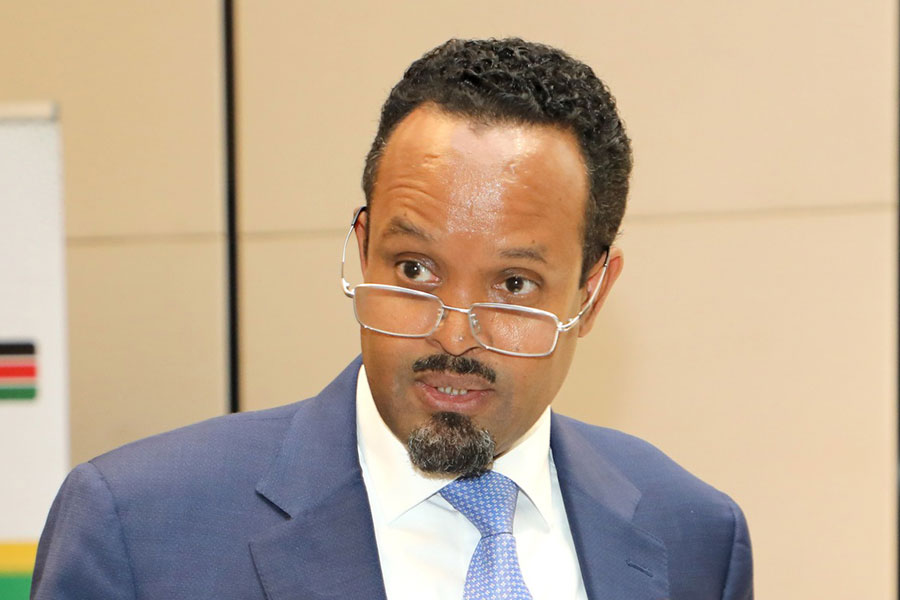
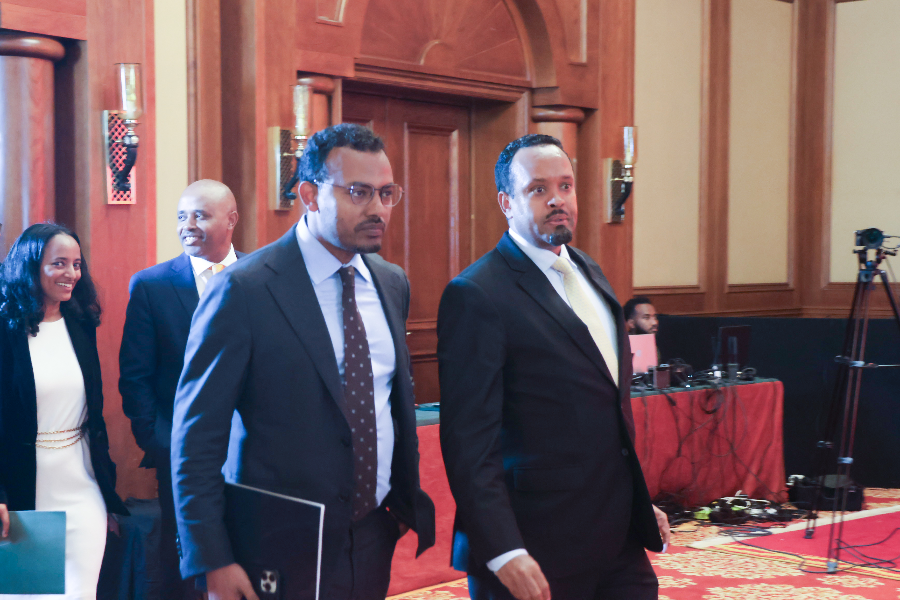
A historic chapter in the domestic financial sector evolution was scripted last week as senior federal government officials convened to formally inaugurate the Ethiopian Securities Exchange (ESX). Governor Mamo Mehiretu and Finance Minister Ahmed Shide, flanked by state minister for Finance Eyob Tekalegn (PhD) and market watchdog Hana Tehelku, filed into the Sheraton Addis’s Lalibela Hall to launch the Exchange. Under the gaze of bankers, diplomats and curious onlookers, ESX Chief, Tilahun Kassahun (PhD), invited executives from Gadaa Bank and Wegagen Bank to strike an inaugural bell, ushering in dematerialised trading of government treasury bills (T-bills), an instrument officials tout as a “positive-yield” alternative to aid and taxes. The shift from paper certificates to screen-based trades, they insisted, will tighten public-liquidity management while luring household savings and institutional cash into state coffers.

For the officials, the symbolism was as potent as the spreadsheets. Ahmed heralded the exchange as proof that Ethiopia can finance its own ambitions, while Mamo called the formal market “a strategic necessity” after years of relying on donors and soft loans. Hana, director general of the Ethiopian Capital Market Authority (ECMA), who spent time shepherding rules through Parliament, said listing T-bills should “instil confidence in corporate issuers” and clear a path for corporate bonds and equities. The sceptics have plenty to watch, ranging from settlement glitches to investor appetite, but for one afternoon at least, as the ceremonial mallet fell and electronic order books flickered to life, the long-promised market liberalisation felt within reach.

The BRICS+ Should Not Miss the Africa Opportunity

The 10 current BRICS+ members, more than most countries, can empathise with the economic and political injustices that Africans have experienced over the years. Many of them, including the continent’s three members – South Africa, Egypt, and Ethiopia – are all too familiar with the disastrous effects of colonialism and exploitation, the difficulty of creating prosperity for millions of people while shouldering an unsustainable debt burden, and the inequality built into the global financial system.

These links have helped promote a closer relationship between BRICS+ members and African countries over the last two decades. For the past 15 years, China has been Africa’s largest trading partner, with annual turnover now estimated at 295 billion dollars. The continent’s trade with other BRICS+ members has also increased, reaching 83 billion dollars with India in 2024, and more than 21 billion dollars with Brazil in 2023.

These relationships have pushed many African countries toward industrialisation. But only South Africa, Egypt, and Morocco have developed any significant amount of industrial power. For the rest of the continent, three major obstacles stand in the way: a huge energy gap, unsustainable debt burdens, and worsening climate change. To overcome these barriers, Africa should develop a strategic partnership with the BRICS+. This partnership would yield other mutually beneficial results, including economic growth and shared prosperity.

The timing is right. More than ever before, Africa is facing growth pressures as evidenced by its exploding working-age population. The BRICS+ bloc is also at a crucial point as it seeks to assert itself on the world stage, develop a new form of multilateralism based on mutualism, expand the New Development Bank, and admit more members. The group is attempting to do all this while navigating delicate relations with the United States (US).

A strategic partnership with Africa would allow the BRICS+ bloc to advance its vision for a world where all countries are respected and work together to solve common problems and pursue green development. But to drive growth, its members will need to become co-investors, rather than merely creditors. They should also help African countries address the obstacles to their development, particularly the energy and debt crises.

China, one of the most powerful BRICS+ members and the world’s clean-energy leader, could help Africa harness its abundant renewable-energy potential. The continent is home to 60pc of the best solar resources globally, but only one percent of installed solar capacity. By contrast, 64pc of all renewable energy capacity added last year was installed in China, which accounts for 60pc of the world’s production capacity in green-tech sectors and dominates solar supply chains. As part of a strategic partnership with Africa, China and other BRICS+ countries could co-establish clean-tech manufacturing and assembly plants on the continent. This would create new markets for renewables while also lowering energy costs for Africans.

There is also the question of debt relief. Sovereign-debt restructurings have been inefficient and ineffective because powerful bilateral and multilateral creditors cannot agree on how to handle them. Improving these processes requires political goodwill. China has shown that this is possible by forgiving 3.4 billion dollars in African debt, as well as 23 interest-free loans for 17 African countries.

BRICS+ countries could oversee the creation of a multilateral framework, tailored to low-income countries, that could convene all creditor classes, including private bondholders and multilateral development banks. This would also facilitate market creation and facilitate geopolitical ties between the bloc’s members and African countries, the foundations of a prosperous future for all.

With the right strategic partners, Africa could become very wealthy in a short period of time. The BRICS+ bloc should begin laying the groundwork for this geopolitical and economic alliance with the continent. Brazil, as the current president, and South Africa, as the group’s first African member, can ensure that an African partnership is at the top of the agenda.


Deepening cooperation with African countries would create future economic benefits for BRICS+ members. But perhaps more importantly, it would signal the group’s willingness to provide equitable opportunities to the broader Global South.

The Quest for Tech, Manufacturing Sovereignty

The recent AI agreement between the United States (US) and the United Arab Emirates (UAE), which paves the way for the latter to establish one of the world’s largest data campuses, has sparked heated debate in the US. The New York Times questioned whether President Donald Trump was “trading away America’s tech future,” while Bloomberg warned that “offshoring AI to the Middle East could hand China a win.”

At the centre of the deal is a commitment to sell the UAE half a million of Nvidia’s most advanced semiconductors per year (for comparison, 200,000 chips reportedly are used to power Elon Musk’s Colossus, believed to be the world’s largest AI supercomputer). This is a clear win for the UAE, which aims to position itself as a tech leader. But, the agreement also highlights a profound shift in global power dynamics. Technological sovereignty is no longer a choice; it has become a strategic imperative.

The economic and geopolitical implications could be far-reaching. As countries compete for dominance in AI, semiconductors, and cloud infrastructure, the real challenge is to achieve technological autonomy without resorting to protectionist policies. That requires striking a delicate balance between international cooperation and addressing national-security risks.

The UAE’s push for AI leadership is a prime example. To become a tech powerhouse, it needs to encourage homegrown innovation while navigating an increasingly interdependent digital landscape.

As the race for technological supremacy intensifies, tech sovereignty has become a top priority for governments around the world. The ability to design, build, and maintain critical systems and production capacity independently is now essential to both economic competitiveness and national security, especially as global supply chains realign.

At its core, technological and manufacturing sovereignty is about maintaining control over the foundational tech stacks that underpin modern economies, from semiconductors to 5G networks. Relying on foreign chipmakers or cloud services can lead to delays, shortages, and strategic vulnerabilities. Consequently, economic competitiveness increasingly depends on the strength of domestic innovation. For developing countries, in particular, bolstering local capacity is a prerequisite for job creation, value generation, and long-term resilience.

The global economic shocks of the past few years, particularly Russia’s invasion of Ukraine and pandemic-related semiconductor shortages, have demonstrated the connection between national security and technological independence. To shield key sectors like defence, energy, finance, and health from foreign influence, governments require secure communication networks, uncompromised defence systems, and AI solutions based on reliable data.

In the digital age, sovereignty also means protecting citizens’ privacy. Control over data governance, encryption, and storage infrastructure is crucial to avoid exposure to foreign surveillance or legislation that undermines national privacy protections and civil liberties.

But tech stacks are not simply a combination of hardware and software. They are socio-technical ecosystems that comprise human capital, research institutions, supply chains, intellectual-property frameworks, and the broader policy environment. Achieving technological sovereignty, therefore, requires more than building a fabrication plant or hosting data on a local server. It calls for collaboration among government, academia, and industry to advance shared objectives.

Governments, in particular, have an important role to play in setting strategic priorities, funding research, regulating platforms, and levelling the playing field for domestic innovators. In addition to investments in education, research and development, and industrial policy, public procurement can help unlock new opportunities for local tech providers.

To be sure, innovation cannot be commercialised or scaled without the private sector. From chipmakers to AI startups, industry actors require clear incentives, supportive policy frameworks, and a stable investment climate to thrive and grow. Public-private partnerships can help mitigate risks, bridge knowledge gaps, and accelerate the development of frontier technologies.

Universities and research labs should continue to serve as talent incubators of innovation engines. By promoting collaboration between academic institutions and private companies, policymakers can ensure a steady flow of skilled professionals and promising ideas into the broader economy.

In its efforts to build a thriving innovation ecosystem, then, the UAE should look beyond capital investments in physical infrastructure. Its success will depend on strengthening ties between academic institutions and the private sector while continuously refining its policy frameworks to attract and retain a diverse, highly skilled workforce.

But the quest for tech sovereignty should not veer into digital protectionism. Instead of chasing an unrealistic vision of total self-sufficiency, policymakers should pursue strategic autonomy by setting national tech policies while remaining open to international cooperation.

The European Union (EU) offers a useful model. Dozens of European tech companies and organisations have expressed support for the EuroStack initiative, which seeks to reduce dependence on foreign infrastructure by developing competitive domestic alternatives in cloud computing, AI, and software. At the same time, the EU wants to curb US firms’ market power by enforcing the Digital Markets Act, despite pushback from Big Tech.

Although the US-UAE agreement has attracted media attention, little is known about its approach to national security concerns and geopolitical risks. How these issues are addressed will determine whether the UAE’s AI campus becomes a model for strategic international collaboration or a cautionary tale about the dangers of overlooking digital security.

The obstacles to achieving tech sovereignty are considerable and multifaceted. The high costs of semiconductor production, the complexity of global supply chains, and the market dominance of major tech firms make it difficult for any single country to secure full sovereignty without trusted international partnerships.

Given this reality, policymakers should integrate sovereignty considerations into trade agreements and data-sharing frameworks. The deepening US-UAE tech partnership, the EU’s efforts to balance regulation with competitiveness, and the formidable barriers to semiconductor self-sufficiency all show that strategic collaboration remains vital even in a volatile geopolitical landscape.

At stake is not only who develops the fastest chips and most powerful algorithms, but who writes the rules that govern the digital world. This kind of influence depends on more than technological prowess; it requires balancing national security with economic openness. The countries that manage to enhance domestic resilience while forming international partnerships will be the ones driving global innovation for years to come.

The Brewed Buck Floats. Can the Economy Stay Afloat?

For two decades, policymakers relied on a playbook that mixed state-funded construction booms, cheap bank credit, and a tightly managed exchange rate. Holding the Birr (Brewed Buck) artificially high kept imported fuel and food affordable, giving the appearance of price stability.

Nonetheless, beneath the surface, trade gaps widened, with goods imports exceeding exports by roughly three to one, while a thriving parallel market quoted the Birr at almost twice the official rate. Foreign-currency debt piled up.

By 2024, the contradictions snapped. Facing thin reserves and growing pressure from creditors, policymakers let the currency float. The Brewed Buck tumbled, and the promised soft landing never arrived.

Officials called the step “a long-overdue correction” meant to lure investment and restore credibility. Ordinary Ethiopians sensed little of that logic at the checkout counter. Prices of teff, cooking oil, and minibus fares skyrocketed, while paychecks remained unchanged, turning a routine trip to the market into an exercise in triage.

The story is familiar to any country that has allowed its currency to have price discovery before erecting shock absorbers.

Egypt offers one of the sharpest lessons. When Cairo let the pound float in 2016, it lost nearly half its value within weeks; inflation shot above 30pc. The government cushioned households by expanding cash-transfer programs, stuck to tight monetary policy, and embedded the float in a broader package backed by the International Monetary Fund (IMF).

The pain was real, but policy sequencing was coherent. By 2018, the economy had steadied enough for investors to return.

Argentina displays the other extreme. The Peso was floated in 2018 during gaping budget deficits and political gridlock. Capital fled, consumer prices spiralled, and bond investors deserted a market they no longer trusted. Absent fiscal restraint or a credible monetary anchor, depreciation fed on itself and reform collapsed.

Interestingly, Ghana sits somewhere in between. The Cedi has weakened by more than 80pc against the Green Buck during the past two decades, yet progress on tax collection, better-targeted subsidies, and transparent reserve management has kept investors engaged for long stretches.

Even so, global rate hikes revived debt distress and inflation, demonstrating that a floating currency remains fragile without robust buffers.

Nigeria, more recently, tried to merge its multiple exchange windows in 2023. The Naira sank, and consumer prices climbed more than 33pc. With no clear monetary framework and inadequate fiscal transparency, the move rattled business sentiment instead of calming it.

Sadly, Ethiopia appears to be risking the repeat of the Nigerian script.

Admittedly, the Birr had been overvalued, discouraging exports and distributing scarce dollars through opaque channels. Aligning the official rate with the street made sense on paper. But a float is a safety valve only when it is part of a reinforced chassis.

Federal authorities launched the reform with no sizable safety net, no timeline toward an inflation-targeting central bank, and little explanation to citizens. The result is a cost-push inflation that has driven up the prices of fuel, food, and medicine for large swaths of the public, while wages remain far behind.

The fiscal impact is equally profound. Because most public borrowing is denominated in foreign currency, each weaker Birr forces more local-currency revenue to service external debt. The Finance Ministry now warns that interest and principal could swallow more than half the federal budget, squeezing funds for schools, clinics, and roads and leaving little for the capital projects that once drove growth.

Officials concede the status quo cannot be sustainable. Some regional states have already delayed projects for lack of counterpart funding, stirring fresh social tensions.

To turn depreciation into recovery, policymakers need to put in place the scaffolding that most of their peers tried, successfully or not, to erect. Targeted cash assistance would mitigate the initial inflationary impact, particularly in urban areas where food and fuel comprise a significant portion of household expenditures.

A hard target for consumer prices, announced and defended by the National Bank of Ethiopia (NBE), would anchor expectations. Domestic revenue mobilisation  the federal tax take is under 10pc of GDP, among the lowest in sub-Saharan Africa  should fill the hole left by costlier debt service.

None of these steps requires novel theories. They require political will.

Security is the other missing pillar. Sporadic violence and unresolved regional conflicts erode investor confidence, disrupt domestic supply chains, and render monetary tightening alone ineffective in taming prices. Without reliable and safe transportation, steady electricity, and predictable farm output, demand may cool, but food inflation continues to climb. Fixing those bottlenecks is as important as any communiqué issued by the Central Bank.

Federal political leaders and their policy advisors still have options available to them. Emergency support could be financed with concessional loans tied to transparent benchmarks on spending and revenue. Credible fiscal rules, such as imposing a firm ceiling on the primary deficit, would provide strong assurance to markets that resorting to the printing press is not only undesirable but unequivocally off the table as a fallback option. Officials also need to communicate, early and often, that they are steering the process. Silence invites speculation, which in turn feeds the parallel market that the float was meant to eliminate.

Floating the Brewed Buck may have been inevitable. The hardship that followed was not. Delay, poor coordination, and inefficient social investment ensured that the costs were borne by those least able to bear them.

Experience from Cairo to Buenos Aires demonstrated that exchange rate liberalisation is never a silver bullet. Only when it is bolted to fiscal restraint, monetary credibility, social protection, and  crucially  peace does it deliver the competitiveness its architects promise.

The question now is whether Ethiopia can muster the discipline to match its policy daring. Markets reward reform only when it rests on trust, coherence, and widespread political legitimacy. The Birr has been left to float; the economy cannot afford to drift with it.

We have withheld the identity of the author upon request.

The Brewed Buck on the Boil as Banks Push Dollar Higher, Central Bank Holds Back

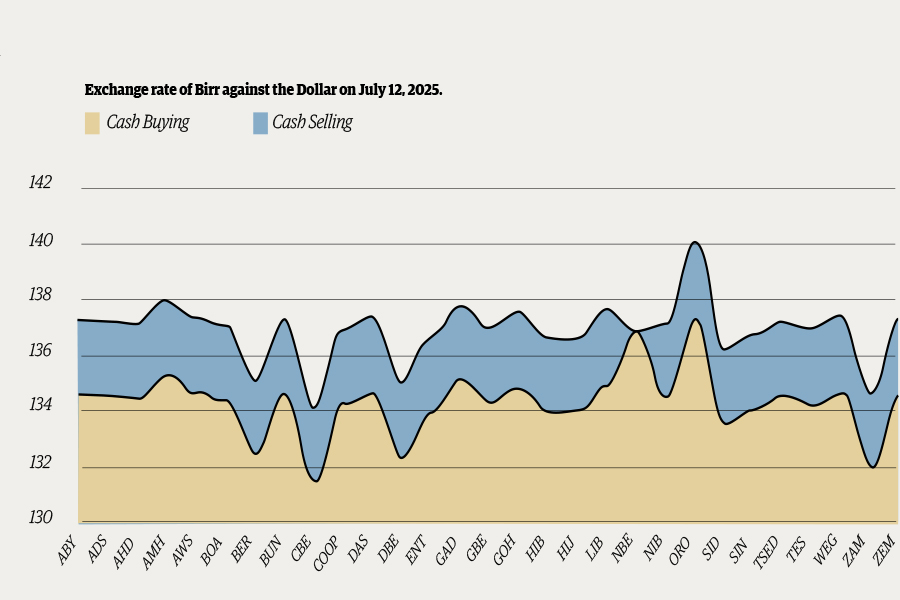
The Birr (the Brewed Buck) continued its slow retreat in the retail forex market last week, losing ground in quiet increments as commercial banks edged their dollar quotations higher. The panel average for buying dollars crept to about 134.9 Br from 134.1 Br, while the companion selling quote rose to roughly 137.6Br, jumping by almost one Birr.

That five-day move, about seven-tenths of a percent in mid-market terms, added to the 1.3pc slide logged over the preceding six trading sessions.

The erosion has unfolded while the Central Bank kept its auction window shut. It has not floated its bi-monthly foreign-exchange tender since June 19, 2025, when it sold 50 million dollars at a weighted-average rate of 136.62 Br.

With no fresh supply on tap, commercial banks have had to meet demand on their own. That was in sharp contrast to the period between June 7 and June 12, when the Birr held inside a tight 131.2 Br-to-132.8 Br range and official sales helped steady the market.

Price leadership has been on the shoulders of forex managers at the Oromia Bank. On July 10, they pushed their posted buying rate to 137.31 Br and kept that level through July 12, while listing a public selling quote above 140.05 Br. Since the start of the month, Oromia Bank’s dollar price has advanced from 135.00 Br, implying a 1.26pc depreciation for the Birr. Week-by-week moves of 0.82 Br, 0.93 Br, and 0.55 Br show how persistent the upward pressure has become.

At the lower end of the board, Amhara, Gadaa and ZamZam banks have kept bids below the market average of 134.5 Br. ZamZam slipped to 132 Br on the morning of July 12, overtaking Commercial Bank of Ethiopia (CBE) as the cheapest buyer. The state-owned giant has been immobile for weeks, posting the same figures of 131.51 Br to buy and 134.14 Br to sell.

Market watchers read the frozen quote as a deliberate anchor meant to project stability in official channels even while private lenders edge higher.

Spreads tell another story, as almost every bank held a two percent margin between buying and selling prices, a result of an official guideline. The only sustained deviation came from the Central Bank itself, which shaved its retail spread from 0.52pc on July 7 to zero by July 11 and July 12, quoting 136.92 Br bid and 136.92 Br offered. Wegagen Bank briefly followed suit on July 9, printing 134.31 Br both ways before restoring the industry-standard cushion.

On July 7, the 27-bank average showed a buying rate of 134.1 Br and a selling rate of 136.8 Br. By July 12, these figures had reached 134.9 Br and 137.6 Br. The narrower 25-bank panel tracked tells the same story: an average buying-rate increase of roughly 0.8 Br mirrored by the selling quote.

Looking further back, the Central Bank’s retail posting has moved from 134.68 Br to 136.92 Br over the past four weeks, a 1.66pc rise, while the industry composite has climbed from 132 Br to 133.39 Br, a 1.05pc gain.

The divergence between policy and market prices has sharpened since early June. During the brief calm from June 7 to June 12, rates across the banks barely strayed outside a one-and-a-half-Birr corridor. Oromia Bank then began to inch ahead, and by mid-July the gap between its bid and CBE’s had stretched to nearly six Birr.

Oromia Bank and the Central Bank made their sharpest adjustments in the final week of June. Other private banks’ dollar quotes rose by 0.93 Br in that stretch, while the Central Bank lifted its own posted rate by 1.78 Br. Across the industry, the Brewed Buck lost between 1.05pc and 1.66pc of its value against the Green Buck over the past four weeks, depending on the series used.

Even the big fives — Awash, Abyssinia, Dashen, Wegagen and Zemen — now cluster around a higher 134.5 Br mean, signalling consensus that the Brewed Buck should trade above its previous plateau.

Analysts point to familiar forces of strong demand on imports, yet export proceeds and diaspora remittances have not kept pace. With the Central Bank absent from the tender pit for two weeks now, speculative buying appears to have grown, especially toward year-end when businesses close books and debt service.

Market watchers point to four overlapping drivers reinforcing one another. Robust import demand, expectations that the Central Bank may eventually recalibrate the official rate, delays in loan and aid inflows, and speculative positioning by traders betting on further weakness. Each strand feeds the next, creating a feedback loop that nudges quotations higher even on otherwise quiet trading days and keeps dealers reluctant to release scarce notes.

For the moment, the forex market remains orderly, and banks report no cash shortages. Yet, the message of the past six trading days is plain. Unless Governor Mamo Mehiretu displays his firepower and the Central Bank resumes its tender, the Birr’s erosion is likely to continue at its current modest but steady pace.


Brewing Trouble as Tella Bars Go Dry

The sweet-sour scent of “tella” still lingered in the cramped compound off Tunisia Street, close to Addisu Gebeya, even though the drink itself is gone. Days ago, 200Lts of the home-brewed beer were poured away, another casualty of a quiet but determined crackdown in Addis Abeba.

“I just dumped the spoiled batch,” said Esubalew Adane, standing beside the empty earthen jars.

It cost him 12,000 Br, money he could ill afford to lose.

Esubalew’s shop had been open only four months when police walked in and ordered him to shut his doors. Officers told him to switch his license from “traditional alcohol retail” to “food only”. The business stayed dark for nine days while he filled out forms and queued at desks. When he reopened, the changes felt like a hollow victory. The “Wancha,” traditional ox-horn cups, sat unused.

In their place were plastic tumblers and commercial beer bottles that did not need 15 days of fermenting.

“Without tella, the business makes no sense,” he said.

He arrived in the capital from Debre Markos, a town in Amhara Regional State, after tailoring work dried up in the ongoing conflict. A Tella-Bet, a traditional brawl, looked like a lifeline. He knew the rhythm of brewing. Gesho (Ethiopian hops) leaves for bitterness, barley and wheat for body, and patience for flavour.

Now, livelihood hangs by a thread. The two women he employs depend on the shop. His wife and two children, back in Debre Markos, also rely on him. Officials have even asked him to declare 50,000 Br in capital instead of the 10,000 Br he managed to scrape together. He has no idea where to find the difference.

Walk 400m down the road, and Tagele Endale is staring at a locked door of his own. A single red stamp on a “sealed” notice has shut his Tella Bet for three weeks. Like Esubalew, he can reopen only if he swaps beer for food. His problem is time. Four hundred litres of fermenting tella sit idle in a back room. If it spoils, he would lose 25,000 Br.

Meanwhile, the rent ticks on at 20,000 Br a month.

“I doubt the profitability if we change it to food,” he said.

Tagele runs another branch in Qechene neighbourhood, but that area has its own worries. Late last month, a woman working after midnight was attacked outside one of his outlets.

Local officials from the Wereda Peace & Security Bureau believe that Tella Bets invites trouble. This view led to the closure of 11 licensed Tella and Areqe brawls in recent weeks and drinks seized from unlicensed vendors.

“The main reason is security,” said Nathan Rundasa, head of the local trade bureau.

A city-level study flagged specific neighbourhoods as hotspots for petty theft and late-night violence. In the first 15 days of the campaign, officials took 25 “legal actions”.

“These places have been monitored before,” Nathan told Fortune. “But many of them have become breeding grounds for crime.”

Not everyone buys the argument, though.

Anteneh Moges stores his Tella in a shaded warehouse near Gerji, where 13 workers help him supply more than six outlets. A bank manager by day, he treats the drink as an investment.

His retailes pay up to 600,000 Br a year in taxes. He shells out 1.5 million Br in rent. For him, the trade is clean, profitable, and predictable.

“I’ve never seen a fight in these places in all the time I’ve worked in the industry,” he said. “Intoxication brings celebration, not violence.”

Research suggests the truth is more complicated. A 2024 paper in the journal “Substance Abuse Treatment, Prevention & Policy” found that hazardous drinking touches about nine percent of the population and is linked to risky sex-related, traffic crashes, and violent crime.

Men are nearly 10 times more likely than women to fall into harmful patterns. And, alarmingly, drinking in the student population is on the rise. Tella is woven into everyday life and occasions such as weddings, funerals, and religious festivities. But, researchers warn that widespread consumption carries costs that the law rarely captures.

City officials logged 11,517 incidents of fraud, forgery, violent assault, and illicit trade, fueled in part by tips from residents. However, they insist that they are not singling out brewers.

According to Ashenafi Birhanu, communications director at the Addis Abeba City Administration Trade Bureau, the crackdown targets any outlet judged a public-safety risk.

“We’re not saying they are illegal,” he told Fortune. “We’re only de-risking the areas.”

Traders usually get notices first, but for Ashenafi, “peace and security have no patience.” Owners are told to relocate or change their line of work.

Addis Abeba has issued more than half a million licences across a thousand sectors. A traditional alcohol permit is “one of the easiest.” Applicants can even file online, but it will not save a bar if the police decide it is in the wrong spot.

The Mayor, Adanech Abiebie, has urged residents to help keep the city safe. Last week, she told councillors that 7.9 million people had taken part in block-level forums, clearing suspected hideouts and setting up volunteer patrols. More than 3,628 pieces of information flowed to the authorities, who see the closed Tella houses as one piece of that broader push.

Addis Abeba alone produces more than two million hectolitres of tella each year, disclosed a study published this year in the Journal of Ethnic Foods. With retail prices of industrial beer rising, demand for the cheaper traditional brew has soared. Some outlets shift up to 800Lts a month.

The drink fuels an informal economy of grain traders, transporters, potters, and workers employed by the brawls. Excise taxes on commercial beer, meant to curb consumption, may have pushed drinkers to the cheaper, unregulated tella instead.

For Abdurazak Nesro, a senior legal adviser,  “It’s a self-inflicted wound.”

Legal experts like him say blanket closures of these outlets violate the right to work. They argue that the constitution guarantees the right to pursue any lawful trade.

“Citizens accept maladministration in silence,” he said.

He wants a proper grievance channel and suggests the Anti-Corruption Commission should review the decisions.

On Tunisia Street, the changes are visible and unsettling. The shelf that once held jog clay jars now displays bottled water and mid-shelf wine. The kitchen, too narrow for real cooking, is a store-room of empty jars and dusty gauges.

Esubalew, apron tied at the waist, watches the door as though a customer might surprise him. Most walked past. Some peered in, sniffed the air, and moved on. The promise of fresh Tella was the lure. Without it, his place feels like a room waiting for its purpose.

Tagele talked with his landlord about a rent cut he is unlikely to get. He sketched numbers on a scrap of paper: lost sales, souring grain, interest on a small loan.

“I migrated to escape the war and find work,” he said. “Who needs clothes when they can’t even survive?”

His question hangs over the city’s informal business sector. When war, inflation, or policy change snuffs out one trade, people jump to the next. But shutting the door on Tella leaves a gap that many do not know how to fill.

In Gerji, Anteneh checked on his workers. They stack barrels in a cool corner and scrub residue from the floor. Business is still good for now. Yet, every phone call brings rumours: another neighbourhood, another closure. If his outlets disappear, his own operation will follow.

“We pay our taxes,” he said. “We keep people employed. What else do they want?”

City officials note that many Tella houses open late and close earlier than commercial beer halls. Critics counter that police presence is lighter in poorer neighbourhoods, making small bars soft targets.

“If there are criminal incidents, they should be addressed case by case, not by blanket shutdown,” Abdurazak said.

For months, Addis Abeba has tried to drag its informal economy into the daylight, issuing licences and urging traders to pay tax. Traditional alcohol was seen as a success story. Low hurdles, online applications, a bit of paperwork, and the state gained revenue.

The Nuances of Baby Carrying

Each morning, just beyond the compound gates, a familiar image greets the day: a mother walking briskly with her baby snug in a front carrier. The child’s legs, splayed outward in a “bracket” shape, often draw the eye. It is the same with another neighbour’s son, always perched in the same forward-facing embrace. These repeated images raise a quiet question that refuses to settle, questions about the connection between this posture and leg development.

This sight differs starkly from practices embedded in Ethiopian and broader African traditions. For generations, women secured their babies on their backs using simple wraps. This method freed the hands for daily tasks while maintaining physical closeness with the infant. In those days, such widespread occurrences of bracket-like leg formations were rarely observed.

Of course, front-carrying holds its appeal. It fosters emotional closeness, offers easy access, and presents a modern aesthetic. Interaction between caregiver and child becomes more immediate and frequent. And yet, one wonders what trade-offs come with that closeness.

Curiosity led to deeper reading, into the scientific world of infant hips and how they grow. A newborn’s hips are shallow and flexible, requiring correct positioning for proper development. To guide this process, the legs must settle in a kind of gentle squat, knees raised above the bottom, forming what specialists call the “M-position.” This position helps the femoral head remain centred within the hip socket, encouraging proper joint formation.

Push the legs straight and pin them close for too long, and the natural formation falters. The joint may grow shallow or unstable, drifting into what’s known as Developmental Dysplasia of the Hip (DDH). DDH occurs when the hip joint fails to form securely, potentially resulting in instability or dislocation. While genetics and birth circumstances influence DDH, postnatal positioning also plays a significant role.

This makes the carrier more than a mere accessory. Some designs cradle the thighs from knee to knee, offering a hammock-like support that lets the baby settle naturally into the M. Traditional African wrap techniques naturally adopt this form, offering inadvertent biomechanical benefits. Studies referenced by bodies like the American Academy of Pediatrics show reduced DDH incidence in cultures that maintain these practices.

One study from Malawi found a no incidence of DDH in infants routinely back-carried in the M-position. Such data reinforce the wisdom behind ancestral methods. When culture and science converge, insights about healthy development become clearer. Without needing clinical language or ergonomic labels, generations of women shaped healthy hips one cloth wrap at a time.

Trouble starts when the carrier leaves legs to dangle, with the weight bearing down through the crotch. This posture forces the hips into extension and adduction, considered detrimental in the early months. The International Hip Dysplasia Institute (IHDI) warns against such designs, advocating instead for carriers that promote natural joint alignment. Parents unaware of these subtleties might inadvertently compromise their child’s hip health.

The visible presence of bracket legs may suggest another issue entirely. Babies often enter the world with a natural curve in their limbs, shaped by months curled inside the womb. That usually straightens with time.

Persistent bowing, however, could signal rickets, a condition stemming from vitamin D deficiency. Vitamin D plays a central role in this story. Without it, calcium slips away, and bones struggle to harden.

While carriers alone do not cause rickets, they may worsen existing deficiencies by placing stress on immature bones. Movement restriction or incorrect joint alignment may further challenge already vulnerable skeletal systems. Thus, both nutrition and posture must be managed in tandem.

Scientific literature continues to highlight the importance of posture in carriers. The IHDI and the American Academy of Pediatrics consistently emphasise the M-position for joint health. Soft-structured, inward-facing carriers that support this stance reduce DDH risk. Conversely, those encouraging adduction and straight-leg extension draw significant caution from researchers.

Direct evidence comparing front and back carrying styles locally remains scarce. However, studies involving Ethiopian Jewish populations in Israel revealed lower DDH rates, suggesting culture may act as shield. Broader studies across sub-Saharan Africa point in the same direction. Even local institutions like CURE Children’s Hospital, while treating bow-leggedness, often trace it back to malnutrition or congenital disorders, not to babywearing alone.

Still, that doesn’t absolve modern designs from scrutiny. Nutrition and hereditary factors undoubtedly shape outcomes, yet daily positioning remains a modifiable variable. Selecting appropriate carriers becomes a small but impactful parental choice. In that quiet way the everyday shapes the body, posture becomes destiny.

Observations made from daily life now find grounding in medical insight. Traditional back-carrying practices, long sustained across African communities, offer more than convenience, they foster healthy hip formation. In the rush to modernity, old habits fade, not always for the better. Back-carrying wraps may lack polish, but they rarely lack function. Their quiet logic has held up for centuries.