FORTUNE+ VIDEO SPONSORED CONTENTS ADVERTORIALS FORTUNE AUDIO Fortune Careers TRADE AFRICA Election 2026 New TIME REMAINING UNTIL ETHIOPIA’S NATIONAL ELECTION 0Days 0Hours 0Minutes 0Seconds

Rise Without Ruin

At times, the pursuit of opportunity quietly takes on a ruthless tone. Success begins to feel like a zero-sum game, where someone must lose for another to win. This mindset isn’t confined to boardrooms or political arenas; it seeps into homes, friendships, and everyday relationships. A single moment, small on the surface, can reveal how far ethical boundaries have shifted.

Recently, my husband Mike and I hired help for our household. We first brought in a cleaner, a woman whose quiet professionalism and integrity quickly earned our respect. She was meticulous, trustworthy, and clearly took pride in her work. When we later decided to hire a cook, we asked the cleaner if she knew someone she could recommend.

The cook she referred arrived confident, articulate, and eager to impress. She spoke at length about her skills and her expectations. But then she made a proposal that stopped us cold. She offered to do both cooking and cleaning for the same salary we had planned for the cooking role alone, on one condition: we had to fire the cleaner.

There was something chilling in that moment. Her offer was not driven by desperation; it was calculated. It was not just about working more, it was about removing someone else, someone who had helped her, for her own advantage. That kind of proposition felt like a betrayal.

It was not just disloyal; it was deeply unsettling. The woman who had vouched for her now stood to lose her job because of it. This was not just competition; it was sabotage disguised as initiative. It reflected a mindset that treats people not as collaborators but as disposable barriers to personal success.

But none of this is inevitable. We still have the power to choose how we respond. In our case, we turned down the cook’s offer. It would have been easier to accept, but it would have rewarded behaviour we could not condone.

We kept both the cleaner and the cook, but we chose not to reveal the cook’s proposal. This was not out of self-righteousness. It was to send a quiet message: skill is not enough without principle. Our home would not reward disloyalty or undercutting.

We wanted to show that coexistence, not competition, was the norm in our space. We were not impressed by her offer to do more for less. We were more interested in how she handled integrity, loyalty, and collaboration. And so, we watched as she adapted.

Over time, she settled in. Perhaps it was embarrassment or the realisation that our home was not a place where scheming would succeed. Maybe she saw the cleaner’s quiet grace and understood something important. Eventually, mutual respect began to replace tension.

This story is not unique to domestic work. In professional spaces, the same dynamics unfold, just in more polished ways. Colleagues undermine one another in subtle ways. Managers take credit for team efforts. Competition is used not to cultivate talent but to push others out.

Even worse, this behaviour is often rewarded. The employee who throws others under the bus is considered “strategic.” The one who climbs by cutting others down is “ambitious.” We’ve built cultures where cruelty looks like drive and collaboration is mistaken for weakness.

Somewhere along the way, many people, like the cook, forget the value of solidarity. They stop asking, “Who helped me get here?” and instead chase personal gain at all costs. But success built on betrayal is fragile. It may glitter briefly, but it leaves ruin in its wake.

There is also a cost that metrics will never capture. The cleaner did not just bring us a name, she offered trust. She vouched for someone, risking her own reputation. That trust was exploited, and with it came an unseen wound to her dignity.

In a country like ours, where jobs are scarce and competition fierce, this pattern becomes vicious. People begin to view one another not as fellow strugglers, but as rivals. Trust becomes collateral damage. Solidarity dissolves into suspicion.

When that happens, community breaks down. People who should be allies turn into adversaries. And while they fight each other, those with real power, employers, institutions, remain untouched. The struggle stays horizontal instead of challenging the root of the system.

What’s most dangerous is how quickly this becomes normal. Newcomers observe what gets rewarded and adjust accordingly. Soon, backstabbing becomes strategy, and loyalty is just a quaint relic. But these values, fairness, trust, dignity, are not relics. They are still within reach.

Structural change matters. But cultural shifts start with the choices we make in our own homes and workplaces. Choosing character over convenience. Standing up for someone who did right by us. Saying “no” when we are asked to play a rigged game.

In the end, integrity is the only currency that lasts. People remember how they were treated when no one was watching. They recall who stayed fair when it was inconvenient. Communities thrive not through competition, but through trust and shared purpose.

Perhaps the cook thought she was being clever. Maybe she believed outmanoeuvring others was the path to success. But a society where betrayal is normalised cannot build a sustainable future. Trust will erode. Morale will collapse. And with it, any real progress.

This lesson, though drawn from a household, applies everywhere. Whether in corporate offices or government ministries, the message is the same. Leaders, families, and institutions all have a role to play in preserving the values that bind us together.

By standing for fairness in our home, we did more than make a hiring decision. We pushed back against a toxic norm. We affirmed that loyalty matters. And we reminded ourselves, and perhaps others, that success means more when no one is left behind.

CBE Capital Deserves the Headlines. Now the Hard Work Begins

CBE Capital Investment Bank announced on June 26, 2025, its first “inter-broker trade” on the Ethiopian Securities Exchange (ESX), the bourse that opened its doors only weeks earlier. A few days before, Gadaa Bank became the second firm to list.

The twin milestones, splashed across front pages, were celebrated as proof that Ethiopia can at last channel household savings, unlock diaspora cash and attract foreign currency through a transparent marketplace. The optimism is deserved, yet the fanfare obscures a tougher question.

Can a market dominated from birth by a state-backed giant convince ordinary investors that everyone plays by the same rules?

That giant is CBE Capital, the securities arm of the Commercial Bank of Ethiopia (CBE), the state-owned financial mammoth. As an investment bank, it arranges initial public offerings and bond sales, serving the issuer and striving to maximise valuations. As a retail broker, it now executes orders for walk-in customers, many of them first-time equity buyers who rely on their agent to flag every risk. The two mandates pull in opposite directions. One hat pushes prices higher, the other hunts for bargains. When the same desks wear both hats, confusion is the mildest outcome; unfair pricing and selective disclosure are the darker prospects.

CBE’s heft makes the tension impossible to ignore. The parent bank controls more than 30 billion dollars in assets, handles government payroll accounts and operates branches in virtually every woreda. Those advantages give its securities offshoot unrivalled access to deposits, deal flow and policymakers. Allowing CBE Capital to act simultaneously as underwriter, broker and, eventually, market maker without internal separation would tilt the playing field against private lenders, especially diaspora-linked challengers that might otherwise spur competition.

More troubling, small savers should wonder whose interests come first.

Mature markets address such conflicts with what Wall Street refers to as a “Chinese Wall.” Departments whose incentives collide are physically and digitally sealed off. Emails are screened, calls recorded, and data rooms are locked. Compliance teams run constant audits, and staff members face personal liability for mis-selling. Clients receive written notice whenever a conflict exists. In the United States and the United Kingdom, these firewalls are far more than guidelines. They are enforceable laws. Break them and fines, licence suspensions and career-ending bans follow quickly.

No public evidence shows that comparable protections exist inside CBE Capital, nor has the Ethiopian Capital Market Authority (ECMA) declared them mandatory. The omission matters because the Exchange is an infant, public knowledge of equities is thin, and the marketing of new issues is squarely targeted at small savers and members of the diaspora. Trust, not technology, will unlock those deposits and attract foreign portfolio managers. If the same firm drafts a prospectus, leads the roadshow and then fills the buy orders, investors lose the neutral checkpoint that separates promotion from execution.

CBE’s structural power also poses a threat to the market’s long-term growth. Allowing its securities arm to juggle three roles at once could deter independent research, custody, and market-making services that deepen liquidity and keep valuations honest. Worse, a single rumour of unfair pricing could freeze trading overnight. Early enthusiasm is brittle; one misstep could turn today’s triumph into a cautionary tale that echoes for years.

The region offers pointed warnings. Kenya’s Exchange spent much of the 2000s rebuilding confidence after related-party trades and cloudy disclosures drove retail investors away. Nigeria tightened its rules only after scandals rattled the market. Ethiopia can spare itself a similar detour. Constructing sturdy firewalls now will cost far less than restoring trust later and will give every participant, large or small, a fair shot from the start.

Private banks still have the opportunity to shape their culture with transparency, unequivocal role separation, and investor-first practices. They can establish a commercial standard that rivals should match. The reward is a reservoir of diaspora savings whose owners are accustomed to data-rich, choice-heavy markets. Winning even a slice of that capital could ease the foreign-exchange crunch and give companies a deeper pool from which to raise funds.

Trust, in short, is a form of infrastructure. Designing the Exchange around credible oversight and conflict-free execution can lower the risk premium foreign nationals assign to Ethiopian assets and give domestic savers a reason to stay invested once the novelty fades. Scrutiny need not suffocate innovation; it can trim borrowing costs, sharpen price discovery and broaden access for citizens who have long relied on bank deposits and real estate.

The Exchange is live, and the first trades are on the tape. The job now is to weave investor protection into its culture, not merely its rulebook. Any institution that raises money for issuers should maintain a solid wall between its bankers and its brokers, disclose conflicts of interest plainly, and punish breaches swiftly. State ownership should not exempt CBE Capital from that discipline; if anything, public backing makes vigilance more pressing.

Ethiopia will earn its investors only if roles are separate and customers come first. One scandal could set the project back years; a well-governed exchange can deepen savings, stabilise foreign-exchange flows and let Ethiopians at home and abroad share in the country’s growth..

How to Put Development Finance Back on Track

lobal growth this year is expected to slow to its lowest rate (outside of a crisis) since 2008. The outlook is especially problematic for developing countries that are already growing well below historical averages, and for those 35 countries, mostly in Africa, that are already in or at high risk of debt distress. One out of every three countries now spends more repaying creditors than on health or education.

As debt payments crowd out money needed for development, these countries’ futures are being jeopardised. Meanwhile, the global gap between the richest and the poorest continues to grow, with Oxfam estimating that the new wealth of the top one percent surged by more than 33.9 trillion dollars since 2015, enough to end poverty 22 times over.

The situation will not change unless there are greater flows of finance to developing countries. Quality matters as much as quantity, as there has been far too much finance of the kind that leads to financial distress, and far too little of the kind that promotes sustained growth.

We believe that finance for development is too important not to involve every stakeholder. As the late Pope Francis emphasised, doing so is a moral obligation. That is the message of the Vatican’s new Jubilee Report on debt, reflecting the work of a global commission of experts, which one of us (Stiglitz) chaired.

But fixing development finance is also a matter of self-interest for most advanced economies. After all, poverty and inequality give rise to social tension, diseases, and conflicts, with spillovers that do not respect national boundaries. A lack of finance in developing countries implies a lack of investment in climate change mitigation, a global public good that is necessary for everyone’s future prosperity.

With the world so divided and so afflicted by the exercise of raw power and by short-term thinking, the Seville, Spain, conference should be seen as an opportunity to renew multilateralism for the common good. But, it will need to be more than an exercise in speech-making about the hope of a better future. Such rhetoric should be translated into tangible progress, and there are some signs that this could happen.

The outcome document, the “Compromiso de Seville,” forged at the United Nations (UN) in New York, gives us confidence that this gathering will lay the foundation for a new debt and financial architecture. Specifically, Spain has launched the Seville Platform for Action, providing a comprehensive framework for coalitions of the willing to advance ambitious, but feasible, initiatives that will drive material progress in addressing challenges related to sustainable development.

For example, we should see the launch of a Global Hub for Debt Swaps to generate more fiscal space for investment in sustainable growth. A Debt Pause Clause Alliance should be in place to ease pressure on vulnerable countries’ budgets when extraordinary events squeeze them; a broad push to re-channel International Monetary Fund (IMF) special drawing rights (SDRs), its global reserve asset, held mostly by wealthy countries, toward more effective uses; steps to strengthen the voices of debtor countries through a borrower-country platform; and the start of an intergovernmental process on debt restructuring at the UN, following principles that were already agreed by an overwhelming majority of member states a decade ago.

These steps represent only the start. In time, the Seville conference could be remembered not as a landing zone, but as a launchpad for further action.

But, for that to happen, we should continue to push for more ambitious, yet feasible, solutions. For example, creating a Jubilee Fund with 100 billion dollars worth of untapped SDRs for debt buybacks would provide the most vulnerable countries with resources that they desperately need to promote sustainable growth. Equally, one can imagine broader frameworks for debt-for-nature and debt-for-development swaps, as well as new and fairer green trade and investment agreements that enhance domestic resources and facilitate developing countries’ participation in the global effort to address climate change.

Seville represents an opportunity to look at finance comprehensively and send a strong message of commitment and trust in multilateralism. We remain optimistic because we believe in the power of pragmatism. By focusing on workable solutions that go beyond the text of whatever agreement emerges, we can finally put development back on track.

Health Extension Model Struggles to Survive Due to Rising Pressures, Waning Support

The federal government’s signature program for public health extension services is at a crossroads. Launched in 2003 to bring essential care to the 85pc of Ethiopians who live in rural areas, the initiative once drew applause from global health experts who saw it as proof that a poor country could move toward universal coverage.

By assigning more than 38,000 one-year-trained female health workers to neighbourhood health posts serving roughly 5,000 people each, Addis Abeba cut maternal deaths almost in half from 728 for every 100,000 births between 2003 and 2016. The city lifted antenatal-care use from 34pc to 62pc between 2011 and 2016. The “magic bullet,” as some officials called it, offered measles shots and other services at costs well below the country’s per-capita GDP of 852.80 dollars in 2018.

Sadly, the early wins have faltered. The same tightly scripted model that once delivered vaccines and promoted hygiene now struggles against non-communicable diseases such as diabetes and high blood pressure, which rise as Ethiopians live longer and urbanise. Health posts in sprawling towns often sit underused because their maternal and child care services no longer match local demand. Inside rural clinics, extension workers face empty drug cabinets and unreliable electricity that compromises vaccine storage.

According to one such worker, their job keeps expanding, but not the support they receive. This is an echo of the frustration that drives a 21.1pc attrition rate recorded over 15 years.

Burnout is only part of the squeeze. Monthly pay is low, promotions are rare and male recruits, now needed to treat gender-sensitive ailments, are still few. District officers, who are supposed to supervise, are often preoccupied with fighting disease outbreaks or completing donor paperwork. When supplies do arrive, poor roads delay delivery; when equipment breaks, replacements can take months. A 2019 economic review found that cutting the assumed life span of certain tools from five years to three pushed the cost-effectiveness ratio for tetanus shots up 30pc, a warning that the program’s celebrated thrift is eroding.

Politics, once a tailwind, has become a drag with successive governments showcasing the program as evidence of progress. They turned it into a catch-all gatekeeper for every new campaign. The result is a jumble of projects — HIV counselling one month, Covid tracing the next — that land on the same overstretched staff. Many physicians and nurses in nearby facilities still “do not fully understand the scope of the HEP,” a Health Ministry memo noted. Extension workers rarely receive backup from higher-level professionals, while community volunteers in the “Health Development Army,” mobilised in 2011 to rally households, have likewise lost steam.

Design lock-in —the reluctance to alter the original 16 health packages —lies at the heart of the problem. The standardised checklist leaves little space for local priorities such as mental health counselling or screening for chronic disease. Rapid urbanisation magnifies the gap. Cities swell, yet the urban version of the program remains an afterthought, with services tailored to villages rather than crowded neighbourhoods. Even digital fixes lag. The electronic Community Health Information System, meant to replace paper logs, reached only 39.3pc of pilot districts because many posts lack power or internet connections, and staff training is uneven.

Officials are aware. A 15-year roadmap for health extension program optimisation, launched in 2020, and the second Health Sector Transformation Plan call for broader training, stronger supply chains and digital upgrades. The blueprints envision adding male health workers, diversifying tasks to include the diagnosis of high blood pressure and diabetes, and setting up clear career ladders. Yet, the documents read more like wish lists unless the resources and management follow. The World Bank and World Health Organisation (WHO) pledge technical aid, but domestic political will is the decisive currency.

Reformers argue that flexibility should replace rigid scripts. They propose letting districts add or drop services according to local data, a shift that would let clinics in truck-clogged Addis Abeba test drivers for hypertension while remote highland posts still focus on clean water. Salaries should rise, and training should connect health workers to referral hospitals, advocates add, so that junior workers can envision a future beyond their first assignment.

Supply chains need predictable budgets and digital tracking to cut stockouts. Electricity and running water, absent in many posts, are prerequisites, not luxuries, for refrigerating vaccines and washing hands.

Cutting the political strings that tie every health initiative to the program may be harder. One remedy is stronger inter-sector work, encouraging ministries of Finance, Education and Agriculture to support clinics instead of funnelling every new activity through them. Empowering local councils to set budgets and measure results would ground priorities in community demand instead of top-down directives. For donors, channelling money toward shared infrastructure rather than headline-grabbing pilots could reduce the fragmentation that now overloads the system.

None of these steps will succeed without addressing morale. Career ladders that allow frontline workers to specialise, becoming skilled midwives, lab technicians, or health information officers, could curb exits and enrich the talent pool.

Ethiopia still has the opportunity to regain its reputation as an innovator in low-cost primary care. The building blocks — a vast network of health posts, a mostly trusted cadre of community workers and decades of lessons — remain in place. Modernising the curriculum, improving pay, wiring clinics to power and data, and trimming political interference would restore momentum. If the government and its partners move beyond praise and address these practical fixes, the health extension program can again serve as a model for countries seeking to reach the hardest-to-reach with basic, life-saving care.

A New Vision for Development Cooperation

he global system of financing for development, including that of development cooperation, has failed to keep pace with the vast changes the world has seen in recent decades. That is why participants at the Fourth International Conference on Financing for Development (FfD4) held last week in Seville, Spain, should pursue nothing short of an overhaul of that system.

Existing frameworks for development financing and cooperation can be traced back to 1944, when delegates from 44 countries gathered in Bretton Woods, New Hampshire, to lay the groundwork for a new economic and monetary order for the post-World War II era. While many of the solutions they devised are no longer fit for purpose, the spirit of cooperation that animated the conference is. Now, like then, leaders must recognise that, far from a zero-sum game, international engagement can lay the foundation for shared prosperity.

To get there, a deep review of development cooperation is required. We need a new model of relations among countries, a clearer agenda backed by sufficient resources, and greater coherence within a fragmented system, with the United Nations (UN) at its core.

Through the 1950s, the UN played a central role in the creation of the development-cooperation system. But OECD donors then took over leadership of the system through the Development Assistance Commitee (DAC). With that, bilateral initiatives, financed by official development assistance (ODA), became the predominant mechanism for wealthy donors to support developing countries. Discretionary relationships, non-binding commitments, and neo-colonial legacies prevailed.

This flawed approach is particularly inappropriate today, when the North-South (donor-recipient) dichotomy has given way to a far more complex dynamic increasingly shaped by “new powers,” a large group of middle-income countries, and growing South-South cooperation. A more inclusive and responsive model for engagement is needed to leverage the diverse capacities of all countries, promote horizontal partnerships, and frame sustainable development as a collaborative process rooted in shared responsibility.

The second imperative, clarifying the development agenda, requires us to differentiate between priorities. When the international aid system was established, it focused squarely on poverty reduction. Today, development cooperation has advanced at least three other agendas: the provision of global public goods (including a healthy environment), humanitarian action, and the promotion of shared interests.

While these agendas are interconnected, each has its own internal logic: redistributive, addressing externalities, rescue and relief, and reciprocity. Each one should be understood on its own terms if progress is to be made. Financing this expanded agenda will require new resources, not simply a reclassification of existing ones. This means moving beyond ODA to channel a broader range of public funds to sustainable development.

Besides that, the development cooperation system has become more complex and fragmented in the field of operations, which currently includes more than 60 official bilateral agencies, over 200 multilateral institutions and funds, around 500 development banks, and a vast array of NGO networks and foundations. Delivering progress in such a crowded field requires action on three fronts.

Development efforts should be more locally anchored, for example, through the establishment of national platforms where external partners operate under the leadership of local authorities. Multilateral action should be strengthened, promoting better coordinated interinstitutional programs. Lastly, regional mechanisms, such as the African Union (AU) and the Ibero-American General Secretariat, should be supported as they help to promote more localised and layered governance structures.

Beyond this, it is necessary to move toward governance that promotes greater coherence and unity. Though a number of platforms have emerged in recent years to support dialogue among development actors, none of them amounts to a suitable governance structure. The OECD’s DAC is effective, in establishing metrics and standards, enabling centralised reporting, and orchestrating a peer-review system that leads to improvements in aid policy, but it is not very representative.

Similarly, the Global Partnership for Effective Development Cooperation and the newly established International Forum on Total Official Support for Sustainable Development lack broad buy-in. Furthermore, they have an excessively narrow focus: the effectiveness and size of financial flows, respectively.

The UN’s Development Cooperation Forum (DCF) also has an overly narrow mandate, but it is more inclusive than its counterparts. It, thus, can play a central role in improving the coherence of development efforts, if its mandate is broadened, and its capacity and resources expanded accordingly.

The point is not to destroy old frameworks to make way for entirely new structures, but rather to renew, streamline, and strengthen the existing system, and to establish the UN as its fulcrum. Greater collaboration between the DCF and other platforms, particularly the DAC, should be promoted through joint initiatives focused on metrics, standards, eligibility criteria, and country graduation processes. An inter-agency program can support UN leadership on this process of convergence, ensuring that the competencies of different agencies are being leveraged effectively.

Success is not guaranteed, but progress is possible. And it should begin at FfD4.

Are We Responsible for Our Choices?

Since ancient times, thinkers have pondered whether we freely choose our actions or if they are determined by forces beyond our control. That debate has been given new impetus by scientific discoveries that have advanced our understanding of the causes of our behaviour. Robert Sapolsky, a Stanford University neuroscientist and recent guest on the podcast “Lives Well Lived,” which I co-host with the Polish philosopher Katarzyna de Lazari-Radek, is one of these science-based determinists.

In his book “Determined: A Science of Life Without Free Will”, Sapolsky argues that free will is an illusion. Consider Joe, who decides that he should eat a healthy diet. He meets a friend at a cafe, and the friend orders a particularly tempting slice of cake, and urges Joe to order one, too. But Joe resists. He may think he exercised his free will and deserves some credit. No, Sapolsky would say: he was able to choose not to order the cake because of his genes, or perhaps because of the way he was brought up – in any case, because of factors over which he had no control.

Because our actions are determined, Sapolsky says, we are not morally responsible for them, and do not deserve praise or blame for what we do. He deplores the fact that all over the world, in everyday life, from courtrooms to classrooms, at award ceremonies and in eulogies, we cling, with “ferocious tenacity” to our belief in free will.

What is wrong with this argument is not the claim that everything has a cause, nor the belief that everything in the universe, including our behaviour, is determined. We can grant that if someone knew everything there is to know about our genes and our environment, they could predict our behaviour. The flaw in Sapolsky’s argument, and that of many others before him, is that he fails to recognise the distinction between behaviour that results from a choice we make and behaviour that does not.

Consider George and Mary. George develops a grudge against his neighbour, who often ignores him when they pass each other on the street. George knows that every morning the unfriendly neighbour goes to a nearby station to catch a train to work, and George decides that this creates an opportunity to get rid of him. George follows his neighbour to the platform, waiting for an opportunity to push him in front of the train as it arrives.

For several days, the neighbour stands too far back from the edge, and George cannot carry out his plan. But he persists, until one day the neighbour stands close enough to the edge for George to give him a hard push. The neighbour falls in front of the train and is killed.

Mary takes the same train to work. One morning, she is rushing to catch it as it pulls in, and does not notice that someone has left a bag on the platform. She trips over it, falling into the back of her neighbour, who is standing near the edge of the platform. He falls in front of the train and is killed.

It is reasonable to say that George freely chose to kill his neighbour and is morally responsible for that person’s death. It is not reasonable to say that about Mary.

Would it be better if we did not think that George should be held responsible, blamed, and punished for the death of his neighbour? Or if we somehow thought that George and Mary were equally responsible for the deaths of their neighbours?

Surely not. People everywhere make such distinctions. Sapolsky himself even notes that some animals do it. He describes a study showing that monkeys and chimpanzees respond differently to a person who is unable to give them food, as compared with someone who could give them food, but does not. They prefer to be close to the former.

Sapolsky’s response to this is: “Heck, even chimps believe in free will.” But the study does not show that chimps believe in the kind of free will that is incompatible with the truth of determinism. If they believe in free will at all, it is a kind that is compatible with our actions being determined, as the difference in our responses to George and Mary is compatible with their behaviour being determined.

When it comes to crime, Sapolsky rejects retributive theories of punishment and believes that we should seek to reduce the social inequities that make it more likely that some people will engage in anti-social behaviour. I share those attitudes. Punishment, in my view, should aim at preventing crime, rather than punishing people for their wickedness. Determinism may be true, but that does not alter the fact that people make choices, and need to be held responsible for the choices they make.

Baking a Country to Prosperity on Borrowed Yeast

When my father retired from the civil service years ago, he opened a narrow bakery, with four walls, an iron oven, and a hopeful sign. It sent hot loaves to schoolchildren racing to the morning bell. For me, a teenager drafted into wage-free summer shifts, the shop was a seminar in political economy.

At dawn on the first of every month, he joined a line at the cooperative, waiting for the government truck to arrive. Among burlap sacks and nodding pensioners, I met Ethiopia’s “developmental state” in physical form: subsidised flour bearing bureaucratic seals.

The model does not tiptoe into commerce. It dived. It owns land, channels bank credit and scripts production. Late-industrialising countries prize it as a shortcut from plough to factory. Instead of patching market failures, it determined to design the market itself, armed with five-year plans and mandatory targets. Ethiopia, under the EPRDFites, embraced that playbook. Party economists cited South Korea and China, convinced that strong guidance could vault a subsistence agrarian base into middle-income ranks. Growth became a national creed; the state would be the engine, the engineer and the referee.

Our bakery sat on the fringe of that machinery. Cheap flour lowered costs, so even humble bread might attract capital. Yet, the decree that granted the subsidy also fixed the retail price, a hedge against unrest that empty stomachs can ferment. Every bag of flour was both a lifeline and a leash.

Morning sales blurred, 30 sweaty minutes of flying buns and clinking coins. By noon, the alley fell silent, and I stacked five- and 10-cent pieces into brittle towers, rehearsing sums my father called “negotiated profit margins.” The state gave with one hand and squeezed with the other. From the government’s perch, small shops like ours were conduits of stability. We kept bread flowing, bellies full, and tempers cool.

In return, profit margins grew so thin that one could read the fine print of policy through them. Subsidies softened blows, but ceilings cemented revenue. Survival reduced itself to self-exploitation, an extra shift, a skipped repair. Keep bread cheap and small outfits endure only by stretching hours and underpaying themselves. Raise prices and risk riots. Neither planner nor proprietor could escape the bottom line. Margins wilted with every uptick in rent, yeast or fuel.

Those days revealed another rule. Subsidies were safer for policymakers than real investment. They could be granted or withdrawn overnight, toggled to douse public anger. Flour arrived at a discount, but the paperwork that accompanied each sack felt heavier than the grain. It spelt out not only cost but conduct, right down to the gram.

When inflation breached double digits or foreign-exchange reserves were depleted, the truck would often show up late or not at all. The subsidy, never large enough to build stockpiles, could not cushion the gap. My father tried stretching dough with extra water, a longer proof, anything to postpone the inevitable. Each workaround confirmed that the developmental state’s safety net was woven with short fibres.

One slow week blurred into another until he swept the floor, killed the pilot flame and locked the gate. No formal bankruptcy, only attrition, one vanished customer at a time, and a final shrug over the flour dust.

The closed storefront mirrored larger fissures. Between 2004 and 2019, GDP per capita leapt from 136 dollars to a little above 1,000 dollars, and annual output expanded at an average rate of 9.5pc. Massive public investment and cheap credit fueled the surge, but structural change lagged.

Manufacturing’s share of output barely changed, remaining near 4.5pc from 1991 through 2017, a stubborn “missing middle.” Billions steered to micro and small enterprises created jobs, but seldom lifted productivity, constrained by the very rules meant to nurture them. The state’s industrial vision often leapt past the corner shops that form the backbone of the economy. That missing middle was visible on any drive from Addis Abeba to the regions—vast industrial parks on the horizon, informal stalls at every bus stop and almost nothing in between. Factories house machines but few workers; stalls hold workers but little capital.

The gulf between them is what the developmental state, for all its muscle, has yet to bridge.

Billions of Birr flowed into Micro & Small Enterprises (MSEs) programs with the slogan of “job creation.” Loans were cheap, training plentiful, yet most firms stayed small, locked out of supply chains. Productivity hardly budged, and many enterprises rotated in and out of existence exactly as our bakery did, quietly, without paperwork, noted only by a shuttered door.

Critics argue that the model misinterpreted motion for progress. Support came in the form of rules rather than risk capital, discipline rather than oxygen. Proponents counter that discipline kept Ethiopia’s growth story intact for more than a decade. Both claims draw support from the same facts.

Giant dams and a sleek railway won headlines, yet repayments swelled external debt, and currency shortages choked importers. Policies that assume perfect logistics unravel when the truck stalls. After our closure, smaller stalls followed, then vendors who had once bought our rolls, illustrating how thin margins can transmit shock through a community.

Officials defended the compact on the grounds of social peace. “A loaf is cheaper than a protest,” one veteran bureaucrat liked to say. The logic worked, until it did not. Flour deliveries can calm a street, but they cannot build an economy.

Economists now pick over those “fault lines,” asking whether a system that can lay concrete can also cultivate competition. Our bakery offers a field note. Subsidies, quotas and ceilings kept bread affordable, but they also throttled the small-scale capitalism the policy claimed to promote.

The scent of fresh dough still pulls me back to those pre-dawn waits at the cooperative, but nostalgia shares space with caution. Baking a country to prosperity takes heat and patience. Turn the oven too high or clamp the door too tightly, and the loaf collapses before it leaves the pan.

Civil Society Feels the Squeeze as Reform Era Unravels

Six years ago, Ethiopia was the darling of international liberal commentators. A year earlier, crowds filled Mesqel Square, chanting slogans celebrating the dawning of an era away from what was an authoritarian state and towards political openness and market-friendly reforms.

That widespread optimism has been on a retreat as civic space contracts as quickly as it once expanded. A new set of draft laws governing democratic institutions, from electoral and political parties to civil society, threatens to stifle the same civic freedoms that politicians once praised, revealing how easily a bold experiment in openness can slide back toward control.

Ironically, the arc appears to be familiar. In 2009, a law introduced by the EPRDFites to regulate charities and societies throttled watchdog groups by capping foreign funds at 10pc. Amnesty International reckoned that 85pc of human rights organisations fell silent or folded. Much like the Charities & Societies Proclamation then, the new draft laws threaten to revive a repressive status quo cloaked in legalese. Parliament repealed the hated cap, stripped away red tape, and reignited the non-government sector. In the 18 months that followed, more than 2,000 new civil society organisations (CSOs) emerged. Foreign contributions leapt from 45 million dollars in 2018 to 112 million dollars in 2022, a surge of 149pc.

With money flowing, activists addressed a range of issues, from voter education to maternal health.

Now the mood is again turning grim. Between January and June 2024, the authorities closed 1,504 CSOs for alleged paperwork lapses. Veterans such as the Ethiopian Human Rights Council (EHRC) and the Ethiopian Human Rights Defenders Centre were summarily suspended, jolting the sector.

Observers suspected bureaucratic convenience, not legal necessity. New registrations, which had increased from 412 in 2018 to 1,372 in 2020, slowed to 460 last year.

Three bills now before Parliament would tighten the screws.

The oversight board that registers CSOs would shrink from 11 seats to seven, five of them reserved for government appointees, demolishing any illusion of independence. Vague security clauses would let officials deny registration or dissolve groups on the grounds of “national security”, with no right to appeal in court.

Organisations receiving foreign money would have to file granular transaction reports every fortnight, a tall order for units operating in remote areas. Another clause lurks in the fine print, forbidding any foreign-funded body from voter education or election monitoring. The package mimics, and in places outdoes, the 2009 repression.

The damage cannot be confined only to the political front. Thousands of projects run by CSOs, such as watershed management and vocational training, amount to an estimated 0.4pc of GDP. Crimping them could risk undermining public health gains, school enrolment, and agricultural extension.

Understandably, defenders of the amendments cite real concerns. In a country scarred by conflicts, foreign cash can conceal political meddling. Officials complain that some NGOs stray into partisanship or feign charity while funding rebels.

They also note the global trend. Uganda’s 2016 NGO Act obliges groups to sign district-level memoranda; Tanzania’s 2019 rules enforce stricter reporting; Kenya’s long-debated Public Benefits Organisations Bill may soon curb foreign grants.

Only two percent of the world’s people live in countries labelled “open”. The international watchdog CIVICUS now classifies Ethiopia as “obstructed”, bracketed with India, Turkey, and Burundi. Ethiopia’s tumble is therefore depressingly common, but no less harmful. Each suspension discourages civic engagement; each opaque audit erodes trust.

The drafts before Parliament, they argue, merely align with neighbours and protect national security and interests.

Yet, successful states show that national security and civil society can coexist. In the Nordics, NGOs integrate into national resilience plans without compromising their autonomy. Britain’s Charity Commission supervises finances but stops short of daily meddling, and its decisions are reviewable in court.

The proposed fortnightly reporting rule, coupled with the threat of registration revocation, would hobble exactly the groups that most depend on outside support, such as rural clinics, legal-aid desks, and corruption monitors. Ethiopia risks reverting to the bad old days when only state-friendly associations could operate, snugly protected under official auspices, while independent voices withered.

Ethiopian authorities could achieve a similar balance by defining “national security” narrowly, sharing board seats equally with civil-society nominees, tailoring oversight to risk, and guaranteeing judicial appeal.

Granted, there are bad apples in the civic society midst, having their existence for rent-seeking.

However, grassroots and genuine civic groups nurture social cohesion by filling gaps that the state cannot. They mediate local conflicts, document abuses, and advise policymakers and legislators. During the darkest hours of the pandemic, they dispersed masks and soap in slums that the Health Ministry dispatches could not have reached. There are several organisations that provide water, education, and health services in remote locations, braving the hardships that come with it.

The bureaucratic shackling will leave them weaker, not effective.

Donors weigh transparency when allocating grants. Citizens, from pastoralists to micro-entrepreneurs, judge the legitimacy of the state by how it treats dissenting voices. Contemporary political leaders, who once prided themselves on breaking from their heavy-handed predecessors, should recall that legacy before enshrining a new arsenal of controls.

History’s lesson is blunt, showing that every democratic opening carries the seeds of closure if laws lack safeguards. The rush to tighten supervision proves that rights won once can be lost twice as fast. A decade from now, pundits will ask whether the present Parliament saved or squandered the “promise” glimpsed in 2018.

Federal lawmakers have the opportunity to steer clear of overreach. They can choose transparency over opacity, partnership over paternalism, and due process over fiat. They could set explicit benchmarks for what constitutes a security threat, violent incitement, money laundering, and material aid to proscribed groups. Anything short of that should fall outside the state’s veto.

A credible oversight regime demands pluralism, proportionality, and judicial recourse. Reporting rules could be tiered by making international charities, which move millions, submit quarterly audits, while small community outfits file a simple annual return. Most importantly, any decision by the CSO agency should be open to swift and independent judicial review. Without these, the authorities court reputational damage and a credibility deficit at home and abroad.

The hardest part of reform is not launching it, but defending its spirit when the temptations of control return. Ethiopia stands at that fork again.

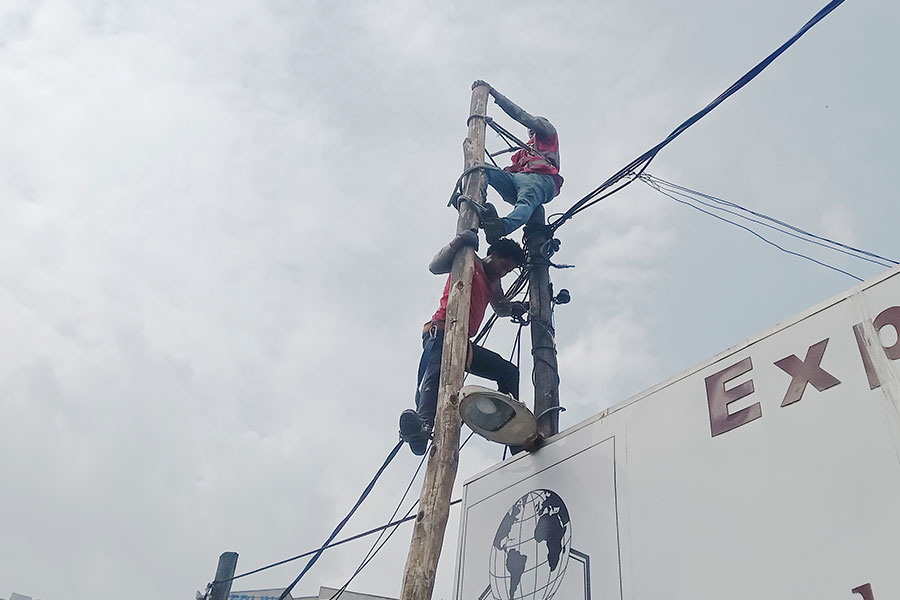
GRID GUARDIANS

Dangling between chaos and current, a tangled mess of wires meets two linemen climb up an electric pole around Mesqel square determined to keep the lights on. Over time, as the polpulation of the city grew power lines have twisted into a chaotic knots, forcing these linemen to hook themselves to the pole, balancing life and limb to restore order strand by strand. It’s a risky dance with electricity and gravity.

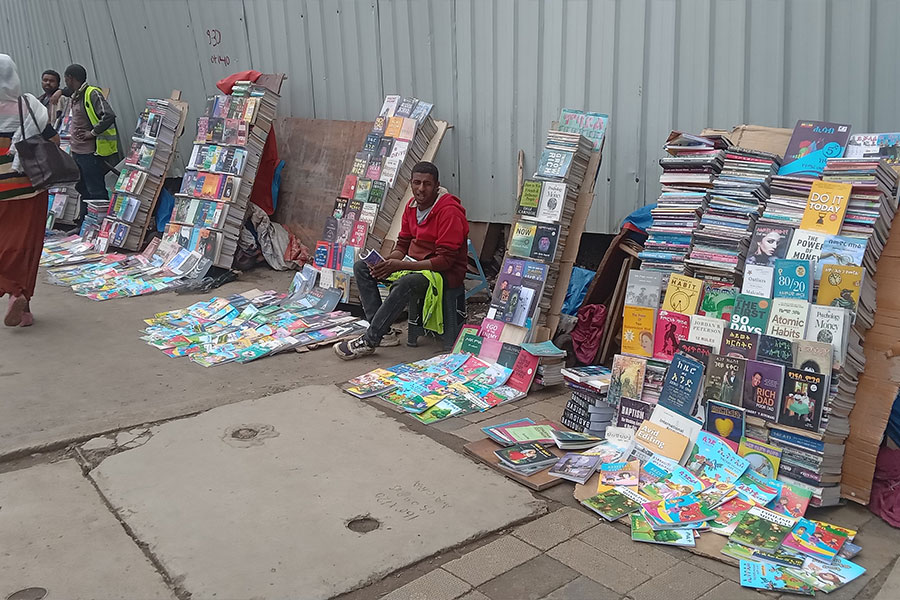
SIDEWALK CLASSICS

In Arat Kilo, True stories, wild fictions, bold theories, and timeless speeches lie stacked one over another as the bookman waits for a curious soul in search of their next world to unfold in pages. The bright clash of book covers mirrors the chaos of ideas, a colourful storm of thoughts and dreams spilled onto the sidewalk, inviting passers-by to stop and notice.

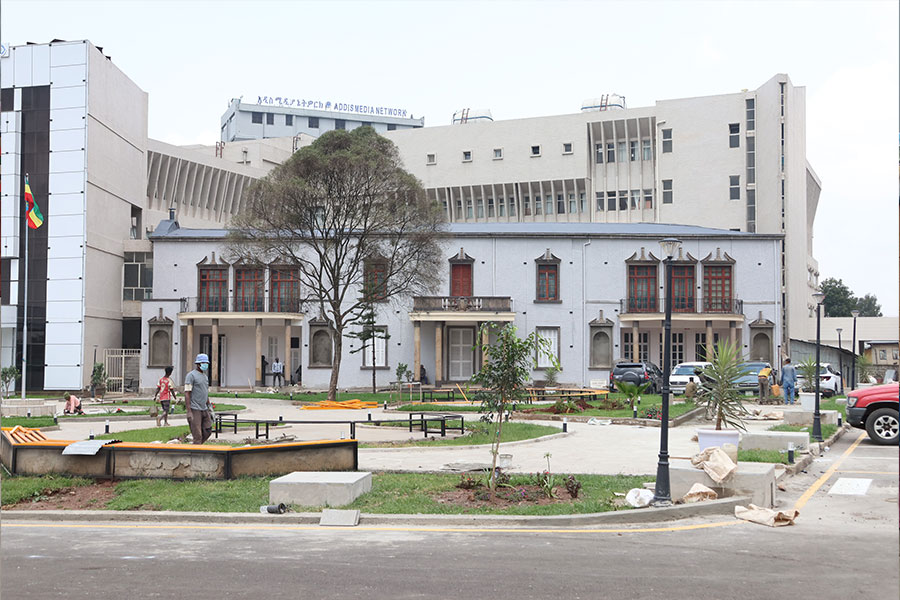
TIME GARDEN

Ethiopia’s National Museum in Amist Kilo home to treasures from ancient relics to the most recently added “Selam,” the 3.3-million-year-old fossil, is getting a fresh new look. Built in 1986, it’s now swapping dusty corners for shady benches, bright lights, and leafy paths, giving visitors the perfect spot to wander, wonder, and soak up history under the stars.

Ethiopia Unveils Consortium to Insure Millions of Farmers

Ethiopia has launched its Agricultural Insurance Consortium (AICE), pledging to protect three million farmers by 2026. Announced on July 3, 2025, at the Hyatt Regency, the initiative is backed by Pula Advisors and five major Ethiopian insurers. AICE plans to promote climate resilience through insurance bundled with the government’s input voucher system. Leveraging AI platforms like Mavuno and PIE, it plans to standardise products, lower costs, and expand coverage to over 200 woredas. With agriculture supporting 85pc of the population but formal insurance almost non-existent, this marks a significant shift. So far, one million farmers have been covered and more than 240 million Br paid in claims. Officials are now calling for regulators and ministries to integrate the model into national policy.