



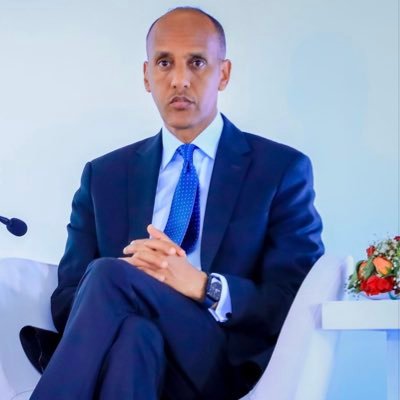
Mustafe M. Omar, president of the Somali Regional State, told BBC Amharic that governing looks far different from inside the political leadership than it does from the sidelines, under “regular political discourse.”
Author: Web Master
195300000
The value in dollars of a short-term capital deficit in the fourth quarter of 2023/24, representing a reversal from a surplus of 23 million dollars during the same period of the previous year. The sharp reversal could be caused by a combination of regulatory caps on new short-term inflows or heightened outflows for FX coverage, pushing the net position deeply into negative territory.
Korenti, Agelegel Microfinance Ink EV Financing Deal
Korenti Auto Trading PLC has signed a strategic agreement with Agelegel Microfinance to provide accessible financing options for electric vehicle (EV) buyers. The partnership seeks to ease EV ownership by offering fair pricing and loan packages with affordable rates. The initiative supports Ethiopia’s push for clean transport and aligns with national sustainability goals. Korenti’s managing director said the move reflects the company’s commitment to expanding electric mobility. Customers can now secure EVs through flexible financing starting this month.
NBE Leads Week-Long Bank Supervision Application Forum
The National Bank of Ethiopia (NBE) is hosting a week-long Bank Supervision Application (BSA) User Group meeting that began on July 7, 2025. The BSA system, developed by a pan-African consortium of central banks including the NBE, automates supervisory work for financial regulators.
NBE will take over the rotating BSA chairmanship in September. Opening the session, Frezer Ayalew, Director of Bank Supervision, stressed the need for modern tools to handle growing regulatory demands amid cybersecurity risks, new technologies, changing business models and geopolitical uncertainties.
Over 70 participants from 17 African countries and beyond are attending the meeting, which aims to boost collaboration and knowledge-sharing among regulators.
Six Fuel Companies Banned, Seven Warned, Authority Noted Illicit Activity
The Ethiopian Petroleum & Energy Authority has taken disciplinary action against 13 fuel distribution companies for illegally trading 2.8 million litres of fuel outside the digital system in the past two months. Six firms face a one-month suspension from the fuel import and trading market, while seven others received final warnings and must rectify their operations within a month.
Director General Destawe Mekwanant (PhD) said the companies failed to monitor fuel stations and ensure proper distribution to consumers. Over the past six months, the Authority has also fined 253 fuel tanker owners more than 116 million birr for deliberately parking tankers to delay supply.
Lowland Livelihood Project Completed in Dubti
Construction of the Lowland Livelihood Improvement Project in Dubti town, Algelyta Kebele, worth 10 million Br has been completed, according to Muhammad Hassan, the regional project coordinator. The livestock market centre is expected to consolidate previously scattered trade under one hub. Project activities have also shown promising results in poultry farming, beekeeping, irrigation, and related areas. The first phase has brought significant improvements to local livelihoods, while plans for a broader second phase are underway.
AI Institute, Federal Police Ink Deal for Smart Station
The Ethiopian Artificial Intelligence Institute (EAII) and the Ethiopian Federal Police Commission (EFP) have signed an agreement to develop a Smart Police Station aimed at modernising law enforcement through artificial intelligence.
The deal was formalised by EAII Director General Worku Gachena (PhD) and Police Commissioner General Demelash Gebremichael. Worku said the initiative aspires to position Ethiopia as a regional leader in AI-driven policing, while setting a benchmark for the continent. He also pledged the institute’s commitment to delivering the project on schedule.
Commissioner Demelash pointed to the success of the EFPApp a prior collaboration with the EAII as evidence of the partnership’s impact. He said the digital tool has strengthened the police’s operational efficiency and international competitiveness.
The Smart Police Station project is expected to further integrate AI solutions into policing practices further, enhancing service delivery, operational effectiveness, and public trust in law enforcement.
Innovation Ministry Taps KPMG for Startup Consulting, Policy Reform
The Ministry of Innovation & Technology has inked a strategic partnership with KPMG East Africa in a bid to bolster Ethiopia’s fledgling startup ecosystem. The collaboration will cover early-stage consulting, policy formulation, incubator support, and capacity building for public innovation institutions. Bayissa Bedada (PhD), state minister at the Ministry, underscored the initiative’s alignment with the “Digital Ethiopia Strategy” under the government’s 10-Year Development Plan. Vasken Sissian, associate director at KPMG, said the firm plans to blend global expertise with local insight to help drive inclusive economic transformation. A joint working group has been tasked with drafting an action plan and rolling out pilot projects. KPMG East Africa, which operates in Ethiopia, Kenya, Uganda, Rwanda, and the DRC, will lead several innovation-driven projects across the region.
Revenues Bureau Targets Landlords in Revenue Push

The Addis Abeba City Revenue Bureau has introduced a new directive set to reshape how half a million property owners report and pay taxes.
In a sweeping overhaul of its rental taxation regime, and city officials claiming to bring transparency to a largely informal housing market, the directive mandates landlords to register every lease, channel rent payments exclusively through formal banking or digital systems, and apply a 35pc flat deduction on gross rental income before taxes are assessed.
The authorities argue that their latest crackdown is a long-overdue response to chronic underreporting and cash-based transactions that have long undermined municipal revenue collection. They insist the reform is essential as the Tax Affairs Sector of the Bureau is moving to address widespread non-compliance among taxpayers who have failed to report, pay, and maintain proper records based on their accounting and financial statements.
A letter detailing recommendations for action against these taxpayers, signed by Deputy Head Worknesh Seboka, has been dispatched to all taxpayer branches.
The Bureau, targeting an ambitious revenue of 202 billion Br for the 2024/25 fiscal year, sees this clampdown on rental incomes as a vital pillar in its strategy to stabilise city finances without increasing blanket tax rates. According to Wendye Kassaye, director of Tax Declaration & Collection, the system is designed to be fair and consistent.
“This year, we’ve made a special effort to address rental housing,” he said.
The directive classifies landlords under the broader structure of the income tax proclamation legislated in 2016, previously used for professions such as lawyers and insurance agents. Those with established bookkeeping practices will fall under categories “A” and” B” and are expected to submit audited financial statements.
However, the majority, those with less formal operations, will be assessed under Category “C”, subjected to a presumptive tax regime, deducting a flat 35pc from their gross rental income to account for operational costs, with the remaining taxed according to progressive brackets.
Tax calculations will be based on Table “C.” Income exceeding 130,000 Br would be subject to a tax rate of 35pc. For lower income brackets, those earning between 7,200 Br and 19,800 Br would pay a tax rate of 10pc, while individuals earning between 63,000 and 93,600 Br would pay a tax rate of 25pc. A landlord earning over 130,000 Br annually could face a tax rate of up to 35pc on that adjusted income.
“They’re not required to keep an account or document,” Wendye told Fortune. “We don’t collect taxes on unrented houses unless there is proof.”
He recalled that under housing administration, tax payments are made after registering as a landlord, and maintaining accounting records was previously mandatory. But the authorities determine the tax by studying the current market price in each location.
Landlords operating without a formal business license but holding professional licenses are also pulled into this net. The Bureau’s approach signals a deliberate effort to plug the gaps in a sector that has long operated below the radar of fiscal authorities.
The directive empowers inspectors with sweeping investigatory powers. They can audit rental ledgers, extract lease agreements, and, if necessary, pursue judicial remedies against alleged tax defaulters.
Non-compliance carries severe financial consequences.
Even vacant properties are not exempt. If a property remains idle for more than a year without credible justification, owners face vacancy penalties. According to Residential Rent Control & Management Guidelines, under Addis Abeba Housing Administration, failure to register leases or channel payments through formal systems can trigger surcharges starting at five percent of monthly rents (for one to two years), escalating to 25pc for longer leases exceeding five years. False or misleading declarations add a further 10pc penalty on declared rental values. Authorities hope this will discourage speculative vacancies and bring more housing stock to the market.
“They’ll pay until they prove otherwise,” Wendye told Fortune, putting the onus on the property owner.
When assessing the taxable value, several factors will be considered, including local market conditions, construction materials, prevailing rental rates for comparable properties in the area, and the landlord-tenant lease agreement, if any existed previously.
Predictably, the reforms have triggered a backlash. Some landlords argue that the system imposes unrealistic compliance burdens, particularly in areas where banking infrastructure is thin. Others worry about retroactive penalties and the potential to displace tenants through increased rents or property withdrawals from the market.
Landlord advocacy groups are exploring legal challenges, especially over the Bureau’s imposition of penalties for past conduct. Critics argue that such retroactivity violates principles of legal certainty and may unfairly penalise those who lacked clarity under previous regimes.
Exceptions carved out for certain professions in the directive’s confidential memos have led to accusations of arbitrary application and the risk of loopholes for the well-advised.
The reform comes at a time when a city-wide housing crunch is evident. A study by the Ethiopian Real Estate Association finds that rents in Addis Abeba have surged by 40pc over the past three years, outpacing wage growth and intensifying affordability concerns. The study attributed speculative behaviour, encouraged by lax enforcement, as a contributing factor to steep rental inflation. The directive appears to double as a tool for market regulation.
However, the tension between enforcement and market stability is evident.
Biruk Nigussie, a tax expert formerly with the federal Ministry of Revenues, supports instalment-based taxation but calls for clearer implementation guidelines.
“Requiring instalments reduces the upfront cost,” he told Fortune. “But, ambiguity in operational details could cause confusion and resentment.”
Landlords like Tesfaye Amha embody the uncertainty. With three units in the Jemo 3 area generating over 150,000 Br annually, he paid about 38,000 Br in taxes last year.
“They keep telling us we can’t increase the rent,” he lamented, unsure how the new rules will affect his earnings. “And we pay what they ask.”
With more than half a million landlords and tenants in the city’s registry, enforcement will demand robust administrative capacity, digital infrastructure, and inter-agency coordination.
Addis Ababa Goes It Alone with Record Budget

Addis Abeba has approved a record 350 billion Br budget for the 2025/26 fiscal year, the first in the capital’s history to run entirely without federal transfers.
Marking a 45.1pc increase over the previous year, the plan signals a bold departure from dependence on central government subsidies, embracing an ambitious, self-financed growth agenda that depends on aggressive revenue mobilisation, urban expansion, and infrastructure-led development.
“This is a turning point,” Deputy Mayor & Finance Bureau head Abdulkadir Redwan told council members as he unveiled the budget.
However, questions persist over the feasibility of its lofty targets amid soft job creation, modest innovation spending, and simmering concerns about fiscal transparency.
The plan calls for an ambitious 117pc rise in revenue collection, pulling in 343 billion Br. Tax receipts are expected to account for 238 billion Br of that sum, a 58pc jump from the prior year, while municipal revenues should climb 78.4pc to 54.4 billion Br.
Non-tax revenue lines, including fees and service charges, are projected at 46 billion Br, a modest five percent increase, while the road fund remains flat at 1.84 billion Br. Foreign assistance will feature merely as a minor supplement at 6.8 billion Br.
These figures rest on last year’s performance, when the city garnered 233 billion Br, 96.5pc of its target, and outperformed itself by 45pc year-on-year.
In contrast to previous budgets, which split funds evenly between capital and operational expenditures, this year’s plan shifts more than 70pc toward long-term investments.
Under the new budget, capital projects will soak up 71.4pc of the total, leaving 100.1 billion Br (28.6pc) for recurrent costs. Of the capital allocation, 177.2 billion Br is earmarked for initiatives to support low-income residents, such as infrastructure upgrades, social-welfare programs, and market-stabilisation measures.
Council members greeted the subsidy-free approach with mixed reactions. Proponents hailed the move as a milestone in municipal governance, while sceptics questioned the feasibility of meeting aggressive growth targets.
Abdulkadir directed attention to the Finance Bureau’s forecast of more than 21.5pc economic growth over the next three years, underpinned by overhauled tax-collection practices, expanded digital systems, and new job-creation schemes.
Samuel Kifle (PhD), acting dean of Addis Abeba University, noted that the city’s budget was once the budget of the federal government. The budget had ballooned from 61 billion Br in fiscal 2021 to 230 billion Br in 2024, a 277pc increase in only three years. He voiced reservations about off-budget spending and raised alarms over subordinate institutions seeking foreign loans.
“Are we allowing them to get loans from foreign entities?” he wondered, warning that unchecked borrowing could strain the city’s balance sheet.
He also cautioned against a mismatch between rhetoric and reality. Despite lofty pledges to modernise through innovation, only 4.9 billion Br was allocated to such initiatives.
Deberesina Musse, another council member, zeroed in on employment, arguing that the 60 million Br set aside for job-creation programs was woefully inadequate.
“The issue is intensely demanding,” she said, chastising the administration of Mayor Adanech Abiebie for underfunding labour initiatives at a time of rising urban unemployment.
Deputy Mayor Abdulkadir defended the allocations, reminding critics that while the city administration could not fulfil every budget request, individual bureaus retained the authority to secure external funding, subject to cabinet approval. He disclosed that total expenditures had climbed by 95 billion Br from the previous year and that supplemental budgets could be ratified retroactively if the need arose.
On digital innovation, Abdulkadir advised caution. Rather than launching new platforms, he said, the city should first bolster existing systems internally. Newly established institutions received seed funding upon ratification of their mandates on July 12, whereas merged entities will have their budgets determined at midyear.
The shift toward municipal self-reliance comes as Addis Abeba’s revenue base climbs steadily. The city’s take grew from 56 billion Br in 2020/21 to 145 billion Br in 2023/24, more than doubling over three fiscal cycles.
Cabinet discussions touched on the risks of overdependence on municipal levies and the need to diversify income through measures such as property taxes and user fees.
Experts suggested exploring municipal bonds and listing on the nascent capital market to fund large-scale projects without burdening taxpayers.
According to Mered Fikire-Yohannes, CEO of Pragma Capital and finance and investment advisor, to sustain development without federal backing, the city would have to pay higher interest rates than the federal government. He also cautioned that credit remains tight at the institutional level due to unresolved Eurobond obligations at the national level.
He believes a simplified tax regime and improved compliance mechanisms could help broaden the revenue base.
The budget resolution coincided with the launch of a package of administrative reforms designed to strengthen revenue generation and service delivery. Weekend market centres have expanded from 193 to 219 sites, and direct supply channels for agricultural and industrial goods now serve more than 300,000Qtls of sugar and 4.3 million liters of edible oil to urban consumers.
The city has invested over 14 billion Br in public-transport subsidies, medical supplies, bread-distribution programs, and emergency feeding initiatives. Partnerships with private bakers have yielded 26 new bread factories, including Sheger Bread and Birhan Bread, benefiting 36,000 residents across 26 locations.
Road projects have remained a centrepiece of Addis Abeba’s capital plan.
Over the past year, the city laid 371Km of new asphalt roads, 95.2Km of cobblestone pavements, and 16.1Km of gravel pathways. Pedestrian infrastructure received 107Km of sidewalks, and 3.7Kms of retaining walls and drainage channels were installed to mitigate flooding. A further 1,180Km of existing roads were rehabilitated and reopened.
The ambitious Corridor Development Project, financed with 6.1 billion Br, upgraded 170Kmof major thoroughfares in two phases, causing the resettlement of residents across 100hct of land. The city constructed more than 4,000 homes to house displaced families while improving arterial roads, pedestrian zones, and stormwater systems.
City officials reported that housing development registered 55,729 new units last year. Individual developers built 11,260 homes; real-estate firms delivered 30,507 units; community initiatives added 8,786; and government programs accounted for 5,176 dwellings.
The city also reclaimed and redistributed 665 existing housing units, including 453 former government residences and 212 communal homes.
Despite these efforts, Addis Abeba faces a housing gap of nearly 1.2 million units. National targets call for 486,000 homes annually, yet annual completions average at 165,000 units. Over the past decade, private builders have added only 21,000 houses, while the government’s condominium scheme has registered over one million dwellings but handed over 384,000.
As the council wrapped up its session, it did so in uncharacteristic harmony, passing the full budget bill without dissent.
VAT Relief Sprouts in Addis, But Roots of Inequality Run Deep

The Addis Abeba Revenue Bureau has scrapped a value-added tax (VAT) on unprocessed vegetables such as onions, potatoes, and their raw cousins, marking a policy shift that could ease household food bills and support struggling growers.
The exemption, grounded in a 2016 VAT amendment and reinforced by regulations issued this year, excludes raw vegetables from taxation, whether sold locally or exported. Fruits, for now, remain taxable. The shift is pitched as a relief valve in an economy still struggling with elevated food prices and rising formalisation pressures on micro and small enterprises.
“This exemption supports local agricultural businesses and potentially reduces the cost of essential food items,” said Mulay Weldu, head of tax policy at the Ministry of Finance.
His optimism is shared, if cautiously, by stakeholders along the supply chain.
For vertically integrated operators like Fresh Corner grocery chains, owned by Luna Group, the change is major. Each step in their farm-to-shelf model, from cultivation to transport and retail, was taxed under the old regime.
Onions were sold at Fresh Corner for 88 Br with VAT, while smaller shops offered the same for 70 Br. The pricing gap siphoned off customers to informal vendors, despite higher quality standards at Luna.
With VAT off the table, Fresh Corner plans to adjust prices downwards by as much as 13pc, disclosed Hirut Hagos, a store manager. “We’re aiming to get closer to 76.50 Br a kilo.”
The policy could reset competitive dynamics, especially if formal retailers pass along savings and reclaim market share.
For smaller shopkeepers, however, the exemption brings less clarity.
Etsegenet Nigussie, who runs a corner shop near Megenagna, still struggles with VAT-related documentation and logistical problems. Until now, she sourced onions from Garment, the only local market that issued receipts needed for VAT filings. However, she finds transporting goods from the Garment area is costly.
“Our final price ends up 10 Br to 20 Br higher than Sunday markets or non-receipted vendors,” she told Fortune. “Customers think we’re inflating prices, but it is the system that leaves us no choice.”
In a system where many upstream sellers lack proper invoicing, formal compliance becomes a cost rather than a shield. While the policy shift is intended to aid farmers, the sector’s structural constraints may dull its impact.
Productivity remains stubbornly low. Onion yields, for instance, average only 90Qtls a hectare, barely a quarter of what research plots can achieve. The constraints are familiar—pest infestations, limited irrigation, poor road access, and rudimentary tools.
A 2023 study spotlighted the seed bottleneck. Most farmers use saved seeds or low-cost imports. Local certified varieties are scarce, and formal seed multiplication is weak. Experts say the VAT exemption, while they welcome it, will not unlock productivity gains unless accompanied by parallel investments in infrastructure, extension services, and input markets.
The exemption also comes at a precarious fiscal moment. VAT has become the federal government’s most lucrative tax stream, with collections hitting above 200 billion Br in 2023/24, up 36.2pc year-on-year (YoY). The figure eclipsed all other taxes combined, accounting for 56.1pc of total tax receipts and over half of federal revenues.
Income tax, by contrast, brought in a mere 103.3 billion Br.
The Ministry of Finance has projected a record 284.5 billion Br in VAT revenues for the 2025/26 fiscal year, accounting for over half of total tax receipts. The figure marks a 30.1pc surge from the previous year’s intake, an ambitious leap in a slowing economy struggling with liquidity constraints and persistent inflation.
According to the budget bill Parliament passed two weeks ago, VAT alone is expected to underwrite 53.6pc of the federal government’s tax haul and nearly 39pc of total revenue, unveiling its role as the bedrock of public finances.
The twin pillars of domestic VAT (141.9 billion Br) and VAT on imports (142.6 billion Br) reveal a deepening dependence on consumer spending and external trade, even as officials tout industrial policy and self-reliance. With excise, income, and customs taxes trailing far behind, the ballooning VAT target spotlights the paradox of expanding a regressive tax in a state, leading experts to raise questions about equity, efficiency, and sustainability in the evolving tax regime.
“VAT has become our single most reliable revenue stream,” a senior Finance Ministry official said.
But the policy’s regressive nature, where poorer households pay proportionately more, raises concerns about tax equity. As Ethiopia phases out concessional loans and aid (currently 421.69 billion Br), it is leaning ever more heavily on VAT to fill the gap.
Experts see the recent VAT exemption as a gesture toward discontented consumers and smallholder constituencies. Economically, they view it as a calculated risk, trading short-term revenue for potential long-term gains in food security, formalisation, and rural livelihoods.
But as Mengistu Deyassa, assistant professor at Jimma University, warns, exemptions complicate tax enforcement and open loopholes.
“Monitoring compliance becomes more complex, especially when value chains are informal and opaque,” he told Fortune. “The government risks losing vital revenue.”
Officials are banking on digital enforcement, real-time audits, and better record-keeping across the supply chain. However, these experts warn that unless these are rolled out in tandem with incentives for upstream compliance, the exemption may be gamed by intermediaries, leaving consumers with modest price drops and the Treasury with unintended leakage.
For now, the onions in Fresh Corner’s aisles may get cheaper, and city-bound trucks might carry a slightly lighter burden. But whether this relief translates into lasting gains for the vegetable sector, or merely papers over deeper inefficiencies, remains uncertain.
Parliament Draws Dividend Dispute to a Close
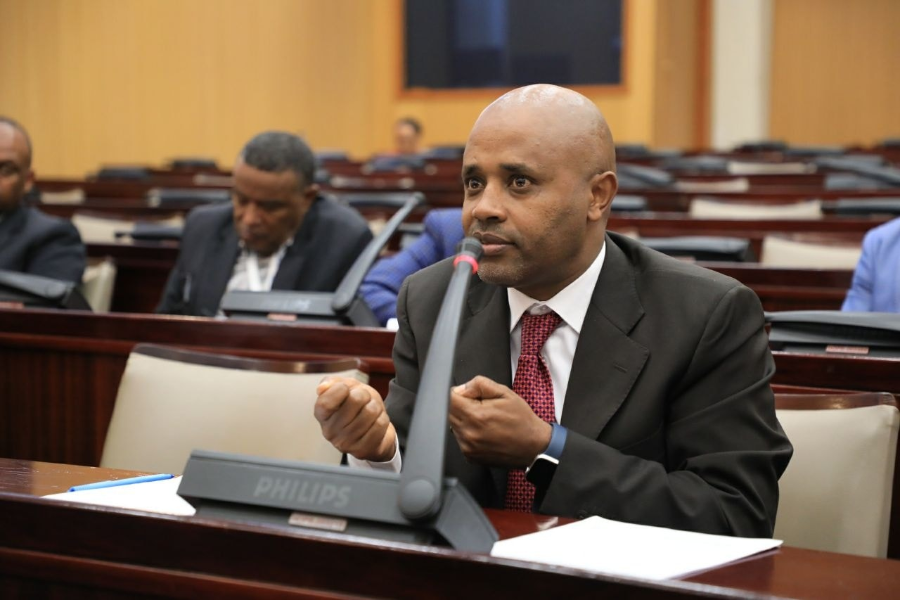
Federal lawmakers have finally brought closure to a protracted and contentious tax debate that has haunted financial institutions for over a year.
In a move widely welcomed by banks and insurers, but not without controversy, Parliament amended the Income Tax Proclamation this month to exempt reinvested dividends used to settle unpaid subscribed capital from income taxation.
The legislative fix ends an interpretive disagreement that had pitted tax officials against 25 banks and insurance companies, leading half of the 5.7 billion Br in tax arrears claims to be locked in escrow. Whether such reinvested earnings constituted taxable income or should be treated as equity contributions has been the crux of the debate.
The confrontation originated in late 2023, when the Federal Large Taxpayers Office (FLTO), relying on a strict interpretation of the 2016 income tax law and a 2023 Cassation Bench ruling, deemed dividend allocations, even when not paid out, as settled liabilities. These were thus taxable at the standard 10pc dividend rate, regardless of whether the funds ever left company coffers.
Financial institutions, however, argued they were not distributing income, but merely converting retained earnings into equity to meet regulatory thresholds. This practice was especially critical when regulators at the National Bank of Ethiopia (NBE) imposed higher capital adequacy demands.
“This was taxation without extraction,” said a bank executive, echoing the frustration many felt at being penalised for beefing up capital buffers.
The new amendment, passed after animated debate in Parliament, reclassifies reinvested dividends used to pay up subscribed capital as non-taxable equity injections. Experts see it aligning the tax regime with international standards and the prudential requirements of financial regulators.
“This correction ends a period of legal ambiguity that created financial and legal distortions,” said Abdulmenan Mohammed (PhD), a financial analyst based in London.
He believes the change promotes clarity and predictability, factors critical for a country that recently launched its first capital market, the Ethiopian Securities Exchange (ESX).
However, Abdulmenan also offered a contrasting perspective on the industry’s grievances. He argued that the earlier tax on dividends used to cover subscribed capital was not inherently unreasonable, as the payments originated from company profits.
“The banks’ complaints aren’t appropriate,” he said, suggesting that taxation of such distributions aligned with basic financial principles.
He acknowledged, nonetheless, that the issue had been subject to competing legal interpretations.
“The government’s decision to revise the law and clarify its position was both necessary and timely,” he said.
For the Ministry of Finance, the revision marks a strategic, if incomplete, recalibration.
“We wanted to encourage reinvestment and ease capital formation,” said Abraham Rega, the Ministry’s legal adviser.
He praised the amendment’s forward-looking nature. However, Abraham disclosed that assessments issued under the previous regime remain enforceable, with no provision for refunding taxes already collected.
The caveat has drawn sharp rebukes from the banking and insurance industries.
“It would have been better if the new law had ordered a refund of the payments already made,” argued Demissew Kassa, secretary general of the Ethiopian Bankers’ Association (EBA).
Companies that had paid under protest remain burdened by what they see as a misapplied levy, affecting capital expansion plans and liquidity positions.
Insurers, such as Zufan Abebe, CEO of Nib Insurance, which faces around 90 million Br in disputed taxes, echoed the sentiment. She believes previous tax treatment conflicted with the law’s spirit, which had sought to incentivise reinvestment.
“Since shareholders are already being taxed, instead of putting their profits back into the business, they are choosing to keep the earnings for themselves,” she said, recalling how the misapplication discouraged reinvestment.
Zufan argued that the amendment should have gone further by explicitly exempting share companies, particularly banks and insurance firms, from the 10pc tax. She stated the importance of correcting the prior misapplication.
“If this issue is not properly addressed,” she warned, “then the amendment will fail to bring about any meaningful change.”
This concern was echoed by Haddush Hintsay, company secretary of Wegagen Bank, who contended that the previous law was misinterpreted and never intended to impose tax on dividends allocated to subscribed capital.
“That interpretation has hurt share companies, as it discouraged shareholders from reinvesting in their institutions,” he said.
Still, Hadush acknowledged the positive trajectory of the reform. By eliminating the tax under the new proclamation, he noted, companies face fewer barriers to raising capital and can better encourage long-term investment.
However, some within the government appear unconvinced. A senior official at the Ministry of Revenue, speaking on condition of anonymity, labelled the amendment “a concession to elite pressure,” criticising it as a politically driven retreat that undermines efforts to widen the federal tax base.
“This wasn’t about sound tax policy,” the official said. “The influence of individuals with access to decision-makers drove it.”
The official also warned of a potential revenue shortfall, citing concerns that removing the tax could set a precedent for further erosion of the tax revenues. The federal government, earmarking close to two trillion Birr budget for the fiscal year 2025/26, aspires to mobilise no less than 1.2 trillion Br in taxes.
The amendment arrives at a time when public finances are under pressure. With escalating debt-service obligations, subsidies, and military expenditures, federal officials find it difficult to afford to forgo major revenue streams. The billions of Birr held in escrow represent a substantial sum in a budgetary situation already strained by competing priorities.
Fiscal experts worry that the lost revenue may push the state to consider alternative tax hikes, such as on interest earnings or consultancy payments, thereby spreading the burden to other sectors. Others suggest that the long-term benefits of stronger financial institutions and deeper capital markets could outweigh the short-term revenue hit.
The decision also sends a powerful signal as Ethiopia’s Securities Exchange begins trading. By removing taxation on reinvested dividends, officials say the government signals a commitment to investor-friendly policy, crucial for attracting private capital and ensuring the credibility of the nascent bourse.
“The rationale for amending the law is to promote reinvestment and business expansion,” said Abraham of the Ministry.
According to him, the new tax exemption is intended to encourage shareholders to support their companies’ growth trajectories rather than extract profits.
 Loading your updates...