



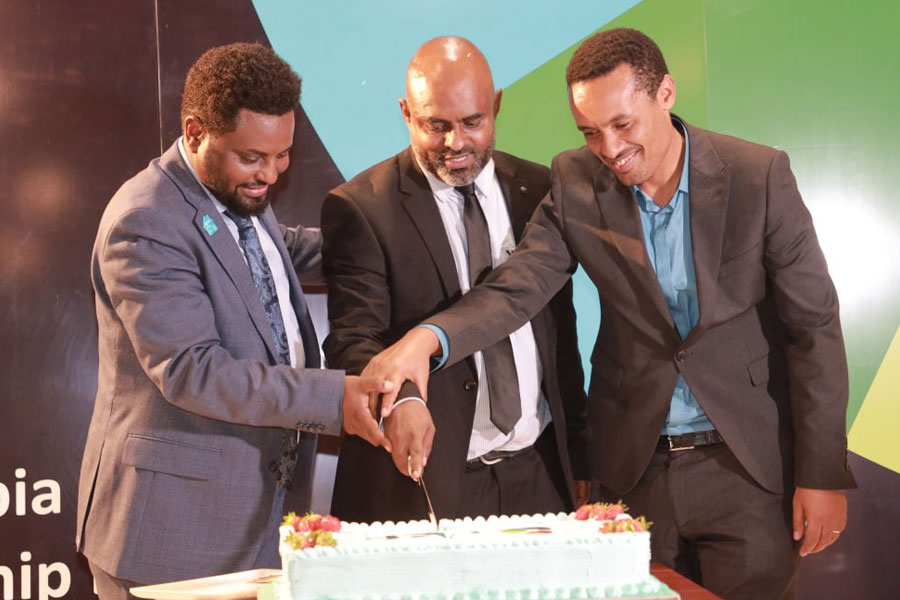
From left: Tilahun Girma, partner at PKF Ethiopia; Feysel Takele, managing partner; and lecturer Dakito Alemu (PhD) mark a milestone few firms in the country can claim. The newly established and officially inaugurated audit, tax, and advisory firm opened its doors on August 15, 2025, at their Liberia St. office, opposite Balcha Hospital, Capstone Building. PKF Global operates in over 150 countries, ranks among the top 15 accountancy networks worldwide, and boasts annual revenues exceeding 2.1 billion dollars with more than 21,000 experts. Headquartered in London, UK, the network has 530 offices globally.
Author: Web Master
Coffee Hub Illu Ababor Targets Bigger Share in Global Market
Illu Ababor Zone supplied more than 51,000 tons of coffee to the central market in the 2024/25 fiscal year, Deputy Administrator Mohammed Teha reported. The effort is part of the “Neqemte Initiative,” designed to promote production, productivity, and quality in top foreign exchange earner.
The zone spans over 700,000 hectares, including 300,000 hectares of newly planted and rehabilitated coffee and 400,000 hectares of wild varieties, cementing its role as a major coffee hub. Officials highlight coffee’s dual economic and social importance, with more than 65 percent of residents depending directly or indirectly on the crop.
Last year, the Ethiopian Coffee & Tea Authority recorded export earnings of 2.65 billion dollars, the highest in 47 years. Mohammed said the zone will intensify efforts in the coming fiscal year to secure higher returns for farmers and strengthen the country’s market position.
From Loan to Tap, Ministry Secures Water Infrastructure Funds
The Ministry of Water & Energy has signed a cooperation framework with China Exim Bank, facilitated by contractor CGCOC, securing a 100 million dollars loan. State Minister for Drinking Water & Sanitation Ambassador Asfaw Dingamo (PhD) said the funding will finance water supply and sanitation infrastructure in five cities: Holeta in Oromia, Areka in the South, Inseno and Tora in Central Ethiopia, and Mizan Aman in the South.
Bureau Rolls Out QR-Enabled IDs for Inspectors
The Addis Abeba Revenues Bureau has equipped inspectors with QR (quick response) code-integrated ID cards to curb fraud and improve transparency. Launched in Mercato, the system lets merchants verify inspectors’ identities via smartphone, deterring impersonation and extortion. Bureau head Biniyam Mikiru said the move strengthens technology-backed oversight and shields compliant taxpayers. Inspectors will also wear new uniforms to distinguish them from impostors. Merchants praised the reform, saying it protects businesses from harassment and urged other agencies to adopt similar measures.
Manufacturing Output Surpasses Job Target
The manufacturing sector created 352,513 jobs in the 2024/25 fiscal year, exceeding the 350,000 target, the Ministry of Industry reported. Medium- and small-scale domestic manufacturers met their job creation goals, while large-scale firms recorded mixed results, domestic investors reached 98.6pc of their target and foreign investors 86.9pc. The ministry has also signed a cooperation deal with the Petroleum & Energy Authority to promote energy efficiency, addressing sectoral energy waste of up to 30pc from outdated technology, poor management, and supply quality issues. State Minister Hassan Mohammed said the agreement will align goals, share expertise, and pool resources for sustainable industrial growth.
Mini-Grids, Mega-Parks Drive Solar Ambition
The Ministry of Water & Energy is advancing solar capacity through collaboration with the International Solar Alliance (ISA). State Minister Sultan Wali (PhD) said the partnership will expand energy output, spur innovation, and attract investment. Key plans include a 400MW solar park across three projects and a 700kW mini-grid, solar carport. Planning to become a regional energy hub by 2030, the ministry is leveraging solar resources to meet domestic needs and export surplus power. ISA Director General Ashish Khanna highlighted the country’s role in advancing solar technology in Africa through knowledge sharing, technical cooperation, and capacity building.
City Roads Authority Outpaces Plan, Inner Streets Get Makeover
The Addis Abeba City Roads Authority outperformed this fiscal year’s cobblestone road target, completing 95.2 km, well above the planned 70.2 km, a 35 percent surplus. Officials say the initiative focused on improving inner-neighborhood connectivity alongside major asphalt projects, making streets more accessible for residents.
Strong community involvement and coordination with local associations helped deliver the work, while creating jobs for the city’s youth. The program eased traffic, enhanced pedestrian safety, and supported small-scale enterprises supplying and installing cobblestones. Authorities highlight the success as a reflection of public collaboration and the administration’s commitment to infrastructure that directly improves daily life.
EEU Reports Progress in Distribution Projects, Confronts Persistent Power Losses
The Ethiopian Electric Utility (EEU) closed the 2024/25 budget year with major gains in rural electrification and infrastructure upgrades, but the sector continues to bleed from theft, outages, and aging equipment.
CEO Getu Geremew disclosed that losses reached 2.31 billion Br, with only 1.43 billion Br recovered. More than 1,000 individuals were held accountable for theft and fraud, as the utility reported 880 million Br still unrecovered. Roughly 22pc of power purchased from Ethiopian Electric Power was lost, half to technical faults such as vegetation and aging conductors, the rest to commercial theft and operational issues.
Blackouts remain severe, averaging 46 hours per week nationwide. EEU is responsible for nearly nine in ten outages, with earth faults, theft, and overcurrents driving most disruptions. To counter this, the utility expanded inspections, replaced 53,700 senior meters with smart devices, and cut non-compliant trees, replanting 80,000 to offset environmental impact.
Despite challenges, EEU electrified 148 rural kebeles, exceeding targets, and added 501,000 new customers, bringing its base to 5.2 million. Distribution projects in Addis Abeba are more than 93pc complete, while broader works in regional towns remain below 12pc.
Looking ahead, the utility plans to electrify 154 rural kebeles, connect 80,000 more customers, and scale up smart meter deployment as part of its 25-year roadmap for a modernised national grid.
Kifiya, Mastercard Foundation Push AI-Driven Credit Access
Kifiya Financial Technologies and the Mastercard Foundation convened the third Kifiya Knowledge Series at the Hyatt Regency, gathering over 250 policymakers, bankers, fintech leaders, and entrepreneurs to debate how AI-powered credit can expand access for micro, small, and medium enterprises (MSMEs) and smallholder farmers excluded from traditional finance.
The series forms part of the Sustainable Access to Finance to Enable Entrepreneurship (SAFEE) program, which has already delivered 16 billion Br in loans to 358,000 MSMEs, 99pc of them women-led, sustaining over one million jobs. By shifting from collateral-based lending to AI-driven credit scoring, partner banks are opening doors for previously underserved borrowers.
Kifiya founder and CEO Munir Duri argued that most entrepreneurs are not “unbankable,” but trapped by systems that fail to capture their realities. Keynote speaker Efosa Ojomo, director of the Global Prosperity Research Group, underlined that solving “non-consumption” creates vast, profitable markets while fueling inclusive growth.
Panels highlighted homegrown solutions and success stories like Beza Ayalew, founder of BeSingularity, whose AI-assisted credit line expanded from 300,000 Br in 2024 to 800,000 Br by mid-2025. Mefthe Tadesse, Mastercard Foundation’s country director, stressed that AI-enabled lending not only deepens financial inclusion but also generates new market opportunities for the informal economy.
The forum closed with a call for scaling up the SAFEE model nationwide, urging policymakers and banks to accelerate inclusive digital credit systems, pushing AI from hype to hard reality in the financial sector.
A Life Devoted to Voice, Mulugeta Gessese Dies at 66
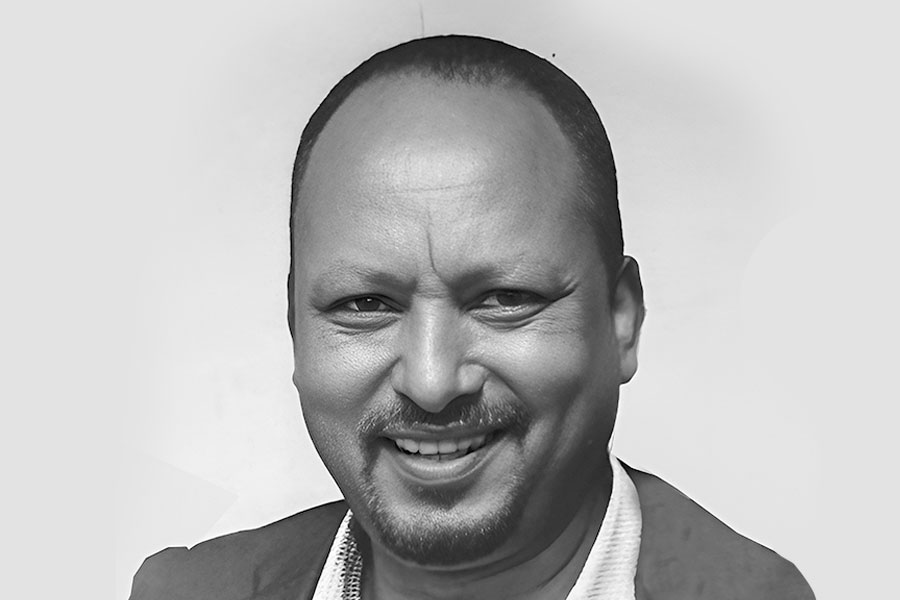
When senior diplomat Meles Alem (PhD) thinks back to his first shifts behind a microphone at a radio, a memory springs up before the static settles. There was a firm and patient figure in Mulugeta Gessese, the founding manager of Fana Radio, a once clandestine voice of an insurgency that eventually took power from the military-Marxist regime of Mengistu Hailemariam (Col.).
“His dedication and sharp eye for talent left a mark on the profession that will outlast him,” said Meles.
It was Mulugeta who nurtured the nervous recruit, helped shape the station’s voice and, in the process, lent shape to modern Ethiopian broadcasting.
Mulugeta, who passed away a few weeks ago, was born during a drought and period of upheaval in the village of Kuiha, 30Km from the town of Meqelle, the seat of the Tigray Regional State. He was the second of eight children in a well-to-do family of traders. Those business trips with his father provided him with stories. Back home, he retold them with a performer’s flair, polished by the books he devoured.
Debate and literature were lifelines for the teenage Mulugeta, yet the public space for both was shrinking fast. That hunger for words collided with the realities of the military regime, a.k.a. the Derge. As his friend Birhanu Ababi remembers, “revoked all democratic rights of gatherings and banned books from public access.”
It was a time of revolution, during which several political groupings, such as the Tigray People’s Liberation Front (TPLF), confronted the regime, raising arms. Mulugeta’s elder brother, Kiros, a third-year engineering student at Haile Selassie I University, joined the group. He was one of the tens of thousands who did not return home when the military government collapsed in 1991.
At 16, Mulugeta followed, but found his battlefield not in the mountains’ trench lines but on air. He helped build the Front’s clandestine station, the “Voice of TPLF,” a precursor to Radio Fana. With a calm delivery, he pushed out propaganda and news designed to blunt the government’s narrative, modelling himself on Hayelom Araya, a military commander later killed in Addis Abeba in the mid-1990s. Hayelom was remembered for his bravery, compassion and good humour among his comrades.
Teshome Beyene, an insurance expert who once served as a board member of the Addis Abeba Chamber of Commerce, described him as an “emblem of the Meqelite spirit.”
“He was larger than life, full of laughter, wit, and warmth,” he posted a tribute on his Facebook page.
The work was perilous. During the Red Terror, dark days of affliction unleashed by the military government against urban insurrection, security forces swept up the young broadcaster, labelling him an “anti-revolutionary.” He was thrown into prison, this time amid a fresh bout of ethnic profiling. In Addis Abeba, police grabbed him and sent him to Meqelle. Birhanu recalled that word filtered through the cells that Mengistu had planned to visit faminestricken Tigray; unrest flared, and commanders called the prisoners “dangerous dissidents.”
A rather daring operation dubbed “Agazi” was launched by the rebels, led by Hayelom, that eventually freed hundreds of prisoners from a detention centre in Mekelle. Mulugeta was one of them to make it out alive.
In 1991, as Ethiopia transitioned from military rule to the Ethiopian People’s Revolutionary Democratic Front (EPRDF) government, Radio Fana emerged above ground, leaving its mountain caves in northern Ethiopia. Four regional endowment companies – EFFORT, TIRET, TUMSA and Wondo – took ownership of the newly incorporated entity. Mulugeta, appointed as a founding general manager, guided what was to become a multilingual broadcaster, transmitting on an FM band and a television station to audiences stretching from pastoral lowlands to diaspora listeners abroad.
Mulugeta encouraged reporters to leave the comfort of Addis Abeba and file from dusty roadside markets, refugee camps and football terraces, insisting that “every voice counts”. The station’s trademark blend of news, culture and sharp political satire, often penned by Mulugeta himself, brought in advertisers, allowing Fana to reinvest in transmitters and open the country’s first dedicated FM talk-show station, Fana FM.
Journalists recalled him more as a mentor and friend than as a boss. Charisma and openness drew new talent; genuine care held them. Shift rotas were flexible for reporters juggling childcare, and no idea was dismissed until it was thoroughly debated. Meles credits him with demonstrating that radio can pursue social impact as well as ratings. The standards Mulugeta set became the yardstick for another generation.
However, the pull of internal squabbles among the TPLF senior leadership cut his tenure short. As factional splits widened in the early 2000s and disorientation swept the rank and file, he chose to step down, saying the newsroom should remain a “space for truth, not turf.” Successors Weldu Yimesel and Bekele Muleta carried the station forward, but colleagues still credit the blueprint to Mulugeta.
In the words of Meles, Mulugeta is “the father of modern professional journalism.”
Radio Fana would later merge with Walta Media & Communication Corporate to form Fana Media Corporation, which operates Fana Television, regional radio outlets and has more than 1,000 staff. The structure of those four endowments, a braid of political and economic interests, remains unusual in the domestic media industry. It traces back to the framework Mulugeta drafted on a typewriter in a cramped office.
Away from broadcasting, he devoted time to Tesfa Goh, a nonprofit he cofounded to support people living with HIV/Aids. At a moment when the virus was cloaked in taboo, he deployed the radio again, airing programmes that challenged myths and promoted education. Later, he pursued a postgraduate degree in business administration in England, refining his instinctive leadership with academic polish.
Mulugeta returned home armed with management theory, introducing performance reviews, newsroom stylebooks and a formal internship scheme for radio journalists. Friends joked that he quoted Peter Drucker, the Austrian-American who expanded the concept of management to include a focus on how businesses operate morally and ethically, as readily as an Amharic proverb. But, staff noticed the schedules ran tighter and the coverage grew broader.
Even near the end, he kept a battered notebook of programme ideas, from profiles of rural artisans to a series exploring the roots of multicultural federalism.
His life, framed by war, censorship, studios and cells, always turned on the same lever. Voice. Whether countering a regime, guiding a newsroom or broadcasting health advice, he believed speech could loosen fear and spark change. That conviction guided him until illness overtook him.
He was laid to rest on August 4, 2025, in a church in Meqelle. He is survived by his wife, a daughter, Mizer, two sons, and six siblings.
“He isn’t only my father and best friend,” Mizer said. “He was a father to many he took under his wing.”
The domestic media scene is noisier now, with the proliferation of mobile phone-based platforms, social media apps, satellite dishes, and a legal environment still catching up. Yet, amid the scramble, there is space to appreciate the modest studio where a 16-year-old once recalibrated a rebellion’s message. The frequencies have shifted; the principle of telling unvarnished stories has not. Long after the static subsides, the mark he left, with his calm and steady cadence that carried across drought, dictatorship and digital dawn, continues to echo.
“Anything good said about Mulugeta can only be a little,” Birhanu, his lifelong friend, said.”It’s nowhere near enough to praise what he did for broadcasting and the country.”
Policy Signals, Not Competition, Steer Forex Price Discovery
The Birr’s (Brewed Buck) market against the Dollar (Green Buck) advanced in neat formation over six trading sessions last week. Private lenders marched almost shoulder to shoulder, policymakers fixed the guardrails, and the state-owned Commercial Bank of Ethiopia (CBE), riding the forex train, kept its engine idling. The convoy metaphor matters because the week’s story was not the distance travelled (under one Birr) but the calm and disciplined road taken.
Across the week, the cross-bank average bid inched to 138.32 Br from 137.24 Br, while the average ask rose to 140.99 Br from 139.88 Br. That 0.79pc depreciation on both sides arrived without the zigzags that often mark weaker-currency stretches. Weekly averages landed at 137.91 Br to buy and 140.58 Br to sell, revealing a metronomic drift rather than a scramble.
Oromia Bank set the pace, consistently posting (for months now) the highest buying quote each day and clocking fresh peaks of 141.46 Br on August 15 and 16. On the sell side, it touched 144.29 Br, also the week’s top. At the other extreme, CBE did not budge from 134.44 Br bid, which remains for four weeks) and 137.13 Br ask, the market’s cheapest ticket.
Between those poles, the National Bank of Ethiopia (NBE) played referee. On five of six days, the Central Bank listed identical buy and sell prices, a zero spread that signals policy intent rather than commerce. On August 15, it posted a bid of 141.11 Br, matching Oromia’s breach of the 140-Birr ceiling.
Bar the three outliers (CBE, NBE, and premium-pricing Oromia Bank), the private-bank core appeared to be working off the same sheet. Their median bid crept from 137.37 Br to 138.6 Br, a 0.94pc advance in six days. The interquartile band on those bids began above 0.7 Br, widened past one Birr midweek and narrowed back to 0.71 Br by Friday. Daily averages traced the same orderly slope. The curve stayed smooth, with no player surging ahead, none falling behind.
Outliers nonetheless defined the forex market. CBE’s frozen quote delivered state-mandated stability yet drifted ever farther below the market. By week’s end, its bid sat more than three percent under the private-bank median, up from 2.1pc at the start. The unmoving floor and a mobile ceiling create a two-tier structure, with a quasi-official anchor that scarcely shifts and a competitive layer that walks the slope.
At the roof, Oromia Bank’s premium hovered near two percentage points all week at 2.98 Br on August 11, easing to roughly 2.8 Br four days later. Because the Central Bank’s reference showed no spread, Oromia Bank’s quotes effectively drew the upper boundary. Once both banks printed bids above 141 Br, the psychological barrier of “140” was not only pierced but also normalised.
Two minor deviations reminded traders who set the tone. Ahadu Bank widened its spread to 2.01pc on August 15 and 16, a slight increase in cash terms, yet a noticeable deviation from the standard two-point margin. And on August 12, the Central Bank allowed itself a 0.49pc spread before snapping back to zero the next day. Neither wrinkle altered direction.
Most private lenders raised both sides of their quotes by one to one-and-a-half Birr as the week unfolded, with laggards such as Hijra, Enat, and ZamZam playing a late catch-up. The group’s synchrony, with tight ranges, rising medians, and near-identical spreads, revealed they were following a template rather than taking fresh risk. In that environment, Oromia Bank’s posture looks less like a speculative bet and more like a deliberate choice to occupy the top of the permitted band.
Market watchers say the standard two-percent gap between buy and sell prices serves as an unwritten rule and is held for nearly every lender, while Ahadu Bank’s brief deviation ended the next day. Private banks waited for the NBE to lift its reference and then followed. The routine shows policy signals, not competition, still steer price discovery and let the Birr weaken without panic.
Authorities appear to favour a controlled slide. Keeping CBE fixed while the private tier drifts accomplishes that. From Monday to Saturday, most private quotes gained over one Birr, yet none crossed the roof sketched by Oromia Bank and endorsed by the Central Bank’s actions. The pattern will likely persist until policy changes, either the NBE raises its zero-spread quote sharply or the CBE leaves its post.
Absent such a shift, traders expect the convoy to keep moving at the same measured pace.
Ministry Casts Reform Net, Fishermen Face a Tide of Uncertainty
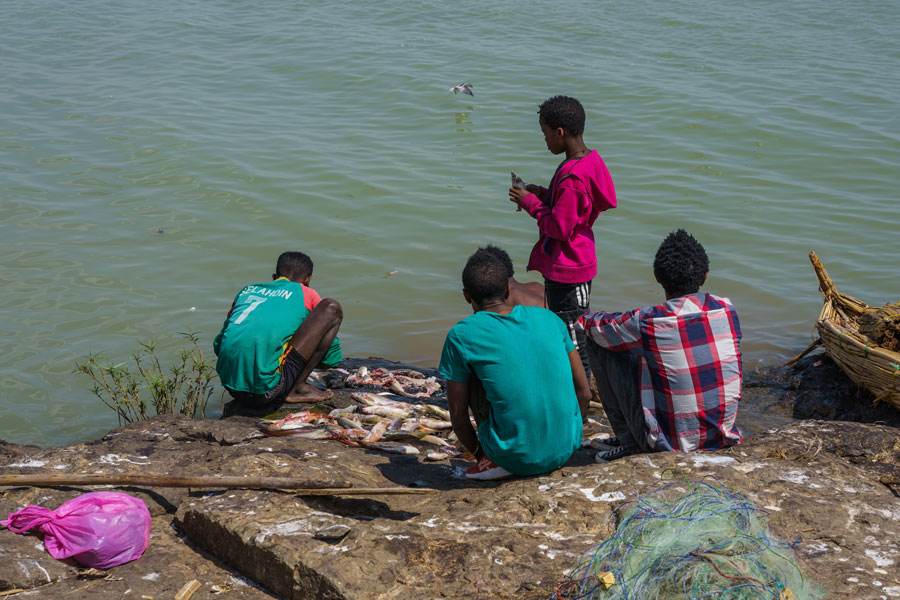
The federal government, led by the Ministry of Agriculture, is finalising a sweeping licensing regime that will introduce formal regulation to a predominantly subsistence-based fishing sector.
The regime plans to eliminate illegal, unreported, and unregulated (IUU) fishing, ban toxic and unapproved gear (including devices that cause intoxication and electric shock), and enforce seasonal restrictions to protect breeding cycles.
“It isn’t possible to fish during the breeding season,” said Fasil Dawit (PhD), head of the fisheries and aquaculture desk at the Ministry of Agriculture, urging fishermen to seek alternative incomes during moratoria. “Fishing using intoxication, electronic devices, or unpermitted nets is forbidden.”
Historically governed by open access and informal structures, the fishing industry is facing a watershed moment in the government’s Blue Economy ambitions, despite environmental decline, regional fragmentation, and a struggle to formalise the value chain. The forthcoming licensing policy, in line with a national Fisheries & Aquaculture Master Plan, will require all fishing operations (human and mechanical) to be registered. Licenses will be tailored by function (commercial, sport, research, entertainment) and gear type.
The master plan, with an estimated cost of 179 million dollars over 10 years, is a foundation of Ethiopia’s broader bid to conserve aquatic biodiversity and stabilise dwindling fish stocks. The plan also seeks regional harmonisation, especially in shared water bodies, such as Lake Turkana and the Omo River basin, where cross-border illicit fishing abounds.
The strategic importance of cross-border water bodies is growing. Ethiopia has recently signed a memorandum with Kenya and plans to enter into another with South Sudan to coordinate action against illicit fishing. Lake Turkana, a hotspot for Nile perch, is a symbol of shared resource vulnerability. Nile perch marrow, reportedly more valuable than the fish itself, is smuggled to China for food and surgical uses, raising the stakes for transboundary conservation.
At a regional level, the Intergovernmental Authority on Development (IGAD) has stepped in. Its Marine Fisheries Monitoring, Control & Surveillance Coordination Centre, unveiled during a mid-August workshop in Addis Abeba, is envisioned as a regional platform to counter fragmented governance and bolster data systems.
“The Centre is a strategic solution to shared challenges,” said Fikru Regassa, state minister for Agriculture.
IGAD’s initiative aligns with Ethiopia’s plans for aquaparks, hatchery development, and public-private partnerships under the “Yelemat Tirufat” (Basket of Plenty) initiative, which aspires to increase annual fish production capacity from 75,000tns to 200,000tns.
Despite Ethiopia’s over 200 fish species (45 endemic) and a potential output of half a million tons (400,000tns from aquaculture), consumption remains low, and the protein contribution from fish is negligible relative to livestock. The Lake recenly formed at the Grand Ethiopian Renaissance Dam (GERD) yielded 14,000kg of fish, including Nile perch.
Fasil Tadesse (PhD), a lecturer at Bahir Dar University and researcher at the Blue Water Institute, attributes the blame to a “chaotic value chain,” illiteracy, illegal gear, and an “open access” legacy that erodes sustainability. Fish feed remains a bottleneck, as many fishers depend on residue-based inputs, while global players utilise fishmeal to achieve higher yields. This undermines productivity and impedes export competitiveness.
“Farmers often say the baby fish we provide are not good enough to meet their needs,” Fassil of the Agriculture Ministry admitted, blaming weaknesses in hatchery capacity and formal market access.
According to Dararo Horaa, a veteran fisherman from Batu Ziway, East Shoa, in the Oromia regional state, spiralling equipment costs and unlicensed competition threaten livelihoods, despite legal compliance.
“The more people there are to produce, the less fish there will be,” Dararo told Fortune. “The cost of fishing materials is untouchable.”
Nets can cost over 100,000 Br, and hooks can cost up to 10,000 Br. Despite these setbacks, his 66-member group can still haul a quintal daily, though catches are increasingly unpredictable.
“Agricultural runoff into lakes further diminishes stock quality,” he said.
Fasil, the researcher, argued that the agriculture officials should stimulate demand by empowering stakeholders, supporting research, and cultivating specialised fish species that are fast-growing and high-yielding. At the national level, livestock resources dominate protein supply, leaving fisheries overlooked.
“Ethiopians don’t consume much fish, and the country’s resources are underutilised,” Fasil noted.
Regional administrations are already piloting regulation enforcement. Officials in Oromia Regional State, a region that produced 3,000tns of fish this year, acknowledged that much of the catch remains illegal. Unlicensed gear, especially around Ziway, Koka, and Gibe lakes, dominates. In Amhara Regional State, which boasts 27,000tns of annual production, high legal gear costs, up to 400,000 Br for 20 nets on a single boat, drive fishermen toward illegal monofilament nets, available at a fraction of the cost.
“The high cost of fishing nets leads them to use illegal nets,” said Aragaw Ambaw, fisheries development management specialist at the Amhara Animal & Fisheries Development Bureau.
Despite these structural weaknesses, regional states are expanding their aquaculture operations. Officials in the Amhara Region built 40 artificial ponds in every district and released one million fingerlings, with plans for nearly double this volume. Those in the Oromia Region promote skill development for local gear manufacturing. However, resource constraints and weak hatchery systems have limited progress.
The sector supports over 60,000 direct jobs and an estimated 400,000 in related services, making any regulatory tightening a delicate socioeconomic calculus.
Both regions are experimenting with aquaculture, though skills and resources remain scarce. The Oromia region has provided training on hand-making fishing materials, while the Amhara region has launched farmer-based aquaculture schemes. However, Aragaw admitted that the lack of local manufacturing factories and the high cost of imports make scaling difficult.
The reform seeks to balance sustainability and social equity. However, experts warn that the authorities’ strategy of expecting fishers to seek “alternative livelihoods” during breeding bans risks economic displacement unless it is linked to retraining and microfinance.
According to Milikisa Negaassa, an official for the Oromia Regional State, the illicit fish trade, particularly from Lake Abaya and Gibe, mirrors black markets like khat.
“Much of the fish ends up in Addis Abeba through informal supply chains, bypassing taxation and traceability,” he told Fortune.
Compounding the challenge is the underdeveloped transport and cold chain infrastructure, especially in remote regions. Few areas have refrigerated facilities, which undermines market competitiveness and shelf life.
To unlock the aquaculture potential, researchers like Fasil Tadesse say policymakers should embrace aquaculture as a buffer against climate change and pollution in natural water bodies. Developing affordable and efficient fish feed is central to this effort. Currently, Ethiopia relies on residue-based feed, unlike many countries where fishmeal is produced from smaller species, a practice that delivers better quality output.
“There are opportunities where we can easily produce and export fish, but we haven’t used them,” said Fasil from Bahir Dar University.
Despite widespread challenges, officials view the new licensing system and regional cooperation as turning points. By tightening controls, curbing illicit activities, supporting aquaculture, and investing in infrastructure, Agricultural officials hope, with IGAD’s backing and a master plan worth hundreds of millions of dollars, to revitalise its fisheries.
 Loading your updates...