


Jan 4 , 2026.
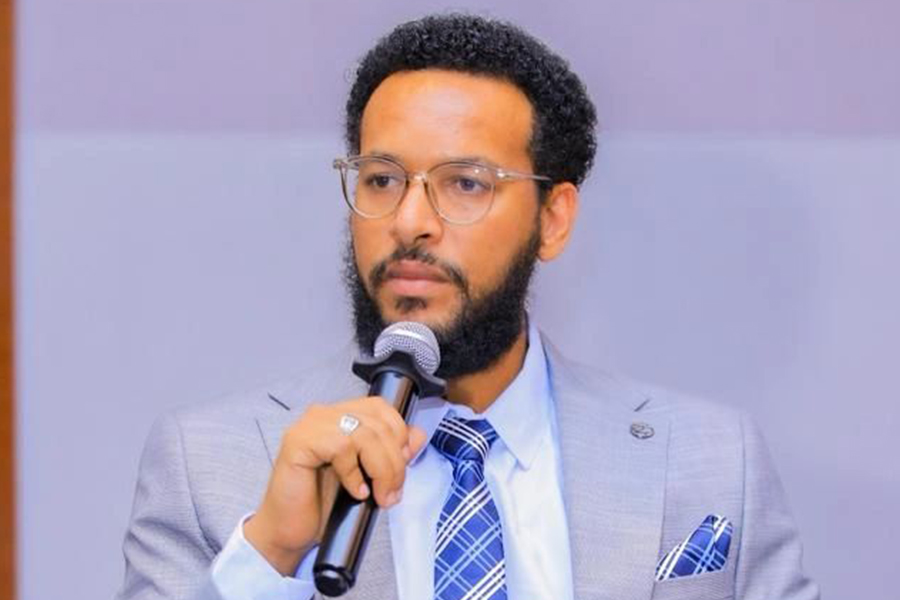
Q: Do you write to change society, or to document it before it changes?
A: I am not writing to change society. I am telling stories. Most of what I write comes from my childhood, the people I know, and the societal relationships that we had. By doing that, I am documenting our way of life.
Q: In your stories, who is usually a free person, someone with money or someone with nothing to lose? Why?
A: My first book, "Hamrawi Terekoch," has 15 biographical fiction stories about people I knew while growing up. These people had a lot; not in terms of money, but in freedom, integrity and generosity. Most of the characters are people that we do not see these days: a girl who fetches water from the river, a man who sews clothes, the man who blows the horn in the neighbourhood to announce good or bad news (Turumba Nefi). They were willing to give and share; they are the freest individuals I know. The people who have nothing but share everything are the freest in my stories.
Q: If you could ban one word from everyday Ethiopian vocabulary, what would it be?
A: I do not like the word “No.” I prefer “I will try,” because it is better than a straight refusal. In saying "no", we close many doors and lose even more opportunities.
Q: Was there a comment about your books that changed your point of view?
A: In my first book, "Hamrawi Terekoch," I used a hard fabric pattern, "Abujede," in every chapter, inspired by my favourite writer, Adam Reta. The fabric itself carries many uses. Some turn it into clothing, others use it in mummification or painting. When someone reviewed the book, she read the pattern as a symbol of salvation, a meaning I had not consciously intended. I liked that interpretation a lot.
Q: What part of writing do you dread the most? Why?
A: Of the entire writing and publishing process, the part I like least is selling. Some writers have publishing houses and sponsors behind them. My friends and I mostly publish on our own, from our own pockets. The printing industry rarely does justice to the creative work being produced, and selling at bazaars or through online markets feels like a grind. When it comes to writing itself, I believe I can keep going for as long as my imagination allows. Some technical critiques come across as attempts to fence that imagination in. I do not buy it. Creativity thrives on freedom. Putting rigid limits on it misses the point.
Q: What does literature teach you about life that school does not?
A: I did not study literature. I am among those who believe writing is a talent, not something you can fully learn, even though studying can help. I have learnt almost everything I know now through writing and practising.
Q: Unforgettable childhood Christmas memory?
A: My favourite and strongest Christmas memory is returning to my family home in Debre Berhan. I cherish every holiday, yet Christmas carries a special pull. I always count down the days, eager for it to arrive.
Q: What do you think about the younger generation’s reading habits?
A: This generation reads, which is good, but most of them prefer English books over Amharic ones. It could be because their medium of learning, being English, is influencing them. But a lot more people than I expected have shown up at the bazaars.
Q: What’s next?
A: I am currently working on my third book, a collection of poems, which I plan to publish soon.
PUBLISHED ON
Jan 04,2026 [ VOL
26 , NO
1340]

Photo Gallery | 192855 Views | May 06,2019

Photo Gallery | 182757 Views | Apr 26,2019

Photo Gallery | 179516 Views | Oct 06,2021

My Opinion | 145001 Views | Aug 14,2021







Aug 8 , 2026
The World Bank asks readers to picture a mother in rural Ethiopia who has never held...

Jul 31 , 2026
Weldu Yiheysh has not read the Pacific temperature charts. He does not need to. In Shibta District of Enderta Wereda, in...

Jul 25 , 2026
Ideally, citizens who have paid income tax all year should not have to reach for thei...
Jul 18 , 2026
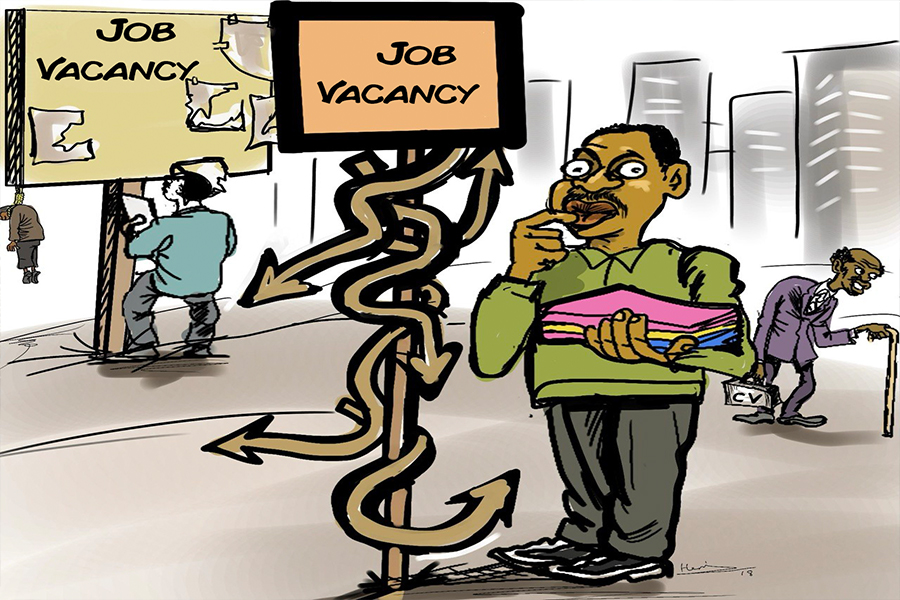
Pressed in Parliament on jobs and household incomes, Prime Minister Abiy Ahmed (PhD)...







 Loading your updates...