

Fortune News | Dec 06,2025



Aug 30 , 2025
By Ahmed T. Abdulkadir
When cholera swept through London in 1854, a physician named John Snow sketched a map that linked the deaths to a single water pump. The discovery compelled officials to view waste, water, and disease as interconnected threads of a single fabric.
Out of crisis came sewers, drainage laws and the modern notion that sanitation is a civic obligation. Waste was no longer something to hide. It was a danger to engineer away, hence the need to be managed.
Addis Abeba met cholera on different terms. Successive outbreaks were subdued not by pipes and drains but by syringes. Mass vaccination drives led by the World Health Organisation (WHO) and public health authorities reached millions and halted the epidemic before it gained momentum. The victory, however, was a Faustian bargain. The germs vanished; however, the conditions that breed them, such as heaps of garbage, open drains and foul ditches, were left intact.
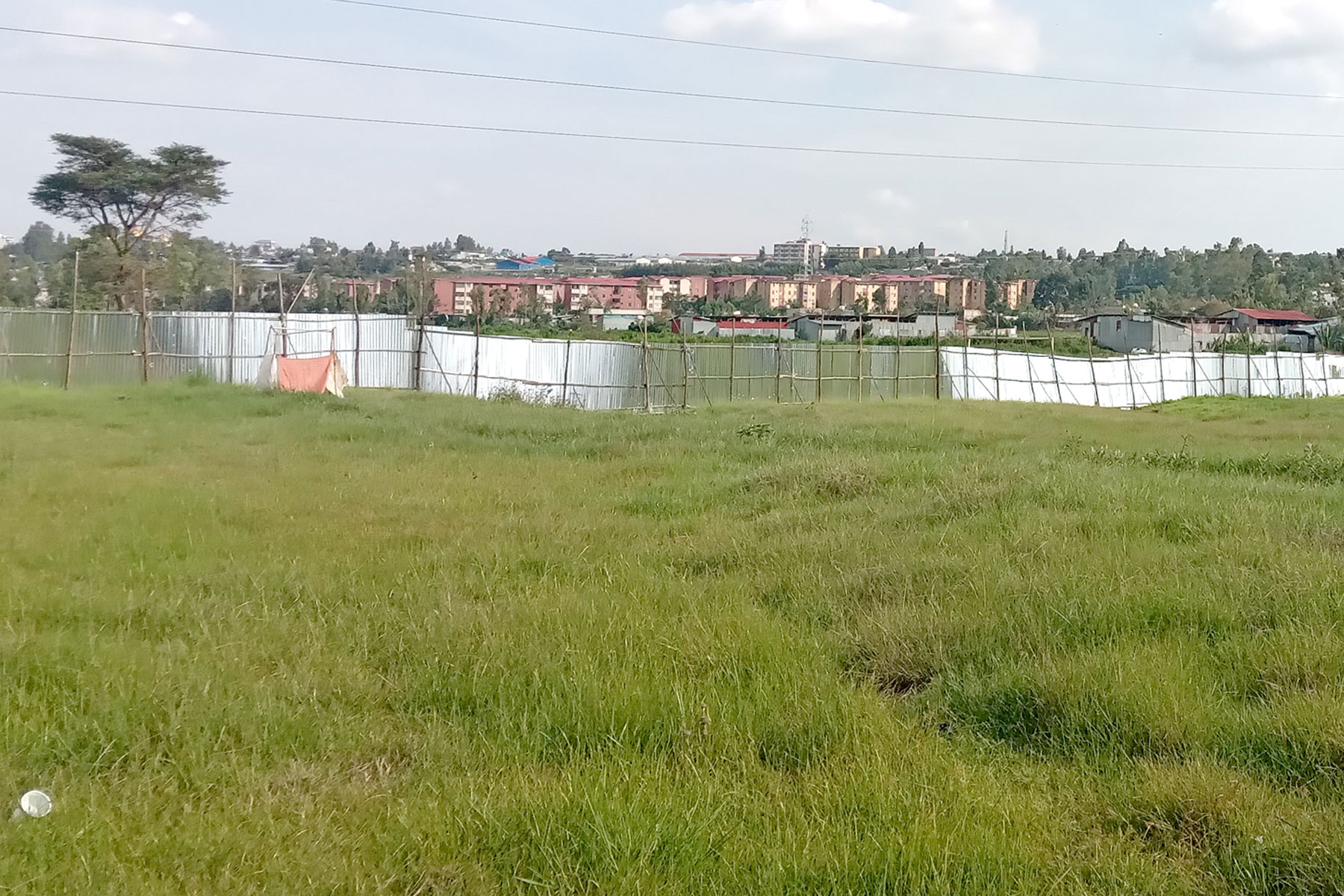
The city generates between 2,400tns and 3,300tns of municipal refuse every day. Roughly three-quarters of household food waste is diverted; a quarter never enters a truck at all. It is tossed into ravines, burned in backyards or swept into rivers. What is collected is trundled by pushcart and battered lorry to Qoshe, a landfill whose rubbish heap has grown for more than half a century.
The mismatch between a skyline of glass towers and a waste service powered by handcarts is nothing less than mesmerising. Each new condominium brings another sack of plastic wrappers and vegetable peels; much of it ends up back on the streets when seasonal rains flush blocked drains and flood low-lying roads. City officials' answer is what critics call a politics of subtraction. Sweep vendors off the pavement, stage periodic clean-up drives, and launch glossy beautification schemes.
In doing so, dirt is pushed from sight, not removed from the system.
Citizens practise their own version of evasion. Public toilets, school latrines and office bathrooms are notorious for going unflushed, as if disposal were someone else’s chore. The Slovenian philosopher, Slavoj iek, jokes that nations reveal themselves through toilet designs. Addis Abeba, he might add, reveals itself through reluctance to pull the handle.
The private act of disavowal scales up in grim fashion at Qoshe. After the rains, the stench drifts over the neighbourhoods of Jemo and Mekanisa. Residents notice its absence more than its presence. In 2017, a section of the dump collapsed, killing more than 100 people; tragedy piled atop neglect.
Leachate, laced with heavy metals, seeps into the soil and groundwater. Methane seeps from decomposing food waste, sometimes igniting spontaneous fires. Plastic bags clog storm drains, and when the sky opens, cars bob like boats. An unflushed toilet eventually fouls every corner of the house, and Addis Abeba now lives that parable citywide.
The machinery meant to contain the mess is itself broken. Waste collection is split among agencies, often lacking sufficient funding and enforcement. Micro- and small enterprises push handcarts door-to-door, yet without coordination or credit, they cannot modernise. The official fleet consists of 140 disposal trucks, with approximately a third of them out of service on any given day.
Into the gaps step hundreds of informal collectors who comb through bins and the dump for bottles, scrap metal and plastic. They are the de facto recycling arm of the city, slinging sacks that earn only a few Birr while officials treat them as nuisances rather than partners. Their labours hint at opportunity. The organic share of the waste stream could be composted into fertiliser instead of belching methane.
Plastics could feed small factories that turn out construction panels instead of clogging waterways. A handful of start-ups already produce plastic bricks or recycle paper, but with hardly any policy support, they remain exceptions rather than a market.
Addis Abeba’s urge to leapfrog problems with a trophy project produced Reppie, a waste-to-energy plant once billed as the first of its kind in Africa. Designed to burn 80pc of the city’s refuse and supply a third of its power, the facility now limps at roughly half capacity. Ovens choke on moisture-rich organics, turbines falter and repairs stall. What was meant to be a showpiece of modern engineering has become a lesson in skipping the basics.
Sorting rubbish at the source into organic, recyclable and hazardous streams would simplify every step that follows. Recognising informal collectors as legitimate handlers would fold their expertise into the official system and improve the city’s diversion rate overnight. Public-private partnerships could channel investment into compost yards and recycling lines, reducing the import bill for fertilisers and building supplies while creating jobs.
Sustained public campaigns, rather than one-off photo-ops, could shift behaviour toward regular flushing, proper binning and timely pickup.
Above all, governance should shift from hiding waste to managing it effectively. A city’s health is written in its drains and dumps as plainly as its skyline. London’s brush with cholera forced it to reinvent itself from the sewer upward. Addis Abeba’s dependence on vaccines lets it defer the hard work. Cholera no longer stalks its streets, but the forces that once invited the disease still lurk in gutters and culverts.
A metropolis that will not handle its own refuse risks, quite literally, being buried by it.
PUBLISHED ON
Aug 30,2025 [ VOL
26 , NO
1322]

AhmedT. Abdulkadir (ahmedteyib.abdulkadir@addisfortune.net) is the Editor-in-Chief at Addis Fortune. With a critical eye on class dynamics, public policy, and the cultural undercurrents shaping Ethiopian society.
Fortune News | Dec 06,2025

Fortune News | Jul 13,2025
View From Arada | Jun 07,2020
Editorial | Sep 20,2025

Radar | Apr 08,2024

Photo Gallery | 193841 Views | May 06,2019

Photo Gallery | 183727 Views | Apr 26,2019

Photo Gallery | 180625 Views | Oct 06,2021

My Opinion | 145983 Views | Aug 14,2021








Dec 22 , 2024 . By TIZITA SHEWAFERAW
Charged with transforming colossal state-owned enterprises into modern and competitiv...

Aug 18 , 2024 . By AKSAH ITALO
Although predictable Yonas Zerihun's job in the ride-hailing service is not immune to...

Jul 28 , 2024 . By TIZITA SHEWAFERAW
Unhabitual, perhaps too many, Samuel Gebreyohannes, 38, used to occasionally enjoy a couple of beers at breakfast. However, he recently swit...

Jul 13 , 2024 . By AKSAH ITALO
Investors who rely on tractors, trucks, and field vehicles for commuting, transporting commodities, and f...

Aug 28 , 2026
Every year, the Ministry of Education (MoE) sets a national examination. Every year,...

Aug 22 , 2026
A record is a strange thing to worry about. Federal trade officials have booked the b...

Aug 14 , 2026
Aschalew Fetene, known as “Ardi” and admired for his poetic depth, has built a ti...

Aug 8 , 2026
The World Bank asks readers to picture a mother in rural Ethiopia who has never held...
Aug 29 , 2026 . By BEZAWIT HULUAGER
The federal government is increasingly relying on Treasury bills (T-bills) to repay T...
Aug 29 , 2026 . By NAHOM AYELE
Judges on a Federal High Court bench have ordered D'Afrique, one of Addis Abeba's old...
The Ministry of Revenues wants to know not just who a taxpayer is but almost everythi...
Aug 29 , 2026 . By BEZAWIT HULUAGER
Electricity supplied from Ethiopia has helped halve Djibouti's power production costs...







 Loading your updates...