
Radar | Feb 15,2026



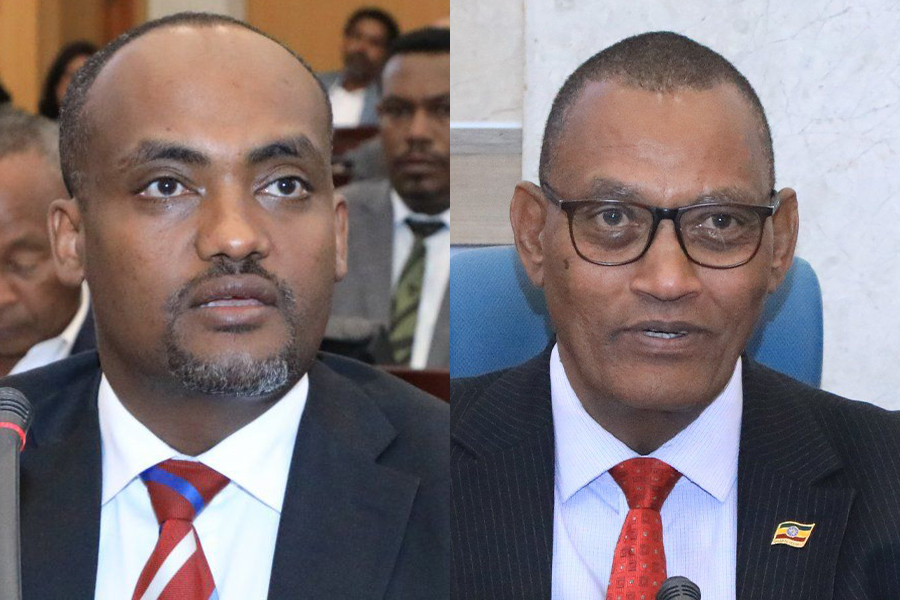
Bureaus, agencies and institutions under the Addis Abeba City Administration are sitting on billions of Birr they have neither collected nor paid, a city audit has found, exposing how a fast-growing revenue base is not translating into money the Administration can actually use.
The city Administration mobilised 233.7 billion Br in the 2024/25 fiscal year and spent 232.5 billion Br, covering 99.5pc of its outlay, yet its books are riddled with funds that never moved.
Presenting his audit report to the City Council, Auditor General, Amente Mechalu, disclosed that the audit review, covering 166 agencies, 91pc of the 183 planned and about 70pc of city spending, found a little over two billion Birr in uncollected receivables across 70 agencies, most of it unliquidated advances on projects, and 1.914 billion Br in payables to third parties across 63.
The audit also uncovered procurement violations totalling 105.7 million Br across five agencies and documentation gaps totalling 108.7 million Br across 36 more. Thirty-one of them drew adverse opinions for financial mismanagement and accounting errors, and Kolfe Industrial College issued a disclaimer after failing to submit its accounts.
The single worst case sat with the Addis Abeba Roads Authority, which received an adverse opinion after auditors found 4.2 billion Br in uncollected receivables and a reconciliation system so loose it kept no distinct codes for each project. It was found that mixing accounts until individual creditors and debtors could no longer be distinguished.
Its Director General, Moges Tibebe, pushed back, arguing that 2.38 billion Br of the flagged sum was advances on projects secured by bank guarantees and released as works hit milestones. He disclosed that the Authority has already collected 1.36 billion Br, and that a task force is clearing 53 million Br in parked debts left over from the city's early-2000s shift from manual to automated systems.
The Land Holding Registration & Information Agency drew another adverse opinion, cited for 9.4 million Br in procurement violations and 240.4 million Br in undocumented payables whose creditors it could not identify, alongside the unauthorised rental of 80 vehicles in 2024.
Its head, Tesfaye Tilahun, owned the lapses as legacy "trends," but claimed staff had been suspended over the illegal rentals. He confirmed that 19 million Br in near-decade-old uncollectible debt had been written off.
“The agency is accelerating the Mesob digital window, having already digitised 723,101 land files and moved to eMaps and eCards to guard the database against manual insertions and forgery,” he said.
The failures extended beyond finance into public health and safety.
Factories in Nifas Silk Lafto were found discharging toxic liquid waste above safe limits, with noise levels reaching 122 decibels. Gandhi Memorial Hospital was faulted for storing hazardous waste for up to 10 days beyond the three-day limit and for operating without a wastewater plant, while the Fire & Emergency Risk Management Commission was faulted for lacking a fuel depot. Its specialised garages were found to be too slow for emergency responses.
The city’s Health Bureau came under particular scrutiny, with its record expansion to 4,195 inpatient beds over five years shadowed by equipment shortages and hazardous-waste failures at Gandhi Memorial and Yekatit 12 hospitals, which also carried 13.6 million Br in receivables and 18.4 million Br in undocumented payables.
Zewditu and Yekatit 12 hospitals were found to lack maintenance tools and trained staff, leaving equipment unrepaired, and Yeka Health Centre was faulted for delivering medicines to outside pharmacies without recording expiry dates.
Yohannes Chala (MD), the Bureau’s head, told the Council that the "excessive payments" flagged were court-mandated deductions for student housing, and that a 1.8 million Br discrepancy arose from a judgment that lacked the accounting identifiers needed to settle it.
“The 100pc upfront payments for medical equipment were a legal requirement of the Ethiopian Pharmaceutical Supply Service,” he said. “The machinery has since arrived, clearing the trail.”
According to the Bureau Head, plans are outlined to centralise the Biomedical Maintenance Centre and a shift of its 68 health institutions to a paperless health-information system.
The transport sector fared little better. Driver-training institutions were found working without practice sites and running obstacle drills in heavy traffic. The Anbessa City Bus Service Enterprise used vehicles that had skipped annual technical inspection for instruction, while stagnant receivables lingered from the defunct Transport Programmes Management Office.
According to the Transport Bureau's Chief, Yabebal Desta, the Administration is recovering illegal training and daily allowances from current staff and pursuing former employees for the balance, as the city works with federal authorities to finalise overdue directives on driver and vehicle regulations.
Against the failures, the city Administration officials pointed to a cleanup. They claimed to have recovered 43.5 million Br in cash, while an Audit Forum led by Buzena Alkadir, the speaker of the Council, and the Deputy Mayor, Jantrar Abay, targeted over four billion Birr in stagnant accounts dating back as far as 13 years.
They claimed accountability followed the money, with disciplinary action against 5,857 staff members, including 79 political appointees.
Beyond the annual books, city officials disclosed the Administration had settled 62 billion Br of a 99 billion Br historical debt inherited from condominium construction, a burden of principal and interest more than a decade old.
The Mayor, Adanech Abiebie, told the Council that the remaining 37 billion Br still has to be cleared using internal revenue, which reached 350 billion Br in 2025/26, and proceeds from the auction of commercial shops.
The Council approved a record 502.27 billion Br for the 2026/27 fiscal year, up by 43pc, with 359.3 billion Br going to capital projects, including completing 1.5 million housing units, pushing road coverage beyond the current 20pc, and scaling a school-feeding scheme that serves nearly one million students.
According to Mayor Adanech and Speaker Buzena, “success would turn on stronger institutions, strict adherence to revised financial rules and deeper audit-driven reform.” The Administration promised a 90-day plan to keep the next budget from carrying the same dead weight.
Whether that holds depends on treating the symptoms as a system rather than a list, argued Tilahun Girma, an audit expert and partner at PKF Accounting & Auditing. With more than a decade in the field, he called for a strategic overhaul, arguing that everything from ghost payrolls for terminated staff to undocumented procurement flows from an ageing single-entry accounting system that should give way to international financial reporting standards.
“The frequent reshuffling of political appointees is itself a drag on discipline, with officials moved every few months, memory lost, and expertise never formed,” Tilahun told Fortune. “Many arrive without training in public financial management or procurement. They approve payments they can’t document.”
His prescription runs from the mechanical to the structural. Electronic records and e-GP procurement to avoid files from being lost or tampered with, adoption of International Public Sector Accounting Standards (IPSAS) in place of the cash-based system that leaves funds open to fraud, and, in time, municipal bonds to finance infrastructure, a tool that would demand exactly the transparent reporting the audit reforms are chasing.
“The [city’s] Auditor General has grown more independent and assertive,” said Tilahun. “But real reform will mean answering the root causes rather than the symptoms, one write-off at a time.”
PUBLISHED ON
Jul 19,2026 [ VOL
27 , NO
1368]
Radar | Feb 15,2026

Life Matters | Feb 18,2023

Radar | Dec 25,2023

Sunday with Eden | Nov 22,2025

Sunday with Eden | Apr 15,2023
Radar | Apr 19,2026
Fortune News | Feb 28,2026
Election 2026 coverage | Jun 02,2026

In-Picture | Jul 06,2025

Dec 22 , 2024 . By TIZITA SHEWAFERAW
Charged with transforming colossal state-owned enterprises into modern and competitiv...

Aug 18 , 2024 . By AKSAH ITALO
Although predictable Yonas Zerihun's job in the ride-hailing service is not immune to...

Jul 28 , 2024 . By TIZITA SHEWAFERAW
Unhabitual, perhaps too many, Samuel Gebreyohannes, 38, used to occasionally enjoy a couple of beers at breakfast. However, he recently swit...

Jul 13 , 2024 . By AKSAH ITALO
Investors who rely on tractors, trucks, and field vehicles for commuting, transporting commodities, and f...

Aug 22 , 2026
A record is a strange thing to worry about. Federal trade officials have booked the b...
Aug 14 , 2026
Aschalew Fetene, known as “Ardi” and admired for his poetic depth, has built a ti...

Aug 8 , 2026
The World Bank asks readers to picture a mother in rural Ethiopia who has never held...

Jul 31 , 2026
Weldu Yiheysh has not read the Pacific temperature charts. He does not need to. In Shibta District of Enderta Wereda, in...









 Loading your updates...