

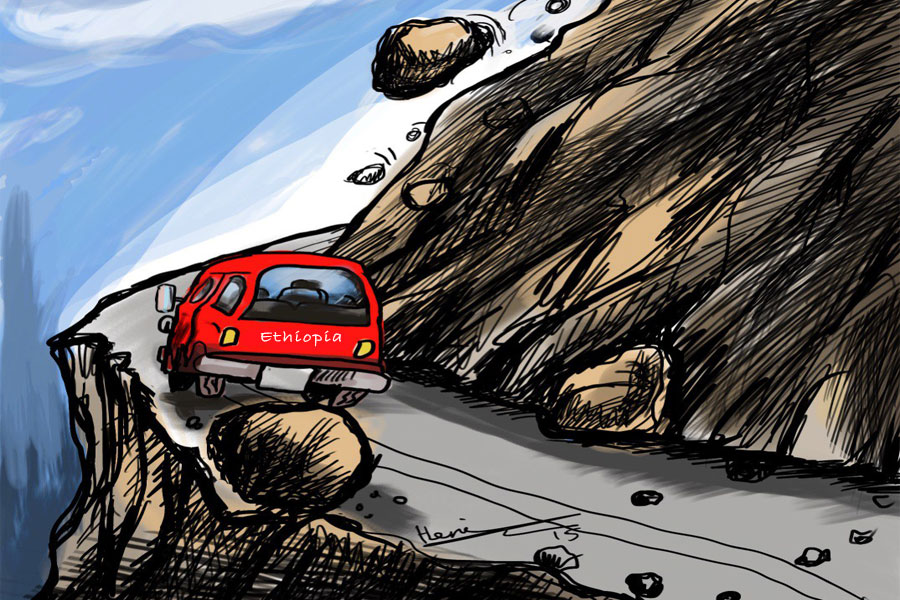
Editorial | Aug 12,2023



Aug 8 , 2026
By Yemanebrehan Kiros
For a country with low purchasing power, one that exports electricity to its neighbours even as it depends on imported fossil fuels, a strategic approach to energy management deserves the fullest attention. Efficiency should be treated as a necessity, not an option to be considered when convenient, writes Yemanebrehan Kiros (yomemech@gmail.com), a manager at Yomenet Energy Auditing & Engineering Plc.
When the energy bill jumps, the reflex is to buy a way out of it. Factories, commercial buildings, and residential complexes reach first for a cheaper source, switching from imported fuel to grid electricity or biomass. Some simply pass the higher cost on to their customers.
All these responses could be expensive, slow, and skip the question that should come first.
How much of that energy is being wasted before anyone pays for it?
The cheapest megawatt is the one never consumed, and it is available now, at low cost, without waiting years for a capital project to pay off. Efficiency is not the glamorous answer. It should be the first one.
The instinct to switch sources is understandable, but it treats a symptom while leaving the disease in place. Process industries burn fuel to raise heat for their operations. As fuel prices climb, they scramble for alternatives that usually mean capital-intensive investment, replacing the most expensive imported fossil fuel with relatively cheaper electricity or biomass. The approach, in most cases, is not efficiency but substitution.
A plant will invest in variable-frequency drives, or convert a heating system from thermal to electric, while poor insulation, oversized equipment, bad controls, and leaks of compressed air, steam, and water quietly drain money in the background. The money spent to arrest those leaks and stop the needless running of energy-hungry equipment is a small fraction of the sum being lined up for a cheaper source. It calls for a decision, a plan, and a modest outlay on resources already at hand.
Passing the cost to consumers looks like the other quick fix. However, it is the one that spreads the damage widest. When the increase is handed down the line, buyers absorb the final surge in the price of goods and services. The business loses ground on competitiveness and import substitution at the same moment.
There is a third option, and it is the one most often overlooked. Reducing consumption through an effective energy management system can bring an immediate return on a relatively low investment, within a short period, easing financial pressure until the slower and capital-heavy solutions begin to earn their keep. In some cases, the savings on the monthly bill will themselves finance the more ambitious upgrades that follow.
As the cost of raw materials, labour, transport, and other inputs keeps rising, manufacturers are under pressure to hold prices competitive. Improving energy performance is a practical way to offset that. By adopting a systematic energy management system and optimising how energy is used, a business can lower production costs, ease prices, and improve profitability and its standing in the market. That begins with knowing the numbers.
Companies and institutions should track their yearly energy performance, establish a baseline, and benchmark against local and international peers. Experience shows a great deal of energy waste can be recovered. Whenever prices surge, the first question should be about energy performance, because there is no logic in paying, ever more dearly, for energy that is thrown away.
The scale of the prize is easy to underestimate. Previous experience and research showed savings of up to 30pc are possible through effective energy management.
Ethiopia has an installed power-generation capacity of more than 9,700MW. A five percent efficiency gain, at a minimum, would translate into the equivalent of a plant the size of Gilgel Gibe II. The comparison rests on installed capacity, and hydropower output does fluctuate, sometimes dropping below 25pc of capacity. The real value is arguably greater still.
This is recovered energy, saved from waste, usable year-round, and already carrying the running costs paid during its initial generation.
Aligning operations with a standard such as ISO 50001 can bring consumption down significantly, yet such standards remain surprisingly unfamiliar in the country. The deeper barrier is awareness. A lack of understanding of the systematic approach to energy management is the single biggest barrier holding companies and institutions back from cutting consumption while raising output. The scarcity of trained energy managers and energy auditors in the workforce compounds it.
Business competitiveness and sustainable development are the further frontiers here, and both can be won by lifting energy performance across sectors. What that takes is stronger technical effort backed by government policy support, because energy consumption still touches the life of every individual.
The benefit does not stop at the factory gate. An effective energy management system reshapes the wider energy ecosystem. Energy saved in one place can be used in another, setting off a domino effect of efficiency and power-quality gains that reach even the firms reluctant to act.
Power quality is the quiet half of this story. Poor quality means higher consumption, equipment failure, and malfunction, and improving it benefits everyone on the line. The utility, above all, has reason to champion energy management. Better power quality and fewer interruptions ease the pressure on distribution infrastructure, reduce transformer and other equipment failures, lower maintenance and upgrade needs, and buy time for better planning.
Efficiency also sharpens the case for cleaner supply. With representative data from an energy management system, the suitability of adaptive and renewable sources can be judged far more precisely, and assessed section by section within a facility. An option that looks unfeasible across a whole plant may be sound for part of it, and only good data reveals the difference.
Development partners have a large role to play alongside local industry and the state, because small improvements, multiplied across many sites, add up to enormous savings. Government bodies, from ministry offices and military facilities to telecom, universities, and technical and vocational centres, carry both the consumption and the workforce to move the national total. They are expected to lead and set an example, so that the knowledge earned in their corridors can pass to the rest of the economy.
Reliable, efficient power should not be a side issue for growth. According to the World Bank, dependable energy sits among the binding constraints on private investment and jobs, which makes every recovered megawatt a contribution to national competitiveness, not only to a single firm's balance sheet. At institutions of that size, a change in habits alone can shift the country's overall consumption.
Recent efforts to fold these concepts into codes and standards, including the Ethiopian building code under revision, should lift energy performance further. This will lighten the financial load on the tenants and households who occupy commercial buildings.
The consumer end of the market needs the same discipline. The energy performance of household and industrial appliances should be communicated plainly through an effective rating and labelling system so that buyers can make informed choices. Awareness of the payoff from efficient appliances is low, and shoppers fix on the sticker price rather than the years of energy cost behind it.
Suppliers, in turn, hesitate to bring high-efficiency products to the local market, fearing the higher upfront price will make them hard to sell. The reckoning should run the other way. A relatively small increase in purchase price is recovered, and then some, through lower running costs, and the same logic holds for industrial plant. Every industry should weigh energy performance before committing to new or existing facilities. It should become routine to ask vendors and suppliers to build efficiency into what they propose.
Efficient equipment does not, on its own, guarantee lower consumption. How it is used and how it is set for peak performance is a separate discipline, precisely where technical capacity matters. A drive left badly configured, a meter no one reads, a setpoint chosen once and forgotten, each can quietly cancel the gain the equipment was bought to deliver.
Energy management concepts belong in product introductions and in the wider technical training that surrounds them, or the hardware will underdeliver.
For a country of low purchasing power, one that exports electricity to its neighbours even as it leans on imported fossil fuel, a strategic approach to energy management deserves the fullest attention. Efficiency should be treated as a necessity, not an option to be considered when convenient. Making operations and consumption leaner through a proper energy management system should not be a technical footnote but a means to build a more durable economy and to secure the country's energy.
The switch to a cheaper source, the pass-through to customers, the new drives and boilers, all have their place. None of them answers the prior question, and none is as fast or as cheap as the answer already sitting inside every plant and building.
The waste is the opportunity. Every leak sealed and every idle machine switched off is capacity created without a new turbine. The cheapest and fastest megawatt in Ethiopia is the one that was never lost in the first place.
PUBLISHED ON
Aug 08,2026 [ VOL
27 , NO
1371]
Editorial | Aug 12,2023
Radar | Jul 04,2026

Agenda | May 17,2025

Radar | Jan 27,2024

Fortune News | Jan 03,2025

Viewpoints | Jul 18,2026

Radar | Jan 24,2026
Commentaries | Sep 03,2022

Fortune News | Jul 04,2026

Fortune News | Nov 08,2025

Photo Gallery | 193838 Views | May 06,2019

Photo Gallery | 183726 Views | Apr 26,2019

Photo Gallery | 180618 Views | Oct 06,2021

My Opinion | 145980 Views | Aug 14,2021









Dec 22 , 2024 . By TIZITA SHEWAFERAW
Charged with transforming colossal state-owned enterprises into modern and competitiv...

Aug 18 , 2024 . By AKSAH ITALO
Although predictable Yonas Zerihun's job in the ride-hailing service is not immune to...

Jul 28 , 2024 . By TIZITA SHEWAFERAW
Unhabitual, perhaps too many, Samuel Gebreyohannes, 38, used to occasionally enjoy a couple of beers at breakfast. However, he recently swit...

Jul 13 , 2024 . By AKSAH ITALO
Investors who rely on tractors, trucks, and field vehicles for commuting, transporting commodities, and f...

Aug 28 , 2026
Every year, the Ministry of Education (MoE) sets a national examination. Every year,...

Aug 22 , 2026
A record is a strange thing to worry about. Federal trade officials have booked the b...

Aug 14 , 2026
Aschalew Fetene, known as “Ardi” and admired for his poetic depth, has built a ti...

Aug 8 , 2026
The World Bank asks readers to picture a mother in rural Ethiopia who has never held...
Aug 29 , 2026 . By BEZAWIT HULUAGER
The federal government is increasingly relying on Treasury bills (T-bills) to repay T...
Aug 29 , 2026 . By NAHOM AYELE
Judges on a Federal High Court bench have ordered D'Afrique, one of Addis Abeba's old...
The Ministry of Revenues wants to know not just who a taxpayer is but almost everythi...
Aug 29 , 2026 . By BEZAWIT HULUAGER
Electricity supplied from Ethiopia has helped halve Djibouti's power production costs...







 Loading your updates...