

Fortune News | Jan 21,2026



Jan 14 , 2023
By Abraham Tekle
The pandemic deranged the stalled global economic growth. COVID-linked disruptions in supply chains, leading to a spurt in raw materials prices and increasing production costs coupled with inflation, have become major headaches for global leaders to move forward.
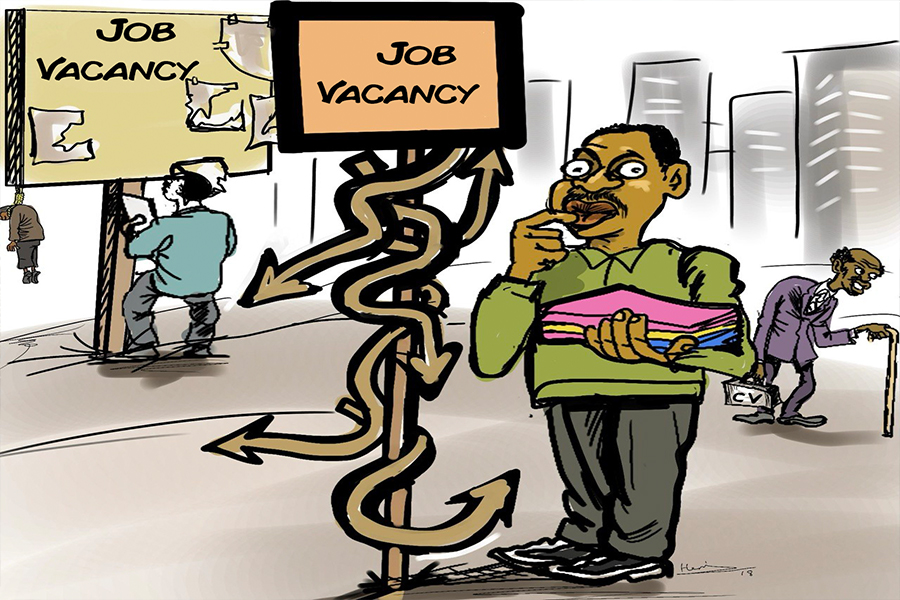
Ethiopia is no exception. The pandemic has created a massive economic gap, with the war adding more pressure on the already-unstable economy to go off-balance. Youth unemployment is one significant catastrophe that needs containment. The federal government has launched different stimulus programmes to prevent the economy from crumbling with the civil war that happened right after, leading the country into further shock. In just two years, the war has severely impacted the soaring prices of items, which reached had maximum due to inflation from the pandemic.
According to the World Bank's latest food security update, Ethiopia ranked ninth in food price inflation. People wake up to find the rising cost of goods and commodities. Inflation has remained stubborn and challenging.
Considering consumer goods prices in African cities, in August 2022, an index released by, Statista ranked Addis Abeba second highest in cost of living, reaching 50.49pc following Dakar, Senegal, with a 50.87pc. However, the price of goods and commodities is more or less similar across the other parts of the country—the living standard of the people deteriorating over time while it becomes difficult for many to survive.
Over a month ago, University lecturers around the nation went on strike because life has become frustrating with their salaries, barely surviving the day—let alone raising their families. The increasing fuel and transportation costs, unaffordable food prices and house rent make their argument valid.
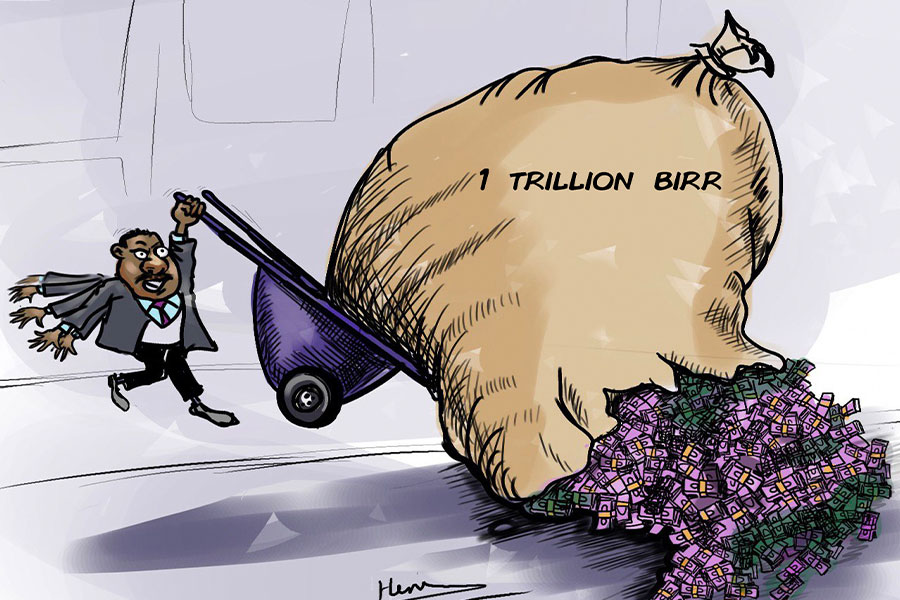
Inflation and poverty reduction should be on top of the list of priorities for the federal government rather than building a palace and luxurious parks.
Even though Ethiopia is in the middle of peace accord settlement, the complex economic crisis requires robust policy implementation to mend the aftermath of the pandemic and war. The former broke the communication routes while the latter left agricultural lands untended.
The peace accord would be an excellent chance to empower the youth as part of the integration process. Doing so will reinforce the agricultural sector to trigger the economy while decreasing the rate of unemployment.
Of course, one wishes for a quick turnaround, with the war ending for the peace process to continue. Perhaps that will happen. However, there is a need for prolonged and coordinated strategies to develop national policies and institutions that focus on developing and utilizing the country's barely tapped human power—the youth.
According to a survey released by, Macrotrends, Ethiopia's youth unemployment rate has reached 5.72pc in 2021, showing a 0.78pc increase from the previous year. One can add to the figure after witnessing the number of young generation stranded in the city looking for an earning to survive the day.
It is essential for the government to pay a renewed focus on developing the skills of millions of unemployed youths in the country. The lack of marketable skills makes them a liability rather than an economic asset. The initiative taken by the Ethio telecom partnership agreement with American-based GETFACT Ethiopia to provide training centred around digital communication, leadership and computer programming could be a good start.
Activities related to the production, consumption, and trade of goods and services make economic policy essential, giving the role of politics its due.
Attempting to boost agricultural growth, improving access to land, and facilitating the use of modern inputs and technologies is prone to improve the economy. On the contrary, if production rates are not adjusted, millions are bound to be affected by continuous famines in the coming years.
PUBLISHED ON
Jan 14,2023 [ VOL
23 , NO
1185]

Fortune News | Jan 21,2026

Viewpoints | Apr 13, 2025
Commentaries | Nov 21,2020

Featured | Sep 14,2025
Radar | Sep 18,2023

Agenda | Feb 22,2020

Commentaries | Apr 17,2021

Editorial | Nov 30,2024
Editorial | Jun 21,2025
Editorial | Mar 27,2021

Photo Gallery | 192947 Views | May 06,2019

Photo Gallery | 182845 Views | Apr 26,2019

Photo Gallery | 179615 Views | Oct 06,2021

My Opinion | 145098 Views | Aug 14,2021






Dec 22 , 2024 . By TIZITA SHEWAFERAW
Charged with transforming colossal state-owned enterprises into modern and competitiv...

Aug 18 , 2024 . By AKSAH ITALO
Although predictable Yonas Zerihun's job in the ride-hailing service is not immune to...

Jul 28 , 2024 . By TIZITA SHEWAFERAW
Unhabitual, perhaps too many, Samuel Gebreyohannes, 38, used to occasionally enjoy a couple of beers at breakfast. However, he recently swit...

Jul 13 , 2024 . By AKSAH ITALO
Investors who rely on tractors, trucks, and field vehicles for commuting, transporting commodities, and f...

Aug 8 , 2026
The World Bank asks readers to picture a mother in rural Ethiopia who has never held...

Jul 31 , 2026
Weldu Yiheysh has not read the Pacific temperature charts. He does not need to. In Shibta District of Enderta Wereda, in...

Jul 25 , 2026
Ideally, citizens who have paid income tax all year should not have to reach for thei...
Jul 18 , 2026
Pressed in Parliament on jobs and household incomes, Prime Minister Abiy Ahmed (PhD)...
Aug 9 , 2026 . By NAHOM AYELE
Anbesa Bank has elected an entirely new board of directors, nine months after the Boa...
Aug 9 , 2026 . By NAHOM AYELE
Ethiopia Hotel, one of the country's oldest hospitality establishments and a landmark...
Aug 9 , 2026 . By FITSUM TADESSE
The excise-tax reform on alcohol and tobacco has done much of what it was made to do...

Aug 9 , 2026 . By BEZAWIT HULUAGER and ABDUREUF JUHAR
Three inter-city transport companies have spent 450 million Br on new vehicles to mee...







 Loading your updates...