
Fortune News | Jul 25,2026



Jan 15 , 2022
By Kofi Boa , Roger Thurow
At the United Nations Climate Change Conference (COP26) last November, world leaders pledged billions of dollars to sustainable farming and agricultural research. This commitment comes at a critical time. Already, climate change is wrecking harvests around the world, and global hunger is on the rise.
The stakes are especially high for Africa’s small farmers, who work their fields by hand and are at the mercy of the elements. The predictable weather patterns these farmers depended on in the past have disappeared. This year, late rains in Ghana and neighboring West African countries delayed planting. Then, unusually heavy rainfall at the end of the growing season hampered the harvest. In East Africa, swarms of locusts, fostered by hotter, wetter conditions, devoured a vast expanse of crops.
Africa’s farmers relied on the world leaders’ meeting at COP26 to take steps that might mitigate some of the worst effects of the climate crisis. While the commitments made in Glasgow set the stage for meaningful action, pledges to reduce greenhouse-gas (GHG) emissions likely fell short of what is needed to limit global warming to 1.5° Celsius, relative to pre-industrial levels.
With climate volatility set to continue, small farmers need support to adapt to the changes they are already experiencing. While most headlines about COP26 focused on emissions reductions, other commitments made in Glasgow provide hope for the future of global agriculture – if leaders follow through on their promises.
For example, the Agriculture Innovation Mission for Climate aims to provide meaningful support for climate-adaptive farming, agricultural research, and food-systems innovations. The AIM4C initiative, led by the United States and the United Arab Emirates, has received pledges of at least four billion dollars thus far and seeks to double these commitments in the next year. AIM4C includes research projects by both government and non-government partners that explore everything from how gene-bank collections could unlock new climate-resilient crops to methods for reducing harmful methane emissions from livestock.
In addition, COP26 participants committed more than one billion dollars to support agricultural research within CGIAR (formerly known as the Consultative Group on International Agricultural Research), the world’s largest research organization assisting small farmers in the developing world. Several countries also made individual pledges to aid climate adaptation in developing countries, including 197 million dollars from the United Kingdom for programs in Africa and three billion dollars annually from the US by 2024 for adaptation finance.
Taken together, these commitments should help small farmers prepare for greater risks. Equally important, they should encourage industrialised agricultural systems to become more sustainable. Africa’s small farmers share none of the blame for the fact that, in the push to increase food production, agriculture has become a large emitter of GHGs. At the same time, the climate change that industrial agriculture is fueling affects food production around the world. It lowers yields, weakens crop nutrients, disrupts the geography of farming, and threatens rural livelihoods. Ultimately, food supplies everywhere are at risk.
Unfortunately, it is far from certain that global leaders will fulfil their commitments to the future of Africa’s farmers – even though their fate will affect our food systems more broadly. The world’s richest countries have fallen behind on their promise from COP15 in 2009 to provide 100 billion dollars annually for climate-change adaptation and mitigation in the world’s poorest countries. And US funding for agricultural research that helps farmers both at home and abroad has largely stagnated in real terms since 2003, according to a recent report commissioned by the Farm Journal Foundation and the American Farm Bureau Federation.
Programs that help Africa’s small farmers become more resilient in the face of climate change are doing invaluable work. For example, at the Howard G. Buffett Foundation Centre for No-Till Agriculture in Ghana, farmers learn essential conservation practices that keep carbon in the ground, preserve nutrients, and retain soil moisture. Other programs, such as One Acre Fund and myAgro, also train Africa’s small farmers in sustainable practices and provide access to more resilient seeds. Often, these solutions enable farmers to harvest a good crop even when extreme weather strikes.
But these programs reach only a small percentage of the population. Millions living in rural Africa still experience an annual “hunger season” – a period of profound deprivation between harvests. It is a cruel irony that small farmers and their families are among the world’s hungriest people.
As Africa’s farmers work to adapt to climate change, global leaders must do their part by keeping – and extending – the promises they made at COP26. Increased investment in sustainable agriculture, including research and development, is critical to eliminating the continent’s hunger season and ensuring food security for all.
PUBLISHED ON
Jan 15,2022 [ VOL
22 , NO
1133]
Fortune News | Jul 25,2026

Viewpoints | Sep 10,2023
Viewpoints | May 27,2023

Commentaries | Feb 26,2022
Exclusive Interviews | Jun 07,2026

Commentaries | Apr 24,2021
Commentaries | Apr 28,2024
Advertorials | May 30,2025

Radar | Aug 08,2020
Viewpoints | Oct 12,2024

Photo Gallery | 191903 Views | May 06,2019

Photo Gallery | 181657 Views | Apr 26,2019

Photo Gallery | 178376 Views | Oct 06,2021

My Opinion | 143918 Views | Aug 14,2021






Dec 22 , 2024 . By TIZITA SHEWAFERAW
Charged with transforming colossal state-owned enterprises into modern and competitiv...

Aug 18 , 2024 . By AKSAH ITALO
Although predictable Yonas Zerihun's job in the ride-hailing service is not immune to...

Jul 28 , 2024 . By TIZITA SHEWAFERAW
Unhabitual, perhaps too many, Samuel Gebreyohannes, 38, used to occasionally enjoy a couple of beers at breakfast. However, he recently swit...

Jul 13 , 2024 . By AKSAH ITALO
Investors who rely on tractors, trucks, and field vehicles for commuting, transporting commodities, and f...

Jul 25 , 2026
Ideally, citizens who have paid income tax all year should not have to reach for thei...
Jul 18 , 2026
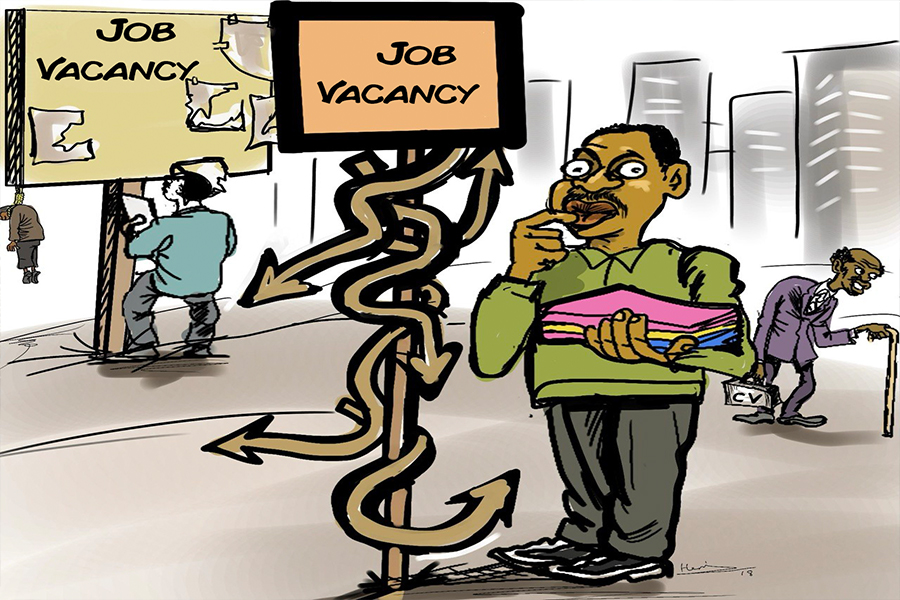
Pressed in Parliament on jobs and household incomes, Prime Minister Abiy Ahmed (PhD)...

Jul 11 , 2026
At a market stall, reform arrives without a communique. It comes as a higher transpor...
Jul 4 , 2026
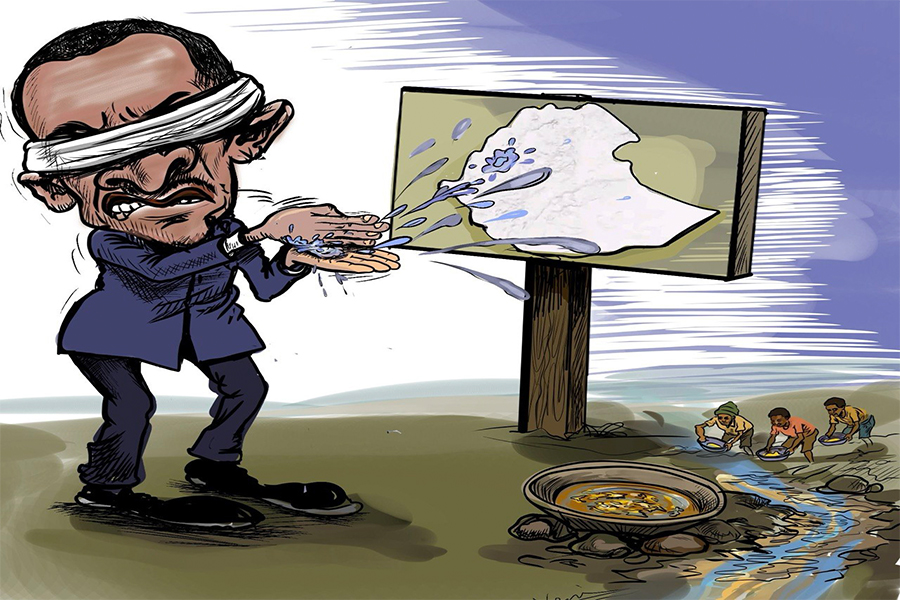
In the goldfields of the Benishangul-Gumuz Regional State, Ethiopia's balance-of-paym...
Jul 25 , 2026 . By BEZAWIT HULUAGER
Global Bank's Board of Directors have overhauled top management, after suspending sev...

Jul 25 , 2026 . By NAHOM AYELE
Judges at the Federal High Court have overturned the National Lottery Administration...
Jul 25 , 2026 . By NAHOM AYELE
A newly enacted regulation by the Council of Ministers lets eligible producers pledge...
Jul 25 , 2026 . By FITSUM TADESSE
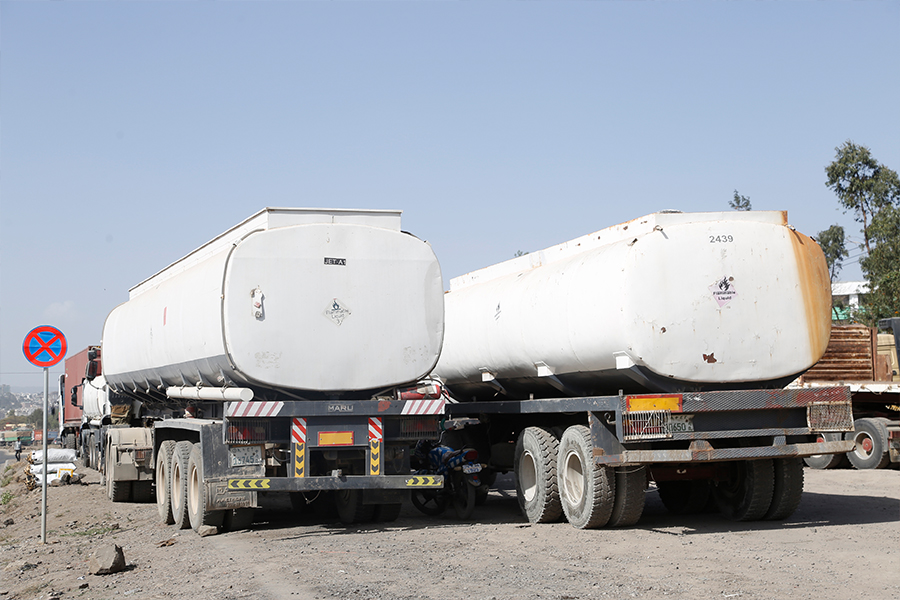
A fuel tanker carrying tens of thousands of litres was confiscated after its driver a...









 Loading your updates...