
Radar | Jan 03,2026



Dec 20 , 2025
By Kidist Yidnekachew
Children ending their lives after minor missteps exposes a troubling cultural failure. Parenting has shifted away from cruelty, yet fear has not disappeared; it has become distorted. Without clear limits, children may interpret correction as existential threat. Emotional protection must coexist with firmness. Survival, not silence, should be the lesson passed down.
I was scrolling through TikTok yesterday when I came across a story that made me stop cold. It was not just sad; it was the kind of heaviness that settles in your chest and makes breathing feel difficult. It forced me to reflect on our culture, our parenting, and the fragility of life. Above everything else, one thought stood out: the rising number of children choosing suicide.
The story was about a 12-year-old boy. A child. He had lost the keys to his father’s motorbike. Terrified of what his father might do, he did not run away or hide. Instead, he ended his life. We are talking about a boy who believed death was safer than facing his parent. In the same video, or perhaps in the comments, there was another story, this time about an eight-year-old who reportedly jumped from the fifth floor, thinking, “I will kill myself before my parents kill me.”
These are not just stories circulating online. They are warning signs that something is deeply broken. I was shaken by them. But once the shock settled, questions followed. How did we get here?
When I look back at my own childhood, my experience was different. I do not remember being beaten, partly because I was mostly well-behaved, but also because I was an only child, a firstborn, and a girl. I had a cushion. Still, even then, I saw a harsher reality around me. Some of my classmates had parents who were strict beyond measure. When they made mistakes, punishment followed, severe and immediate. Yet those children grew up. They survived. Suicide, as far as I know, was never an option. They were scared, yes. They dreaded consequences. But they endured the punishment, cried, and moved on.
We have all heard those stories, or lived them ourselves. Parents who relied on corporal punishment that now sounds barbaric: forcing children to smell berbere until their eyes burned, belt beatings, pinching, and all kinds of physical discipline. Parents today appear far more lenient than previous generations. And here lies the paradox. Parenting has softened, yet children seem to be breaking faster.
I am not romanticising abuse. Those punishments hurt, physically and mentally, and many adults still carry those scars today. But they survived. They are here. So why does a lost key now feel like a death sentence, when far worse mistakes once ended in survival?
I struggle with the idea that most parents are capable of truly destroying their own children. Most are not. Parents lose their temper. They shout. They say cruel things they later regret. Some even use extreme threats in moments of anger. Growing up, many of us understood this as frustration speaking, not literal intent. We feared consequences, but we did not believe our lives were truly at risk.
There must be boundaries between parents and children. Respect matters. Some level of fear may exist, but when fear becomes exaggerated, when a child genuinely believes their safety is gone, it pushes them into dangerous territory.
As teenagers, our biggest fears were things like pregnancy outside marriage, getting caught with drugs, or failing school. Breaking something expensive was stressful, but never to the point of believing death was preferable. We knew the line.
I have studied psychology, so I am not dismissing mental health struggles. I have felt purposelessness. I have lived under the grey fog of depression deeply enough to understand its weight. I have struggled with self-image. But I wonder whether, in trying to correct the harshness of the past, we have swung too far in the opposite direction.
Perhaps suicide was less visible when I was younger. Maybe social media did not exist to amplify dark thoughts. Maybe cases were hidden or reported differently. Whatever the reason, it was rare for children as young as eight or twelve to even consider ending their lives. We were raised to endure. That had costs, emotional suppression is real, but it also built resilience. A kind of callus that protected us from the world’s sharp edges.
I believe in discipline without cruelty. But the modern idea of “gentle parenting” is often misunderstood. Some children seem unable to tolerate raised voices or firm correction. I recently heard someone explain this clearly: if a child throws a fork at someone, you tell them it is wrong and take the fork away. You do not stand there praising their feelings. That is not parenting; it is neglect. Children raised without limits risk becoming irresponsible or unprepared for a world that is anything but gentle.
This does not mean the 12-year-old boy experienced this kind of parenting. We do not know his full story. Perhaps he had been beaten repeatedly and expected the worst. I cannot imagine the fear that led him to that decision, or the guilt his parents now live with. One comment under the video stayed with me: “Children should always have someone to go to when they mess up.” Often, that person is the mother, the shield between a child and anger.
I hope stories like these make parents kinder and more mindful of their words. Kindness, though, does not mean the absence of boundaries. Children need a firm wall to lean on, not one that collapses onto them.
And to anyone reading this who is contemplating suicide, please listen. The pain you feel now is temporary, even when it feels endless. You will grow stronger. You will find purpose. Do not wait for motivation, it rarely arrives on its own. Act anyway. Seek help if the darkness becomes overwhelming. There is no shame in support.
Finally, to children who fear their parents: they likely love you more than they know how to show. Adults struggle with emotional control too. If you mess up, apologise sincerely. Ask for mediation if needed. Reach out to an aunt, uncle, or grandparent. And remember this, fear lies. It exaggerates reality. Stand firm, ask for help, and choose life.
PUBLISHED ON
Dec 20,2025 [ VOL
26 , NO
1338]

Radar | Jan 03,2026

Radar | Oct 12,2024
Fortune News | Aug 25,2024

Exclusive Interviews | Apr 10,2026

My Opinion | Aug 28,2021
Exclusive Interviews | Jan 04,2026
View From Arada | Mar 07,2026
Radar | Jul 04,2026

View From Arada | Aug 12,2023
Fortune News | Sep 22,2024

Photo Gallery | 193369 Views | May 06,2019

Photo Gallery | 183254 Views | Apr 26,2019

Photo Gallery | 180061 Views | Oct 06,2021
My Opinion | 145493 Views | Aug 14,2021





Dec 22 , 2024 . By TIZITA SHEWAFERAW
Charged with transforming colossal state-owned enterprises into modern and competitiv...
Aug 18 , 2024 . By AKSAH ITALO
Although predictable Yonas Zerihun's job in the ride-hailing service is not immune to...
Jul 28 , 2024 . By TIZITA SHEWAFERAW
Unhabitual, perhaps too many, Samuel Gebreyohannes, 38, used to occasionally enjoy a couple of beers at breakfast. However, he recently swit...

Jul 13 , 2024 . By AKSAH ITALO
Investors who rely on tractors, trucks, and field vehicles for commuting, transporting commodities, and f...
Aug 14 , 2026
Aschalew Fetene, known as “Ardi” and admired for his poetic depth, has built a ti...

Aug 8 , 2026
The World Bank asks readers to picture a mother in rural Ethiopia who has never held...

Jul 31 , 2026
Weldu Yiheysh has not read the Pacific temperature charts. He does not need to. In Shibta District of Enderta Wereda, in...
Jul 25 , 2026
Ideally, citizens who have paid income tax all year should not have to reach for thei...
Aug 15 , 2026 . By NAHOM AYELE
Federal prosecutors have charged seven defendants over a set of foreign-trade deals t...
Aug 15 , 2026 . By BEZAWIT HULUAGER
Ethio-post is preparing to turn its thousands of branches into banking agents, allowi...
Aug 18 , 2026 . By BEZAWIT HULUAGER
Kassahun Gofe (PhD), minister of Trade & Regional Integration (MoTRI), is prepari...
Aug 16 , 2026 . By NAHOM AYELE
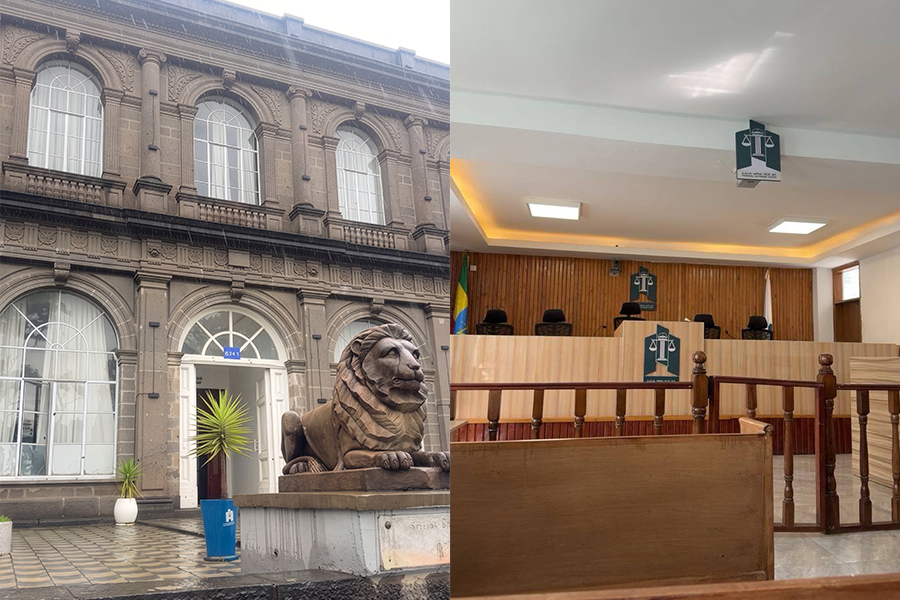
Justices at the Federal Supreme Court widened the shield they are holding over lawyer...






 Loading your updates...