

Election 2026 coverage | Nov 22,2025



Feb 28 , 2026
By Shumye Getu (PhD)
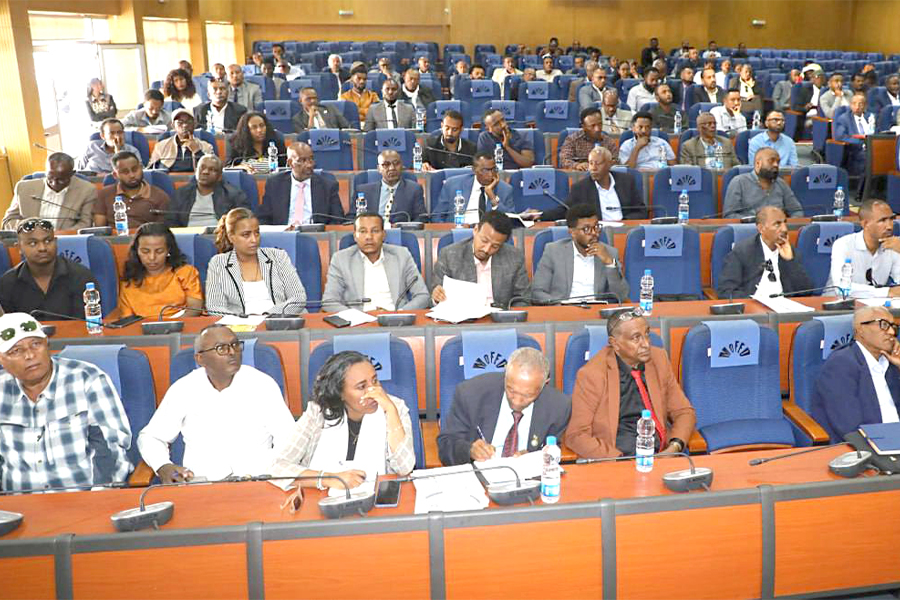
Almost three years ago, headlines promised a new era for higher education. The Ministry of Education (MoE), under Berhanu Nega (Prof.), announced a major transformation to grant public universities academic autonomy. Beginning in 2022, 10 first-generation universities were meant to become autonomous within two years.
Autonomy, the policymakers believed, would bring quality education and unlock financial and operational independence.
To give this promise legal force, they lobbied lawmakers to pass a 2023 law granting universities autonomy. Campuses rushed to respond, institutionalising structures that were redesigned, curricula revised, and operational rules rewritten. Everyone talked about “the autonomous university” as if it were around the corner.
At first, universities were told they would become autonomous within two years. Later, a different model emerged. Addis Abeba University would move ahead on its own, and other universities would follow at some undefined point. There is still no clear time frame for when the rest will become autonomous.
A few years later, little has changed, with the only real exception being the Addis Abeba University, the country’s oldest higher-learning institution, which was granted autonomy in October 2023. Even there, reality has not matched the rhetoric. The University is still in probation, testing what autonomy means in practice and finding that expectations are harder to meet than promises. According to its Interim President, Samuel Kifle, “autonomy of the Addis Abeba University will pave the way to the delivery of quality education.”
The Ministry of Education has insisted that university autonomy is about administrative independence. But the law, and the early practice on the ground, tell a different story. The essential objective appears to be financial independence. The law clearly designates strong financial capacity as one precondition for universities to become autonomous.
The first test of autonomous status was not quality but who gets in the door. Quality is measured over time, while students faced a more immediate issue of enrollment.
What, exactly, are the enrollment criteria for autonomous universities?
Experience at the Addis Abeba University so far has shown that a student’s economic background is being tested almost as much as academic merit. The ability to pay tuition calculated following the European Credit Transfer System (ECTS) is now central to their chances. Not having the financial means to cover these fees can quell aspirations before students ever sit in a lecture hall. This tilts the system away from the country’s education and training policy goals of fairness, inclusiveness and accessibility.
A UNESCO report found that Ethiopia falls short of the 12pc higher education enrollment seen in middle-income countries. When access is already low, tying autonomy so closely to income risks putting the cart before the horse. And that is no detail.
Undoubtedly, the higher-education institutions face serious problems. Quality is patchy, efficiency is weak, budgets are tight, and leadership is contested. The Ministry’s own assessments find that some universities fail to meet required standards. The Minister even warned that such campuses could be turned into boarding schools. To admit that several universities are struggling to meet basic standards, while insisting they march toward autonomy, is a contradiction.
Building a strong financial base is one of six criteria in the proclamation for granting autonomy. The law spells out the objective of establishing an autonomous university as “to enable universities have good standing to generate revenues and thereby build a system to become self-sufficient by efficiently and judiciously managing their revenues.” That sounds less like academic freedom and more like a business plan.
But most universities are in no position to generate their own budgets. Autonomy, in this context, pushes them to hunt for revenue wherever they can. The most direct path is through students, in the form of rising and diversified tuition payments. Autonomy becomes a legal cover to collect income and to render services only when payment is secured.
Indeed, administrative and academic autonomy do matter. Universities should be able to make independent decisions, govern themselves autonomously and safeguard academic freedom. These are important for building quality teaching and research. But financial autonomy is a different animal. In the current context, it is mostly about revenue generation and resource administration.
For the federal government, this reform eases budgetary pressure. Higher education has long required large capital and operational spending. Rather than struggle with this financial burden, the state appears ready to step back in the name of administrative autonomy.
The uncomfortable truth is that most public universities are not structurally strong. They remain exposed to political interference and dependent on central administrators. Asking them to shoulder the responsibility for funding themselves before they have regained their footing carries clear risks. Instead of fixing quality, autonomy may end up pricing students out and leaving campuses with less public support, more financial pressure and no guarantee of better education.
PUBLISHED ON
Feb 28,2026 [ VOL
26 , NO
1348]

Election 2026 coverage | Nov 22,2025
Fortune News | Mar 14,2026
Fortune News | May 11,2025
Fortune News | May 31,2026

Radar | Mar 14,2026
Agenda | May 09,2026

Advertorials | Feb 12,2024

View From Arada | Apr 25,2026
Obituary | Mar 30,2024
Fortune News | Apr 25,2026

Photo Gallery | 193371 Views | May 06,2019

Photo Gallery | 183256 Views | Apr 26,2019

Photo Gallery | 180064 Views | Oct 06,2021

My Opinion | 145496 Views | Aug 14,2021






Dec 22 , 2024 . By TIZITA SHEWAFERAW
Charged with transforming colossal state-owned enterprises into modern and competitiv...

Aug 18 , 2024 . By AKSAH ITALO
Although predictable Yonas Zerihun's job in the ride-hailing service is not immune to...

Jul 28 , 2024 . By TIZITA SHEWAFERAW
Unhabitual, perhaps too many, Samuel Gebreyohannes, 38, used to occasionally enjoy a couple of beers at breakfast. However, he recently swit...

Jul 13 , 2024 . By AKSAH ITALO
Investors who rely on tractors, trucks, and field vehicles for commuting, transporting commodities, and f...

Aug 14 , 2026
Aschalew Fetene, known as “Ardi” and admired for his poetic depth, has built a ti...

Aug 8 , 2026
The World Bank asks readers to picture a mother in rural Ethiopia who has never held...

Jul 31 , 2026
Weldu Yiheysh has not read the Pacific temperature charts. He does not need to. In Shibta District of Enderta Wereda, in...

Jul 25 , 2026
Ideally, citizens who have paid income tax all year should not have to reach for thei...
Aug 15 , 2026 . By NAHOM AYELE
Federal prosecutors have charged seven defendants over a set of foreign-trade deals t...
Aug 15 , 2026 . By BEZAWIT HULUAGER
Ethio-post is preparing to turn its thousands of branches into banking agents, allowi...
Aug 18 , 2026 . By BEZAWIT HULUAGER
Kassahun Gofe (PhD), minister of Trade & Regional Integration (MoTRI), is prepari...

Aug 16 , 2026 . By NAHOM AYELE
Justices at the Federal Supreme Court widened the shield they are holding over lawyer...





 Loading your updates...