

Agenda | May 23,2026



A crowded meeting at the Ministry of Finance on King George VI Street last Tuesday, March 10, 2026, laid bare the collision between tax enforcement and business survival. The Ministry’s conference hall was full, and more than 200 participants wanted to speak. Business owners, lawyers, industry leaders and lobbyists arrived with drafts, treating the proposed changes as a threat.
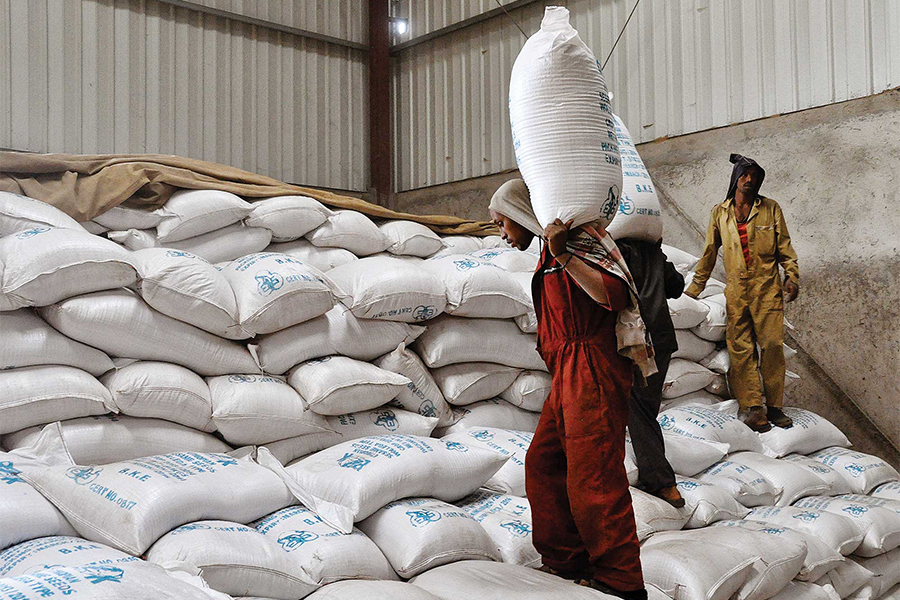
A flour mill in Debre Marqos came to embody the fear. Built on 40,000Sqm of land in Menkorerie District, in the Amhara Regional State, and designed to process 1,000Qtls of wheat into flour a day, the plant is now operating at three percent of capacity. Once running at 60pc, it supplied flour to consumer unions and bakery businesses in Addis Abeba, employed 100 workers and paid 10 million Br a year in profit tax. Now, its owners are no longer talking about recovery, but closure. Transporters have become reluctant to move goods from the area due to security concerns, while input shortages, rising wheat prices, and scarce working capital have compounded the pressure. The company reported a loss last year and paid no profit tax. Over the past seven months, its conditions have not improved. Even so, it was required to make quarterly advance tax payments based on earlier turnover, draining what remained of its cash and leaving it struggling to cover salaries and expenses.
The backlash followed quarterly advance payments and the Minimum Alternative Tax (MAT) regime. Under the amended law, Category A and B taxpayers must pay quarterly instalments equal to 25pc of the previous year’s tax. The Minimum Alternative Tax requires businesses to pay 2.5pc of their annual turnover if calculated income tax falls below that level, even when they are loss-making. Anxiety spread across sectors. Millers, transport operators, contractors, exporters, pharmaceutical manufacturers, legal professionals and the country’s only private telecom operator all sought special treatment. A construction company running six sites had paid about 1.6 million Br in profit tax last year and recently struggled to pay around 400,000 Br in quarterly advance tax, warning that a 2.5pc levy on project value would be passed on to bid prices.
Business profit tax accounted for 21pc federal tax revenue in 2020, while employment income tax contributed 16pc. Direct taxes grew from 37pc of tax receipts in 2015 to 46pc by 2020, yet the tax-to-GDP ratio fell from 12.4pc in 2014/15 to 7.3pc in 2023/24. The dispute is whether a tax system meant to catch evaders can distinguish them from taxpayers struggling to stay alive.
You can read the full story here
PUBLISHED ON
Mar 14,2026 [ VOL
26 , NO
1350]
Agenda | May 23,2026

Agenda | May 20,2024

Commentaries | Feb 21,2026

Featured | Jun 29,2025

Fortune News | Oct 27,2024

Fortune News | Apr 03,2023
Fortune News | Nov 08,2025

Fortune News | Feb 27,2021
Commentaries | Aug 21,2021

Fortune News | Jul 25,2026

Dec 22 , 2024 . By TIZITA SHEWAFERAW
Charged with transforming colossal state-owned enterprises into modern and competitiv...

Aug 18 , 2024 . By AKSAH ITALO
Although predictable Yonas Zerihun's job in the ride-hailing service is not immune to...

Jul 28 , 2024 . By TIZITA SHEWAFERAW
Unhabitual, perhaps too many, Samuel Gebreyohannes, 38, used to occasionally enjoy a couple of beers at breakfast. However, he recently swit...

Jul 13 , 2024 . By AKSAH ITALO
Investors who rely on tractors, trucks, and field vehicles for commuting, transporting commodities, and f...

Aug 14 , 2026
Aschalew Fetene, known as “Ardi” and admired for his poetic depth, has built a ti...

Aug 8 , 2026
The World Bank asks readers to picture a mother in rural Ethiopia who has never held...

Jul 31 , 2026
Weldu Yiheysh has not read the Pacific temperature charts. He does not need to. In Shibta District of Enderta Wereda, in...

Jul 25 , 2026
Ideally, citizens who have paid income tax all year should not have to reach for thei...










 Loading your updates...