

Fortune News | May 29,2021



Mar 14 , 2026
By Shumye Getu (PhD)
A ministerial office in the federal government is committing human and financial resources to meet a target that, in plain terms, sends close to 800,000 talent and skills abroad this year. Officials call it “labour mobility.” It remains taboo to call it by its proper name: migration.
The Ministry of Labour & Skills, under Muferihat Kamil, argues that such mobility is a natural phenomenon and that policy and regulation are needed to protect citizens’ security and human rights as they pursue jobs and earn income overseas. That intention is understandable. The newly ratified overseas employment law makes the same case.
Says the law Parliament passed last year: "Notwithstanding the Government’s commitment to creating a favourable domestic condition for promoting employment opportunities, it has been deemed imperative to protect the rights, safety and dignity of those seeking overseas employment, commensurate with their qualifications and abilities, and to facilitate their rightful benefit.”
The effort is also presented as part of job creation and a response to rising youth demand for work. It is, too, an alternative source of foreign currency. That may ease pressure on reserves, but it does not solve the employment problem.
But for all the reasons given in its favour, the policy can have damaging consequences. It encourages the drain of knowledge and skills.
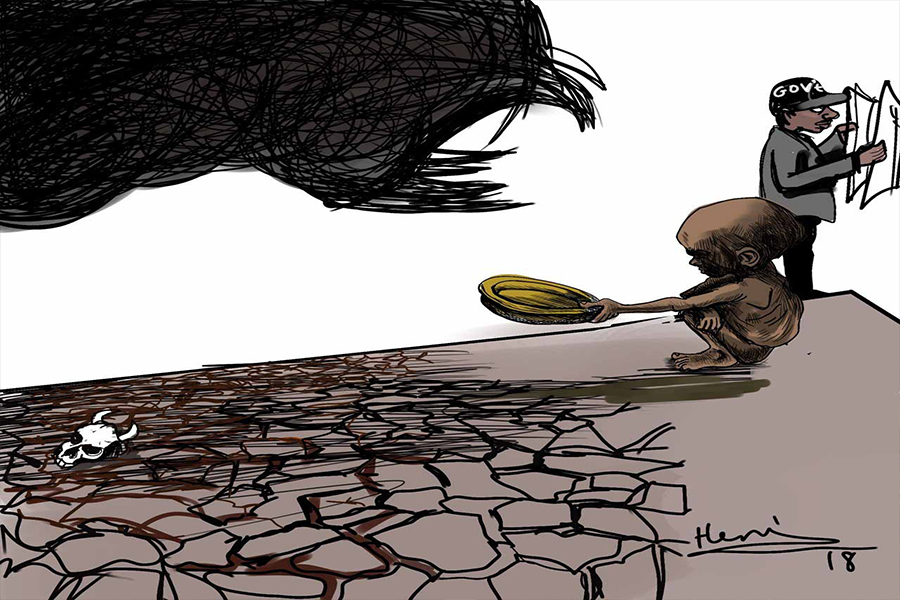
A recent national labour force survey by the Ethiopian Statistical Services (ESS) shows unemployment at eight percent. Youths between the ages of 15 and 24 face the hardest test. Their unemployment rate reaches 10pc, a sign that many young adults are struggling to enter the workforce. With unemployment rising at an alarming rate, employment policy is caught in a dilemma. The choice is either to open up and enable domestic industries to absorb a growing young workforce, or to move productive and innovative skills abroad in the name of “labour mobility” and the “creation of additional job opportunities.”
To avoid hasty generalisation, the policy paper and the broader economic record do not show that domestic job creation has been abandoned in exchange for labour mobility. The law says, “notwithstanding the Government’s commitment to creating a favourable domestic condition for promoting employment opportunities.” Yet field performance and official figures tell a different story.
A great deal of youth skills and knowledge leave the country each year. Based on reports from the Labour Ministry, more than 300,000 citizens secured legal, trained or semi-trained employment abroad in the 2023/24 fiscal year.
Domestic labour performance is strained not only by unemployment, but also by very low labour income. That reality risks pushing out other senior professionals, including physicians and researchers who completed tertiary education. The scale of the problem is visible in healthcare.
According to the WHO's Global Health Workforce Statistics, Ethiopia has one physician for every 9,979 people, one of the lowest doctor-to-population ratios in the world. Even in Kenya, at one in 6,000, or in the United Kingdom (UK), at one in every 350, the crisis becomes evident. Human Resources for Health has found that Ethiopia is losing physicians primarily to migration, ranking among the leading African countries in aggregate loss after Egypt, Nigeria, South Africa and Ghana.
The migration of medical doctors and other professionals shows that it is not only “labour mobility” that affects the country’s need for skilled human resources and the economic growth required for its ambitions. It also exposes a critical gap in creating enough jobs and in offering attractive income, even for those already employed.
These skilled professionals and youths are leaving despite heavy public investment in cultivating their skills and knowledge. That investment should have been an immediate indicator of attracting foreign direct investment, creating more wealth and opening more jobs at home, without the outward flow of talent. The more the Ministry targets training youths for migration, the less it appears to plan for creating opportunities at home.
As the saying goes, “failing to plan is planning to fail,” especially in the effort to generate new jobs domestically. With its fast-growing population and ambitious development aspirations, Ethiopia needs to plan and manage its workforce more effectively, benefiting all through job creation and higher wages.
The policy choice is plain. Policymakers can continue with curated labour mobility that benefits overseas economies, or they can expand domestic industries and create more opportunities at home to absorb growing talent and skills, thereby supporting industrial growth and economic development.
PUBLISHED ON
Mar 14,2026 [ VOL
26 , NO
1350]

Fortune News | May 29,2021

Viewpoints | Jun 07,2020

Fortune News | May 27,2026

View From Arada | Nov 01,2025

Fortune News | Jan 14,2023

Radar | Jul 29,2023
Editorial | Aug 10,2024

Radar | Feb 15,2026
My Opinion | Jun 07,2025
Viewpoints | Jun 21,2025

Photo Gallery | 193369 Views | May 06,2019

Photo Gallery | 183254 Views | Apr 26,2019

Photo Gallery | 180062 Views | Oct 06,2021

My Opinion | 145494 Views | Aug 14,2021







Dec 22 , 2024 . By TIZITA SHEWAFERAW
Charged with transforming colossal state-owned enterprises into modern and competitiv...

Aug 18 , 2024 . By AKSAH ITALO
Although predictable Yonas Zerihun's job in the ride-hailing service is not immune to...

Jul 28 , 2024 . By TIZITA SHEWAFERAW
Unhabitual, perhaps too many, Samuel Gebreyohannes, 38, used to occasionally enjoy a couple of beers at breakfast. However, he recently swit...

Jul 13 , 2024 . By AKSAH ITALO
Investors who rely on tractors, trucks, and field vehicles for commuting, transporting commodities, and f...

Aug 14 , 2026
Aschalew Fetene, known as “Ardi” and admired for his poetic depth, has built a ti...

Aug 8 , 2026
The World Bank asks readers to picture a mother in rural Ethiopia who has never held...
Jul 31 , 2026
Weldu Yiheysh has not read the Pacific temperature charts. He does not need to. In Shibta District of Enderta Wereda, in...

Jul 25 , 2026
Ideally, citizens who have paid income tax all year should not have to reach for thei...
Aug 15 , 2026 . By NAHOM AYELE
Federal prosecutors have charged seven defendants over a set of foreign-trade deals t...
Aug 15 , 2026 . By BEZAWIT HULUAGER
Ethio-post is preparing to turn its thousands of branches into banking agents, allowi...
Aug 18 , 2026 . By BEZAWIT HULUAGER
Kassahun Gofe (PhD), minister of Trade & Regional Integration (MoTRI), is prepari...

Aug 16 , 2026 . By NAHOM AYELE
Justices at the Federal Supreme Court widened the shield they are holding over lawyer...






 Loading your updates...