
Fortune News | Jul 03,2024



Mar 21 , 2026
By Shumye Getu (PhD)
On an evening in the first week of March this year, around 9:00pm, I was at a hospital being treated for the flu after three days of illness. While I waited for my laboratory test, the calm in the emergency ward suddenly gave way to chaos.
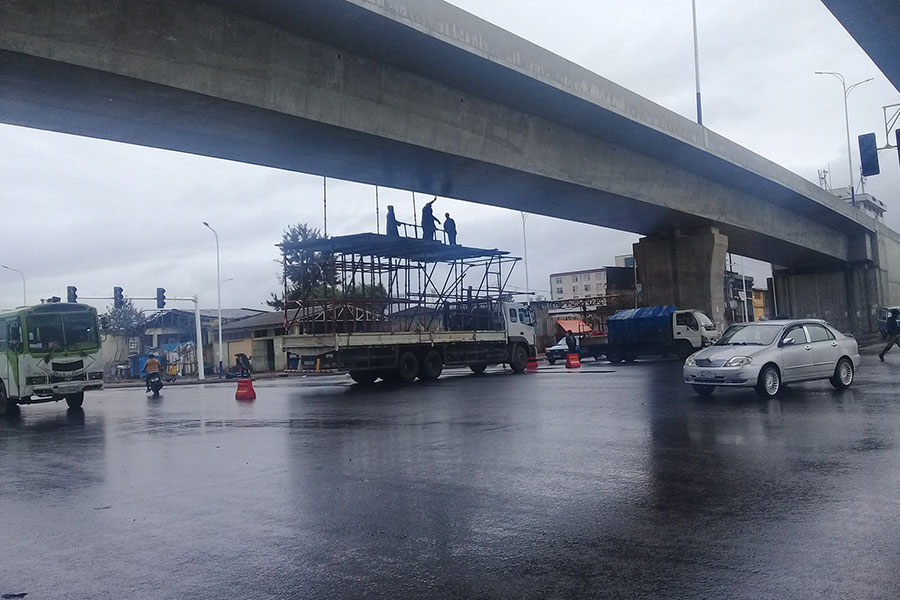
An ambulance arrived with its siren blaring. People jumped out, carrying the injured, bleeding from broken legs and hands. I counted five people injured due to a car crash where a city bus had collided with a minibus. A man who had lost his leg lay on an emergency bed, crying in distress for minutes until he was finally given anaesthesia.
As the scene unfolded, the people around me began reflecting on what had just happened. Their comments pointed to road traffic accidents, a neglected public health issue. It is a reality we live with as news of crashes often comes over the radio, ruining families and leaving children without guardians. According to the World Health Organisation (WHO), traffic fatalities and injuries are among the world’s biggest public health problems.
A man standing in front of me summed up what many seemed to feel. If drivers had the patience for a few seconds, such tragic accidents could not have happened. Many could not do that, and that is the problem. The blame often fell on the drivers, on their behaviour.
Indeed, driver behaviour remains a serious problem, and interventions are essential. Some drivers overspeed recklessly. Some fail to yield to pedestrians and cyclists. Some drive under the influence of alcohol or drugs. Others drive without proper training. The behaviour of other road users matters. But that is only part of the story.
Which factor is most responsible for a high rate of death and injury, and who should be blamed? The drivers? The law? Regulators? Traffic police? Infrastructure and roads?
National road safety policy documents primarily attribute problems to individual road users. As a result, responsibility for traffic safety is left largely to the road users themselves. Responsibility assigned to other parts of the system remains limited. Despite government efforts to curb the problem through training, licensing, fines and other interventions, traffic deaths and injuries have continued to rise.
In 2023, the WHO reported that 1.2 million people die in road crashes each year. The report disclosed that nine in 10 deaths occur in low- and middle-income countries. The global rate stands at 15 road traffic deaths for 100,000 people, while Africa has the highest fatality rate at 19 deaths for 100,000. Ethiopia loses 13 people a day in road traffic crashes.
Ethiopia's transport authorities have been trying to implement the African Union Road Safety Action Plan, which still focuses on post-crash management and other traffic safety issues. Some progress has been made in education and awareness campaigns. Yet the trend shows no decline in road traffic deaths and injuries. The plan still mirrors the traditional model, with its focus on risky driver behaviour and its call for sustained behavioural interventions.
We are quick to blame drivers. But the traditional system assumes that only road users, drivers, pedestrians and cyclists are the problem and that the rest of the system is sound. The response then centres on training, licensing and policing. To secure long-term solutions, a shift in thinking is needed, both in how problems are understood and in who is held responsible for preventing deaths and serious injuries.
Vision Zero, a global strategy that began in Sweden in 1997, offers such a shift. It is a transportation system with zero fatalities or serious injuries, taking responsibility away from solely blaming driver behaviour and toward designing a safe system that anticipates human error and puts human life above traffic speed or convenience.
Vision Zero argues that traffic safety systems should move beyond the traditional focus on driver behavior alone.
That approach overlooks a basic reality: human beings are fallible. No matter how much road users are educated, trained or policed, there will always be a chance that they make mistakes. That is why systems need proactive management.
Research shows that the traditional system invests heavily in wider and straighter roads. But from a safety standpoint, such roads can influence driver behaviour in dangerous ways. The straighter and wider a road is, the more it can nudge drivers to speed, and speed is what kills. That is why there is a need to move beyond older ways of building road infrastructure. It requires, among other things, curved roads and more roundabouts.
As Vision Zero updates the traffic safety system, it says the system should tolerate mistakes. Road safety policies in countries that have reduced traffic deaths and injuries make this point explicitly: the system should be designed on the basis of human error.
Research has found that countries using Vision Zero have been more effective in improving road safety. If Ethiopia is to halt the continuing rise in traffic deaths and injuries, it will have to shift from the traditional model to Vision Zero, which places the ultimate responsibility for traffic safety on system designers rather than individual road users. Road users are still expected to act responsibly and follow the rules. But they are fallible, and they can make mistakes.
Road system designers should build roads, vehicles and traffic systems in ways that ensure predictable human mistakes do not result in fatal or serious injury crashes.
PUBLISHED ON
Mar 21,2026 [ VOL
26 , NO
1351]

Fortune News | Jul 03,2024

Radar | Nov 27,2023
Fortune News | Aug 12,2023

Sunday with Eden | Jun 27,2026
News Analysis | Apr 05,2026
Radar | Jun 22,2024
Radar | Aug 13,2022
Radar | May 09,2026

Radar | Jan 31,2026

Election 2026 coverage | May 17,2026

Photo Gallery | 193369 Views | May 06,2019

Photo Gallery | 183254 Views | Apr 26,2019

Photo Gallery | 180062 Views | Oct 06,2021

My Opinion | 145494 Views | Aug 14,2021







Dec 22 , 2024 . By TIZITA SHEWAFERAW
Charged with transforming colossal state-owned enterprises into modern and competitiv...

Aug 18 , 2024 . By AKSAH ITALO
Although predictable Yonas Zerihun's job in the ride-hailing service is not immune to...

Jul 28 , 2024 . By TIZITA SHEWAFERAW
Unhabitual, perhaps too many, Samuel Gebreyohannes, 38, used to occasionally enjoy a couple of beers at breakfast. However, he recently swit...

Jul 13 , 2024 . By AKSAH ITALO
Investors who rely on tractors, trucks, and field vehicles for commuting, transporting commodities, and f...

Aug 14 , 2026
Aschalew Fetene, known as “Ardi” and admired for his poetic depth, has built a ti...

Aug 8 , 2026
The World Bank asks readers to picture a mother in rural Ethiopia who has never held...

Jul 31 , 2026
Weldu Yiheysh has not read the Pacific temperature charts. He does not need to. In Shibta District of Enderta Wereda, in...

Jul 25 , 2026
Ideally, citizens who have paid income tax all year should not have to reach for thei...
Aug 15 , 2026 . By NAHOM AYELE
Federal prosecutors have charged seven defendants over a set of foreign-trade deals t...
Aug 15 , 2026 . By BEZAWIT HULUAGER
Ethio-post is preparing to turn its thousands of branches into banking agents, allowi...
Aug 18 , 2026 . By BEZAWIT HULUAGER
Kassahun Gofe (PhD), minister of Trade & Regional Integration (MoTRI), is prepari...

Aug 16 , 2026 . By NAHOM AYELE
Justices at the Federal Supreme Court widened the shield they are holding over lawyer...




 Loading your updates...