
Viewpoints | Jun 18,2022



Jan 3 , 2026
By Temwa Gondwe
Were he still alive, Frantz Fanon, the revolutionary Pan-African thinker and son of Martinique, would have celebrated his centenary this July. Hence, the poignant symbolism that many of us felt when we gathered this September in Algiers, the land where Fanon joined the struggle for liberation, to mark Global Africa Diaspora Day at the Intra-African Trade Fair 2025 (IATF2025).
As a young man, Fanon left the Caribbean to stand shoulder to shoulder with Africans in the fight against colonial domination. His core message was that Africans must stick together, regardless of where they may be now, and irrespective of their personal beliefs, colour, gender, or political persuasion. It is a message that remains as urgent today as it was in the 1950s. After all, people of African descent continue to face marginalisation, suspicion, and systemic inequities in countries around the world.
Despite our significant numbers and immense contributions to civilisation, we remain divided and too often defined by narratives not of our own making. Fanon’s life reminds us that unity is possible where there is a will.
Today, the challenge before us is not only political or cultural. It is economic. To address it, we must transform the global African community, both on the continent and throughout the diaspora. We have to tap into our shared ancestry, identity, and destiny to become a cohesive, self-reliant world-spanning economic powerhouse.
This is the essence of “Global Africa”, a modern variant of Pan-Africanism rooted not only in shared identity, but also in markets, capital, and ownership. Africans everywhere need to be empowered to control the value chains and institutions that shape our destiny, and this is best done by building resilient cross-regional ties. Ours is a story of untapped potential.
Global Africa comprises approximately two billion people, with a combined GDP (in purchasing power parity terms) of around 12 trillion dollars, making it one of the world’s largest untapped economic blocs. If we could become an integrated economy, we could unlock unparalleled opportunities for internal trade, investment, and shared prosperity.
Yet for too long, this potential has remained latent. Our fragmentation, nurtured by centuries of colonial divide-and-rule strategies, has kept us from leveraging our collective strength. If we could only muster that strength now, we could achieve economic sovereignty, inaugurating a new era of Pan-Africanism.
Consider the world of sport. People of African descent dominate sprinting, football, endurance running, and other athletic competitions. Yet the economic rewards for this excellence often accrue to others. Our communities provide the sweat, while others reap the profit. And the same pattern is repeated across industries, from commodities and manufacturing to music and film. The challenge is not a lack of talent or creativity. It is the absence of control over markets and distribution.
If Global Africa is to move from rhetoric to reality, we should institutionalise it. To that end, a recently proposed Global Africa Commission would seek to establish the governance, networks, and financial instruments that will give coherence and longevity to our shared economic vision, while amplifying our common voice and influence globally. It would also help formalise efforts to advance a shared trade, cultural, educational, and creative agenda.
In addition to leaning on our economic ties, we should also harness Africans’ soft power. A proposed Global Africa Athletics Championship series, as well as an expanded Unity Cup that celebrates Afro-Caribbean ties, are more than sporting events. They are strategic levers for economic integration, vehicles for promoting new industries, branding, and commercial opportunities that will return value to our athletes and communities.
Crucially, each will strengthen ties and create more opportunities for African youth.
The message from Algiers' trade fair was unambiguous. The era of fragmentation should end. The future of Global Africa depends on our determination to produce within our communities, trade among ourselves, and take pride in consuming what we produce. Only we can shape a solid and secure future rooted in unity, sovereignty, and a shared recognition of our global cosmopolitan identity. To succeed, we have to mobilise investment, leverage remittance-based financing, promote skills and knowledge exchanges, support the development of cultural industries, and accelerate cross-border integration.
The IATF is a testament to this vision, a space where Africa and its diaspora can connect, transact, and build shared wealth. The biennial fair, Africa’s premier trade and investment event, continues to play a critical role in enhancing access to information on trade and investment opportunities across Global Africa. We need to capitalise on the benefits of wholly owned and interconnected African value chains.
The foundation has been laid, and the next step is to continue building. It is up to us to harness our economic potential, and to make Global Africa not only a dream conceived by our forebears, but a reality for generations to come.
PUBLISHED ON
Jan 03,2026 [ VOL
26 , NO
1340]
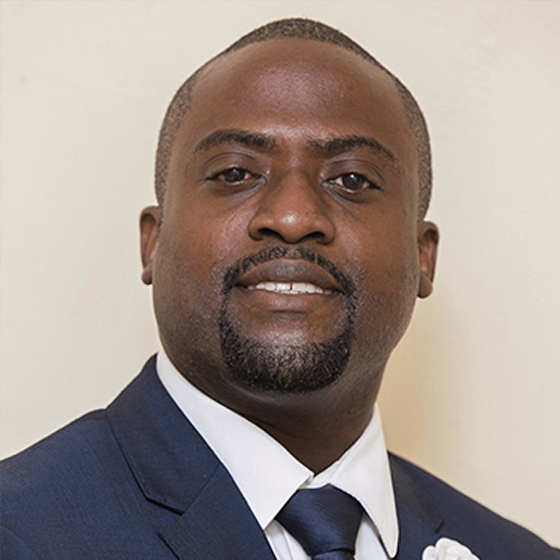
Temwa Gondwe is director of Creatives & Diaspora at the African Export-Import Bank (Afreximbank). This article is provided by Project Syndicate (PS).
Viewpoints | Jun 18,2022
Radar | Oct 26,2025
Radar | Jun 01,2024

Featured | Apr 05,2026
Viewpoints | Sep 06,2025

Commentaries | Nov 06,2021
Viewpoints | Jan 31,2026
Commentaries | Jul 31,2026
Commentaries | Mar 21,2020
Commentaries | Jan 10,2026

Photo Gallery | 193503 Views | May 06,2019

Photo Gallery | 183397 Views | Apr 26,2019

Photo Gallery | 180211 Views | Oct 06,2021

My Opinion | 145638 Views | Aug 14,2021






Dec 22 , 2024 . By TIZITA SHEWAFERAW
Charged with transforming colossal state-owned enterprises into modern and competitiv...

Aug 18 , 2024 . By AKSAH ITALO
Although predictable Yonas Zerihun's job in the ride-hailing service is not immune to...

Jul 28 , 2024 . By TIZITA SHEWAFERAW
Unhabitual, perhaps too many, Samuel Gebreyohannes, 38, used to occasionally enjoy a couple of beers at breakfast. However, he recently swit...

Jul 13 , 2024 . By AKSAH ITALO
Investors who rely on tractors, trucks, and field vehicles for commuting, transporting commodities, and f...

Aug 14 , 2026
Aschalew Fetene, known as “Ardi” and admired for his poetic depth, has built a ti...

Aug 8 , 2026
The World Bank asks readers to picture a mother in rural Ethiopia who has never held...

Jul 31 , 2026
Weldu Yiheysh has not read the Pacific temperature charts. He does not need to. In Shibta District of Enderta Wereda, in...

Jul 25 , 2026
Ideally, citizens who have paid income tax all year should not have to reach for thei...
Aug 15 , 2026 . By NAHOM AYELE
Federal prosecutors have charged seven defendants over a set of foreign-trade deals t...
Aug 15 , 2026 . By BEZAWIT HULUAGER
Ethio-post is preparing to turn its thousands of branches into banking agents, allowi...
Aug 18 , 2026 . By BEZAWIT HULUAGER
Kassahun Gofe (PhD), minister of Trade & Regional Integration (MoTRI), is prepari...
Aug 16 , 2026 . By NAHOM AYELE
Justices at the Federal Supreme Court widened the shield they are holding over lawyer...





 Loading your updates...