
Commentaries | Jul 18,2020



Nov 2 , 2024
By Hailemariam Desalegn
Our long-term prosperity and the well-being of future generations are in jeopardy, as biodiversity loss and the collapse of critical ecosystems threaten our environment and raise risks for the economy, public health, national security, and global stability. At the 2024 United Nations Biodiversity Conference, held in Cali, Colombia, leaders should meet this crisis with the level of political commitment and funding it warrants.
Biodiversity is often understood in terms of the variety of life on Earth – the number of species of plants, animals, and microorganisms. Its significance cannot be overstated. Biodiversity underpins the ecosystem services that sustain human life, such as water purification, flood control, and climate regulation. The rapid decline of species and ecosystems – one million plant and animal species are on the brink of extinction - thus amounts to an existential threat.
If left unaddressed, biodiversity loss will accelerate climate change and amplify its consequences, contributing to more natural disasters and market shocks. It will also leave our agricultural systems increasingly vulnerable to hazards — from pests and pathogens to extreme weather — and deplete the ocean of critical fish stocks. This will affect both the price and availability of food, causing scarcity in the Global South and compounding insecurity in already fragile societies.
These trends will leave a growing number of people with little choice but to flee their homes in search of better living conditions. According to the Institute for Economics & Peace, natural disasters and other ecological threats could displace as many as 1.2 billion people by 2050. These “environmental refugees” could destabilise destination countries, strain international relations, and challenge security frameworks. As the planet’s total habitable area shrinks, and competition for resources grows, conflict will become all but inevitable.
Biodiversity loss also threatens public health, which is inextricably linked to the ecosystems surrounding us. Many diseases, including emerging infectious diseases such as mpox, can be tied directly to changes in biodiversity. As habitat destruction forces wildlife closer to human populations, the risk of zoonotic diseases like COVID-19 rises.
It is estimated that tackling the biodiversity crisis will require an additional 700 billion dollars annually by 2030. Fortunately, at the 2022 UN Biodiversity Conference (COP15), world leaders agreed to close this gap by phasing out or repurposing harmful subsidies worth half a trillion dollars and raising the remaining 200 billion dollars. Financing from developed economies to their developing counterparts is supposed to reach at least 20 billion dollars yearly by next year and at least 30 billion dollars a year by 2030.
That might seem like a lot, but it is peanuts compared to the cost of inaction. According to projections by the Environmental Change Institute at the University of Oxford, the shocks to the global economy caused by biodiversity loss and ecosystem damage could cost as much as five trillion dollars over five years. The world’s biodiversity-financing needs are also dwarfed by its current defence spending, which totalled 2.24 trillion dollars in 2022. Since investing in nature amounts to one of the most cost-effective long-term defence strategies, it should be embraced by the world’s foremost defence spenders, beginning with the United States.
As with any good security strategy, finance must be paired with international cooperation. The consequences of biodiversity loss know no borders. Countries should cooperate to protect critical habitats, enforce environmental regulations, and promote sustainable development practices.
As such, multilateral groups, such as the High Ambition Coalition for Natural & People, could continue to take the lead in forging international agreements and action plans that establish biodiversity conservation as a cornerstone of global security. Policymakers should continue to focus on working to meet the biodiversity framework’s "30x30" target, by encouraging and facilitating government action to protect 30pc of the planet’s land and ocean by 2030. Members from the Global North should increase financial support for countries in the Global South to implement necessary designations, specifically by meeting their commitment to deliver at least 20 billion dollars of nature finance annually by 2025.
Finally, we should engage and inform the public. Education and awareness campaigns explaining the importance of protecting biodiversity can empower individuals and communities to advocate for policies that protect our natural resources, helping generate the necessary political will. If an enemy state threatened the economy, public health, national security, and global stability, we would throw everything we had at it to defend ourselves. The biodiversity crisis is no different.
To prevent such a future, all countries should recognise biodiversity loss as a security issue. This means integrating biodiversity considerations into defence and foreign policymaking. It also means financing the response, including investments in practices that protect ecosystems and ambitious measures to address the root causes of biodiversity loss, such as habitat destruction and climate change, as robustly as they would for any other security crisis.
PUBLISHED ON
Nov 02,2024 [ VOL
25 , NO
1279]

Commentaries | Jul 18,2020

Viewpoints | Nov 16,2024
Election 2026 coverage | Mar 28,2026
Commentaries | Sep 14,2024
Viewpoints | Jan 04,2020

Editorial | Dec 13,2025

Fortune News | Jun 10,2021

Commentaries | Sep 06,2020

Radar | Jun 15,2025

Commentaries | Nov 08,2025

Photo Gallery | 193419 Views | May 06,2019

Photo Gallery | 183313 Views | Apr 26,2019

Photo Gallery | 180124 Views | Oct 06,2021

My Opinion | 145544 Views | Aug 14,2021









Dec 22 , 2024 . By TIZITA SHEWAFERAW
Charged with transforming colossal state-owned enterprises into modern and competitiv...

Aug 18 , 2024 . By AKSAH ITALO
Although predictable Yonas Zerihun's job in the ride-hailing service is not immune to...

Jul 28 , 2024 . By TIZITA SHEWAFERAW
Unhabitual, perhaps too many, Samuel Gebreyohannes, 38, used to occasionally enjoy a couple of beers at breakfast. However, he recently swit...

Jul 13 , 2024 . By AKSAH ITALO
Investors who rely on tractors, trucks, and field vehicles for commuting, transporting commodities, and f...

Aug 14 , 2026
Aschalew Fetene, known as “Ardi” and admired for his poetic depth, has built a ti...

Aug 8 , 2026
The World Bank asks readers to picture a mother in rural Ethiopia who has never held...

Jul 31 , 2026
Weldu Yiheysh has not read the Pacific temperature charts. He does not need to. In Shibta District of Enderta Wereda, in...

Jul 25 , 2026
Ideally, citizens who have paid income tax all year should not have to reach for thei...
Aug 15 , 2026 . By NAHOM AYELE
Federal prosecutors have charged seven defendants over a set of foreign-trade deals t...
Aug 15 , 2026 . By BEZAWIT HULUAGER
Ethio-post is preparing to turn its thousands of branches into banking agents, allowi...
Aug 18 , 2026 . By BEZAWIT HULUAGER
Kassahun Gofe (PhD), minister of Trade & Regional Integration (MoTRI), is prepari...
Aug 16 , 2026 . By NAHOM AYELE
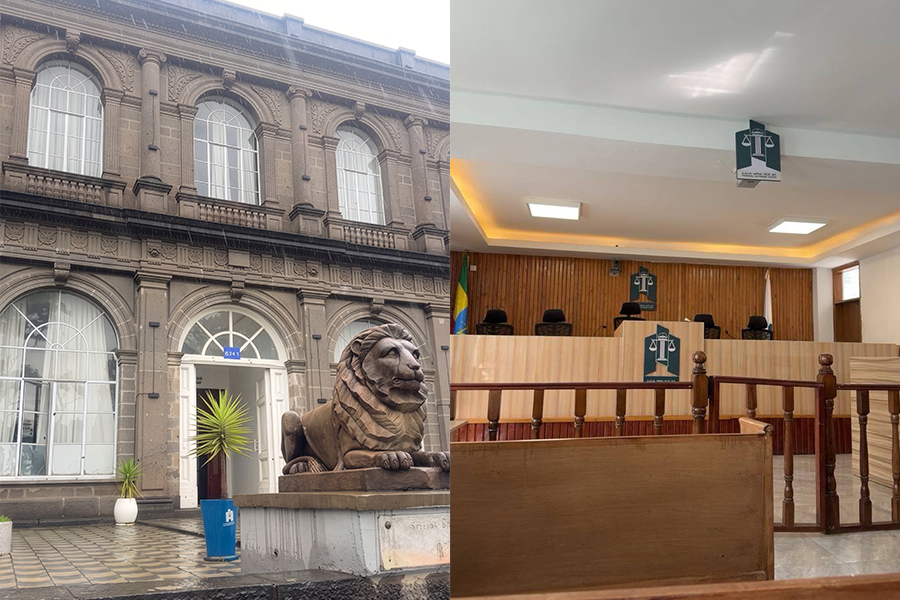
Justices at the Federal Supreme Court widened the shield they are holding over lawyer...






 Loading your updates...