


Apr 25 , 2026
By Xolisa Ngwadla , Paul Thompson
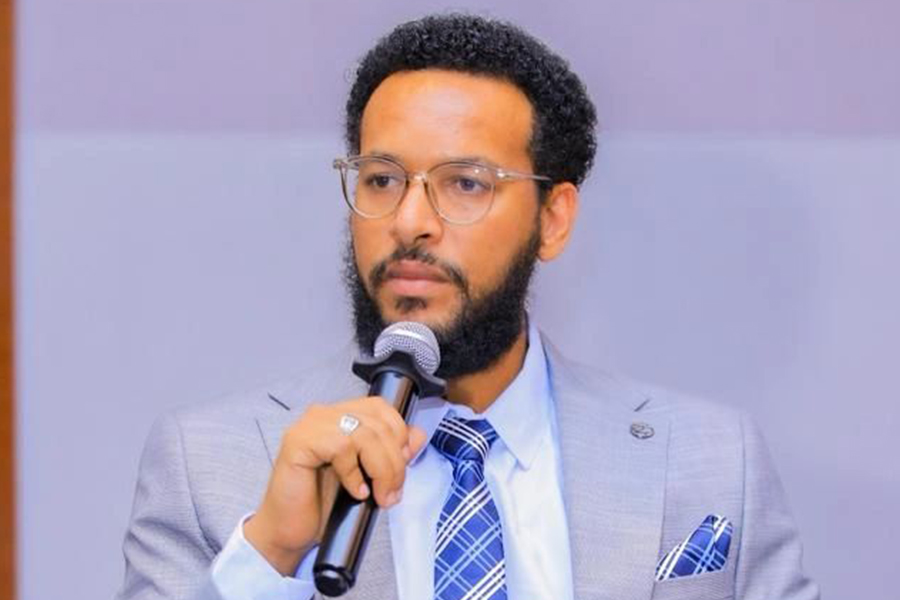
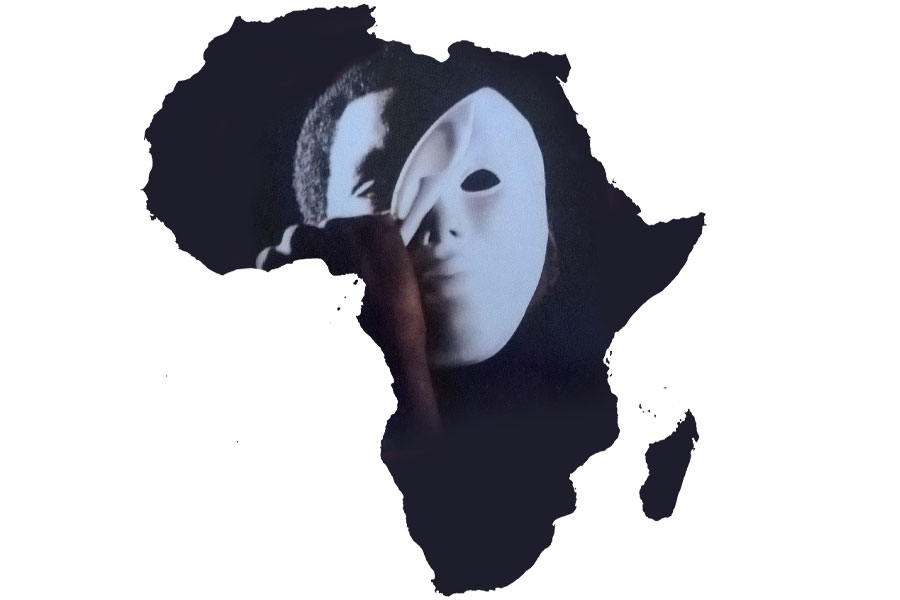
Africa possesses the extraordinary endowments required for a green transition, including massive renewable energy potential and the world's largest reserves of critical minerals. The scramble for these minerals positions Africa at the core of a reconstituted global economy, one no longer driven solely by demand for fossil fuels. In this commentary provided by Project Syndicate (PS), Xolisa Ngwadla, a senior climate policy expert and lead negotiator for the African Group of Negotiators, and Paul Thompson, a lecturer at Nelson Mandela University, argue that the shift allows for the development of the "African Single Electricity Market" and regional industrial platforms.
The shift from fossil fuels to low-carbon, climate-resilient economies, intertwined with the digital transformation, is not merely an environmental imperative but the organising principle of the next world order. It will inevitably produce winners and losers, and history offers no guarantee that justice will determine which is which.
At the centre of this upheaval lies the global energy transition.
Fortunately, Africa is not without power or agency. Two recent African climate summits, in Nairobi in 2023 and Addis Abeba in 2025, signalled that the continent intends to position itself as a notable contributor to global solutions, not a perpetual supplicant or the epitome of a continent mired in dependent development. This framing may matter, but framing without strategy is mere rhetoric.
The question now is whether Africa, notwithstanding its intent and positioning, can turn its moral high ground and its extraordinary endowments, such as massive renewable-energy potential, large reserves of critical minerals, and a young, growing labour force, into durable geopolitical and economic leverage.
The African Union's (AU) 2023 induction into the G20 as a permanent member offers the continent a strategic opening that it still needs to capitalise on. The G20 has proven its capacity to shape the multilateral agenda. Language from its communiqués calling for a tripling of renewables commitments, a phase-down of fossil-fuel subsidies, and reforms to the financial architecture has consistently migrated to the United Nations Framework Convention on Climate Change (UNFCCC) process.
By its very nature, the G20 represents the centre of the global economy, not the periphery.
But lest we forget, the 2002 Johannesburg Declaration on Sustainable Development went further in embedding African priorities into the global policy agenda. Among its most important elements were commitments to electrify the continent (now enshrined in Mission 300, which seeks to connect 300 million people to electricity by 2030), to promote clean cooking, and critically, to address illicit financial flows. Over two decades later, illicit flows, driven largely by extractive industries, drain an estimated 88 billion dollars annually from African economies, a problem that will only intensify as the world scrambles for the minerals that underpin the green transition.
This scramble is positioning Africa at the core of a reconstituted global economy, one that is not driven solely by demand for fossil fuels and a shifting governance architecture that supplants the colonial-type matrices of asymmetrical power relations. Thus, for the first time in the continent's post-colonial history, it can leverage strategic leadership and the weight of a broader historical transformation to exert control over its own resources and developmental priorities.
Seizing this opportunity calls for a two-pronged strategy. Africa should use multilateralism as a shield, insisting on rules, norms, and principles of equity and common but differentiated responsibilities to protect smaller powers in an anarchic world. At the same time, Africa should use minilateral engagements as a sword, advancing concrete development goals where the rules are still being written.
Within the G20 context, the African Union Commission should pursue integrative opportunities for regional and sub-regional economic development. For example, greater investment is needed to link regional industrialisation in the ARISE Integrated Industrial Platforms and regional transport corridors with the energy-minerals nexus of Africa's Green Minerals Strategy, the Continental Power System Masterplan, and the African Single Electricity Market.
The G20, and potentially the BRICS+ groupings, offer the type of platform Africa needs at this point in the continent's socio-economic development trajectory. An African Union presence in BRICS+, even as an observer, would diversify the continent's global engagement and open channels for infrastructure and climate finance that do not run exclusively through Western-dominated institutions. A technical team drawing on the African Continental Free Trade Area (AfCFTA) Secretariat, Afreximbank, the African Development Bank (AfDB), the African Group of Negotiators, and the UN Economic Commission for Africa (UNECA) would give such engagement real substance.
The moral dimension of this strategy should not be underestimated. The G20 has been conspicuously reluctant to engage seriously on climate adaptation and loss and damage (compensation for irreversible climate-driven harms), because doing so would implicate its members in questions of historical responsibility that they prefer to avoid. For that reason, the G20 is precisely where African political capital should be concentrated. By holding the moral high ground on climate justice, Africa gains leverage not only in the UNFCCC process but also in broader discussions over priorities for 21st-century global development.
Strategic opportunity is not destiny. But the confluence of a fracturing world order, the energy transition, and Africa's demographic and resource endowments creates conditions that have not existed before. The continent's leaders, its negotiators, and its institutions have the tools to usher in a new paradigm. But they should use them strategically and in concert. The move from gladius to spatha said a lot about the evolving nature of power in Roman times. The situation today is no different.
The choice of instrument, and who wields it, will define the coming era.
PUBLISHED ON
Apr 25,2026 [ VOL
27 , NO
1356]
Commentaries | May 09,2026

Radar | Jul 06,2019

Viewpoints | Oct 18,2025

My Opinion | Aug 26,2023
Viewpoints | Sep 10,2023

Viewpoints | Jul 26,2025
Commentaries | Nov 15,2025
Viewpoints | Jun 22,2019
View From Arada | Oct 11,2025
Commentaries | May 21,2022

Photo Gallery | 192832 Views | May 06,2019

Photo Gallery | 182735 Views | Apr 26,2019

Photo Gallery | 179495 Views | Oct 06,2021
My Opinion | 144980 Views | Aug 14,2021









Dec 22 , 2024 . By TIZITA SHEWAFERAW
Charged with transforming colossal state-owned enterprises into modern and competitiv...

Aug 18 , 2024 . By AKSAH ITALO
Although predictable Yonas Zerihun's job in the ride-hailing service is not immune to...

Jul 28 , 2024 . By TIZITA SHEWAFERAW
Unhabitual, perhaps too many, Samuel Gebreyohannes, 38, used to occasionally enjoy a couple of beers at breakfast. However, he recently swit...

Jul 13 , 2024 . By AKSAH ITALO
Investors who rely on tractors, trucks, and field vehicles for commuting, transporting commodities, and f...

Aug 8 , 2026
The World Bank asks readers to picture a mother in rural Ethiopia who has never held...

Jul 31 , 2026
Weldu Yiheysh has not read the Pacific temperature charts. He does not need to. In Shibta District of Enderta Wereda, in...

Jul 25 , 2026
Ideally, citizens who have paid income tax all year should not have to reach for thei...
Jul 18 , 2026
Pressed in Parliament on jobs and household incomes, Prime Minister Abiy Ahmed (PhD)...
Aug 9 , 2026 . By NAHOM AYELE
Anbesa Bank has elected an entirely new board of directors, nine months after the Boa...
Aug 9 , 2026 . By NAHOM AYELE
Ethiopia Hotel, one of the country's oldest hospitality establishments and a landmark...
Aug 9 , 2026 . By FITSUM TADESSE
The excise-tax reform on alcohol and tobacco has done much of what it was made to do...
Aug 9 , 2026 . By BEZAWIT HULUAGER and ABDUREUF JUHAR
Three inter-city transport companies have spent 450 million Br on new vehicles to mee...








 Loading your updates...