

Radar | May 10,2026



Aug 3 , 2025
By Mikiyas Mulugeta (PhD)
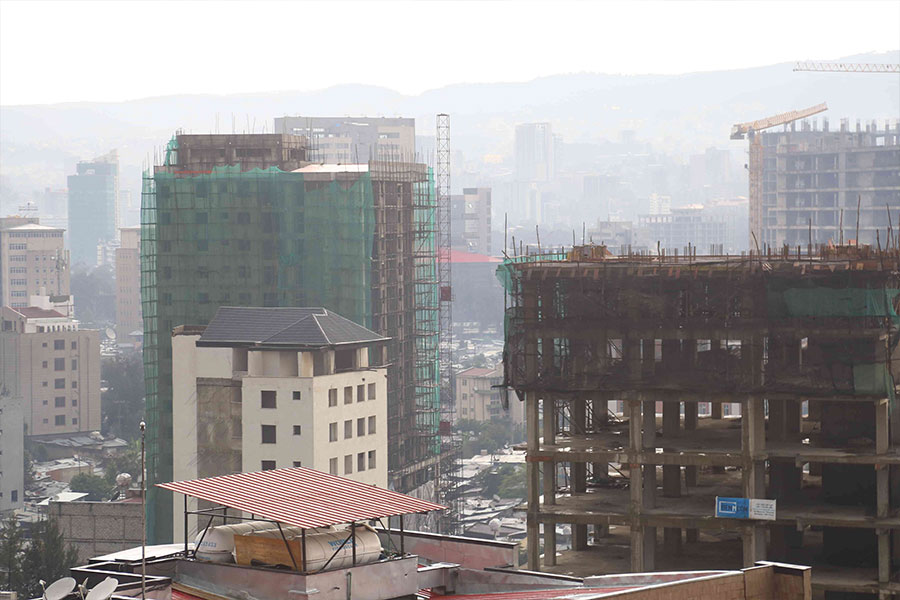
In 2021, the National Bank of Ethiopia (NBE) doubled the minimum capital requirement for commercial banks to five billion Birr and gave them five years to comply. The countdown will end in June 2026.
Regulators say this policy decision will create stronger financial institutions. Their warning is clear that banks that fall short face forced mergers.
On paper, the logic appears sound. Larger balance sheets and higher capital cushions can support a more stable economy. But in practice, mergers are rarely simple. They require the integration of corporate cultures, governance models, IT systems, and shareholder interests. And they raise difficult questions.
Who sets the valuation? What happens to smaller shareholders? What of employees and branches?
With no clear answers, anxiety spreads from teller lines to trading desks.
For the new generation banks, once symbols of inclusive finance, the mood has shifted. Boardroom chatter has turned from growth targets to survival strategies. Again, the question looms large.
Can they meet the capital requirement in time? Or be absorbed in mergers and acquisitions (M&A)?
The risk is real. Many of these lenders are less than a decade old. They were created to extend credit to underserved areas, backed by regional investors, cooperatives, and the diaspora. They are still earning trust, building their deposit base, and opening branches in places long neglected by the industry’s older and more established players.
If these banks are absorbed hastily, the system may become larger, but it may not necessarily become better. It may, in fact, become narrower.
Capital matters, but it should not be mistaken for a shortcut to resilience.
There is precedent for caution. In other countries that abruptly raised capital thresholds, the result was fewer banks, but not stronger ones. Governance challenges lingered. Integration proved difficult. Operational weaknesses emerged long after the mergers were completed.
Capital matters, but it should not be mistaken for a shortcut to resilience.
Nor do all banks start from the same place. A few are already close to the five billion Birr mark. Others are stable on a day-to-day basis but require new capital. Some are posting losses. Treating them all the same may tick regulatory boxes, but could leave the resulting institutions hollowed out.
The sector's diversity adds to the risk. Some banks are deeply rooted in local communities, and their customers and staff share a regional identity. That kind of trust does not transfer easily. Merging banks with different cultures and clientele could unsettle employees and savers, the very foundation of the banking industry.
Officials argue that high capital buffers are wise in an economy vulnerable to shocks. The goal is broadly accepted. However, bankers argue that the process lacks clarity.
A credible roadmap should outline how mergers will be selected, how valuations will be determined, and how shareholder disputes will be addressed. Technical assistance is needed to integrate IT systems and branch networks smoothly. Early reassurances should be provided to depositors, employees, and the broader community.
The timing complicates matters further. Ethiopia is opening its financial sector to foreign capital. Larger local banks may be better prepared to compete, but pushing smaller ones into rushed mergers when global brands arrive could make the reform look like a fire sale.
Ethiopians may wonder whether the policy protects local finance, or clears the field for outsiders. The answer lies in how regulators handle the transition.
Reformers argue that action is needed for the sake of stability. But the health of the banking industry will also be judged by how much diversity and public trust it preserves. If June 2026 arrives without a clear plan, the country could be left with fewer and larger banks. They will be better capitalised on paper, but more distant from the rural clients and small businesses, once promised better access to credit.
The choice is clear. Turn consolidation into a careful transition, and the sector may grow stronger. Use a heavy hand, and the effort could do more harm than good. Shrinking for strength is a delicate task. Done right, banks could emerge leaner and fitter. Done wrong, the cure may be worse than the disease.
The choice to enforce a high capital threshold mirrors a global norm, tailored to a vulnerable economy. The goal may be sound. But it is the execution that will determine the outcome. Banks will need help aligning operations without service disruptions, and shareholder conflicts should be resolved early and decisively.
PUBLISHED ON
Aug 03,2025 [ VOL
26 , NO
1318]
Radar | May 10,2026
Fortune News | Dec 21,2022
Fortune News | Feb 18,2023

Fortune News | Mar 16,2024
Radar | Oct 22,2022
Featured | Nov 23,2019
Money Market Watch | Jun 15,2025
Viewpoints | Oct 14,2023
Radar | Sep 10,2023
Fortune News | Oct 16,2021

Photo Gallery | 193591 Views | May 06,2019

Photo Gallery | 183491 Views | Apr 26,2019

Photo Gallery | 180316 Views | Oct 06,2021

My Opinion | 145740 Views | Aug 14,2021






Dec 22 , 2024 . By TIZITA SHEWAFERAW
Charged with transforming colossal state-owned enterprises into modern and competitiv...
Aug 18 , 2024 . By AKSAH ITALO
Although predictable Yonas Zerihun's job in the ride-hailing service is not immune to...

Jul 28 , 2024 . By TIZITA SHEWAFERAW
Unhabitual, perhaps too many, Samuel Gebreyohannes, 38, used to occasionally enjoy a couple of beers at breakfast. However, he recently swit...
Jul 13 , 2024 . By AKSAH ITALO
Investors who rely on tractors, trucks, and field vehicles for commuting, transporting commodities, and f...
Aug 22 , 2026
A record is a strange thing to worry about. Federal trade officials have booked the b...

Aug 14 , 2026
Aschalew Fetene, known as “Ardi” and admired for his poetic depth, has built a ti...

Aug 8 , 2026
The World Bank asks readers to picture a mother in rural Ethiopia who has never held...

Jul 31 , 2026
Weldu Yiheysh has not read the Pacific temperature charts. He does not need to. In Shibta District of Enderta Wereda, in...
Aug 22 , 2026 . By BEZAWIT HULUAGER
The forthcoming strategy for interest-free finance will place Sharia-compliant financ...
Aug 22 , 2026 . By NAHOM AYELE
Wegagen Capital Investment Bank (WCIB) has completed its first full year in profit an...
Judges at the Federal High Court, sitting on a limited basis to hear only urgent matt...
Aug 22 , 2026 . By BEZAWIT HULUAGER
Federal authorities are about to find out whether they can make a single payment wind...






 Loading your updates...