
Viewpoints | Oct 12,2024



Jun 15 , 2019
By Eyobed Tibebu Lisanework
Accountability is a key requirement of good governance. Not only governmental institutions but also the private sector and civil society organisations must be accountable to the public, argues Eyobed Tibebu Lisanework, who holds BA and LLB degrees. He works as a freelance trainer and advisor in insurance and management.
The terms “governance” and “good governance” are being increasingly used in literature and over the media. Bad governance is regarded as one of the root causes of all evil within societies.
In fact, the root causes of all evils are jealousy, hatred, greed and other negative emotions. People should avoid them totally and keep their expectations to minimum, to lead a happy and stress-free life.
Apparently, major donors and international financial institutions, perhaps except China, are increasingly basing their aid and loan grants on the condition that reforms that ensure “good governance” are undertaken.
Good governance has eight major characteristics. It is, participatory; consensus oriented; accountable; transparent; responsive; effective and efficient; equitable and inclusive; and follows the rule of law.
It assures that corruption is minimized if not totally eradicated. The views of minorities are taken into account, and the voices of the most vulnerable in society are heard in decision-making. It is also responsive to the present and future needs of society following the avenue toward sustainable development.
Thus, in government leadership roles, accountability is the acknowledgment and assumption of responsibility for actions such as products, decisions, and policies. This includes administration, governance and implementation within the scope of the role of the position. It encompasses the obligation to report, explain and be answerable for resulting consequences.
Accountability of government is stipulated in the 1994 Ethiopian Constitution. Transparency, sanction and recall are the three basic and important purposes underscored in the Constitution.
The advantage of transparency is that it creates harmonized relationships between the government and the people governed. Transparency means that decisions are taken and their enforcement done in a manner that follows rules and regulations.
It also means that information is freely available and directly accessible to those who are affected by such decisions and their enforcement. It requires that enough information be provided in easily understandable forms and media.
This goes a long way in creating a harmonious society. If there is a harmonious relationship between the government and the people, it means that trust and confidence is created to work, live and let live. If the government and the people governed are hands and gloves, they work together concertedly with minimum antagonistic motives and the country will develop socially, culturally and economically.
Sanctioning illegal behavior is a responsibility the Constitution puts on the shoulders of government. Unacceptable execution of responsibility and authority due to deliberate flouting of policies, rules and regulations should not be tolerated. Corruption or exceeding the limits of decision-making authority should alert the government to take its sanctioning responsibility seriously. Government officials have to discharge their responsibilities and exercise their authority in a manner acceptable to all citizens.
Recall by the people when they lose confidence over their elected representatives is a safety valve; so that elected persons would not hang around until their term of mandate is expired. This will again alert the elected persons that at any time when confidence is lost over them the people can impeach them by exercising their sovereign power.
While accountability has many such advantages, I would argue that it has no disadvantages whatsoever. Accountability is a key requirement of good governance. Not only governmental institutions but also the private sector and civil society organizations must be accountable to the public and to their institutional stakeholders. Who is accountable to whom varies depending on whether decisions or actions taken are internal or external to an organization or institution. In general, an organization or an institution is accountable to those who will be affected by its decisions or actions. Accountability cannot be enforced without transparency and the rule of law.
From the above point of view, it should be clear that good governance is an ideal which is difficult to achieve in its totality. Very few countries and societies have come close to achieving good governance in its totality.
Most of the ingredients of good governance which work in concert are especially difficult to implement in developing countries. Mainly African countries have struggled to implement accountability according to the letter of the law and the aspirations of citizens.
Concepts of democracy, such as transparency, accountability and rule of law should not be merely constitutional theories. Rather, to ensure sustainable human development, actions must be taken to work toward these ideals with the aim of making them a reality. It should not, however, be overlooked that good government requires good people.
PUBLISHED ON
Jun 15,2019 [ VOL
20 , NO
998]

Viewpoints | Oct 12,2024

Sunday with Eden | Oct 26,2019

My Opinion | Feb 11,2023
Commentaries | Nov 07,2020
Fineline | Mar 09,2019

Viewpoints | Aug 30,2025
Viewpoints | Sep 27,2025
Viewpoints | May 06,2023

View From Arada | May 21,2022
Commentaries | Apr 20,2019

Photo Gallery | 191805 Views | May 06,2019

Photo Gallery | 181566 Views | Apr 26,2019

Photo Gallery | 178280 Views | Oct 06,2021
My Opinion | 143825 Views | Aug 14,2021





Dec 22 , 2024 . By TIZITA SHEWAFERAW
Charged with transforming colossal state-owned enterprises into modern and competitiv...

Aug 18 , 2024 . By AKSAH ITALO
Although predictable Yonas Zerihun's job in the ride-hailing service is not immune to...

Jul 28 , 2024 . By TIZITA SHEWAFERAW
Unhabitual, perhaps too many, Samuel Gebreyohannes, 38, used to occasionally enjoy a couple of beers at breakfast. However, he recently swit...

Jul 13 , 2024 . By AKSAH ITALO
Investors who rely on tractors, trucks, and field vehicles for commuting, transporting commodities, and f...
Jul 18 , 2026
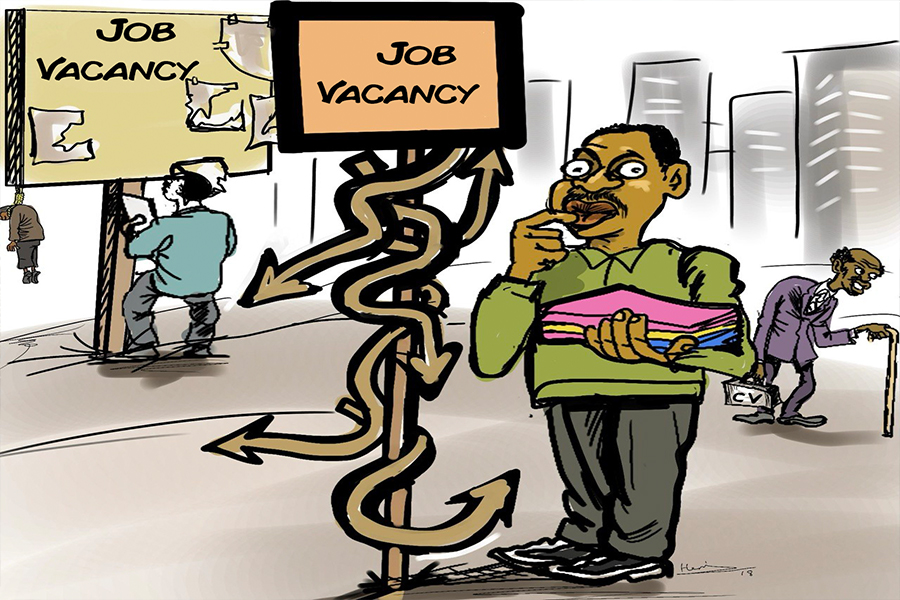
Pressed in Parliament on jobs and household incomes, Prime Minister Abiy Ahmed (PhD)...

Jul 11 , 2026
At a market stall, reform arrives without a communique. It comes as a higher transpor...
Jul 4 , 2026
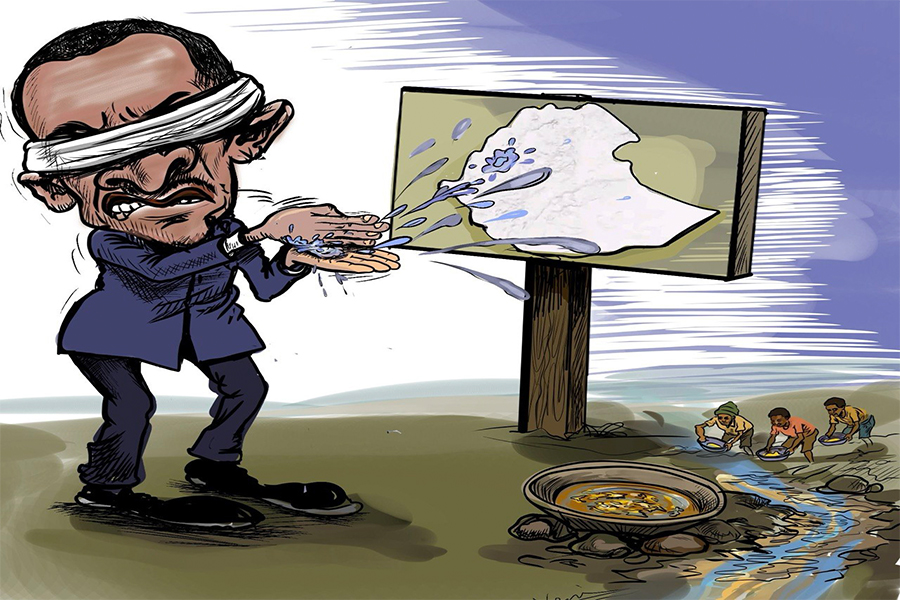
In the goldfields of the Benishangul-Gumuz Regional State, Ethiopia's balance-of-paym...
Jun 27 , 2026
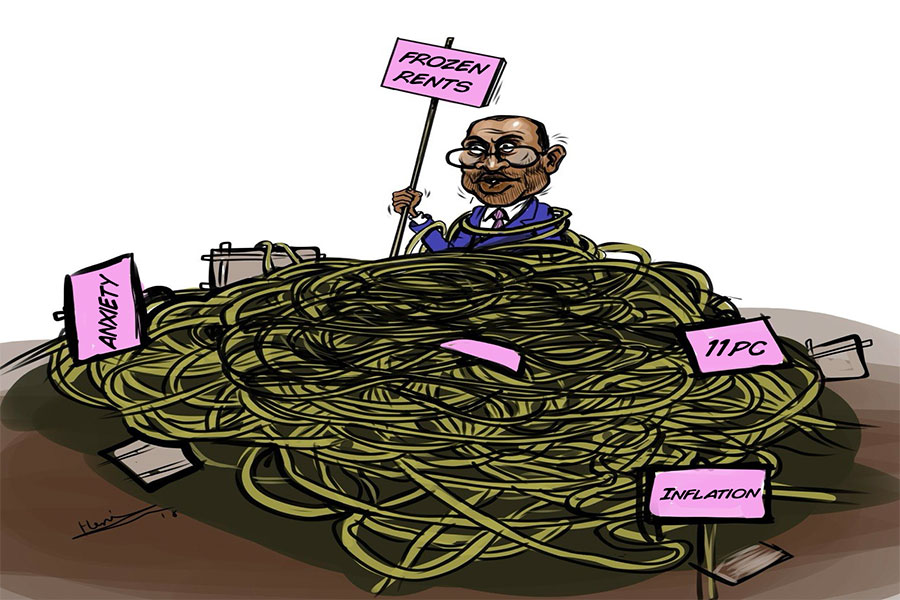
The federal legislative house rushed through one of the country's most contentious ho...
Jul 19 , 2026 . By BEZAWIT HULUAGER
Bureaus, agencies and institutions under the Addis Abeba City Administration are sitt...

Jul 22 , 2026 . By NAHOM AYELE
Most airports under the Ethiopian Airlines Group (EAG) lack master plans, and some op...
Jul 19 , 2026 . By NAHOM AYELE
Judges at the Federal High Court have struck down an amendment that the Ministry of E...

Jul 19 , 2026 . By BEZAWIT HULUAGER
Addis Abeba is moving to force its money through the wires. A draft directive from th...








 Loading your updates...