

Radar | Apr 19,2025



May 23 , 2026
By Erik Berglöf
The global water cycle is our planet's life-support system. It is a powerful environmental pump, with forests transpiring moisture and replenishing giant atmospheric rivers of freshwater.
It is also a global thermostat, regulating the climate through evaporation and cloud formation. And it is a giant filter, purifying water as it percolates through the soils and wetlands.
But while all life depends on the water cycle, it is coming under increasing strain and losing its ability to perform these essential functions, leading the United Nations (UN) to declare a new era of "global water bankruptcy." Rising temperatures, ecosystem degradation, and shifting rainfall patterns are weakening the natural systems that regulate water flows and quality, while conventional infrastructure, designed for historical hydrological conditions, is increasingly exposed to variability, sedimentation, and shock.
To protect the water cycle from these competing pressures, we have to adopt a holistic, systemic perspective. That means treating the water cycle itself as shared infrastructure, and reshaping investments and governance accordingly.
As a first step toward protecting the natural infrastructure that has served us for centuries, governments, investors, and multilateral development banks should emphasise retaining water in its natural environment wherever possible. Efforts to protect forests, wetlands, river basins, and soil cover are key to mitigating disruptions to the water cycle and adapting to shocks.
To be fully effective, such interventions should be conceived at the level of total ecosystems.
For example, the Delta Blue Carbon project, the world's largest mangrove restoration initiative, has facilitated the planting of tens of millions of mangrove seedlings on the southeast coast of the province of Sindh, Pakistan, restoring more than 75,000hct of degraded mangrove forests and tidal wetlands. Such efforts are projected to sequester 142 million tons of carbon dioxide over the next five decades, as well as protect against storm surges and provide nurseries for marine biodiversity.
Beyond restoring the natural (green) infrastructure that we already rely on, we should also pursue traditional (gray) infrastructure investments to build water-system resilience against higher temperatures, glacial melts, and more volatile climate conditions. For example, the Indonesia Dam project, co-financed by the Asian Infrastructure Investment Bank (AIIB), the World Bank, and the government of Indonesia, aims to strengthen flood buffers and preserve key water sources. It combines engineering measures, such as dredging and structural rehabilitation, with ecosystem restoration to address sediment accumulation and its consequences.
This combination of green and gray infrastructure has the potential to support mitigation and adaptation efforts to protect the water cycle against climate change. But bringing them together requires alignment on governance, data, and finance.
From a governance standpoint, water is too often treated as a local commodity rather than the shared, transboundary resource it is. As the AIIB shows in a recent report, "Where the Water Flows", the celebrated Ramsar Convention, an intergovernmental treaty to conserve wetlands signed in Ramsar, Iran, in 1971, has worked well in the world's advanced economies, particularly for smaller wetlands. But it has been much less effective in countries with weak institutional capacity and limited resources.
Fortunately, emerging science and technology could transform water governance by enabling the tracking of individual water drops. Satellite data, remote sensing, and improved modelling already allow for real-time monitoring of water flows, infrastructure performance, and environmental conditions. And now, AI and machine learning can improve flood forecasting, optimise irrigation scheduling, and support predictive maintenance.
Leveraging these technologies to improve water governance will lay the groundwork for scaling up investment in the hydrological cycle, and not a moment too soon. As matters stand, an estimated seven trillion dollars is needed to close the global financing gap for investment in water infrastructure by 2030.
Multilateral development banks have an important role to play in mobilising finance toward water-cycle preservation. The AIIB finds that water-related projects account for a decreasing share (around 14pc) of dwindling overall official development assistance. It is, therefore, imperative that development banks boost their investments across the water cycle to integrate natural, engineered, and digital infrastructure; promote economic reforms to align fiscal policies across borders; and mobilise private finance for water-focused interventions.
As we look toward a more uncertain, less secure water future, it is incumbent on governments and financial institutions to ensure that restoring and maintaining our water cycle remains a key development priority. We have to come together to harness recent advances in science, monitoring technologies, and data availability to improve governance and scale up financing. Water is the foundation that connects every aspect of human life. There can be no higher priority than protecting the water cycle.
PUBLISHED ON
May 23,2026 [ VOL
27 , NO
1360]
Radar | Apr 19,2025

Fortune News | Jul 13,2025

Radar | Jan 09,2024
Fortune News | Mar 16,2020

My Opinion | Jun 19,2021
Fortune News | Apr 26,2019
Radar | Jul 13,2019

Fortune News | Jan 29,2022
Fortune News | Aug 31,2020
Fortune News | Jun 29,2024

Photo Gallery | 191994 Views | May 06,2019

Photo Gallery | 181747 Views | Apr 26,2019

Photo Gallery | 178478 Views | Oct 06,2021
My Opinion | 144011 Views | Aug 14,2021




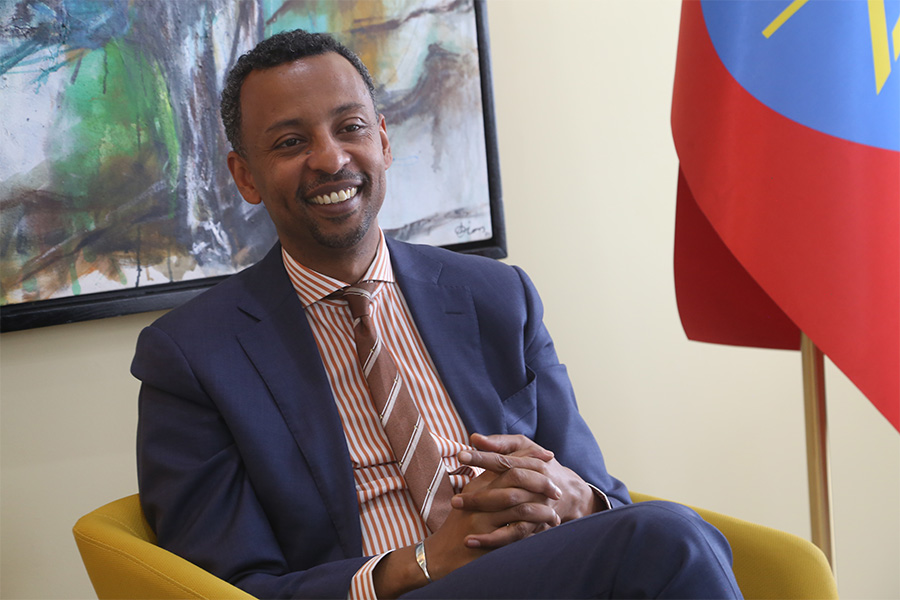
Dec 22 , 2024 . By TIZITA SHEWAFERAW
Charged with transforming colossal state-owned enterprises into modern and competitiv...
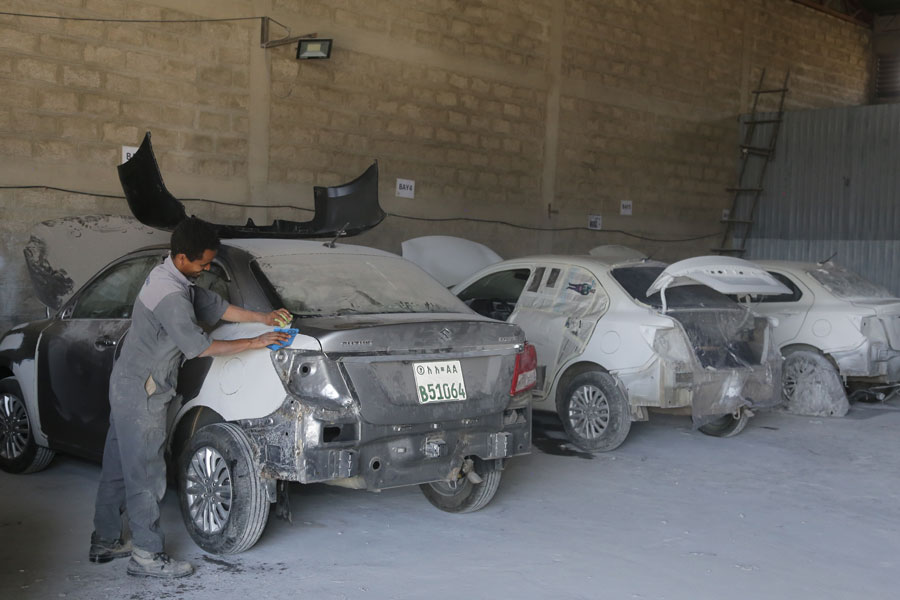
Aug 18 , 2024 . By AKSAH ITALO
Although predictable Yonas Zerihun's job in the ride-hailing service is not immune to...

Jul 28 , 2024 . By TIZITA SHEWAFERAW
Unhabitual, perhaps too many, Samuel Gebreyohannes, 38, used to occasionally enjoy a couple of beers at breakfast. However, he recently swit...
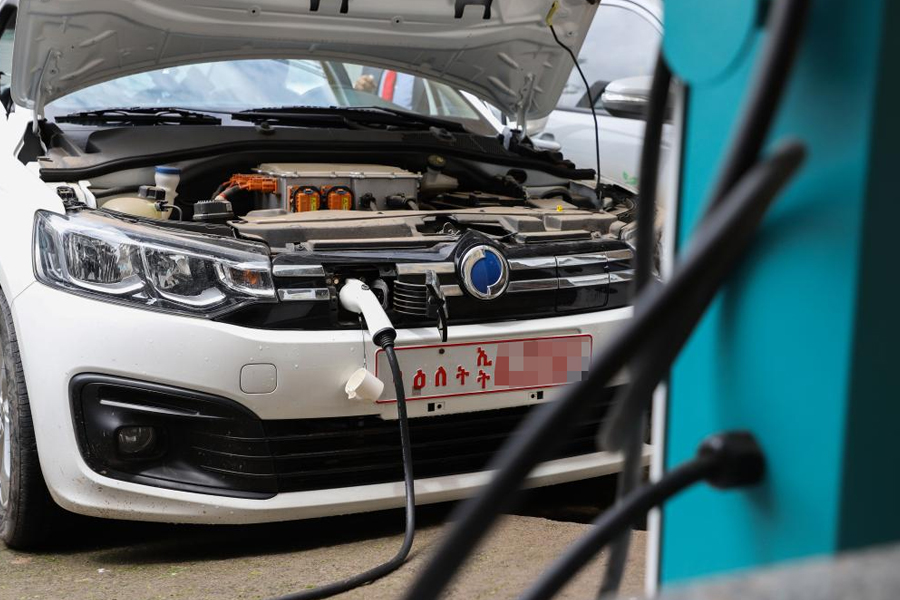
Jul 13 , 2024 . By AKSAH ITALO
Investors who rely on tractors, trucks, and field vehicles for commuting, transporting commodities, and f...

Jul 25 , 2026
Ideally, citizens who have paid income tax all year should not have to reach for thei...
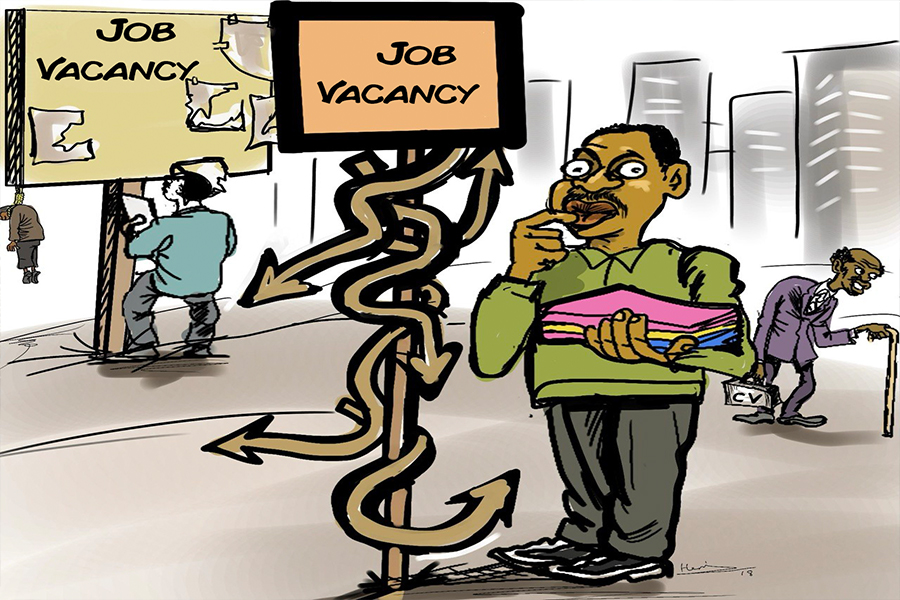
Jul 18 , 2026
Pressed in Parliament on jobs and household incomes, Prime Minister Abiy Ahmed (PhD)...

Jul 11 , 2026
At a market stall, reform arrives without a communique. It comes as a higher transpor...
Jul 4 , 2026
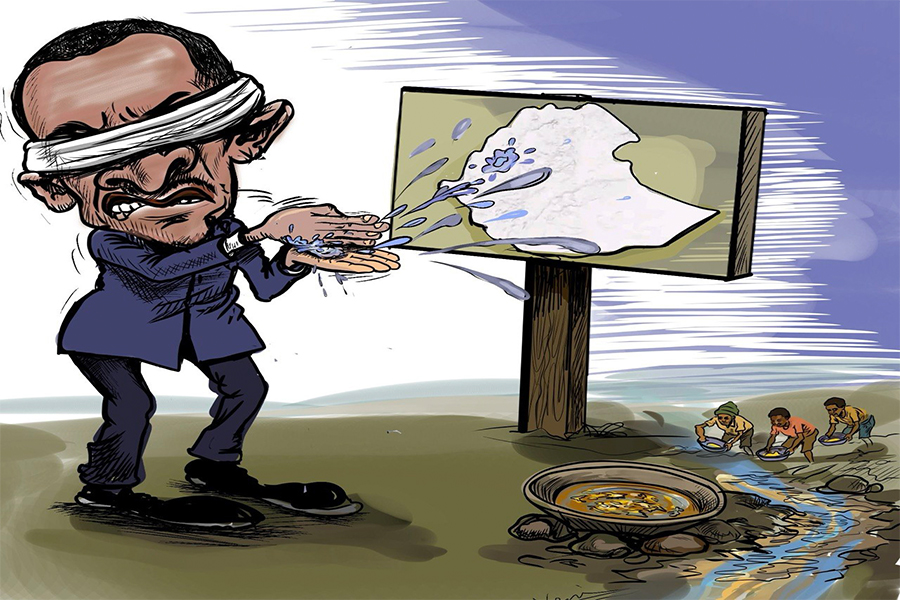
In the goldfields of the Benishangul-Gumuz Regional State, Ethiopia's balance-of-paym...
Jul 25 , 2026 . By BEZAWIT HULUAGER
Global Bank's Board of Directors have overhauled top management, after suspending sev...

Jul 25 , 2026 . By NAHOM AYELE
Judges at the Federal High Court have overturned the National Lottery Administration...
Jul 25 , 2026 . By NAHOM AYELE
A newly enacted regulation by the Council of Ministers lets eligible producers pledge...
Jul 25 , 2026 . By FITSUM TADESSE
A fuel tanker carrying tens of thousands of litres was confiscated after its driver a...






 Loading your updates...