
Commentaries | Jul 23,2022



Mar 9 , 2019
By
There is a simple, straightforward and yet effective tool that the Addis Abeba City Traffic Management Agency used to address severe congestion along the Ayat-Megenagna corridor during rush hour.
The street usually sees annoyingly high traffic during the morning hours, when residents living in the suburbs of Ayat and surrounding areas make their way to the city centre through this major artery. The adjacent lane, on the other hand, where traffic flows from Megenagna to Ayat is almost free given that the latter is mostly a residential area.
What the Agency decided was to allow the use of part of the uncongested lane, separated by plastic barriers, for traffic to flow to the Megenagna area. It is not the most ingenious plan, nor is it a big project the way government officials like it. But it works, with officials asserting that the time it takes to drive along the street has been decreased by at least a third.
The city did not have to blow through millions of Birr or create inconveniences for any of the city’s other residents. It addressed a fundamental problem faced by residents through a cost-efficient and responsible manner. This is good governance for a city, and a country, rife with a lack of it.
This particular case can be contrasted with another of the city’s proposals to address congestion. One includes the expensive project of increasing road infrastructure, while another has to do with getting people to use automobiles less and bicycling or walking to work.
It is important to have long-term plans, and it is crucial to be sober as well. In a city where it is rare to find a person whose place of employment is within walking distance of his home and in a country where vehicles are considered a sign of higher social status, I wish the city administration a great deal of luck in getting residents to bicycle to work. But it does not seem like a realistic plan.
Granted, our elected officials have a duty to address problems as holistically as possible. They are not in public office to give temporary relief. But the nation’s project management, planning and implementation capability, if experiences matter, is worrying and problematic.
Even projects as hyped and politically fundamental as the Grand Ethiopian Renaissance Dam seem to have cost the nation dearly. At this point, and given early analysis, it would be an achievement in itself if the project can pay back what it has cost.
And this is not to mention other current projects that have been ballyhooed despite the disappointment expressed by this very same administration about such massive investments. We all want the La Gare Eagle Hills and the 29 billion Br river beautification project in Addis Abeba to succeed but have a hard time swallowing that they will indeed bear fruit.
This is a government that has yet to learn to be restrained in its spending. Such habits will not go away easily, since it needs the active participation of offices in local, regional and federal levels. It is also a problem that can only be addressed slowly, given that checks and balances need to be introduced in government.
Ideas such as the Ayat-Megengna traffic policy are what will move Ethiopia forward. It is not lavish, and I doubt that officials could sell it with the public enthusiasm the La Gare Eagle Hills and riverbank beautification received. But it is effective and can be carried out with few resources that can be pooled from within the country. This is the sort of idea that will help the nation escape poverty, not hyped projects that are evidently too large in scale and sophisticated for the nation’s implementation capacity.
Ethiopia should not punch above its weight but strengthen its economy piece by piece, through networks, resources and ideas it can realistically pool in the country. This may not seem like a grand ambition, but it is a practical one many developed countries have followed.
PUBLISHED ON
Mar 09,2019 [ VOL
19 , NO
984]
Commentaries | Jul 23,2022
Radar | Apr 08,2023

Viewpoints | Feb 15,2020
Editorial | May 30,2026

Radar | Jan 11,2020

Radar | Aug 05,2023
Radar | Jun 14,2026
Radar | Jul 12,2026
Fortune News | Dec 04,2022
Commentaries | Aug 23,2025

Photo Gallery | 193683 Views | May 06,2019

Photo Gallery | 183578 Views | Apr 26,2019

Photo Gallery | 180407 Views | Oct 06,2021

My Opinion | 145832 Views | Aug 14,2021









Dec 22 , 2024 . By TIZITA SHEWAFERAW
Charged with transforming colossal state-owned enterprises into modern and competitiv...

Aug 18 , 2024 . By AKSAH ITALO
Although predictable Yonas Zerihun's job in the ride-hailing service is not immune to...

Jul 28 , 2024 . By TIZITA SHEWAFERAW
Unhabitual, perhaps too many, Samuel Gebreyohannes, 38, used to occasionally enjoy a couple of beers at breakfast. However, he recently swit...

Jul 13 , 2024 . By AKSAH ITALO
Investors who rely on tractors, trucks, and field vehicles for commuting, transporting commodities, and f...
Aug 22 , 2026
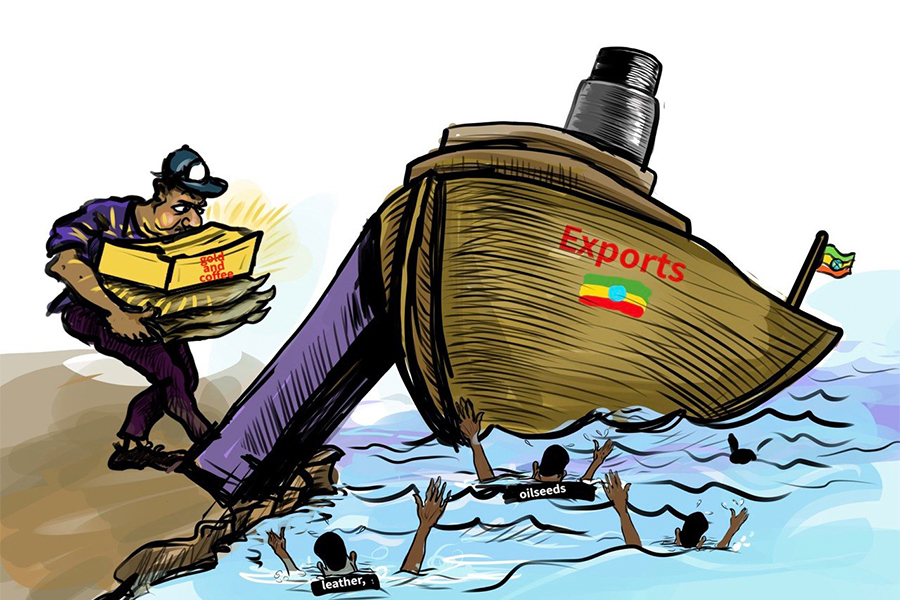
A record is a strange thing to worry about. Federal trade officials have booked the b...

Aug 14 , 2026
Aschalew Fetene, known as “Ardi” and admired for his poetic depth, has built a ti...

Aug 8 , 2026
The World Bank asks readers to picture a mother in rural Ethiopia who has never held...

Jul 31 , 2026
Weldu Yiheysh has not read the Pacific temperature charts. He does not need to. In Shibta District of Enderta Wereda, in...
Aug 22 , 2026 . By BEZAWIT HULUAGER
The forthcoming strategy for interest-free finance will place Sharia-compliant financ...
Aug 22 , 2026 . By NAHOM AYELE
Wegagen Capital Investment Bank (WCIB) has completed its first full year in profit an...
Aug 25 , 2026 . By NAHOM AYELE
Judges at the Federal High Court, sitting on a limited basis to hear only urgent matt...
Aug 22 , 2026 . By BEZAWIT HULUAGER
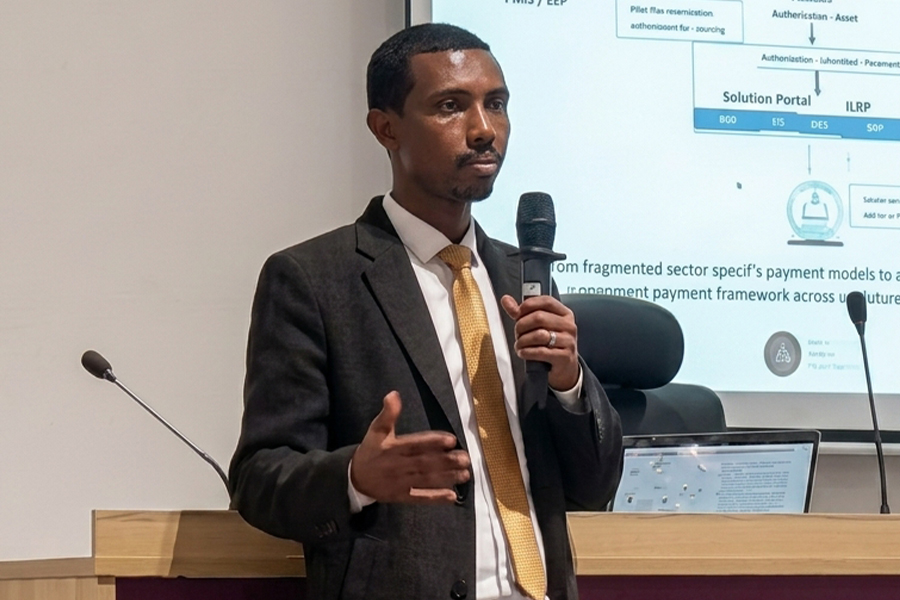
Federal authorities are about to find out whether they can make a single payment wind...







 Loading your updates...