
Commentaries | Sep 27,2025



Mar 11 , 2023
By Barbara Balke , Thomas Östros
Putting more women in charge would give us a much better chance of controlling global warming and achieving greater prosperity along the way.
Emerging research underscores the business and development case for applying a gender lens to climate-related investments. It also highlights the critical role women play in climate leadership. A recent European Investment Fund (EIF) report shows that women-led firms have higher environmental, social, and governance (ESG) scores than other companies. Businesses with greater representation of women in leadership positions have better track records of adopting environmentally friendly practices.
Similarly, women leaders are more likely to invest in renewable energy, leading to reduced greenhouse gas (GHG) emissions and improved environmental outcomes. Women-owned businesses are more likely to pursue greater energy efficiency and practices such as recycling. Banks run by women lend less to big polluters.
In the workplace, women's leadership is associated with increased transparency regarding environmental footprints, and a higher percentage of women on a corporate board is known to correlate positively with the proper disclosure of greenhouse gas emissions. A critical mass of women on a board leads to better climate outcomes and more innovation. Given these findings, it is unsurprising that women lead the world's most sustainable cities.
And yet, while more than one-fifth of major corporations have pledged to reach net-zero emissions by 2050, very few are taking explicit steps to include women in their climate action plans and decision-making. They would have a far better chance of hitting their targets if they did.
Elevating more women to the top ranks of companies is not just about equality; it is about leadership and entrepreneurship that play a critical role in driving economic growth and creating jobs with positive social, environmental, and climate spillovers.
But women still face more economically and socially costly barriers to starting and growing a business than men. Although female entrepreneurship is growing worldwide, male business owners still outnumber female business owners three to one. According to recent research by the economics department of the European Investment Bank (EIB), only 36pc of all entrepreneurs in the European Union are women, partly because they have more difficulty than men when it comes to financing their ventures.
Though female-funded companies get some public support, it mostly comes in the form of startup grants, while access to a wider range of growth finance remains limited. In Europe, only two percent of invested capital goes to all-female founding teams, and only five percent goes to mixed teams. Men-only teams get an astonishing 93pc.
The consequences of this disparity are far-reaching. Women who own businesses are more likely to employ and retain other women and improve employees' skills by investing in training. The EIB finds that 47pc of female-owned firms have more than 50pc female employees, compared to just 26pc of male-owned firms.
The shift toward a greener, more digital economy can open up more opportunities for women because firms that pursue such goals also tend to grow more dynamically, which in turn creates jobs and helps to mainstream practices that promote gender parity. Moreover, there is some evidence that women more often establish green start-ups.
Beyond increasing the number of women in corporate leadership positions, we also need more women leaders across other parts of the economy. Women investors, for example, are increasingly important because they have a stronger preference than men for investments that emphasize ESG factors. By supporting women as investors, fund managers, and entrepreneurs, we will have a much better chance of accelerating climate solutions – many of which require large-scale investments.
As 2XCollaborative's "Gender_smart Climate Finance Guide" shows, there are many ways to ensure that women play a greater role, from elevating more women to the top ranks of financial-services providers to supporting women investors and helping women customers go green. Women care about sustainability, and since they are usually the "chief purchasing officers" within households, they are who the marketers of climate-friendly products need to reach. Hence, the Financial Alliance for Women, a global network of 90 large financial institutions, is exploring how to green the customer-value proposition for women across a broader range of products and services.
As part of its new commitment to link gender and finance, the Luxembourg Stock Exchange has begun to flag sustainable debt instruments that either set gender-equality targets or raise financing for projects advancing gender equality and women's empowerment. These simple measures can make it much easier for investors to identify gender-focused bonds.
But policymakers also should do more to help increase women's participation in the green transition. They can do so by offering affordable, high-quality childcare to parents; increasing support for women-owned enterprises; expanding the financial and networking opportunities available to businesses managed and owned by women; and pursuing measures to eliminate the gender gap in technological industries.
We must remove the economic barriers women face and provide the resources and support they need to succeed. With more women in business leadership, we can create a more equitable world for everyone and give humanity a better chance of survival.
PUBLISHED ON
Mar 11,2023 [ VOL
23 , NO
1193]
Commentaries | Sep 27,2025
Commentaries | Feb 14,2026

Sponsored Contents | Sep 26,2021

Exclusive Interviews | May 17,2025

Editorial | Jul 29,2023

Commentaries | Aug 21,2021
Viewpoints | Sep 30,2023
Radar | Dec 20,2025

Fortune News | Jan 19,2019
My Opinion | Aug 26,2023

Photo Gallery | 192416 Views | May 06,2019

Photo Gallery | 182214 Views | Apr 26,2019

Photo Gallery | 178950 Views | Oct 06,2021

My Opinion | 144475 Views | Aug 14,2021







Commentaries | Jul 31,2026

Dec 22 , 2024 . By TIZITA SHEWAFERAW
Charged with transforming colossal state-owned enterprises into modern and competitiv...

Aug 18 , 2024 . By AKSAH ITALO
Although predictable Yonas Zerihun's job in the ride-hailing service is not immune to...

Jul 28 , 2024 . By TIZITA SHEWAFERAW
Unhabitual, perhaps too many, Samuel Gebreyohannes, 38, used to occasionally enjoy a couple of beers at breakfast. However, he recently swit...

Jul 13 , 2024 . By AKSAH ITALO
Investors who rely on tractors, trucks, and field vehicles for commuting, transporting commodities, and f...

Jul 31 , 2026
Weldu Yiheysh has not read the Pacific temperature charts. He does not need to. In Shibta District of Enderta Wereda, in...

Jul 25 , 2026
Ideally, citizens who have paid income tax all year should not have to reach for thei...
Jul 18 , 2026
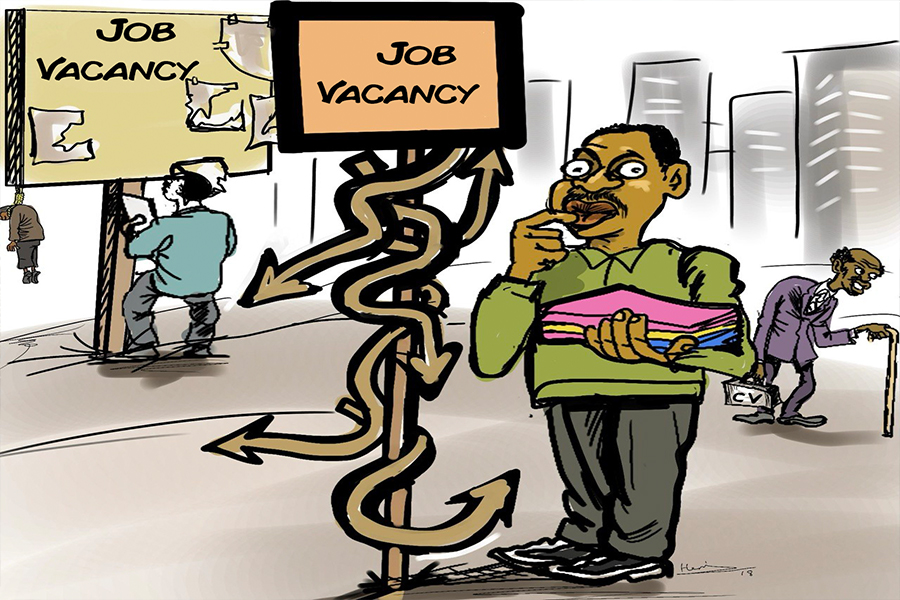
Pressed in Parliament on jobs and household incomes, Prime Minister Abiy Ahmed (PhD)...
Jul 11 , 2026
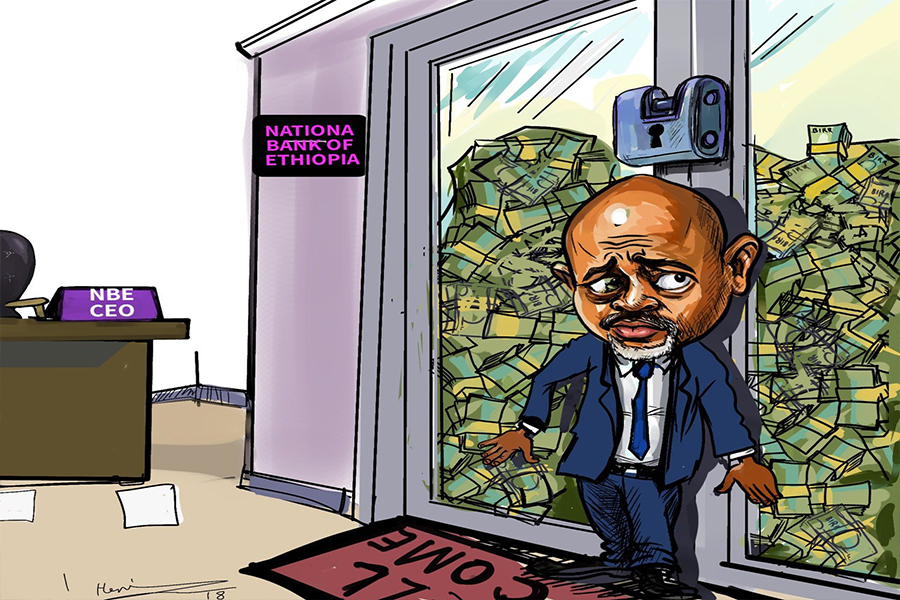
At a market stall, reform arrives without a communique. It comes as a higher transpor...
Aug 1 , 2026 . By NAHOM AYELE
Addis Abeba University set out to win its institutional autonomy. Two years in, that...
Aug 1 , 2026 . By NAHOM AYELE
The state-owned Ethiopian Shipping & Logistics (ESL) unveiled its most ambitious...
Aug 1 , 2026 . By BEZAWIT HULUAGER
The Ethiopian Airlines Group (EAG) will take delivery of eight Boeing 777 and Airbus...

Aug 1 , 2026 . By NAHOM AYELE
Judges at the Federal High Court have ordered that 27 apartments at Noah Victory Apar...







 Loading your updates...