

Viewpoints | Mar 23,2024



Jun 18 , 2022
By Alexander Müller , Violet Shivutse and Jes Weigelt
The combined negative effects of climate change, conflict, COVID-19 and cost, pose major risks to food security worldwide. But immediate responses to the current hunger crisis must also support the long-term transformation of food systems, writes Alexander Müller, managing director at TMG Think Tank for Sustainability, Violet Shivutse, founder and coordinator of Shibuye Community Health Workers, and Jes Weigelt, head of programs at TMG Think Tank for Sustainability.
The global food system is broken. Although it produces more than enough calories to feed everyone, up to 811 million people – more than 10pc of the world’s population – go to bed hungry each night. Sadly, effective governance to ensure access to food for all is still lacking. A globally coordinated effort to address both the short- and long-term aspects of the hunger crisis must therefore be the top priority.
Today, all four dimensions of food security – availability, access, stability, and utilisation – are threatened by the combined negative effects of climate change, conflict, COVID-19, and cost. By disrupting global trade and pushing up food prices, these four “Cs” are creating a short-term challenge of increasing hunger. At the same time, the human-made climate crisis poses a medium to long-term threat.
Climate change has already started to affect the environment in which food can be produced. Exceptional droughts, heat waves, and floods are undermining farming in regions as different as the Horn of Africa and the Midwest of the United States. The Intergovernmental Panel on Climate Change’s recent Sixth Assessment Report leaves no doubt: The climate crisis will have increasingly damaging consequences for food systems around the world.
Russia’s war against Ukraine is aggravating this already dire situation. Armed conflicts have long been major causes of hunger, usually at the regional level. But the Ukraine war, involving two of the world’s largest producers of agricultural commodities, is distorting global trade. As a result, the Food Price Index compiled by the Food & Agriculture Organisation (FAO) of the United Nations hit an all-time high in March.
Prices of basic commodities such as flour or vegetable oil have tripled in some regions since the war began. Food producers also face skyrocketing prices for fossil fuel-based fertilisers, of which Russia is one of the biggest exporters. In severely affected countries, rising food prices may threaten social stability. When food prices soared in 2008, more than 20 countries reported social unrest and instability.
Then there is COVID-19. According to the UN, the pandemic has caused tens of millions of people to go hungry. And lockdowns aimed at combating the virus have disrupted supply chains, adding to the upward pressure on food prices.
Our food systems face further challenges. Overconsumption of cheap calories, enabled by global trade in commodities and fossil fuel-based inputs, has led to widespread obesity and caused severe environmental problems. But the negative effects of production systems on the environment have often been treated as economic externalities and thus ignored.
More generally, and notwithstanding last September’s UN Food Systems Summit, there have been very few holistic approaches to food-system transformation. Industrialised agriculture continues to hold sway.
That means there is much to be done. But threats to global food security will increase if policymakers trying to stem the immediate hunger crisis continue to ignore the climate and biodiversity crises and delay necessary steps to make food systems more sustainable. For example, postponing the implementation of the European Union’s Farm to Fork Strategy, as some have proposed, will not provide the amount of food needed in the coming months and will further undermine the resilience of European agriculture.
As risks to food security mount, we cannot exclude the possibility that agricultural production from the food, feed, fiber, and fuel sectors will be insufficient to meet demand. Scarce supplies and disruptions to global trade will force us to make choices.
Countering the effects of the Ukraine war and the four Cs will require a globally coordinated response. The key question is whether the multilateral system will be able to provide an active platform where states and all stakeholders can manage these challenges effectively. If existing multilateral mechanisms are not up to the task, global solidarity demands a swift response by the G7.
In fact, the G7 has started to address the situation, and new pledges are being made to equip multilateral financing mechanisms to support countries in need. Furthermore, G7 countries should make a firm commitment to share grains currently used as animal feed and biofuel with poorer economies.
Such a step would demonstrate that the rich world has learned its lesson from the COVID-19 pandemic, when it shared too few tests, vaccines, and other supplies with poorer countries. A G7 agreement would provide a fast solution, create trust, and thus could spur the multilateral system to act, both now and to avert future food crises.
Again, it is vital that immediate responses to the current hunger crisis also support the long-term transformation of our food systems. Albert Einstein reportedly defined insanity as doing the same thing repeatedly and expecting a different result. So, why try to revive a broken system in times of crisis? The G7 initiative would create a starting point for the much-needed transformation of food systems everywhere. The alternative is increasing hunger and further instability.
PUBLISHED ON
Jun 18,2022 [ VOL
23 , NO
1155]
Viewpoints | Mar 23,2024
Commentaries | Feb 08,2020
Viewpoints | Sep 10,2023

Fortune News | Jan 02,2021
Fortune News | Apr 15,2023

Viewpoints | Jan 19,2024
Viewpoints | Apr 20,2024

Fortune News | Mar 13,2021
Commentaries | Aug 23,2025
Viewpoints | Nov 30,2024

Photo Gallery | 193653 Views | May 06,2019

Photo Gallery | 183548 Views | Apr 26,2019

Photo Gallery | 180380 Views | Oct 06,2021

My Opinion | 145802 Views | Aug 14,2021










Dec 22 , 2024 . By TIZITA SHEWAFERAW
Charged with transforming colossal state-owned enterprises into modern and competitiv...

Aug 18 , 2024 . By AKSAH ITALO
Although predictable Yonas Zerihun's job in the ride-hailing service is not immune to...

Jul 28 , 2024 . By TIZITA SHEWAFERAW
Unhabitual, perhaps too many, Samuel Gebreyohannes, 38, used to occasionally enjoy a couple of beers at breakfast. However, he recently swit...

Jul 13 , 2024 . By AKSAH ITALO
Investors who rely on tractors, trucks, and field vehicles for commuting, transporting commodities, and f...
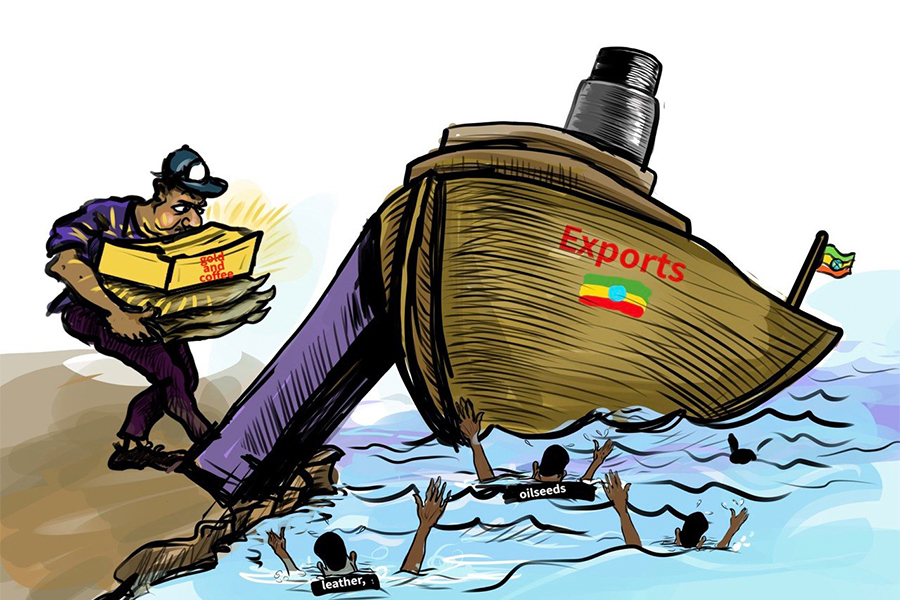
Aug 22 , 2026
A record is a strange thing to worry about. Federal trade officials have booked the b...

Aug 14 , 2026
Aschalew Fetene, known as “Ardi” and admired for his poetic depth, has built a ti...

Aug 8 , 2026
The World Bank asks readers to picture a mother in rural Ethiopia who has never held...

Jul 31 , 2026
Weldu Yiheysh has not read the Pacific temperature charts. He does not need to. In Shibta District of Enderta Wereda, in...
Aug 22 , 2026 . By BEZAWIT HULUAGER
The forthcoming strategy for interest-free finance will place Sharia-compliant financ...
Aug 22 , 2026 . By NAHOM AYELE
Wegagen Capital Investment Bank (WCIB) has completed its first full year in profit an...
Aug 25 , 2026 . By NAHOM AYELE
Judges at the Federal High Court, sitting on a limited basis to hear only urgent matt...
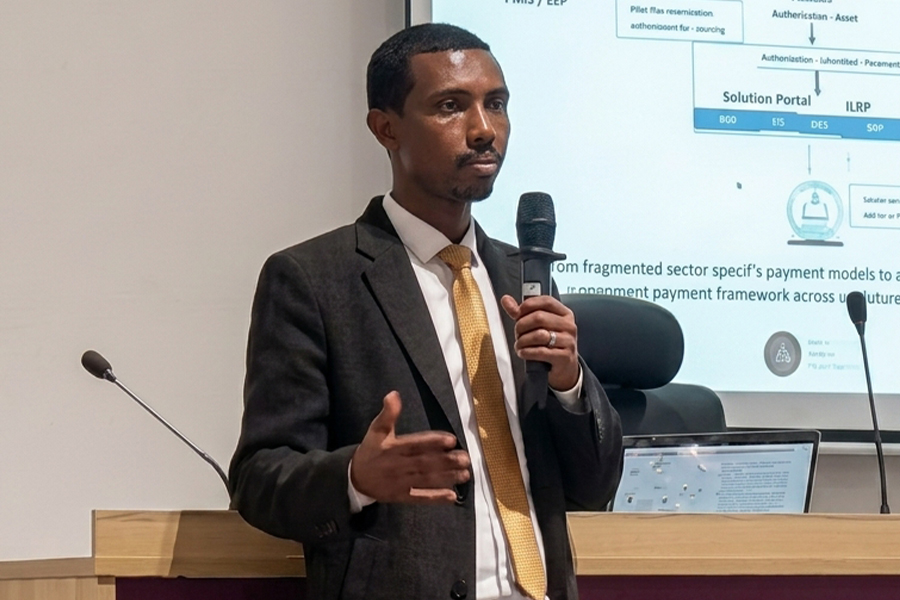
Aug 22 , 2026 . By BEZAWIT HULUAGER
Federal authorities are about to find out whether they can make a single payment wind...







 Loading your updates...