


Viewpoints | Nov 05,2022



Apr 19 , 2025
By Eden Sahle
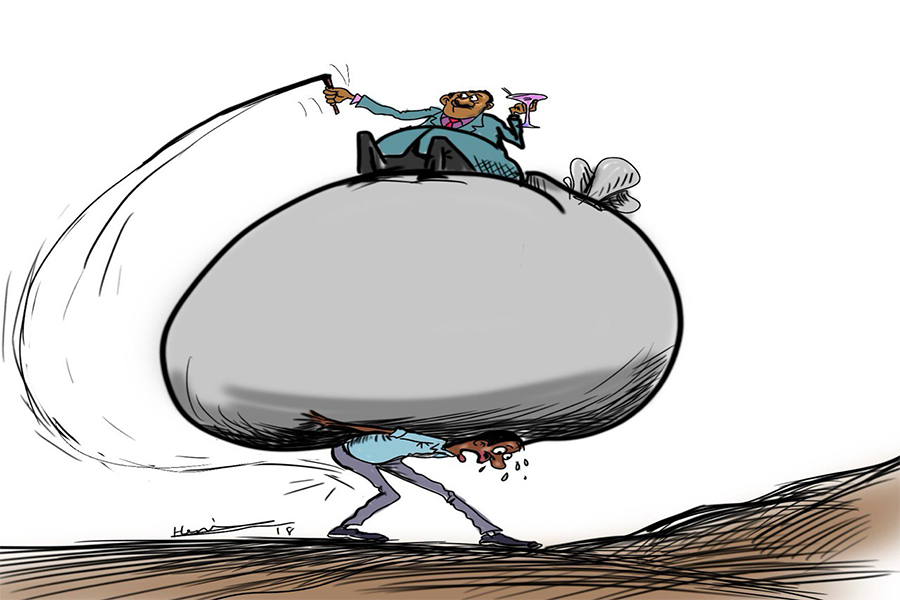
In almost every conversation, I hear people mention “the good old days.” The phrase slips in like a sigh, usually when someone’s facing difficulty. It acts as comfort, a way to escape the discomfort of the present by romanticizing the past.
People often reach for nostalgia when life feels overwhelming. It’s a mental shortcut to a time that seemed simpler, safer, or more joyful. But sometimes, “the good old days” were not that good; they were just different. Or maybe we were simply less aware of life’s weight. Still, the phrase lingers because it gives us a sense of control, even if only over the story we tell ourselves.
Nostalgia is powerful. It can transport us to moments that feel lighter, freer, and more whole. People reminisce, longing for an era when life was supposedly easier, more honest, and more fulfilling.
It’s a common sentiment: “Things were better back then.” Whether people are reminiscing about the simplicity of childhood, the supposed innocence of past decades, or the slower pace of life before technology took over, nostalgia has a way of painting the past in golden hues.
The truth is the “good old days” were often not as good as we remember. What we miss is often exaggerated; or only seems appealing now that we no longer bear its burdens. A more balanced view of history reveals that while some aspects may have felt simpler, the past was also filled with challenges we conveniently forget.
Every era has its struggles, just as every generation does. People who idealize the past often forget that previous generations endured wars, depressions, and severe limitations in medicine, technology, and rights.
One key reason we idealize the past is selective memory. Our brains are wired to preserve the positive while minimizing the pain. Psychologists refer to this as the "Rosy Retrospection Bias.” We recall childhood as an endless play but forget the loneliness or confusion that often accompanies it. We remember the adventure and wonder but forget the fears, frustrations, and limitations.
Someone might remember the magic of growing up in a close-knit neighbourhood yet forget the financial strain their parents quietly shouldered. Another might idealize how society once was but overlook the political tensions and economic instability of the time.
It’s natural to look at the past through rose-coloured glasses. But that selective memory distorts reality. The hardships and uncertainties fade, leaving only soft-edged fragments.
Another reason is uncertainty about the future. When life feels complex and unpredictable, we reach for a stable time, even if that stability is an illusion. We forget that every period in history had its share of turmoil.
Today’s problems – rising costs, political division, climate change, digital overload – can feel uniquely overwhelming. But no time has been free of struggle. Life has never been perfect. Previous generations lived through wars, plagues, and oppressive systems with fewer tools to address them.
Medical advancements now extend life expectancy and improve quality of life. Diseases once deadly are now treatable. Though human rights still need defending, more people today enjoy freedoms once unimaginable. Technology, despite its downsides, has revolutionized communication, education, business, and civic engagement.
Yes, modern life brings its stressors – social media pressure, environmental uncertainty, and economic strain. Each generation has faced its battles, some more brutal than others. Acknowledging this helps us appreciate the present and make better choices for the future.
But nostalgia isn’t really about facts. It’s about comfort. The past feels safer because it’s known. It offers no surprises. We know how the story ends.
That doesn’t mean we should dismiss the past. History holds lessons: about resilience, responsibility, and community. Traditions carry meaning. Values like kindness and integrity deserve preservation. But rather than longing for a past that never truly existed, we can take what was good and bring it forward.
For example, many people miss the strong neighbourhood bonds of previous decades. Urbanization and tech have shifted how we connect, but that doesn’t mean community is lost. We can still build intentional, meaningful relationships. Instead of wishing for the “good old days,” we can shape stronger, more inclusive communities now.
It’s also a privilege to have “good old days” to remember. For many, the past was harsher, more limited, and more unjust. The idea of a golden era depends on who's remembering – and who was excluded. What brings one person comfort might remind another of pain or erasure.
Nostalgia isn’t inherently bad. It connects us to values, traditions, and identities that matter. It can ground us in where we come from and what we’ve survived. But there’s a difference between honouring the past and escaping into it. “The good old days” won’t fix what’s broken. Only action can.
Each generation has the opportunity to build on what came before. Progress is never linear, and challenges never disappear – but retreating into memory won’t move us forward.
If we focus on the present and commit to a better future, we can create memories that are truly worth cherishing. The best days aren’t necessarily behind us. They can still be ahead if we choose to make them so.
Nostalgia can be a warm light, but it shouldn’t blind us. The perfect past we remember may never have existed, but a better tomorrow is still within reach. After all, one day, someone might look back on now and call it their “good old days.”
PUBLISHED ON
Apr 19,2025 [ VOL
26 , NO
1303]
Viewpoints | Nov 05,2022

News Analysis | Jan 04,2026

Radar | Feb 05,2022
Editorial | Nov 29,2025
Viewpoints | Jan 09,2021

Advertorials | Aug 04,2025
Viewpoints | Oct 16,2021
Commentaries | Apr 17,2020
Commentaries | Dec 05,2018
Sunday with Eden | Feb 22,2020

Photo Gallery | 193376 Views | May 06,2019

Photo Gallery | 183260 Views | Apr 26,2019

Photo Gallery | 180069 Views | Oct 06,2021

My Opinion | 145501 Views | Aug 14,2021









Dec 22 , 2024 . By TIZITA SHEWAFERAW
Charged with transforming colossal state-owned enterprises into modern and competitiv...

Aug 18 , 2024 . By AKSAH ITALO
Although predictable Yonas Zerihun's job in the ride-hailing service is not immune to...

Jul 28 , 2024 . By TIZITA SHEWAFERAW
Unhabitual, perhaps too many, Samuel Gebreyohannes, 38, used to occasionally enjoy a couple of beers at breakfast. However, he recently swit...

Jul 13 , 2024 . By AKSAH ITALO
Investors who rely on tractors, trucks, and field vehicles for commuting, transporting commodities, and f...

Aug 14 , 2026
Aschalew Fetene, known as “Ardi” and admired for his poetic depth, has built a ti...

Aug 8 , 2026
The World Bank asks readers to picture a mother in rural Ethiopia who has never held...

Jul 31 , 2026
Weldu Yiheysh has not read the Pacific temperature charts. He does not need to. In Shibta District of Enderta Wereda, in...

Jul 25 , 2026
Ideally, citizens who have paid income tax all year should not have to reach for thei...
Aug 15 , 2026 . By NAHOM AYELE
Federal prosecutors have charged seven defendants over a set of foreign-trade deals t...
Aug 15 , 2026 . By BEZAWIT HULUAGER
Ethio-post is preparing to turn its thousands of branches into banking agents, allowi...
Aug 18 , 2026 . By BEZAWIT HULUAGER
Kassahun Gofe (PhD), minister of Trade & Regional Integration (MoTRI), is prepari...
Aug 16 , 2026 . By NAHOM AYELE
Justices at the Federal Supreme Court widened the shield they are holding over lawyer...






 Loading your updates...