

Viewpoints | Aug 25,2024



Jan 3 , 2026
By Noreena Hertz
Beneath the promise of generous AI dividends lies a historical dilemma. Once wealth is concentrated, its owners seldom volunteer to share it. Already, a handful of AI and tech companies account for an outsized share of global corporate value. If universal high incomes arrive only after vast fortunes are locked in, distributing gains may prove as difficult as persuading 19th-century industrialists to invent the modern welfare state.
At the Saudi-US Investment Forum in November, Elon Musk sketched a future in which AI and humanoid robots will do almost all the work. Money, he suggested, will become almost irrelevant. Jobs will be "optional," more like hobbies such as gardening. Machines will have ended poverty, because everyone will receive a "universal high income" from the state.
Musk is hardly the only tech titan with this vision of the future.
Demis Hassabis of Google DeepMind looks forward to an era of "radical abundance" in which AI will deliver extraordinary productivity and prosperity, with the gains all "fairly" distributed. Mustafa Suleyman of Microsoft AI argues for a "universal basic provision" that would treat access to powerful AI systems and digital services almost as an entitlement. And Sam Altman of OpenAI has proposed an "American Equity Fund" that would tax large companies and private land at 2.5pc per year to pay every US adult an annual dividend.
Put simply, the leading architects of AI are open about the fact that they are creating systems whose success in generating material abundance could also obliterate large swaths of the labour market. In their envisioned future, the "springs of cooperative wealth" will flow so abundantly that people will receive "according to their needs," not according to the hours they clock in a factory.
If that last sentence sounds familiar, that is because it comes from Karl Marx.
Are capitalism's most fêted poster boys actually closet socialists?
In one sense, yes. The people building advanced AI are unusually candid about the distribution of wealth. They accept that if machines perform tasks more cheaply than humans, labour's share of national income will shrink. If wages disappear, people will need another way to feed and house themselves, and the economy will need new mechanisms to sustain purchasing power.
But look closely at tech leaders' proposals, and their apparent affinity for socialism fades fast. Altman does not argue for workers' control of OpenAI, nor for public ownership of the infrastructure. He wants governments to socialise only the returns. While a "universal high income" could help share the spoils, the chips, models, and platforms that generate those spoils would remain firmly in the hands of an extraordinarily wealthy few.
This would not be socialism as we know it. A tiny elite would own AI's "commanding heights" and hand everyone else a check or some form of digital ration. The sum would be enough to live on, but not enough to challenge those in power.
But if the universal income being offered is high enough to deliver a comfortable life, some will argue, it does not matter who owns the algorithms and data centres. There are at least three reasons to be sceptical.
We are told that generous AI dividends will come whenever the productivity gains have been fully unleashed. But history suggests that once wealth and ownership are locked in, the beneficiaries rarely volunteer to dilute themselves. Already, a handful of AI and platform businesses account for an astonishing share of global corporate value.
By the time any serious AI-funded income scheme arrives, much of this value will have been converted into concentrated equity and dynastic wealth. Asking today's AI barons to retrofit egalitarianism onto this structure is like asking Victorian-era mill owners to invent the welfare state.
Even if some sort of distribution scheme did materialise, what about the vast majority of countries that host no frontier AI firms? If local jobs are automated away while the profits pile up in California, Seattle, or Shenzhen, who exactly is going to fund their citizens' income?
The AI founders have been strikingly quiet on this question.
Lastly, a monthly payment, however generous, is no proxy for a meaningful life. Work has long been one of the main ways that we contribute to society. It is how we prove to ourselves and others that we matter. It gives our lives purpose, structure, and validation. Without it, we risk becoming a society of passive spectators, well-fed, permanently entertained by AI-generated content, and tended to by humanoid robots, but stripped of the dignity that comes from caring for others and being needed.
A stipend can pacify; it can also be tinder for revolt. A population that is materially provided for but politically powerless is unlikely to remain forever docile.
Even if governments do figure out how to deliver a universal high income and secure a meaningful social stake in AI's upside, the answer to large-scale automation cannot simply be to tax robots and buy everyone a new Tesla. Income matters, but so does agency.
This means ensuring that governments and civil society remain in control of the evolving AI terrain. Rules, restrictions, and safeguards cannot be left to powerful private-sector architects. Moreover, a significant share of any future AI bounty would need to be spent on specific goods belonging to the "human economy": care, education, the arts, and local democracy. The purpose would not be to manufacture pointless jobs, but to sustain the idea that citizenship is predicated on contribution.
And finally, we would need global mechanisms to spare countries without frontier AI champions from becoming collateral damage. One option would be an International AI Dividend Fund, financed by a modest levy on the profits or computing usage of the largest AI and cloud companies, with payouts directed to the countries hardest hit by automation. Such a scheme would be imperfect and politically difficult to pull off, but at least it would provide an answer to the question that Musk and his peers have ignored.
Who pays for everyone else?
The tech titans are offering us a future of socialism from above. They keep the means of production, and we get allowances. Our task is to promote democracy from below. That means demanding not only a share of the AI wealth, but also the power to shape and control the means of generating it.
PUBLISHED ON
Jan 03,2026 [ VOL
26 , NO
1340]
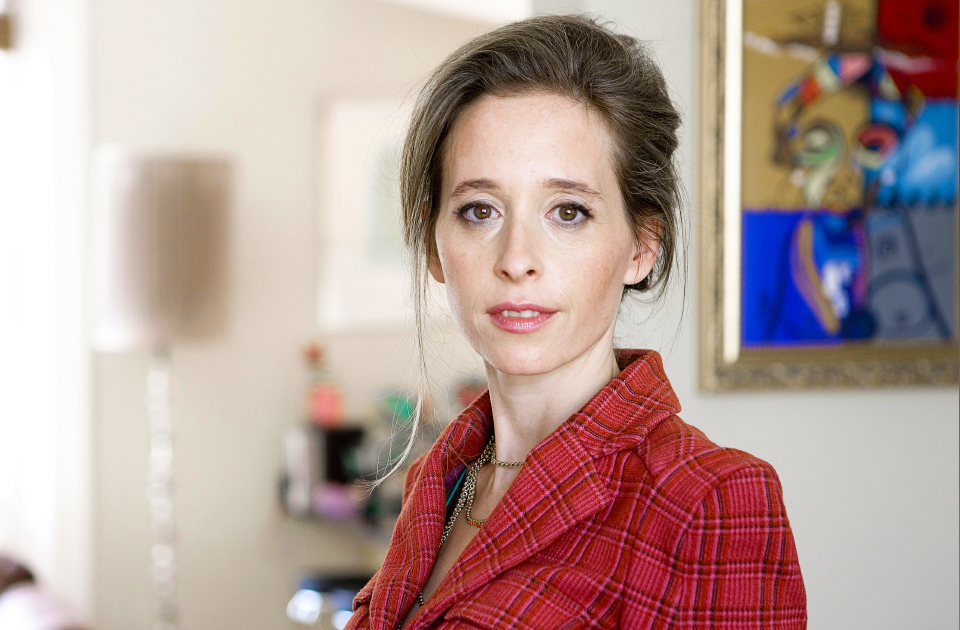
Noreena Hertz is an honorary professor at the UCL Policy Lab, where she leads research on AI. This article is provided by Project Syndicate (PS).
Viewpoints | Aug 25,2024
Obituary | Sep 29,2024
Agenda | Apr 15,2023
Viewpoints | Oct 07,2023

My Opinion | Nov 15,2025
Fortune News | Jun 15,2019
Fortune News | Apr 04,2020
View From Arada | Nov 29,2025

Sunday with Eden | Oct 11,2025
Fortune News | May 31,2025

Photo Gallery | 193564 Views | May 06,2019

Photo Gallery | 183458 Views | Apr 26,2019

Photo Gallery | 180283 Views | Oct 06,2021
My Opinion | 145707 Views | Aug 14,2021








Dec 22 , 2024 . By TIZITA SHEWAFERAW
Charged with transforming colossal state-owned enterprises into modern and competitiv...

Aug 18 , 2024 . By AKSAH ITALO
Although predictable Yonas Zerihun's job in the ride-hailing service is not immune to...

Jul 28 , 2024 . By TIZITA SHEWAFERAW
Unhabitual, perhaps too many, Samuel Gebreyohannes, 38, used to occasionally enjoy a couple of beers at breakfast. However, he recently swit...

Jul 13 , 2024 . By AKSAH ITALO
Investors who rely on tractors, trucks, and field vehicles for commuting, transporting commodities, and f...
Aug 22 , 2026
A record is a strange thing to worry about. Federal trade officials have booked the b...

Aug 14 , 2026
Aschalew Fetene, known as “Ardi” and admired for his poetic depth, has built a ti...

Aug 8 , 2026
The World Bank asks readers to picture a mother in rural Ethiopia who has never held...

Jul 31 , 2026
Weldu Yiheysh has not read the Pacific temperature charts. He does not need to. In Shibta District of Enderta Wereda, in...
Aug 22 , 2026 . By BEZAWIT HULUAGER
The forthcoming strategy for interest-free finance will place Sharia-compliant financ...
Aug 22 , 2026 . By NAHOM AYELE
Wegagen Capital Investment Bank (WCIB) has completed its first full year in profit an...
Aug 22 , 2026 . By NAHOM AYELE
Judges at the Federal High Court, sitting on a limited basis to hear only urgent matt...
Aug 22 , 2026 . By BEZAWIT HULUAGER
Federal authorities are about to find out whether they can make a single payment wind...






 Loading your updates...