



Aug 29 , 2020
By Shawil Girma
We are going through tough times as the Novel Coronavirus (COVID-19) pandemic is severely affecting communities. As the pandemic continues to threaten public health, the nation’s low-income urban dwellers with weakened purchasing power are facing an even more difficult challenge. Their primary concern is food inflation.
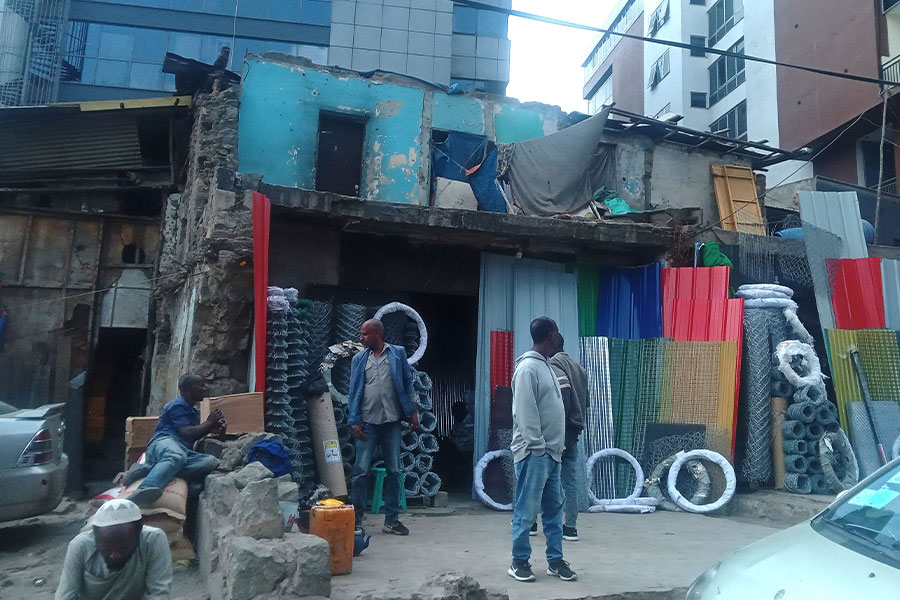
For many of us, urbanisation is a sign of prosperity. However, not everybody feels the same way. Although our urban centres have enjoyed decades of growth, there are longstanding complaints among low-income urbanites that have remained unaddressed. The cost of living is rising, and income inequality have widened. The prices of teff, wheat, onions, tomatoes, cooking oil and meat are skyrocketing at a faster rate than the income growth of this demographic. Government interventions have helped but not to an adequate degree. The upward climb of prices has been unabated and has become routine.
In addition to the pre-existing socioeconomic realities, lockdown measures put in place in response to COVID-19 and the desert locust infestation have added to the headache. The latter may subside soon, but the former may continue to spread until the end of 2020, at the very least. Under such circumstances, the fate of food prices, to be optimistic, will be uncertain.
Food inflation has been tracking at above 20pc for most of this year, driving general inflation upwards. At the same time, no comparable income growth was observed.
There are more questions than answers. The consequences are too early to predict precisely. There is no reflective, statistically significant evidence of where the rate of inflation will land. At least for now. What little studies there are show that the consequences will be severe. Taking a relatively small sample, a report by the International Food Policy Research Institute revealed that incomes have dropped among the 600 households that were sampled.
We need to worry, because the ability of the urban, low-income household to withstand a slight price change is easily compromised. Whether from nutrition or the economic point of view, slight variations could jeopardise their security disproportionately. The stakes are high.
While the impact will be felt by most households almost immediately, the difficulties across demographics will not be uniform. Most informal workers and construction sector employees are paid less and work part-time or temporarily, while women are in even more vulnerable positions.
Therefore, combined with non-food item increases, the food price hike will put more pressure on urban and semi-urban food market-dependent communities. Overall, due to wide structural diversity, the gap might not be effectively compensated by targeted adjustments in the nominal wages of certain sectors.
The nation's capital and largest urban centre, Addis Abeba, is characterised by relatively considerable wealth and income concentration. In the meantime, it is home to a sizable number of low-income residents. Furthermore, its food supply requires longer value chains than smaller cities. It enables intermediaries to gain more control over pricing. Because of the size and system complexities, the issue deserves unique attention and effort.
What should be done then? More supply?
It is an oversimplification to take supply alone as a magic solution. In the short term, balanced supply does not guarantee fair pricing. Urban food system dynamics are multilayered - the role of intermediaries that are scattered across value chains are predominant drivers of the spike in the price of food items as much as the supply itself, if not more. Such inefficiencies in the supply chains as well as in the overall market are aggravating factors.
Under the circumstances that currently afflict Ethiopia, it is appropriate to recognise the federal leadership’s coordinated and multidimensional response and mobilisation to the outbreak. Besides its extensive effort in flattening the curve of the transmission, the leadership is cautiously intervening to mitigate the economic impact of the pandemic.
The Addis Abeba City Administration has also shown responsiveness to long-term food-related concerns through its initiatives aimed at helping the poor. School feeding programmes and advocating the launch of a mega bread factory - Sheger Bread - are notable initiatives in addressing urban nutrition realities. However, a decline in tax revenue and the presence of competing government priorities have a chance to limit government spending ability on grassroots stabilisation efforts in the foreseeable future.
In the long term, inclusive economic growth is the safest exit. Isolated fiscal or monetary stimulus measures alone are unlikely to calm post-pandemic food price volatility meaningfully.
Instead, building sustainable resilience to food system hardships requires the combined effort of individuals, communities, government, nonprofit organisations and the private sector. Each has an irreplaceable role in unleashing much-needed resilience against inflation. Paying equal attention, organising and mobilising these stakeholders should be among the priorities of the government.
The hardships of the pandemic are unprecedented, and its path is uncertain. Independent economists, research and educational institutions may offer alternative strategies to the government, but consensus among professionals and technocrats is not expected or required. This is except, of course, on one front: the urgency of affording attention and recognition to one of Ethiopia’s biggest foes, food insecurity.
PUBLISHED ON
Aug 29,2020 [ VOL
21 , NO
1061]


Fortune News | Jul 07,2024

Covid-19 | Mar 21,2020
In-Picture | Jan 10,2026
Featured | Apr 22,2022

Viewpoints | Jun 18,2022

Radar | Jul 18,2020
Commentaries | Dec 26,2020
Viewpoints | Jan 07,2023
Radar | Jan 07,2022
In-Picture | Apr 05,2026

Photo Gallery | 193424 Views | May 06,2019

Photo Gallery | 183319 Views | Apr 26,2019

Photo Gallery | 180128 Views | Oct 06,2021

My Opinion | 145555 Views | Aug 14,2021











Dec 22 , 2024 . By TIZITA SHEWAFERAW
Charged with transforming colossal state-owned enterprises into modern and competitiv...

Aug 18 , 2024 . By AKSAH ITALO
Although predictable Yonas Zerihun's job in the ride-hailing service is not immune to...

Jul 28 , 2024 . By TIZITA SHEWAFERAW
Unhabitual, perhaps too many, Samuel Gebreyohannes, 38, used to occasionally enjoy a couple of beers at breakfast. However, he recently swit...

Jul 13 , 2024 . By AKSAH ITALO
Investors who rely on tractors, trucks, and field vehicles for commuting, transporting commodities, and f...

Aug 14 , 2026
Aschalew Fetene, known as “Ardi” and admired for his poetic depth, has built a ti...

Aug 8 , 2026
The World Bank asks readers to picture a mother in rural Ethiopia who has never held...

Jul 31 , 2026
Weldu Yiheysh has not read the Pacific temperature charts. He does not need to. In Shibta District of Enderta Wereda, in...

Jul 25 , 2026
Ideally, citizens who have paid income tax all year should not have to reach for thei...
Aug 15 , 2026 . By NAHOM AYELE
Federal prosecutors have charged seven defendants over a set of foreign-trade deals t...
Aug 15 , 2026 . By BEZAWIT HULUAGER
Ethio-post is preparing to turn its thousands of branches into banking agents, allowi...
Aug 18 , 2026 . By BEZAWIT HULUAGER
Kassahun Gofe (PhD), minister of Trade & Regional Integration (MoTRI), is prepari...

Aug 16 , 2026 . By NAHOM AYELE
Justices at the Federal Supreme Court widened the shield they are holding over lawyer...







 Loading your updates...