

Photo Gallery | 191702 Views | May 06,2019



Jan 10 , 2026. By Aminata Touré ( Aminata Touré, a former prime minister of Senegal, is the High Representative of the Senegalese President and a member of the Club de Madrid. ) , Kevin Casas-Zamora ( Kevin Casas-Zamora, a former vice president of Costa Rica, is the secretary general of the International Institute for Democracy & Electoral Assistance (IDEA). This article is provided by Project Syndicate (PS). )
Democracy and development, far from being at odds, are deeply interconnected. Broad-based development is fundamentally about expanding human freedom and agency, a process that requires democracy at its core. Free elections and accountable governments have proven to create conditions in which sustainable and inclusive growth is not only possible but likely.
Democracy is in trouble. For nine consecutive years, more countries have suffered a weakening of democratic institutions than have experienced improvement, the longest such decline in a half-century. Around the world, citizens are losing faith in democracy, and demagogues have exploited their disillusionment.
One factor driving this growing democratic crisis is the false notion that political rights and socioeconomic welfare are separate or even competing goods. History suggests the opposite. Countries that protect political rights and freedoms are the ones that build lasting prosperity. From our work leading diverse national and international administrations, we know that if democracy and development are to be sustainable, they should be pursued in tandem.
Broad-based development is ultimately about expanding human freedom and agency. It cannot be achieved without democracy at its core. This is not only a principled approach; it is also practical. It is no accident that democracies account for 27 of the top 30 countries in the United Nations Human Development (UNDP) Index. When people are free to choose their leaders and hold them accountable, sustainable and inclusive growth becomes more likely.
The pattern is even clearer when we look at gender equality. Half of all authoritarian regimes perform very poorly on this metric, whereas only three percent of democracies do. No society can thrive if half its population is held back.
The 2024 Nobel Prize winners in economics, Daron Acemoglu, Simon Johnson and James Robinson, have shown how democratic governance enhances innovation, safeguards investment, and improves financial accountability and oversight. Democracies do not merely safeguard rights. They deliver results.
Yet here we are. With less than five years to go until the 2030 deadline for the Sustainable Development Goals (SDGs), we are still debating governance frameworks instead of doing what we already know to be effective. Since democracy is the most reliable driver of development, governments and multilateral institutions should strive with equal intensity to advance civil and political rights, on one hand, and social and economic rights, on the other.
To be sure, while we firmly believe in democracy’s place at the heart of development, we are not blind to its shortcomings. In rich and poor countries alike, the health of democracy is often seen as a distant issue involving abstract processes and political theatre, when what concerns people most is the need to feel safe in their homes, the affordability of food and care for their families, and the knowledge that their children will have a better future than they did. When democracy is seen to be failing to deliver these basics, anger and disillusionment follow.
Such perceptions are not unwarranted in a world where, by some measures, the richest one percent own more wealth than the bottom 95pc. Faced with such glaring disparities, it is no wonder that so many people are willing to throw their lot in with the first demagogue who comes along promising radical change. If we do not confront rampant inequality and the sense of unfairness that it provokes, democracy will continue to suffer.
A democracy rooted in human development should be able to show that it provides just and fair outcomes for the people it serves. That means delivering concrete benefits, from improving healthcare access and educational opportunities to safeguarding freedom of expression and labour rights. Fortunately, one can already find this kind of human-centred democracy narrative in initiatives like the Global Democracy Coalition’s #KeepDemocracyAlive campaign.
Democracy and development should be reconciled within the multilateral system, too. Owing to the economic, social, and political transformations of the last century, many international organisations are no longer well-suited for current needs or aligned with new global configurations. The emerging powers of the Global South are justified in demanding reforms to the global economic and political order. Fair representation and power-sharing in multilateral institutions like the World Bank, the International Monetary Fund, and, most importantly, the UN Security Council are not only overdue. They are essential if we ever want to cultivate the kind of cooperation that works for everyone.
When democracy and development reinforce each other, the results are transformative. Democratic freedoms empower citizens, improve social inclusion, and boost economic growth. Development, in turn, strengthens credibility and trust in democratic governments. To sustain human progress in an era of radical change and uncertainty, democracy and development must go hand in hand.
PUBLISHED ON
Jan 10,2026 [ VOL
26 , NO
1341]
Photo Gallery | 191702 Views | May 06,2019

Photo Gallery | 181455 Views | Apr 26,2019

Photo Gallery | 178163 Views | Oct 06,2021

My Opinion | 143712 Views | Aug 14,2021


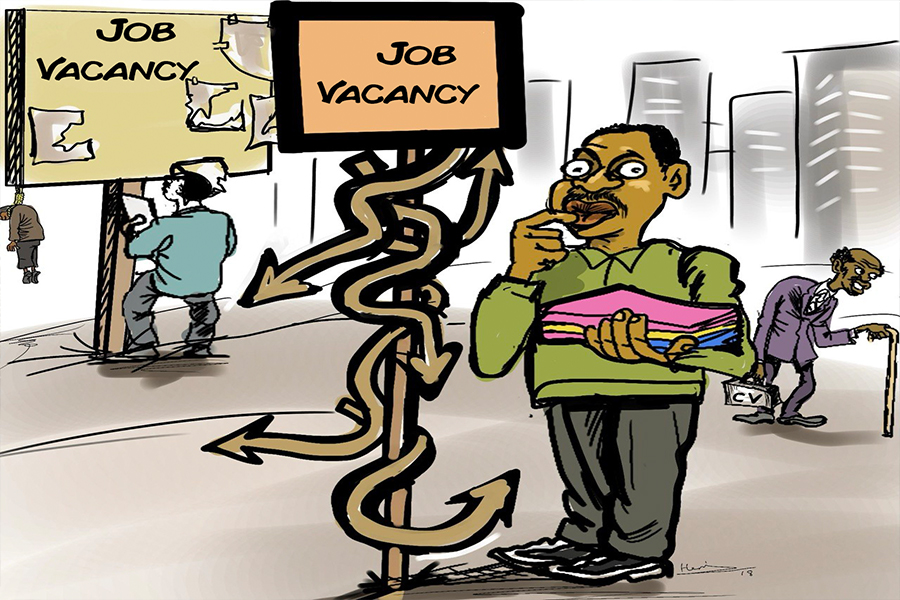
Jul 18 , 2026
Pressed in Parliament on jobs and household incomes, Prime Minister Abiy Ahmed (PhD)...
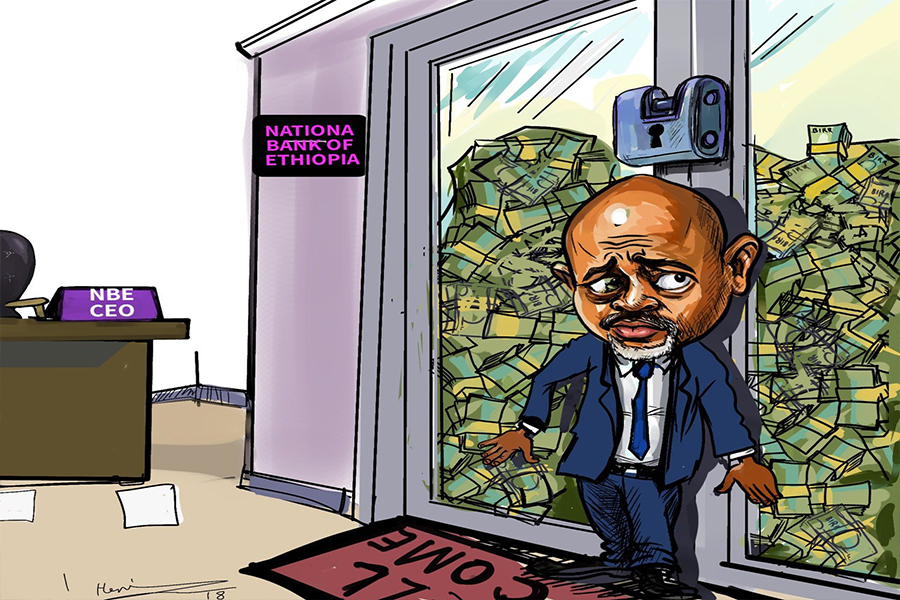
Jul 11 , 2026
At a market stall, reform arrives without a communique. It comes as a higher transpor...
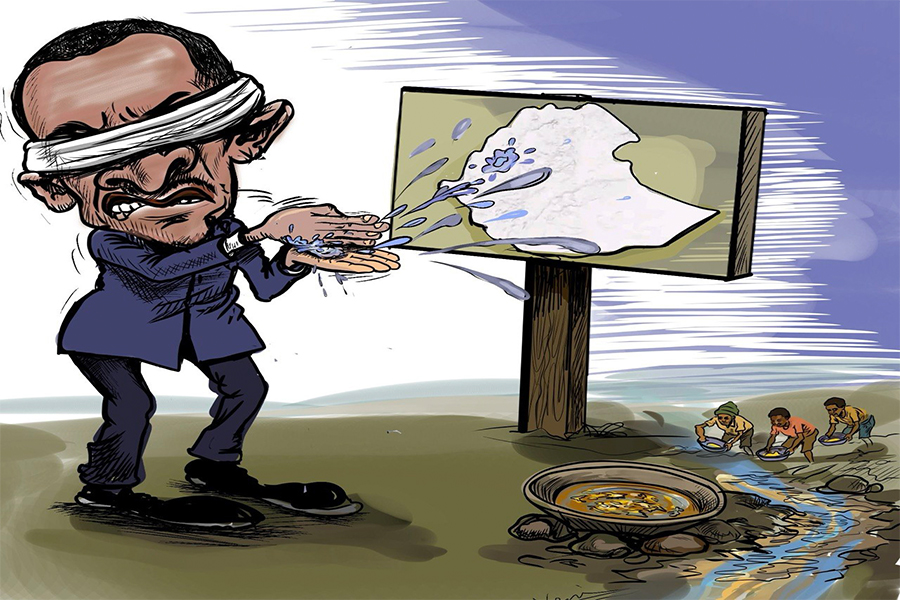
Jul 4 , 2026
In the goldfields of the Benishangul-Gumuz Regional State, Ethiopia's balance-of-paym...
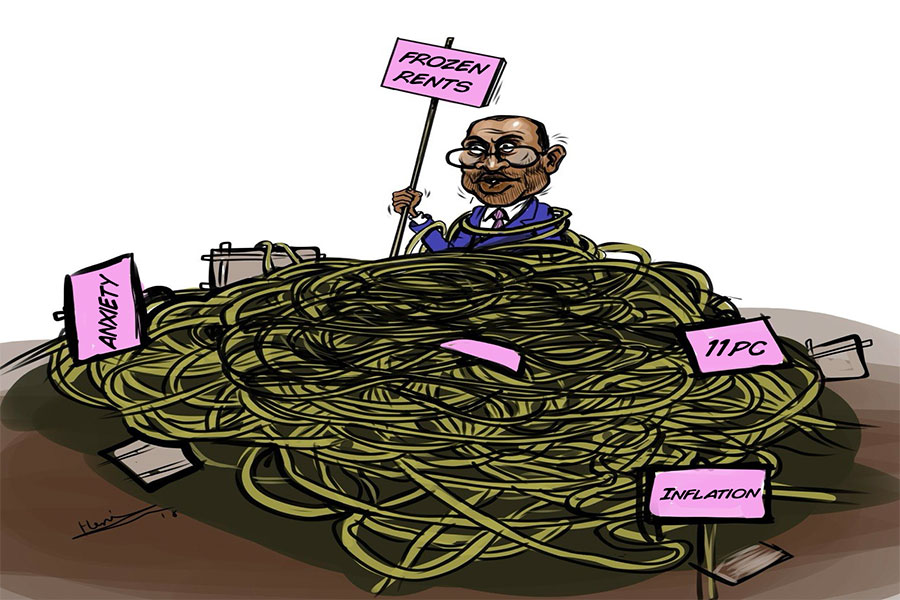
Jun 27 , 2026
The federal legislative house rushed through one of the country's most contentious ho...






 Loading your updates...