


Nov 8 , 2025. By YITBAREK GETACHEW ( FORTUNE STAFF WRITER )
The Ministry of Education is establishing an autonomous department for special needs education, marking a shift away from years of piecemeal programs. The new department, led by Meseret Bekele, is expected to address persistent low participation rates among students with disabilities. The policy follows mounting criticism that the education system has historically marginalised these students.
The Ministry of Education has unveiled a long-overdue plan to transform the country’s fragmented approach to special needs education.
The proposal establishes a new and autonomous department for special needs education, signalling a national shift from token gestures to institutional integration. The push comes after years of criticism that the existing education system left too many children with disabilities on the margins. The new department is expected to address low participation rates and end the patchwork of programs and fragmented efforts that have long characterised the official approach to special needs education.
Students with disabilities, representing 11.1pc of the student population in primary schools and 2.8pc in secondary education, can pursue mainstream inclusion in regular schools, enrol in special classes within mainstream schools, or attend entirely separate special schools. Depending on their needs and local context, they may also participate in adult training programs or alternative basic education centres.
The Ministry, overseeing a population of 22 million students across the country, has also committed to hiring more teachers and specialists who have received vocational and professional training, with certification from health institutes. These personnel will work in all three types of educational settings, supporting students who are visually impaired, deaf, or who have autism, multiple disabilities, or intellectual impairments.
The Ministry will provide more “on-the-job training,” including instruction in the use of Braille and other assistive materials. Colleges and universities will also be expected to graduate more teachers with specialised qualifications. For the first time, a uniform national standard will be established, requiring all schools to be accessible and equipped with materials tailored to students’ individual needs.
Special needs education fell under the directorate of the Pastoralist & Special Needs Desk. With the upgrade to full departmental status, Minister Berhanu Nega (Prof.) is expected to deploy more staff, better supervise ground-level operations, and focus on identifying areas for improvement.
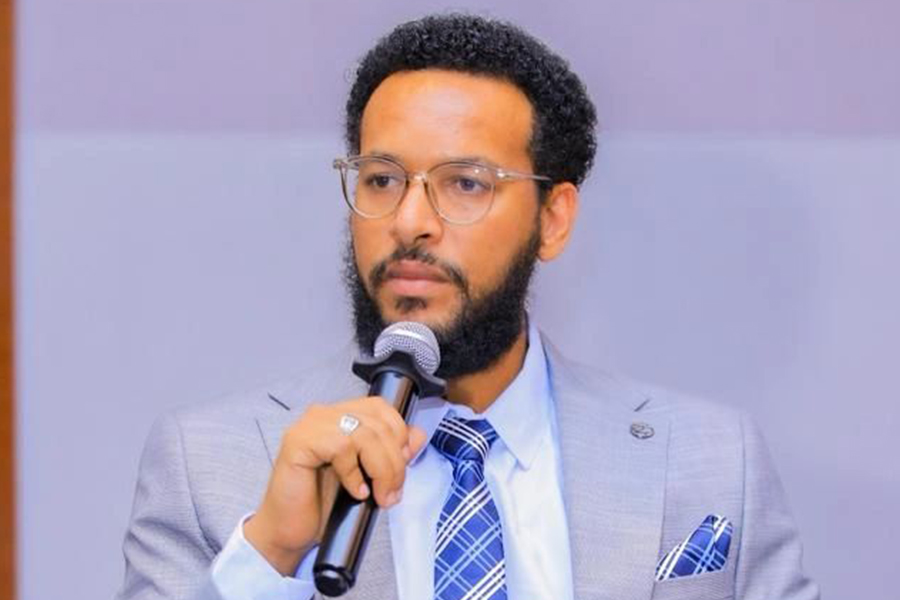
“It'll have an autonomous mandate, under the Minister,” said Meseret Bekele, head of the department.
With the support of the World Bank, more than 35,000 schools have been grouped into roughly 7,000 clusters, each costing about 16,000 dollars to equip. A cluster comprises five or six schools, with one designated as a support centre equipped with the materials, technologies, and facilities to support students with disabilities. Each cluster will have a teacher assigned to support all schools within that group, a position designed to encourage the sharing of resources and expertise across the system.
The other schools in each cluster share these resources, allowing the Ministry to spread scarce funding more widely. About 1,450 of these clusters are currently fully equipped and operational, with plans to build another 150 in the coming year and 600 more over the next four years.
“To build all of them at once is impossible," said Meseret. "We don’t have the financial capacity. That’s why we created clusters.”
However, the directive spells out what schools should provide, from access to facilities and adapted classrooms to directional signs that students with disabilities can easily follow.
The new policy introduces incentives for teachers and students. Teachers in special schools and classes will receive a monthly allowance of 800 Br, while itinerant teachers who work across the 1,450 centres for inclusive education support will get 1,500 Br a month. Principals in special schools will see their salaries topped up by a monthly 1,050 Br. However, these payments will apply to all cluster schools.
According to Meseret, payments will be made in accordance with Civil Service Commission rules after the directive receives approval.
"Our focus is on providing real support for them,” she told Fortune. “Our goal is to reach as many schools as possible with our limited resources.”
Students will receive support as well. Those with disabilities will be eligible for an annual stipend of 1,000 Br for educational materials and 1,500 Br for uniforms. If a school does not have a feeding program, eligible students will also receive a monthly stipend of 1,800 Br for food and transport. Nonetheless, if a feeding program exists, the monthly transport allowance drops to 1,000 Br. Those who study away from home will receive an additional monthly rental allowance of 1,500 Br.
According to Ketema Baleyen, an inclusive education coordinator at the Ethiopian Blind Association, the high cost of tuition and living expenses often forces students with disabilities to move away from their families to pursue their education.
“These students seek education alongside people who have a better outlook and opportunities,” he said.
The gap between policy and practice remains a major concern.
Wase Weretaw, a civics teacher for the visually impaired with over 11 years of experience, currently teaches at Misrak Ber Elementary School in Addis Abeba, near the Megenagna area. He sees the potential for progress but has doubts about implementation.
“I know many clusters in terms of implementation, but there is no real commitment when it comes to execution,” Wase told Fortune. “Books aren't available for either teachers or students. They rely on their own printing processes. This should be prepared during the summer break.”
He insisted that incentives alone are not enough so long as there is no consistent implementation.
“In general, life for people with disabilities in Ethiopia is very challenging,” he said.
The Association, representing over 17,000 members across 31 branches, remains deeply concerned about the accessibility of schools and the conditions faced by students with disabilities. Its leaders often receive complaints about testing procedures, material shortages, and poor school conditions that add to students’ frustration. For Ketema, the president, awareness of disability issues is much higher in major cities than in rural areas, where children with disabilities are less likely to attend school. He recalled a visually impaired student struggling to take ICT courses and finding it difficult to secure a job afterwards.
“Now we’ll have to see how well it is going to be implemented,” he told Fortune. “We hope this new system will solve the problems that have been holding us back.”
According to Alemayew Tekilehaymariam (PhD), a lecturer at Addis Abeba University who specialises in special needs and inclusive education, recalled laws on the books before, but have not always translated into real change.
“In the past, we had many laws,” he said, “but the real question is how well they will be implemented.”
For Alemayehu, who teaches in one of the 22 universities that offer assisted learning to students with special needs, and others, the fate of the new directive depends not only on the wording of the policy but on the strength of leadership and the seriousness of the government’s commitment to seeing it through. He believes the directive could help close the gaps created by shortages of materials, inadequate facilities, and a lack of incentives.
“It’s a good initiative, but how well it works depends on leadership,” Alemayew said. “Commitment, accountability, patience, and ensuring accessibility are all crucial.”
Alemayew advocated for the use of individual education plans (IEPs) to support students on a case-by-case basis.
“All of this will be helpful to them," he told Fortune. "We can’t say it’s perfect, but it will help reduce shortages and expand training opportunities.”
PUBLISHED ON
Nov 08,2025 [ VOL
26 , NO
1332]

Photo Gallery | 192845 Views | May 06,2019

Photo Gallery | 182748 Views | Apr 26,2019

Photo Gallery | 179507 Views | Oct 06,2021

My Opinion | 144989 Views | Aug 14,2021







Aug 8 , 2026
The World Bank asks readers to picture a mother in rural Ethiopia who has never held...

Jul 31 , 2026
Weldu Yiheysh has not read the Pacific temperature charts. He does not need to. In Shibta District of Enderta Wereda, in...

Jul 25 , 2026
Ideally, citizens who have paid income tax all year should not have to reach for thei...
Jul 18 , 2026
Pressed in Parliament on jobs and household incomes, Prime Minister Abiy Ahmed (PhD)...






 Loading your updates...