

Photo Gallery | 192885 Views | May 06,2019



Jul 25 , 2026. By Iryna Volnytska ( Iryna Volnytska is the founder and CEO of IronCyber, and the president of SET University. This article first appeared on Project Syndicate (PS). )
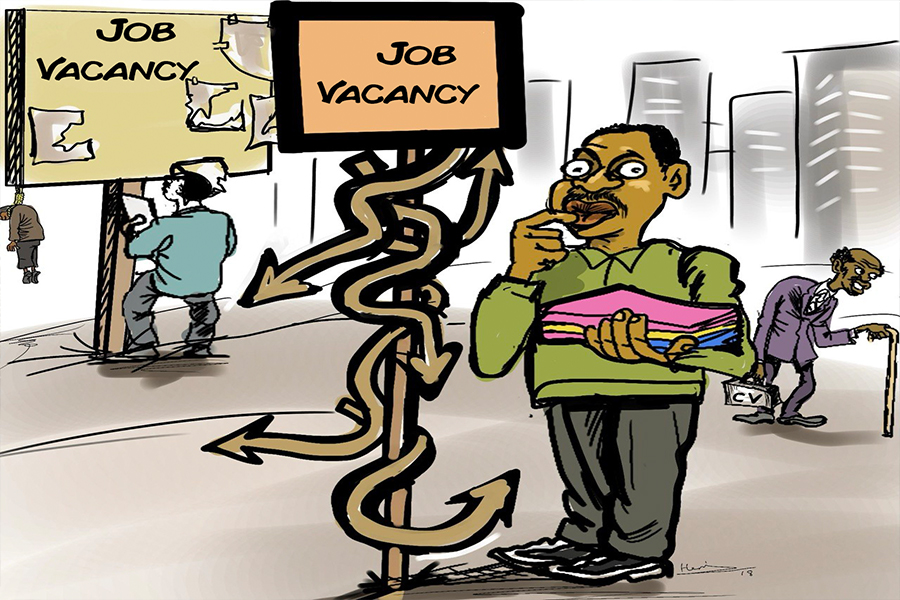
Education is no longer a social service but the new infrastructure of power. Whoever controls the development of technical talent controls the future. Google, Apple and IBM now hire for skills over degrees, and more than half of employers have dropped degree requirements for some roles. Recruiters want to know how applicants decide amid uncertainty and how fast they learn, not what they have memorised.
Just as French aristocrats under the "ancien régime" could hardly imagine the abolition of their noble titles, most of today’s university leaders cannot conceive of a world in which the degrees they confer become worthless pieces of paper.
The former were in for a rude awakening in 1790; the latter are barreling toward a similar shock.
No longer a social service, education has become the new infrastructure of power. Whoever controls the development of technical talent controls the future. The countries that understand this have stopped arguing about teaching quality and started measuring how fast knowledge translates into capability. The rest are reforming a 20th-century system and calling it progress.
Large employers like Google, Apple, and IBM now have hiring practices that focus on skills rather than degrees. More than half of employers have gone so far as to drop degree requirements entirely for some roles. Recruiters no longer want to know how much applicants have memorised. They want to know how they make decisions amid uncertainty and how quickly they learn.
Y Combinator funds Stanford dropouts, or people who forgo university altogether. A GitHub profile now says more about what you can build than a college transcript. To be sure, degrees still hold value, but mostly for entry to regulated professions like law and medicine, public-sector jobs, and prestige networks. But notice that this value lies in access, not knowledge.
In an AI-transformed world, capability is the new dividing line. True, a free AI chatbot will explain quantum mechanics to anyone. But access to a tool is not the same as the ability to use it. A chasm is growing between people who can harness AI to solve hard problems and those who only consume the answers it hands them. The defining skill of the next decade will be orchestration: running several AI agents toward an outcome defined by the individual.
This raises an important question.
Is AI in education a threat or an opportunity?
My answer is that it is an opportunity, but only for institutions willing to rebuild around the technology. That means overhauling assessment methods, because reproducing knowledge is no longer as important as demonstrating judgment and application skills. The key is to test whether a student can command and critique an AI system, rather than outsource thinking to it. With this shift, AI can become education’s largest-ever scaling lever, providing personalised tutoring at near-zero marginal cost, simulation at scale, and instant feedback.
Consider the live drone-hack simulation that Ukraine’s SET University, where I am president, ran with IronCyber, my cybersecurity startup. When applying AI, it was completed roughly six times faster. The technical layer can be compressed, but the orchestration layer cannot, a reality that the old educational model, which was built to be AI-resistant, fails to grasp.
The University does not know its own value. Its campus, faculty, and academic programs are ostensibly its most prized assets. But in the digital era, data trumps all else. Every interaction a student has with a learning platform leaves a trace of their cognitive processing, speed of adaptation, and capacity to collaborate. Universities sit on terabytes of this information but do little with it.
All this points to the need for AI-native institutions. The dramatic death and rebirth of the edtech sector suggest that such a shift is already underway. The companies that simply moved lectures online are disappearing. The investors who once scaled some of Silicon Valley’s most prominent tech firms are funding their replacements. Outsmart, launched by former Duolingo executives, has raised more than 36 million dollars from Khosla Ventures, Lightspeed, and DST Global on a single promise of building “the university of the future.”
Other powerful tech players who no longer trust universities have also started building alternatives. Peter Thiel pays young people 100,000 dollars to drop out of school and launch startups. Y Combinator became a university of founders, compressing years of iteration into a few months. And yet, elite universities’ real product was never education. MIT has given away lectures for two decades. It is the network. Four years in the same room builds social capital that compounds for life. That, not the curriculum, is what people pay for.
It follows, then, that the future of the university rests on deliberately designing environments that facilitate strong connections, which almost no one is doing. Moreover, the focus should be less on the number of STEM (science, technology, engineering, and mathematics) graduates, and more on the pipeline from university to product. Many have fretted that China graduates more STEM PhDs than the United States. But what sets China apart is the speed with which it turns research into innovation that people can use, in a few years, compared to a decade or more elsewhere.
Most of the world treats education as a cultural mission to be improved at the margins, even though it has become a crucial determinant of strategic advantage.
Why else would Canada, Germany, Singapore, and the United Arab Emirates (UAE) have fast-track visas to import tech workers that someone else paid to train?
Developing talent for export is a subsidy to other economies. The question that should guide education reformers is how fast they can convert a person’s knowledge into a country’s gain, before someone else beats them to it.
PUBLISHED ON
Jul 25,2026 [ VOL
27 , NO
1369]
Photo Gallery | 192885 Views | May 06,2019

Photo Gallery | 182788 Views | Apr 26,2019

Photo Gallery | 179547 Views | Oct 06,2021

My Opinion | 145036 Views | Aug 14,2021







Aug 8 , 2026
The World Bank asks readers to picture a mother in rural Ethiopia who has never held...

Jul 31 , 2026
Weldu Yiheysh has not read the Pacific temperature charts. He does not need to. In Shibta District of Enderta Wereda, in...

Jul 25 , 2026
Ideally, citizens who have paid income tax all year should not have to reach for thei...
Jul 18 , 2026
Pressed in Parliament on jobs and household incomes, Prime Minister Abiy Ahmed (PhD)...







 Loading your updates...