



Nov 15 , 2025. By Robel Mulat ( Robel Mulat(PhD) is an urban anthropologist whose research critically examines the connections between urbanisation, industrialisation, and migration. He regularly writes his academic work into public dialogue through blogs and opinion pieces in both Amharic and English. He can be reached at (robel.mulat@yahoo.com) )
When Ethiopia’s federal government rolled out its “Digital Ethiopia 2025” strategy, it promised a future where innovation drives productivity, governance, and job creation. It spoke of unlocking potential in a young and growing labour force, nearly two million entrants each year, and lifting millions out of poverty through digital inclusion. But on the production lines of Hawassa’s garment factories, that promise is still waiting to be stitched into reality, writes Robel Mulat (robel.mulat@yahoo.com)
This year, the federal government launched its “Digital Ethiopia 2025” strategy, pledging to harness technology to boost employment, productivity, and public services. The initiative promises a tech-driven transformation capable of lifting millions out of poverty.
For the growing youth population, approximately two million enter the labour force each year, and the digital economy holds promise for new possibilities. Yet, for industrial workers, particularly in the garment industry, the promised future feels distant. On factory floors, the mood is marked more by uncertainty than optimism.
The worldwide march of artificial intelligence (AI), automation, and data-driven manufacturing, often referred to as the Fourth Industrial Revolution, continues to reshape the nature of work itself. While some believe that technology will open doors to new employment opportunities, others warn of widespread job losses. This debate is especially acute for countries like Ethiopia, which have sought to accelerate economic growth and industrialisation through labour-intensive manufacturing. The coming revolution offers opportunities but also exposes vulnerabilities.
Drawing participants from government officials, experts, and business leaders, the Ministry of Labour & Skills convened the “Future of Work Summit 2025” in Addis Abeba on October 17-18, exploring how Ethiopia can keep pace with a global labour market in flux. The summit reinforced a well-known national ambition of deploying technology and industrialisation as key engines for economic progress. While the conversation around digital innovation has gained momentum among policymakers and startups, the manufacturing sector, which has long been a pillar of national growth plans, finds itself on the sidelines of this new technological wave.
Central to the discussion was a dilemma familiar to many developing countries. Ethiopia has built its industrial strategy on the back of low-cost labour, but new technologies threaten to undercut that edge. Automation and AI, celebrated as tools of progress, now cast a long shadow over the manufacturing sector, raising urgent questions about job security and the future shape of work.
Research published this year by the University of Bristol captures this tension on the ground.
The study, which examines workers’ perspectives at Hawassa Industrial Park, recently renamed Hawassa Special Economic Zone, offers a rare window into how technological change lands with those on the factory floor. Their experiences and anxieties reveal a side of economic transformation that policy documents rarely capture.
How do workers and their families weather the pressures of automation and shifting global demand?
Thousands of young Ethiopians, mostly women from rural regions, migrate each year to Hawassa in search of factory jobs and city life. Today, more than 22,000 people are employed in factories located within the Park, many of whom sew garments for major global brands. These jobs offer income and a measure of skill development, but they also come with low pay, long shifts, and limited opportunities to advance.
Since 2020, several shocks have roiled the sector. Productivity challenges, the COVID-19 pandemic, and the suspension of Ethiopia’s participation in the African Growth & Opportunity Act (AGOA) are some of these. In response, some factories have looked to automation and efficiency technologies to survive. But such changes have generated as much fear as hope among workers, who worry about deepening inequality and the risk of being left behind.
Women make up the majority of operators in Hawassa’s garment factories, and for many, industrial work was supposed to open doors to independence. Yet, the reality on the ground is marked by strict discipline, constant surveillance, and a pervasive fear of losing one’s job.
“We came to the city to change our lives, but the work consumes all of it,” one worker told researcher.
The pressure to hit production targets leaves little time for rest, family, or personal well-being.
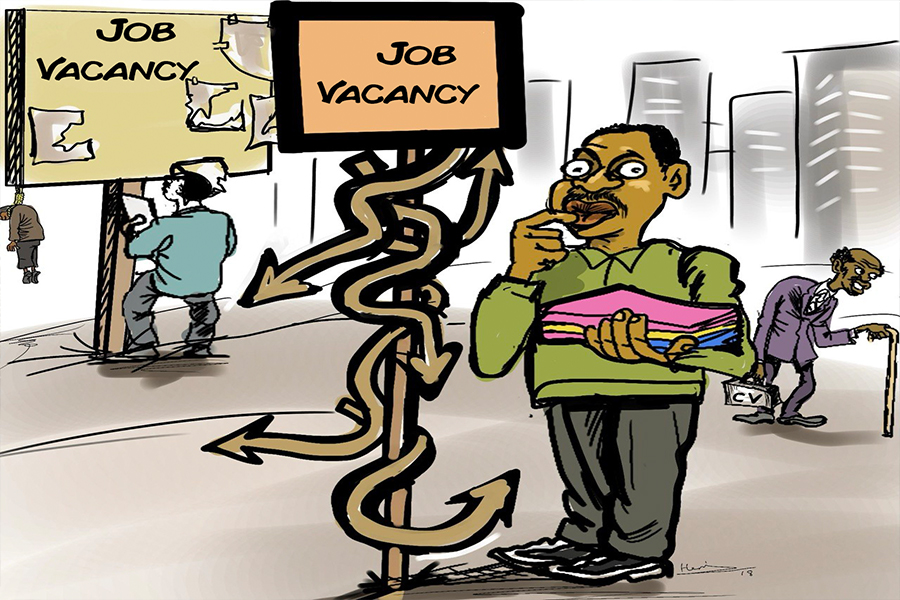
When these workers consider the future, they are less concerned about robots replacing them overnight and more worried about the ways new technologies could mean even fewer jobs, tighter controls, and more demanding work, without better pay or improved working conditions. In their eyes, digitalisation has yet to deliver genuine transformation. Instead, it often means an intensification of the daily grind.
This reality complicates the dominant narrative that industrialisation inevitably leads to modernisation and upward mobility. While industrial parks like Hawassa are often touted as symbols of progress, they are frequently criticised for offering low wages and limited transfer of technical expertise. For many investors, Ethiopia’s main draw remains its cheap labour rather than its technological advancements. The development model that results may deepen dependency on outside capital and reinforce the very inequalities industrialisation was meant to resolve.
A lasting solution lies in redefining the terms of competitiveness. Ethiopia’s digital strategy should extend beyond ambitions for a “smart” economy and also focus on fairness. Investing in local skills, promoting gender equity in training and promotion, and shielding workers from the social costs of economic transition are all critical steps. Furthermore, the voices of workers, especially women, deserve a place at the table when shaping policy. All too often, discussions about technology and the future of work are held at a remove from those most affected.
If policymakers hope to translate their digital aspirations into tangible and sustainable progress, they should see labour not as a disposable input but as the foundation of development. Placing workers’ welfare at the centre of digital transformation can help the country deliver a future that is productive, humane, and broadly shared.
PUBLISHED ON
Nov 15,2025 [ VOL
26 , NO
1333]

Photo Gallery | 192832 Views | May 06,2019

Photo Gallery | 182735 Views | Apr 26,2019

Photo Gallery | 179493 Views | Oct 06,2021

My Opinion | 144980 Views | Aug 14,2021







Aug 8 , 2026
The World Bank asks readers to picture a mother in rural Ethiopia who has never held...

Jul 31 , 2026
Weldu Yiheysh has not read the Pacific temperature charts. He does not need to. In Shibta District of Enderta Wereda, in...

Jul 25 , 2026
Ideally, citizens who have paid income tax all year should not have to reach for thei...
Jul 18 , 2026
Pressed in Parliament on jobs and household incomes, Prime Minister Abiy Ahmed (PhD)...








 Loading your updates...