


May 30 , 2026.
Addis Abeba’s most contested planning document is entering its final year, carrying the legacy of political rupture and the imprint of rapid redevelopment.
The 10th structural master plan, approved in July 2017, which led to one of the most consequential protest movements, is expected to lose its legal standing after next July. Its successor is now being prepared by the city Administration, which has begun assembling a new structural master plan for the capital to guide its expansion, investment, land-use regulation, and self-organisation.
The city cabinet under Mayor Adanech Abiebie recently approved a regulation establishing a dedicated project office to carry out the task. The Office will operate for two years, reporting to the Mayor and receiving technical supervision from the Planning & Development Bureau. The Land & Development Bureau, led by Adem Nuri, has already begun reviewing the outgoing plan, commissioning the Ethiopian Civil Service University to assess what the city gained from it, where implementation failed and which ambitions were left unattended.
Individuals close to the development disclosed that the University has begun the study, placing the next planning cycle within a review of its predecessor.
Cities traditionally prepare master plans every 10 years, and Addis Abeba has again reached a planning threshold. It will be the third plan prepared fully by Ethiopian professionals. Earlier plans were shaped through partnerships between Ethiopian and foreign consultants, especially French and Italian planners, before the shift toward local planning began with the ninth master plan. The last was meant to manage growth, infrastructure and land use. It became, instead, a symbol of political discontent around land, identity, federalism and state power.
Its most controversial element was an integrated development proposal introduced during former Mayor Diriba Kuma tenure. Officials described it as a mechanism to link Addis Abeba to the surrounding zones within the Oromia Regional State and to coordinate infrastructure with towns on the outskirts of the city. Many saw "an undisclosed boundary project" behind the technical language. Residents, activists, students and political groups used it as a rallying cry, arguing that the plan would extend Addis Abeba’s reach deep into the Oromia Regional State, dispossessing farmers and weakening the Regional State's administrative control.
High school and university students became central to the backlash.
The protests widened and became more confrontational, evolving into broader anti-government unrest between 2015 and 2018. Thousands died in protests and security crackdowns, before public pressure forced the EPRDF-led government to abandon the project. The fallout reached beyond planning offices. The unrest surrounding the plan became one of the major crises that weakened the previous administration and helped create the conditions for Abiy Ahmed's (PhD) rise to power in 2018.
Addis Abeba’s standalone master plan continued, while the formal link with surrounding towns in the Oromia Regional State was scrapped. Some argue the idea never fully disappeared, attributing the establishment of Sheger City in 2022 to several areas that were reorganised under it and had been included in the 2017 integrated plan for coordinated development with the capital.
Some officials and experts credit the same document that turned politically toxic with reshaping Addis Abeba’s current physical form. They link today’s corridor developments, expanding commercial districts and emerging urban centres to its urban vision, citing Cazanchis, Bole Medhanialem, CMC and the banking district around Mexico Square as illustrations. The outgoing master plan classified the city's land into 14 categories and sought to change the housing model. It proposed moving beyond the state as the dominant housing developer toward more diversified and multimodal housing approaches.
The master plan's assumptions were modest when drafted, but later leadership changes and more aggressive urban investment policies widened the gap between projections and implementation. According to city officials involved in developing the next master plan, it will have to reconcile scarcity, vertical growth, and political sensitivity.
Getachew Haile, a long-serving Planning & Development Bureau official and its deputy head, foresees the city moving to a new framework because the plan is nearing the end of its legal life.
“Because the current master plan will lose its legal base after next July, we're working to establish the project office and prepare the city’s structural master plan,” Getachew told Fortune.
The new Office is designed to sit at arm’s length from the Bureau’s ordinary operations. The Mayor will appoint its General Manager, while technical staff will come from executive organs, universities and independent experts.
“The Bureau will only cooperate with the project office,” Getachew said. “The staff and technical team will operate independently.”
Funding is expected to come from the city Administration and institutional support. According to Getachew, the Office’s main task is to “ensure the continuous smart city development endeavours of the city" and enable it to become a hub for services, tourism, finance, and technology.
"The next plan should also improve the legal and institutional flow of investment," he told Fortune. "It's expected to review land use, building-height rules, municipal services, transport systems, cemetery locations, roads and the city’s direction for growth."
The Project Office is expected to study urban lifestyle patterns, land utilisation, transport infrastructure, environmental systems, underground infrastructure, natural resources and social and economic conditions across the city. It will prepare maps and technical proposals for building heights, and study Addis Abeba’s ties with neighbouring cities and regional administrations. The scope shows how far the next plan would reach, while the previous integrated proposal continues to shadow the discussion of the capital’s relationship with the Oromia Regional State.
The outgoing plan theoretically allowed 100-storey buildings. But Getachew disclosed that several provisions are under review due to growing land scarcity, and that the capital is increasingly moving vertical. He also acknowledged that some areas identified as major urban centres did not develop as planned.
"Correcting such failures will be one priority," Getachew told Fortune.
Authorities hope to complete the planning work within one year despite the Office’s two-year mandate. Extra time was included based on experience that the process may require it.
“The experience shows extra time is necessary,” Getachew said, noting that documentation and technical consolidation alone could take another year.
Urban planning experts welcomed the initiative, but warned it would test the Administration’s determination to protect technical independence.
Anteneh Tesfaye (PhD) is an architect and urban planner who participated in the preparation of the previous master plan and led the central city urban planning project office. He believes that planning horizons should run from five to 20 years and should not be driven by short-term politics. He warned against “short-sighted” planning in which political goals override technical projections and data.
According to Anteneh, there is always a risk that government direction overshadows technical research. He warned that when realistic projections are rejected in favour of ambitious government wishes, it creates unnecessary stress and unfavourable pressure on the urban system. For him, a master plan should be a technical and scientific projection of how a city can realistically grow, not merely a reflection of political aspiration.
"The new plan should avoid earlier mistakes and focus on social, environmental and economic sustainability," he told Fortune. "Modern planning can't depend only on physical expansion or infrastructure ambitions. It has to balance environmental limits, economic productivity and residents’ social needs."
Anteneh could not see how Addis Abeba can be planned in isolation from nearby cities and regional administrations. The capital and surrounding urban centres need integrated relationships while preserving their identities.
“If possible, the master plans should be prepared jointly,” he said. “If not, they should at least follow a shared understanding and reference one another during implementation.”
Anteneh called for institutional neutrality in the project office. He urged that experts leading the studies should be chosen on merit, not political affiliation. Universities, which he said have been sidelined, should have a larger role.
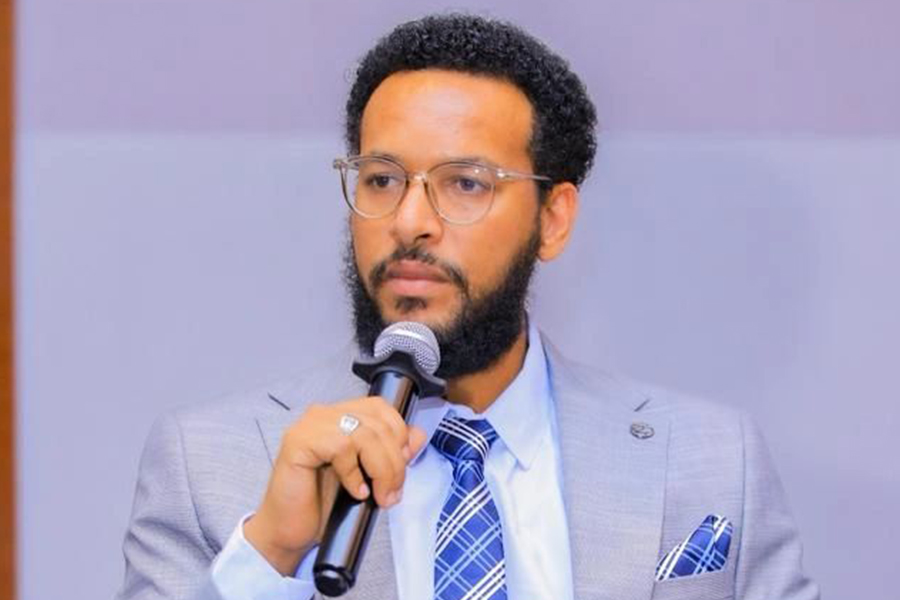
Manalush Alemu, a veteran urban planner and former head of the Land & Development Bureau in Lideta District, welcomed the initiative. She advocates designing cities around daily life and economic realities. For her, the core purpose of planning is to enable residents to live comfortably while remaining productive.
“Comfort doesn't only mean having green areas, parks, and recreational spaces,” Manalush told Fortune. “It also means ensuring workplaces and residential areas are located close to each other because that increases productivity.”
Manalush cautioned that plans prepared without broad public consultation can become detached from residents’ needs.
“Otherwise, it becomes an attitude of ‘I know what is best for you,’” she said.
Infrastructure priorities, she added, should mirror conditions on the ground, as building roads in areas without access to water would not truly benefit the people.
According to Manalush, Addis Abeba’s future should also be framed through its economic and logistical links with neighbouring cities.
"The plan should make clear what the capital gives and receives," she said. “For example, if shoes are produced here and sent elsewhere, there should be a clear system showing how products move and reach their destination.”
The question is whether the next plan can organise the city’s growth while earning public trust. Getachew said consultations with residents, experts, institutions and stakeholders will begin as the Office takes shape.
“We're preparing a plan that will guide the city’s development for the next 10 years,” he said.
PUBLISHED ON
May 30,2026 [ VOL
27 , NO
1361]

Photo Gallery | 192832 Views | May 06,2019

Photo Gallery | 182735 Views | Apr 26,2019

Photo Gallery | 179495 Views | Oct 06,2021

My Opinion | 144980 Views | Aug 14,2021





Aug 8 , 2026
The World Bank asks readers to picture a mother in rural Ethiopia who has never held...

Jul 31 , 2026
Weldu Yiheysh has not read the Pacific temperature charts. He does not need to. In Shibta District of Enderta Wereda, in...

Jul 25 , 2026
Ideally, citizens who have paid income tax all year should not have to reach for thei...
Jul 18 , 2026
Pressed in Parliament on jobs and household incomes, Prime Minister Abiy Ahmed (PhD)...






 Loading your updates...