

Photo Gallery | 191702 Views | May 06,2019



Apr 10 , 2026.
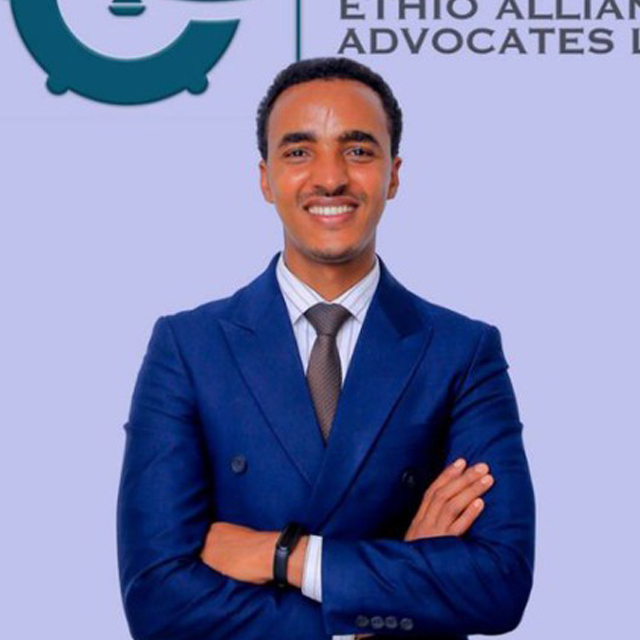
As Ethiopia edges toward its national polls scheduled for June this year, Eyob Mesafint, 42, steps into the leadership of Ethiopian Citizens for Social Justice, better known in its Amharic acrynom EZEMA, at a fraught moment, with militarised conflicts shadowing parts of the country, youth disengagement worrying political actors, and old arguments over the Constitution returning to the centre of the debate among contensting parties. The lawyer-turned-politician, Eyob argued that his Party’s leadership change was timed to avoid disruption during the campaign season, defends holding elections in relatively peaceful areas while conflict persists elsewhere, and makes the case for constitutional revision, institutional reform, and deeper youth participation. For all the certainty in his responses, there is also an implicit admission of constraint. EZEMA is campaigning in a country where not all constituencies may vote, where opposition activities remain unevenly protected, and where parliamentary influence can be numerically marginal. In an exclusive interview for a podcast that sounded less like a manifesto of imminent power than a case for political relevance, he tried to persuade sceptical voters that participation, however imperfect the political arena may be, is still preferable to withdrawal. Speaking with Kethurah Campbell, our editor-in-chief, Eyob addressed issues of democratic deficits, the limits of opposition politics, and why, in his view, abstaining from the ballot box amounts to surrendering the future. He criticised the Constitutional consensus he characterised as "ethnic federalism" as a source of division, but stopped short of dismissing the existing Constitutional order.
Fortune: Have you voted before?
Eyob Mesafint: Yes. I have voted since I was 18.
Q: How does the current electoral climate compared with the past?
Under the EPRDF, except in 2005, elections were largely nominal and predictable. Opposition leaders expected arrests, and harassment was routine. Today, the atmosphere is better. Parties like EZEMA can campaign more freely. But arrests and intimidation still happen, especially at lower levels of government, where old habits persist.
Q: Why were you selected to lead EZEMA now, with the national elections approaching?
According to the Party’s rules, a leader serves for five years, effectively one electoral cycle. Because EZEMA was founded in the middle of an election period, the timetable was awkward. Rather than changing leadership during the campaign itself, we agreed it would be better for a new leader to take the Party through the election season.
Q: As a legal professional, how has your background shaped your role in the Party?
Law and politics are closely connected. But I have also studied peace, security, and development because I always dream to involve in politics. Law matters because a country is administered through it. It also cultivates you to debate, argue and engage public issues.
Q: What is the Party’s position on conflict areas where elections may not be held?
Elections cannot be separated from peace. conducting election in the middle of an active conflict is not sensible. But still, the country must have a government. Since most areas are relatively peaceful, elections should proceed there, even if some parts of the Amhara Regional State, much of Tigray Regional State, and pockets of the Oromia Regional State may be excluded.
Q: Doesn’t that undermine inclusivity and the claim that the election is free and fair?
A government is established by winning a majority of seats, not by being chosen by everyone. That is democracy. Still, in a federal system, all parts of the federation should ideally be represented. [The exclusion of voters] in Tigray Regional State in the last election showed how serious that problem can become.
Q: If EZEMA wins, which parts of the Constitution would you seek to change?
Constitutional reform is one of our central agendas. We believe the current constitution, drafted more than 30 years ago, is too deeply rooted in ethnic politics. A Constitution should unite citizens, not organise them primarily around difference. We would revisit the preamble, Article 8 on sovereignty, Article 39 on [the right] to secession, and provisions shaping federal-regional power.
Q: But does changing the provisions guarantee enforcement? What pressure is being applied now?
No law implements itself. But without the right law, proper implementation is impossible. Ethiopia’s deeper problem is institutional weakness. Power has too often rested with individuals rather than durable institutions. Our view is that institutions, not personalities, should enforce the law and guarantee continuity.
Q: If EZEMA loses, would you work through a shadow cabinet and cooperate with the winning party?
One of EZEMA’s core principles is cooperation. Ethiopian politics has long treated the ruling party and the opposition as enemies, deepening conflicts. We reject that. Where there is common ground and national interest, we are prepared to work with any party. Where there are differences, we will criticise clearly and offer alternatives.
Q: How do you reconcile your personal views with the Party’s positions?
So far, I have not faced a contradiction I could not live with. I am part of the leadership and have a vote in decisions. In EZEMA, majority rule applies internally as well. Democracy must be practised inside the party before it can be promised to the country.
Q: What would you say to people who have decided not to vote?
Politics shapes the air we breathe, the security we live under, the food we eat and the quality of our lives. Rejecting politics changes nothing. In practice, not voting is also a vote because it means accepting whatever others decide. If people want the current pressures, conflict and hardship to continue, they can stay home. If not, they should vote.
Q: Many young people may feel they do not see enough real movement on the ground. How can they compare parties and decide whom to support?
They should listen carefully to what each party proposes and, more importantly, how it plans to deliver. A promise alone is not enough. For instance, when EZEMA says conflict is rooted in ethnic politics and argues for citizenship-based politics instead, voters can weigh that idea against competing visions and choose what they believe is better.
Q: Our survey found that nearly half of the respondents aged 18 to 30 have no interest in voting. Why is youth participation so weak?
The disinterest is real, even if I might question the exact number. Social media has shortened attention spans and shifted young people away from sustained civic engagement. But politics in Ethiopia has also failed to inspire them. It has too often been associated with conflict, destruction and personal attacks rather than ideas, debate and hope.
Q: What are you specifically doing to attract younger voters?
Fortunately, EZEMA itself is largely young. Most of our members, activists and many of our leaders fall within that demographic. Our social media outreach is driven by young people, and our leadership structure reflects that. We are trying to use those networks, though much more still needs to be done.
Young people, in particular, should not retreat from politics. The decisions taken now will shape the longest stretch of their lives, whether they participate or not. Refusing to engage only makes unwanted outcomes more likely. They should register, follow what is happening, and vote for whoever they believe can make tomorrow better.
Q: What has the Party’s youth training centre achieved?
We created a political academy because we believe politics should be grounded in knowledge, not emotion. The ambition was to train and prepare young leaders. Financial constraints, however, have limited its reach. It has trained only a few groups so far. The idea is promising, but still at an early stage.
Q: EZEMA holds four seats in Parliament. What did it achieve with them?
From the beginning, EZEMA was organised into a party and a government wing, supported by a shadow cabinet. Our MPs used that structure to review draft laws, prepare critiques and suggest improvements. With only four seats, our influence was limited, but we still provided detailed, sector-based input and pushed for better legislation wherever possible.
PUBLISHED ON
Apr 10,2026 [ VOL
27 , NO
1354]
Photo Gallery | 191702 Views | May 06,2019

Photo Gallery | 181455 Views | Apr 26,2019

Photo Gallery | 178163 Views | Oct 06,2021

My Opinion | 143712 Views | Aug 14,2021



Jul 18 , 2026
Pressed in Parliament on jobs and household incomes, Prime Minister Abiy Ahmed (PhD)...
Jul 11 , 2026
At a market stall, reform arrives without a communique. It comes as a higher transpor...
Jul 4 , 2026
In the goldfields of the Benishangul-Gumuz Regional State, Ethiopia's balance-of-paym...
Jun 27 , 2026
The federal legislative house rushed through one of the country's most contentious ho...





 Loading your updates...