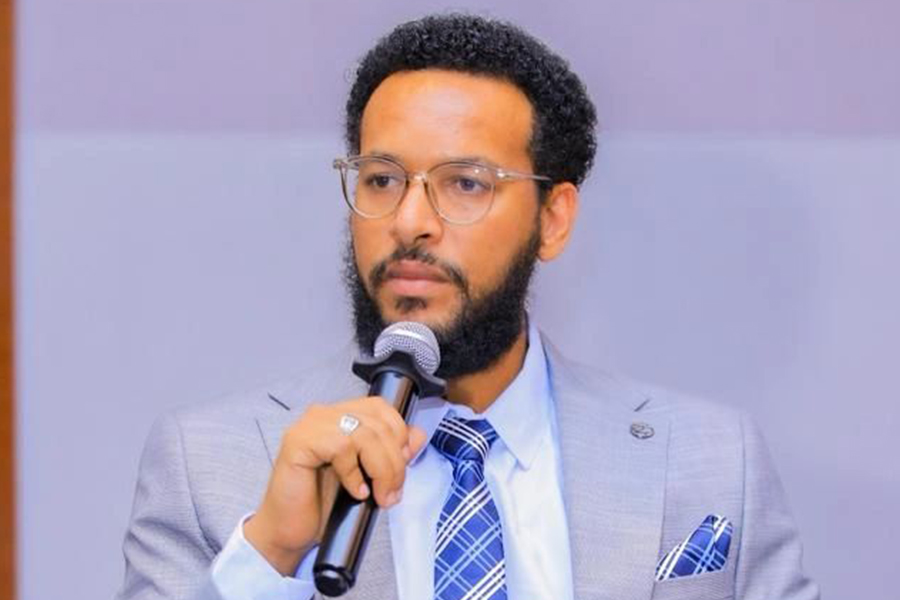



Nov 15 , 2025. By Mustafa Suleyman ( Mustafa Suleyman is the CEO of Microsoft AI and the author of "The Coming Wave: Technology, Power, and the Twenty-First Century's Greatest Dilemma. He previously co-founded Inflection AI and DeepMind. This article is provided by Project Syndicate (PS). )
AI has already outpaced humans in general knowledge competitions and is poised to overtake in other domains. Yet, there are spaces where human uniqueness persists. The question is no longer if AI will surpass us, but whether it can be shaped to advance, rather than undermine, human flourishing.
For decades, the Turing test was AI researchers' North Star. Today, it has been quietly surpassed. With reasoning models and agentic capabilities emerging, and with the pace of AI infrastructure build increasing, we have crossed an inflexion point on the journey to superintelligence, the point at which AI exceeds human-level performance at all tasks.
Indeed, the most consequential question for our time is not whether AI will surpass us, because in some ways it already has (try beating an AI at general knowledge), in many other ways, it will, and in some ways, we will always be unique. The real question, then, is whether we can shape AI to advance human flourishing rather than undermine it. That is the most important challenge of our time.
To be sure, everyone is primed by now to roll their eyes at AI hype. I get it. But the stakes could not be higher.
Science and technology have always been humanity's greatest engine of progress. Over the last 250 years, that engine has doubled life expectancy, lifted billions of people out of poverty, and given us antibiotics, electricity, and instant global communication. AI is the next chapter in this story. It represents our best shot at accelerating scientific discovery, economic growth, and human well-being. This potential is worth keeping in mind.
But harnessing AI's potential will work out right only if we build AI the right way. The costs of getting it wrong are immense. No one yet has reassuring answers about how we contain or align these systems. We are caught at an odd moment, faced with history's most powerful technologies and unsure how they can be controlled or whether they will remain beneficial.
I think we can cut through the noise and understand it in this way. AI, like all technology, can be judged by a simple test.
Does it improve human life? Is it clearly working in the service of people?
As we embark on the next phase of AI, the answer to these questions lies in what I call Humanist Superintelligence (HSI). It is an advanced AI designed to remain controllable, aligned, and firmly in service to humanity. This project is explicitly about avoiding, at all costs, an unbounded entity with total autonomy.
Instead, we should focus on domain-specific superintelligence. Rather than simply making a system that can endlessly improve and run away with itself for whatever purpose it might eventually arrive at, the core purpose is to deliver practical and real-world benefits to billions of people. It should forever remain unequivocally subordinate to humanity. This is the vision of our Superintelligence Team at Microsoft, where our core mission is to keep humanity secure and firmly in control.
Why humanism?
Because history has demonstrated the humanist tradition's enduring power to preserve human dignity. AI built in that spirit can unlock extraordinary benefits while avoiding catastrophic risks. We need a vision of AI that supports humanity, amplifies creativity, and protects our fragile environment, not one that sidelines us.
The prize for humanity is enormous. It is a world of rapid advances in living standards and science, and a time of new art forms, culture, and growth. It is a truly inspiring mission that has motivated me for decades. We should celebrate and accelerate technology as the greatest engine of progress that humanity has ever known. That is why we need much, much more of it.
HSI offers a safer path forward. Remaining grounded in domain-specific breakthroughs with profound societal impact is an example of this. Imagine AI companions that ease the mental load of daily life, enhance productivity, and transform education through adaptive and individualised learning. Imagine medical superintelligence delivering accurate and affordable expert-level diagnostics that could revolutionise global healthcare, capabilities already previewed by our health team at Microsoft AI.
Consider the potential for AI-driven advances in clean energy that will enable abundant, low-cost power generation, storage, and carbon removal, meeting soaring demand while protecting the planet.
With HSI, these are not speculative dreams. They are achievable goals that can benefit people around the world, providing concrete improvements to everyday life.
To state the obvious, humans matter more than tech or AI. Superintelligence could be the best invention ever, but only if it sticks to this maxim. That means ensuring accountability and transparency, and a willingness to make safety a top priority. Our goal is not to build a superintelligence at any cost, but to follow a careful path toward one that is contained, value-aligned, and always focused on human well-being.
Everybody needs to ask themselves this.
What kind of AI do we actually want?
The answer will shape the future of civilisation. For me, that answer is Humanist Superintelligence.
PUBLISHED ON
Nov 15,2025 [ VOL
26 , NO
1333]

Photo Gallery | 192832 Views | May 06,2019

Photo Gallery | 182735 Views | Apr 26,2019

Photo Gallery | 179493 Views | Oct 06,2021

My Opinion | 144980 Views | Aug 14,2021







Aug 8 , 2026
The World Bank asks readers to picture a mother in rural Ethiopia who has never held...

Jul 31 , 2026
Weldu Yiheysh has not read the Pacific temperature charts. He does not need to. In Shibta District of Enderta Wereda, in...

Jul 25 , 2026
Ideally, citizens who have paid income tax all year should not have to reach for thei...
Jul 18 , 2026
Pressed in Parliament on jobs and household incomes, Prime Minister Abiy Ahmed (PhD)...






 Loading your updates...