

Photo Gallery | 192830 Views | May 06,2019



Dec 16 , 2025.
Today, many childhood cancers can be treated successfully, giving children the chance to grow up and look forward to a full life. With effective treatment, they can attend school, build a career, start a family, and even have children of their own. At Acıbadem, we have been working toward this goal for over 30 years, dedicating each day to helping children and their families overcome cancer with the highest standard of care.
Childhood cancers are relatively rare compared to adult cancers. However, for a parent whose child is diagnosed with cancer, how rare the disease is becomes irrelevant. What truly matters is finding the best possible care and hope for recovery. Thankfully, there is more hope than ever today, thanks to major advances in childhood cancer treatment. For example, cancer-promoting genes are now better understood and can be targeted with specific medications. Surgeries can be performed more precisely, the side effects of chemotherapy are better managed, and modern therapies can destroy cancer cells while preserving healthy tissue.
In many types of childhood tumors, chemotherapy remains the most important form of treatment and is used in nearly all cases. However, recent innovations in certain pediatric cancers now allow some children to be treated with targeted therapies instead of chemotherapy. Still, chemotherapy continues to play a central role in the treatment of childhood cancers.
The good news is that children are generally able to tolerate high-dose chemotherapy, which helps in eradicating the tumor. This is possible because children grow rapidly and their bodies can produce new cells quickly. As a result, when chemotherapy affects both cancerous and healthy cells, a child’s body has greater capacity to regenerate and recover. This allows for higher and more intensive doses of chemotherapy than are typically tolerated by adults.
While chemotherapy in adults is often used to control tumor growth, in children it is mostly used with the goal of achieving a cure. There is no specific age limit for administering chemotherapy in children, but dosage must be calculated with great precision. The goal is to deliver an effective dose strong enough to destroy cancer cells, while protecting vital organs and healthy tissues.
Thanks to advances in radiation therapy, excellent outcomes can now be achieved in many adult patients, even without surgery. However, in children, the use of radiotherapy is more limited due to its potential impact on growth and development. For this reason, careful patient selection is essential when considering radiation treatment in pediatric cases. Today, radiotherapy is most commonly used in children with brain tumors. If possible, the brain tumor is first removed through surgery. The need for radiotherapy is then evaluated based on the child’s condition and overall treatment plan.
One of the most debated questions in childhood cancers is at what age a child can safely receive radiotherapy. This decision depends on several factors, including the type of tumor, how it responds to other treatments, and how quickly it progresses. For example, if the tumor can be managed with chemotherapy, radiotherapy may be postponed until the child is around 10 years old. On the other hand, in aggressive tumors, radiotherapy might be considered as early as age 3. In some urgent cases, where the tumor continues to grow despite other treatments, radiotherapy may need to be given even earlier. In the end, every decision is made based on the individual needs of the child.
The good news is that today at Acıbadem, we use the most advanced radiotherapy technologies, allowing us to precisely target tumors while protecting healthy tissue. These tools make it possible to deliver higher doses to the tumor and lower doses to surrounding normal tissues, improving local control significantly. Especially in very young children, we can adapt the treatment by using lower daily and cumulative doses, and by delivering highly accurate radiation that spares critical structures nearby. As a result, we are able to minimize acute side effects and reduce the risk of long-term complications.
When all other treatments are not enough to cure childhood cancers, bone marrow transplantation can offer a life-saving option. This procedure replaces destroyed blood cells with healthy blood-forming stem cells infused into the child’s body. To date, Acıbadem has successfully performed over 1,200 bone marrow transplants for children from around the world.
When even bone marrow transplantation fails in some cases of lymphoma and leukemia, CAR T-cell therapy may be considered. This form of cellular immunotherapy enhances the ability of T cells to recognize and eliminate cancer cells. CAR T-cell therapy represents one of the most promising cancer treatment options available today and, in some cases, may offer the potential for a cure. Acıbadem is the first and only CAR T-cell producer in Türkiye and the surrounding region.
In every case, there is a careful balance between treating cancer effectively with chemotherapy and allowing a child’s normal growth to continue by minimizing side effects. Today, many chemotherapy-related toxicities can be prevented or reduced with supportive medications. For example, drugs are routinely given alongside chemotherapy to help prevent potential damage to hearing, the heart, and the bladder. Common side effects such as nausea and vomiting can also be managed with medications given before, during, or after treatment. In this way, both acute and long-term side effects of chemotherapy can be minimized as much as possible.
PUBLISHED ON
Dec 16,2025 [ VOL
26 , NO
1338]
Photo Gallery | 192830 Views | May 06,2019

Photo Gallery | 182732 Views | Apr 26,2019

Photo Gallery | 179492 Views | Oct 06,2021

My Opinion | 144979 Views | Aug 14,2021







Aug 8 , 2026
The World Bank asks readers to picture a mother in rural Ethiopia who has never held...

Jul 31 , 2026
Weldu Yiheysh has not read the Pacific temperature charts. He does not need to. In Shibta District of Enderta Wereda, in...

Jul 25 , 2026
Ideally, citizens who have paid income tax all year should not have to reach for thei...
Jul 18 , 2026
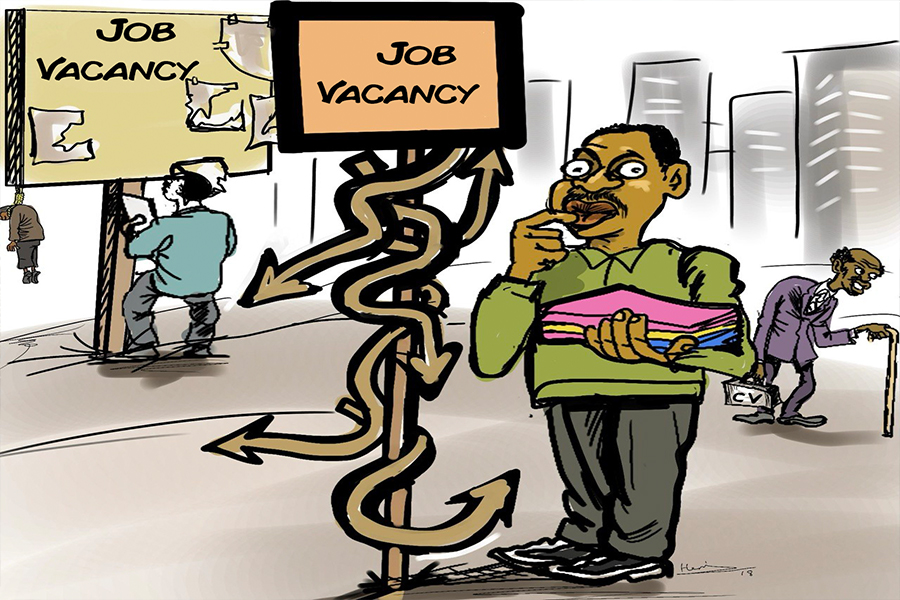
Pressed in Parliament on jobs and household incomes, Prime Minister Abiy Ahmed (PhD)...






 Loading your updates...