
View From Arada | Feb 24,2024



Mar 5 , 2022
By Abebe Haile-Gabriel
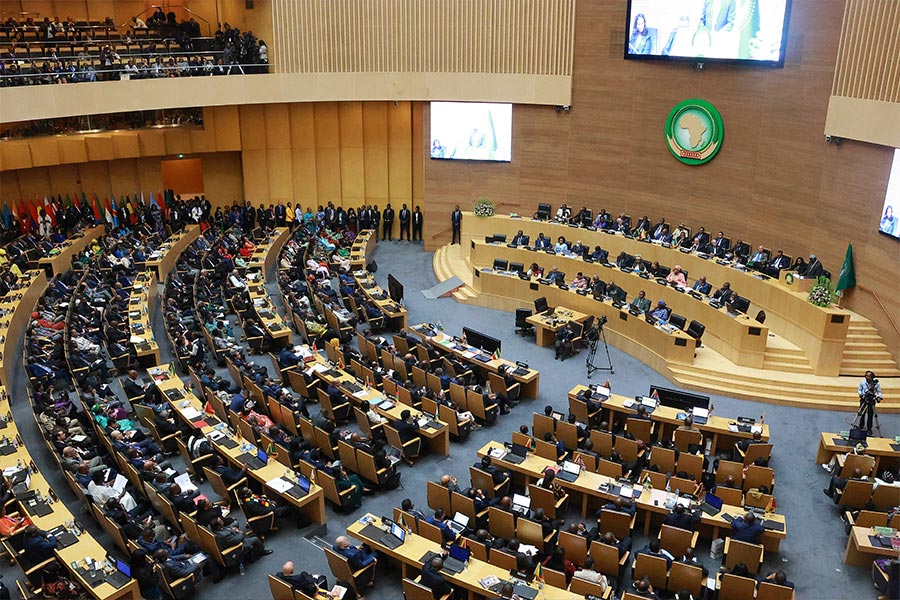
African women are overrepresented in cross-border trade, but their specific needs and challenges are not adequately considered in relevant national and regional trade policy frameworks, argues Abebe Haile-Gabriel (PhD), Food & Agriculture Organisation (FAO) assistant director-general and regional representative for Africa.
March 8 is marked around the world as International Women’s Day. For many women in Africa, including those in the agriculture sector, it will be just another day where invisible barriers hold them back from their true potential.
Inclusivity and fairness are key to achieving sustainable development in agriculture, and this objective cannot be obtained without accounting for the central role played by women in the sector, including in agriculture markets, trade and value-chain development.
The African Continental Free Trade Area (AfCFTA) is a major opportunity to boost economic growth, reduce poverty, and broaden economic inclusion. We must seize this opportunity for gender equality as well.
The African agricultural and agribusiness market is undergoing rapid expansion, with its value estimated to reach one trillion dollars by 2030, according to the World Bank. This represents an immense potential for Africa to boost food and non-food trade within the continent and enhance food security and resilience for all.
The AfCFTA has opened up immense new market and trading opportunities to capitalise on this potential. The agreement, signed by 54 African Union member states and covering a market of 1.2 billion consumers, establishes the largest free-trade area in the world since the creation of the World Trade Organisation (WHO) almost 30 years ago.
The agreement creates a regional single market aiming to enhance intra-African trade, facilitate investment, improve continental economic integration, and boost the competitiveness of its member countries both within the continent and in the global market.
However, this potential cannot be realised without empowering women to fully participate in the AfCFTA.
Women have and continue to play a crucial role in agriculture in the region. They contribute significantly to food production, processing and marketing, household food security and nutrition, natural resources management and conservation of biodiversity in the face of climate change. In recognition of women’s roles, this year’s International Women’s Day theme focuses on the importance of gender equality for sustainability.
Women in Africa operate all along agri-food value chains. They are producers, traders and agriculture entrepreneurs and stand to benefit greatly from the new opportunities presented by the AfCFTA.
Some of the many benefits that women can reap by trading under the AfCFTA include: moving up the value chain, leveraging networks of women’s associations, upgrading their businesses, and tapping into new markets and investment opportunities.
The rollout of the AfCFTA also presents potential risks for women traders that need to be addressed. By creating new formal regulated markets, the AfCFTA will trigger a structural shift in the way certain economic activities and businesses are conducted in Africa.
Currently, 85pc of economic activity in Africa is carried out in the informal sector where women account for nearly 90pc of the informal labour force. In addition, at least 30pc to 40pc of total intraregional trade in the region is composed of informal cross-border trade, the overwhelming majority of which, about 60pc to 70pc, is accounted for by women who are owners of mainly micro, small and medium enterprises.
Due to this concentration of women in the informal sector, the formalisation of trading practices, and the creation of new formal regulated markets catalysed by the AfCFTA has the potential to impede women traders’ access to the new market, investment and business opportunities that the free trade area promises.
In fact, the specific challenges faced by women and the importance of explicitly targeting them for inclusion were highlighted in FAO and the African Union’s Framework for Boosting Intra-African Trade in Agricultural Commodities and Service which is a guide for policy and decision-makers.
While African women are overrepresented in cross-border trade, their specific needs and challenges are not adequately considered in relevant national and regional trade policy frameworks.
There is a risk that this gender-neutrality of the current enabling policy environment would be exacerbated by the new trade frameworks that will be elaborated under the AfCFTA. The safeguard towards minimising, if not avoiding, this imminent risk is to be intentional in considering gender dimensions in the implementation of the agreement.
Decisive action is needed at all levels: subnational, national and regional, and requires the involvement and cooperation of all relevant stakeholders from women’s groups, government ministries, regional bodies, the private sector and development partners.
PUBLISHED ON
Mar 05,2022 [ VOL
22 , NO
1140]

View From Arada | Feb 24,2024
Radar | Dec 26,2020
Obituary | Apr 27,2025

My Opinion | Apr 18,2026
Commentaries | Dec 04,2021

Commentaries | May 30,2026
Viewpoints | Nov 25,2023
Commentaries | Sep 14,2024
Commentaries | Apr 10,2026
Editorial | Jan 01,2022

Photo Gallery | 193198 Views | May 06,2019

Photo Gallery | 183087 Views | Apr 26,2019

Photo Gallery | 179875 Views | Oct 06,2021
My Opinion | 145329 Views | Aug 14,2021









Dec 22 , 2024 . By TIZITA SHEWAFERAW
Charged with transforming colossal state-owned enterprises into modern and competitiv...

Aug 18 , 2024 . By AKSAH ITALO
Although predictable Yonas Zerihun's job in the ride-hailing service is not immune to...

Jul 28 , 2024 . By TIZITA SHEWAFERAW
Unhabitual, perhaps too many, Samuel Gebreyohannes, 38, used to occasionally enjoy a couple of beers at breakfast. However, he recently swit...

Jul 13 , 2024 . By AKSAH ITALO
Investors who rely on tractors, trucks, and field vehicles for commuting, transporting commodities, and f...

Aug 14 , 2026
Aschalew Fetene, known as “Ardi” and admired for his poetic depth, has built a ti...

Aug 8 , 2026
The World Bank asks readers to picture a mother in rural Ethiopia who has never held...

Jul 31 , 2026
Weldu Yiheysh has not read the Pacific temperature charts. He does not need to. In Shibta District of Enderta Wereda, in...

Jul 25 , 2026
Ideally, citizens who have paid income tax all year should not have to reach for thei...
Aug 15 , 2026 . By NAHOM AYELE
Federal prosecutors have charged seven defendants over a set of foreign-trade deals t...
Aug 15 , 2026 . By BEZAWIT HULUAGER
Ethio-post is preparing to turn its thousands of branches into banking agents, allowi...
Aug 16 , 2026 . By BEZAWIT HULUAGER
Kassahun Gofe (PhD), minister of Trade & Regional Integration (MoTRI), is prepari...

Aug 16 , 2026 . By NAHOM AYELE
Justices at the Federal Supreme Court widened the shield they are holding over lawyer...







 Loading your updates...