

Advertorials | Jun 07,2026



Sep 4 , 2021
By Bereket Alemayehu
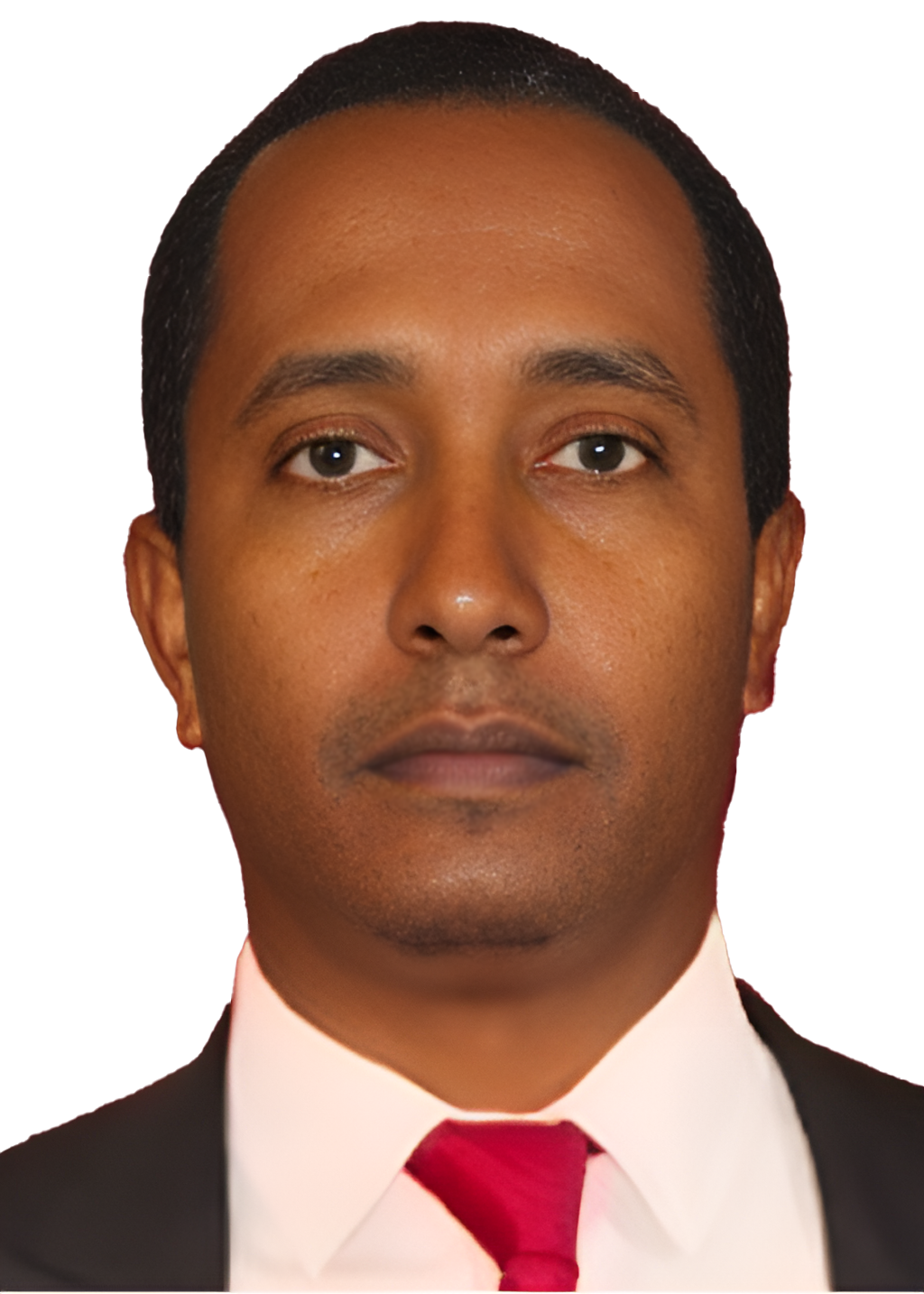
The AfCFTA offers a great deal of opportunities for Ethiopia. To optimally utilise the opportunities, the government must give more attention to the AfCFTA and its implications on the Ethiopian economy, writes Bereket Alemayehu, an adjunct lecturer at Addis Abeba University and a Market Access and Trade Policy Officer at the UK Department for International Trade in Ethiopia. The views expressed in this article are those of the author and do not represent any institution he is affiliated with. He can be reached at bereketalemayehu84@gmail.com.
In keeping with the global trend, Ethiopia has been encouraging investment and enhancing its trade with other countries to reinforce its integration into the global economy. It joined the African Continental Free Trade Area (AfCFTA) and has also been negotiating for years to become a member of the World Trade Organisation (WTO). Even though becoming a member of the AfCFTA and acceding to the WTO have enormous implications, the level of attention accorded to these subjects in Ethiopia is below what is warranted. The former is chosen as a case in point for this article.
The AfCFTA is a free trade bloc in Africa established in 2018, which became effective in January 2021. All African Union Members, except Eritrea, have signed it and 38 of them have ratified it thus far. It aims principally at facilitating the integration of African economies, mainly through enhancing intra-African trade and investment. Its protocols on trade in goods, services, and dispute settlement came into force last January, while state parties (member states) are negotiating for protocols on investment, competition policy and intellectual property rights. Subsequently, a protocol on e-commerce is also slated to be negotiated.
The Free Trade Area has many fundamental principles and rules. Liberalisation, provision of market access, non-discrimination and transparency are among the notable ones. The principle of liberalisation requires state parties of the AfCFTA to regularly negotiate for the removal of tariff and non-tariff barriers to trade in goods and restrictions to trade in services based on reciprocity (negotiating states would mutually benefit from negotiated opportunities and treatment in each other’s market).
Related to liberalisation is market access. It demands that a state party must refrain from taking measures that restrict trade in goods or services, except those allowed under its specific commitments, by businesses from other parties of the AfCFTA.
The other principle of the Free Trade Area is non-discrimination, which has dual prongs – national and most-favoured-nation (MFN) treatment. The former requires that a state party treat the goods, services or businesses of other members to the trade bloc no less favourably than like (very similar) domestic goods, services or businesses after customs procedures are completed, such as in terms of domestic taxes. MFN requires the treatment of a state party's goods, services, or businesses as favourably as like (very similar) goods, services or businesses of another state party to the AfCFTA.
The AfCFTA also requires that state parties, by the principle of transparency, make sure that their laws, procedures and other general rulings relating to trade and investment are published or made publicly available in any other way. These and other principles of the AfCFTA are supported by detailed rules that guide intra-African trade and, once the protocol on investment is adopted, investment. It is worth noting that many of the principles of the AfCFTA have conditions for application and exceptions.
Thus, it should be clear that the AfCFTA’s principles and rules will have huge implications on Ethiopia's economy, especially as implementation is gradually strengthened. The AfCFTA will open many opportunities for Ethiopia-based businesses, since it will enable them to trade with businesses and consumers or make investments in other state parties at relatively lower costs, thereby increasing trade volume and investment in the continent.
As such, local businesses should develop the appetite and capability to utilise the opportunities that the AfCFTA offers, including by integrating themselves into regional value chains.
Yet, as the AfCFTA works based on reciprocity, Ethiopia also has to grant the goods and services of other state parties the privileges that are corresponding to what it is entitled to claim from them. Businesses from these countries will have easier access to the market, both in terms of trade and investment. This would intensify the competition of foreign and domestic businesses in the market. For Ethiopian consumers, a competitive market is believed to be advantageous, given that it can offer them a range of goods and services at competitive prices and qualities.
Ethiopian businesses should also brace for a more competitive market. If they cannot effectively compete, they could fail to survive. This would be more challenging for small and medium enterprises (SMEs), which have limited financial and professional capacity to vie in the market with large businesses effectively. The inability of SMEs to survive in the market can negatively affect Ethiopia’s desire to build a robust domestic economy. To some extent, revenue losses are also expected to result from Ethiopia’s tariff reduction or elimination commitments under the trade bloc.
It is, therefore, necessary for the government to give more attention to adopt appropriate policy, regulatory and institutional frameworks and to properly engage with stakeholders. These can help Ethiopia to optimally utilise the opportunities the AfCFTA offers, while helping it achieve its sustainable development objectives. No less is necessary for the government to ensure that its national economic policies and laws are aligned with the trade bloc.
Here, its plans to enhance the manufacturing sector and agricultural productivity to increase the export volume of finished products and agricultural commodities should be given more attention. The government also needs to effectively exercise its regulatory power by using the exceptions provided in the AfCFTA, as appropriate, to serve its different objectives, including those other than the promotion of trade and investment, such as protecting the environment and labour.
This should be coupled with measures to enhance the capacity of institutions that work on trade and investment-related issues, such as the Ministry of Trade & Industry and the Customs Commission. It is also essential for the government to improve its capacity to efficiently and fairly collect taxes from domestic sources to compensate for the revenue lost due to the tariff reduction or elimination. It also needs to work to ensure that trade and investment-related laws as well as their enforcement are transparent. This will help showcase that the business environment is transparent and predictable, thereby contributing towards building traders’ and investors’ trust in the system.
Finally, the government must engage with chambers of commerce and other stakeholders to address their concerns on the AfCFTA and augment the competitiveness of local businesses (including SMEs) in the continent’s markets (using the AfCFTA’s infant industries protection rules, as appropriate). This could be by providing them with training and linking them with experienced businesses. However, these measures should not reduce the importance of promoting foreign investment in Ethiopia. Foreign investment can still play a critical role in bringing capital, facilitating technology and knowledge transfer and creating jobs.
PUBLISHED ON
Sep 04,2021 [ VOL
22 , NO
1114]

Advertorials | Jun 07,2026
Editorial | May 06,2023
Election 2026 coverage | Apr 16,2026

Viewpoints | Jul 01,2023

My Opinion | Aug 26,2023
My Opinion | Jan 01,2022
Fortune News | Mar 09,2024
Fortune News | Jan 09,2021
Fortune News | Nov 21,2020
Commentaries | Dec 04,2020

Photo Gallery | 193846 Views | May 06,2019

Photo Gallery | 183733 Views | Apr 26,2019

Photo Gallery | 180632 Views | Oct 06,2021
My Opinion | 145987 Views | Aug 14,2021









Dec 22 , 2024 . By TIZITA SHEWAFERAW
Charged with transforming colossal state-owned enterprises into modern and competitiv...

Aug 18 , 2024 . By AKSAH ITALO
Although predictable Yonas Zerihun's job in the ride-hailing service is not immune to...

Jul 28 , 2024 . By TIZITA SHEWAFERAW
Unhabitual, perhaps too many, Samuel Gebreyohannes, 38, used to occasionally enjoy a couple of beers at breakfast. However, he recently swit...

Jul 13 , 2024 . By AKSAH ITALO
Investors who rely on tractors, trucks, and field vehicles for commuting, transporting commodities, and f...

Aug 28 , 2026
Every year, the Ministry of Education (MoE) sets a national examination. Every year,...
Aug 22 , 2026
A record is a strange thing to worry about. Federal trade officials have booked the b...

Aug 14 , 2026
Aschalew Fetene, known as “Ardi” and admired for his poetic depth, has built a ti...

Aug 8 , 2026
The World Bank asks readers to picture a mother in rural Ethiopia who has never held...
Aug 29 , 2026 . By BEZAWIT HULUAGER
The federal government is increasingly relying on Treasury bills (T-bills) to repay T...
Aug 29 , 2026 . By NAHOM AYELE
Judges on a Federal High Court bench have ordered D'Afrique, one of Addis Abeba's old...
The Ministry of Revenues wants to know not just who a taxpayer is but almost everythi...
Aug 29 , 2026 . By BEZAWIT HULUAGER
Electricity supplied from Ethiopia has helped halve Djibouti's power production costs...





 Loading your updates...