


Feb 21 , 2026
By Abreham Tesfaye
Over the past few years, the National Bank of Ethiopia (NBE) has issued a steady stream of directives in quick succession, reshaping banking operations, foreign exchange rules, capital requirements and market conduct. On paper, the agenda claims to adopt international standards, liberalise the forex regime, strengthen supervision and modernise a long-controlled financial system. In practice, the economic payoff remains unclear and largely unproven.
Over the past few years, the National Bank of Ethiopia (NBE) has issued a steady stream of directives, in quick succession, reshaping banking operations, foreign exchange rules, capital requirements and market conduct.
On paper, the agenda looks ambitious. It claims to adopt international standards, liberalise the forex regime, strengthen supervision, and modernise a long-controlled financial system. In practice, the economic payoff remains unclear and largely unproven.
The latest round of monetary policy reform feels familiar to many observers. Each new directive arrives with the language of urgency and inevitability, billed as a bold correction to years of distortion. Yet for an economy battered by inflation, forex shortages, and falling private-sector confidence, these measures look less like decisive leadership and more like belated admissions that earlier policies failed to deliver.
The problem is not the reform itself. The economy needs financial policy reforms. It is the timing, sequencing and credibility that is the source of the troubles. Many of the decisions now presented as breakthroughs are reforms that should have been in place years ago, before distortions hardened into crises.
Liberalising foreign exchange after years of rationing did not create dollars. It simply exposed how deep the shortage had become. Tightening banking regulations after inflation eroded balance sheets did not restore confidence. It may instead raise compliance costs for institutions, banks and borrowers already struggling to lend productively.
Supporters of the agenda argue that impact takes time and patience. That is true. But patience is a luxury for businesses facing daily liquidity constraints and households watching their purchasing power eroded day after day. For them, the question is not whether reforms are theoretically sound, but whether they are working now in the real economy. So far, the evidence is flimsy. The cost of living remains stubbornly high, even though official government data on inflation says otherwise. Credit to productive sectors is constrained. Access to foreign currency still determines who survives and who exits the market.
What makes this more troubling is the policy's reactive nature. Many directives seem to respond to pressures that have already spun out of control rather than anticipating them. Interest rate moves come after inflation has surged. Forex measures follow years of widening parallel market premiums. Prudential rules are tightened once risks are already embedded in balance sheets. The pattern is of an institution chasing events instead of shaping them.
There is also reform by proclamation. Frequent directives may signal activism, but they also create uncertainty and doubt. Businesses struggle to plan when rules change faster than contracts can be written. Banks hesitate to innovate when regulatory interpretations shift midstream. Investors, domestic and foreign, read inconsistency as risk. Reform fatigue follows, not because change is unwelcome, but because it feels endless and unsettled for many market participants.
Equally worrying is the growing gap between official narratives and daily economic reality. Policymakers talk about meeting global standards, yet standards alone do not generate growth. They point to liberalisation, yet markets cannot function when trust is weak and institutions overstretched. They speak of resilience, while ordinary businesses quietly downsize or close. Reform becomes a performance, measured by the number of directives issued rather than by outcomes achieved on the ground.
None of this argues for a reversal of course. But it does argue for a serious rethink, with fewer directives and better timing. Policymakers need to have more data-driven evaluations and less rhetorical celebration. Above all, a clear recognition that reform delayed is reform diminished. When policies arrive after the damage is done, they may stabilise the wreckage, but they rarely unlock growth or renewed confidence.
The economy does not need another wave of announcements to show that change is happening. It needs evidence that change is working. Until that shows up plainly in prices, credit access and confidence, the financial policy reform story will remain what it increasingly appears to be. It is too little, too late and far too uncertain for an economy that cannot afford long experiments.
PUBLISHED ON
Feb 21,2026 [ VOL
26 , NO
1347]


Sunday with Eden | Sep 16,2023

Fortune News | Oct 05,2025
Fortune News | Jul 06,2025

Radar | Apr 26,2026

Fortune News | Sep 03,2022
Radar | Sep 14,2024

Viewpoints | May 16,2026

Exclusive Interviews | Jan 04,2026

Election 2026 coverage | Nov 22,2025

Photo Gallery | 193436 Views | May 06,2019

Photo Gallery | 183335 Views | Apr 26,2019

Photo Gallery | 180142 Views | Oct 06,2021

My Opinion | 145572 Views | Aug 14,2021







Dec 22 , 2024 . By TIZITA SHEWAFERAW
Charged with transforming colossal state-owned enterprises into modern and competitiv...

Aug 18 , 2024 . By AKSAH ITALO
Although predictable Yonas Zerihun's job in the ride-hailing service is not immune to...

Jul 28 , 2024 . By TIZITA SHEWAFERAW
Unhabitual, perhaps too many, Samuel Gebreyohannes, 38, used to occasionally enjoy a couple of beers at breakfast. However, he recently swit...

Jul 13 , 2024 . By AKSAH ITALO
Investors who rely on tractors, trucks, and field vehicles for commuting, transporting commodities, and f...

Aug 14 , 2026
Aschalew Fetene, known as “Ardi” and admired for his poetic depth, has built a ti...

Aug 8 , 2026
The World Bank asks readers to picture a mother in rural Ethiopia who has never held...
Jul 31 , 2026
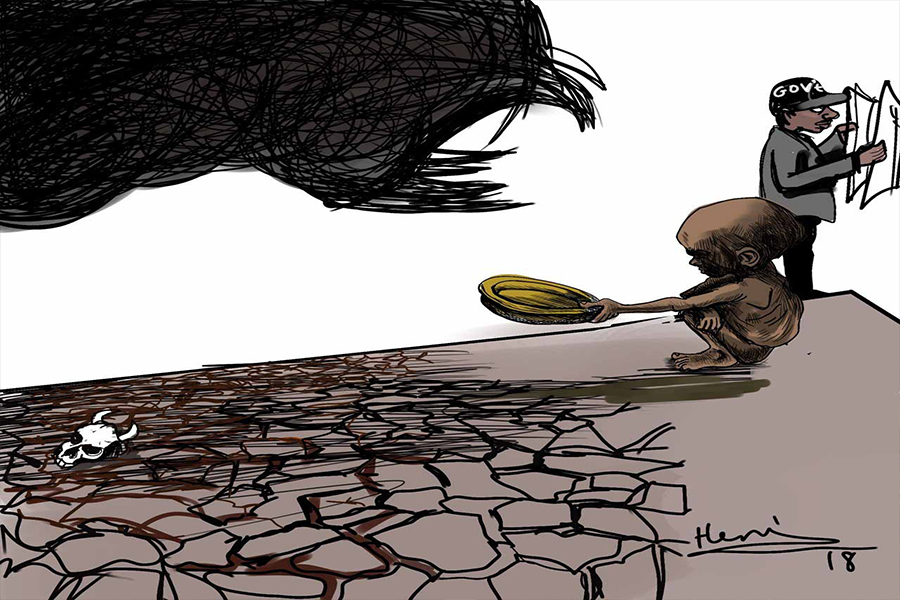
Weldu Yiheysh has not read the Pacific temperature charts. He does not need to. In Shibta District of Enderta Wereda, in...
Jul 25 , 2026
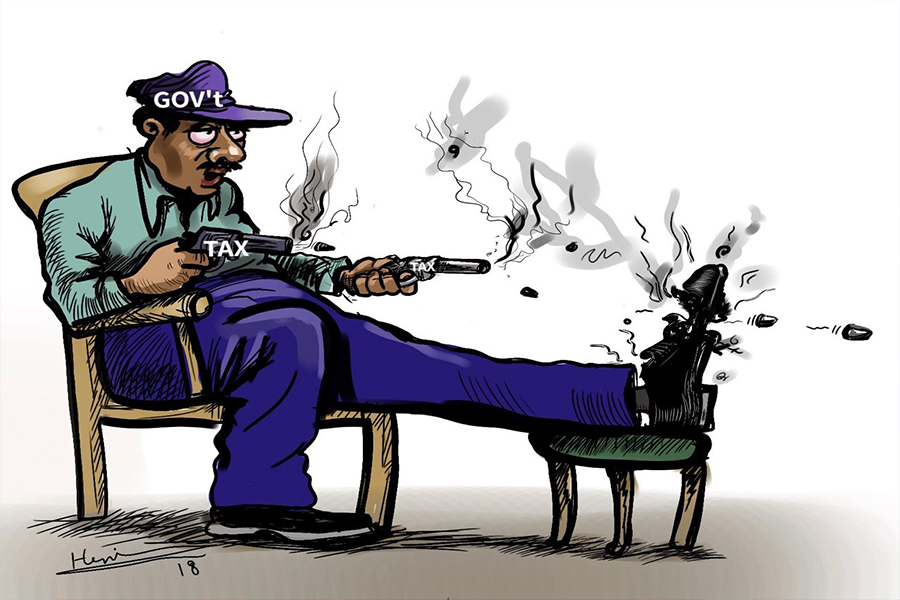
Ideally, citizens who have paid income tax all year should not have to reach for thei...
Aug 15 , 2026 . By NAHOM AYELE
Federal prosecutors have charged seven defendants over a set of foreign-trade deals t...
Aug 15 , 2026 . By BEZAWIT HULUAGER
Ethio-post is preparing to turn its thousands of branches into banking agents, allowi...
Aug 18 , 2026 . By BEZAWIT HULUAGER
Kassahun Gofe (PhD), minister of Trade & Regional Integration (MoTRI), is prepari...

Aug 16 , 2026 . By NAHOM AYELE
Justices at the Federal Supreme Court widened the shield they are holding over lawyer...








 Loading your updates...