

Radar | Jun 29,2025



Jul 29 , 2024
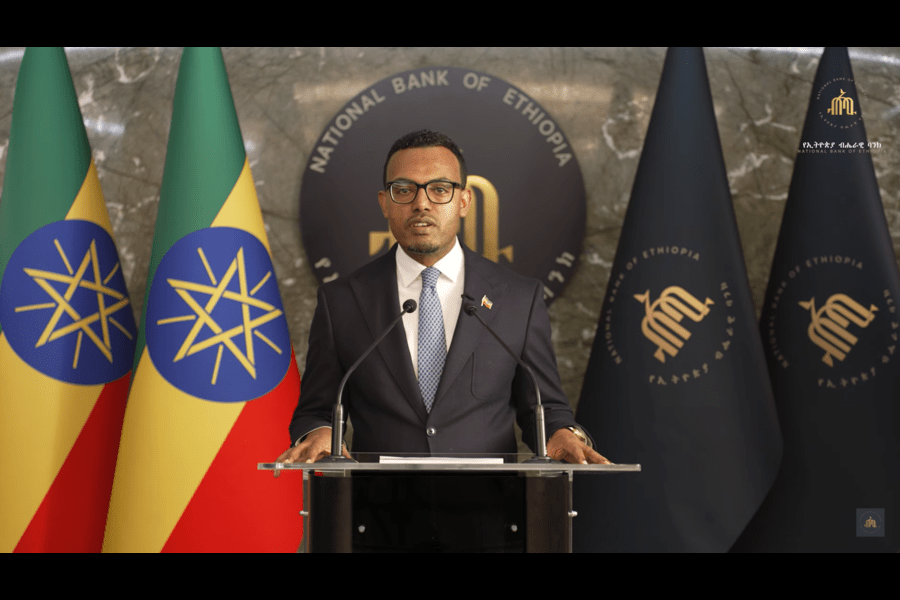
In a momentous departure from its erstwhile tightly controlled policies, the National Bank of Ethiopia (NBE) has granted permission to commercial banks to freely negotiate foreign currency exchange rates with clients and amongst themselves.
They are granted, effective today and alongside exporters the liberty to hold onto their foreign exchange earnings, which is a departure from the prior obligation to surrender forex to the central bank. Non-bank foreign exchange bureaus have been given the nod to conduct business, armed with the capability to trade foreign currency cash notes at market rates.
A part of an extensive overhaul of the country's foreign exchange regime by the Central bank Governor Mamo Mehiretu, the NBE has committed to limiting its interventions in the forex market, primarily to maintain order. A shift to a market-based determination of exchange rates was announced by Governor Mamo, marking an epoch-making crucial from the historical inflexible policies. Yet, capital account outflows will continue to be under control.
Exporters have now been permitted to hold onto 50pc of their foreign exchange proceeds, a noticeable increase from the earlier 40pc. The waiting list system for banks' allocation of forex has been done away with, making it easier for importers to gain access. Ethiopian residents can now revel in the simplified rules on foreign currency accounts, which permit them to open accounts based on incomes in forex, inclusive of remittances and salaries. They can open these accounts for disbursements related to foreign transactions. The ceiling on interest rates for foreign loans to private entities has also been removed, a step in the direction of attracting more investment, according to the Governor.
The NBE has also done away with an array of import restrictions, notably the ban on 38 categories of products, thus liberalising foreign exchange access for importing a broad spectrum of goods and services. Firms within special economic zones have been allowed to keep 100pc of their foreign exchange earnings, courtesy of the special privileges granted to them. Neither will restrictions on franco valuta imports stay in place.
According to Governor Mamo, who made a public statement earlier morning today, these measures will augment Ethiopia's economic competitiveness, unlock export potential, and pull in foreign direct investment (FDI).
"These bold steps aim to rectify long-standing economic distortions and promote a more dynamic and inclusive economic environment," said the NBE in a statement issued today, July 29, 2024. “There is a strong expectation that the economy will be on a trajectory of robust growth in years to come.”
Radar | Jun 29,2025
Radar | Nov 14,2020
Radar | Dec 19,2018

Fortune News | Oct 15,2022
Verbatim | Feb 21,2026

Viewpoints | Jan 17,2026

Radar | Apr 24,2023

Featured | Sep 08,2024

Fortune News | Jan 22,2022

Fortune News | Apr 12,2020

Photo Gallery | 193156 Views | May 06,2019

Photo Gallery | 183047 Views | Apr 26,2019

Photo Gallery | 179826 Views | Oct 06,2021

My Opinion | 145292 Views | Aug 14,2021











Aug 14 , 2026
Aschalew Fetene, known as “Ardi” and admired for his poetic depth, has built a ti...

Aug 8 , 2026
The World Bank asks readers to picture a mother in rural Ethiopia who has never held...

Jul 31 , 2026
Weldu Yiheysh has not read the Pacific temperature charts. He does not need to. In Shibta District of Enderta Wereda, in...

Jul 25 , 2026
Ideally, citizens who have paid income tax all year should not have to reach for thei...







 Loading your updates...