

Delicate Number | May 31,2025



Mar 14 , 2026
By Kidist Yidnekachew
Defending the indefensible is a human tendency shaped by identity, ideology, and limited information. Attempts to impose truth often provoke resistance rather than clarity. Conversations reveal that ego can interfere with meaningful dialogue. International and domestic awareness together sharpen perspective. Patience and reflection remain essential to seeing beyond inherited filters.
I once had a friend who would lose his temper whenever our conversations drifted toward politics or religion. He was principled, deeply committed to fairness in a world that rarely offers it. When we debated, his voice would rise in disbelief.
"How can you not see this?" he would ask. "Why don’t you see it the way it is?"
At the time, I stood on the other side of that frustration. I calmly explained that I simply did not see things the way he did. His intensity felt exaggerated. What I did not realise then was that he wasn’t arguing merely to win; he was grieving that someone he cared about seemed blind to what he considered obvious truth.
Years later, the roles have quietly reversed.
I still have much to learn about global power dynamics and geopolitics. Yet recently, I have recognised the same irritation that once consumed my friend. It surfaces when people seem unwilling or unable to acknowledge realities that are painfully clear.
Truth is rarely simple. Everyone views the world through filters shaped by upbringing, culture, and experience. But there are moments when the facts stand plainly, and human consequences are impossible to ignore. In those moments, it becomes difficult to understand how anyone could defend what appears indefensible. Still, people do.
I often see individuals remain fiercely loyal to a group, movement, or ideology, even when it stands accused of clear wrongdoing. Loyalty becomes stronger than evidence. Justice becomes selective. Long-standing grievances against an opposing side blind people to the actions of those they support. People defend the indefensible simply because they share a religion, culture, or political identity with the accused. Attempts to introduce nuance or alternative perspectives frequently collide with an invisible wall.
In Ethiopia, that wall is reinforced by more than stubbornness; it is built out of language. Many rely on information available in only one language or a narrow set of local sources. International reports, diverse historical accounts, and broader perspectives often remain inaccessible. When access is limited, the world naturally appears smaller. People become prisoners of the narratives available to them.
I realised how deeply this dynamic affected me during a recent conversation. As the discussion intensified, anger rose. My tone sharpened. Patience evaporated. In that moment, I remembered my old friend, I had become him.
The realisation forced me to pause. Perhaps the people I argued with simply hadn’t reached the same stage of understanding. Everyone arrives at new perspectives at their own pace. Once a layer of misinformation or propaganda falls away, it changes how a person sees the world. That moment of discovery cannot be forced.
I also recognised another uncomfortable truth: my ego had crept into the conversation. At the height of my frustration, I sounded almost authoritarian. My message, intended or not, was: listen, accept my evidence, agree with my conclusions. I believed I was right because I had spent time reading, researching, and reflecting. Yet anger rarely persuades anyone. Instead of opening dialogue, it shuts it down. Truth cannot be commanded; it must be discovered.
Too often, ideology is adopted the way someone picks a brand of clothing. People align with a narrative simply because they dislike those associated with the opposite one. Propaganda, international or local, shapes opinions so thoroughly that recognising reality becomes increasingly difficult.
This dynamic becomes especially visible when global conflicts dominate public conversation. Many ask why Ethiopians should concern themselves with disputes involving countries such as Israel, the United States, or Iran. To them, these debates seem distant and irrelevant. It is easy to imagine we live in isolation from the rest of the world. Yet no country exists in a vacuum.
Global politics sends ripples that eventually reach even the most distant shores. Economic shifts, political alliances, humanitarian crises, and ideological struggles influence international systems in ways that affect everyone. Remaining informed about these developments is not merely intellectual; it is part of understanding the environment in which we live.
Some argue that Ethiopians should focus exclusively on domestic challenges. Indeed, our country faces serious problems. But caring about international injustice does not diminish concern for local struggles. Awareness of global events can deepen understanding of patterns that produce injustice everywhere. Observing those patterns abroad often helps us recognise them more clearly at home.
Ultimately, these reflections represent only my personal thoughts. I do not speak for any group, community, or nation. I am simply someone weary of the filters and facades that shape so many conversations today.
The world often demands that we choose sides quickly and unquestioningly. It encourages loyalty over reflection and outrage over understanding. Resisting that pressure is not easy.
I cannot force anyone to see the world the way I do. But I can try to keep my own eyes open. And perhaps, when the moment is right, others will begin to question the filters they have inherited as well.
PUBLISHED ON
Mar 14,2026 [ VOL
26 , NO
1350]

Delicate Number | May 31,2025
Money Market Watch | Mar 07,2026
Obituary | Mar 30,2024
Money Market Watch | Mar 28,2026
Radar | Oct 05,2025

Radar | Jul 27,2025

Fortune News | Apr 03,2023
Featured | Jul 06,2025
Commentaries | Jun 22,2024
Fortune News | Oct 13, 2024

Photo Gallery | 193371 Views | May 06,2019

Photo Gallery | 183256 Views | Apr 26,2019

Photo Gallery | 180064 Views | Oct 06,2021

My Opinion | 145496 Views | Aug 14,2021









Dec 22 , 2024 . By TIZITA SHEWAFERAW
Charged with transforming colossal state-owned enterprises into modern and competitiv...

Aug 18 , 2024 . By AKSAH ITALO
Although predictable Yonas Zerihun's job in the ride-hailing service is not immune to...

Jul 28 , 2024 . By TIZITA SHEWAFERAW
Unhabitual, perhaps too many, Samuel Gebreyohannes, 38, used to occasionally enjoy a couple of beers at breakfast. However, he recently swit...

Jul 13 , 2024 . By AKSAH ITALO
Investors who rely on tractors, trucks, and field vehicles for commuting, transporting commodities, and f...

Aug 14 , 2026
Aschalew Fetene, known as “Ardi” and admired for his poetic depth, has built a ti...

Aug 8 , 2026
The World Bank asks readers to picture a mother in rural Ethiopia who has never held...

Jul 31 , 2026
Weldu Yiheysh has not read the Pacific temperature charts. He does not need to. In Shibta District of Enderta Wereda, in...

Jul 25 , 2026
Ideally, citizens who have paid income tax all year should not have to reach for thei...
Aug 15 , 2026 . By NAHOM AYELE
Federal prosecutors have charged seven defendants over a set of foreign-trade deals t...
Aug 15 , 2026 . By BEZAWIT HULUAGER
Ethio-post is preparing to turn its thousands of branches into banking agents, allowi...
Aug 18 , 2026 . By BEZAWIT HULUAGER
Kassahun Gofe (PhD), minister of Trade & Regional Integration (MoTRI), is prepari...
Aug 16 , 2026 . By NAHOM AYELE
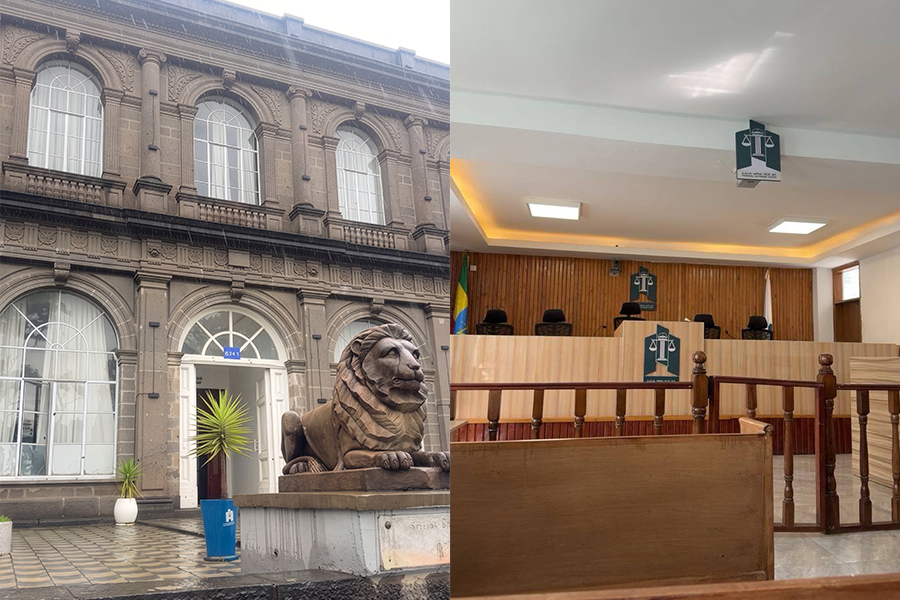
Justices at the Federal Supreme Court widened the shield they are holding over lawyer...





 Loading your updates...