

Featured | Sep 11,2020



Sep 13 , 2025
By Ahmed T. Abdulkadir
The liberal world order, once marketed as self-correcting and permanent, is fraying in plain sight.
Last week, the United States (US) reeled after conservative commentator Charlie Kirk was assassinated, proof that violence now reaches the Republic’s core. In France, the government fell amid street unrest and collapsing coalitions. Poland, worried by Russia next door, invoked NATO’s Article 4, the consultation clause last used in 2022. Then it served as symbolic reassurance after Russian tanks crossed the Ukrainian border; now, with Europe shaky and Washington distracted, it resembles a flare fired into a foggy sky.
Strain appears in smaller rooms, too. Masked US immigration agents carry out rapid deportations without hearings. One target, 26-year-old KilmarÁbrego García, was flown to a detention centre in El Salvador before any lawyer could act. Liberalism once called itself the high temple of due process. Today, it can feel like a courthouse where defendants are marched in and the gallery stays shut.
A young man in his late 20s scrolls this news feed in a studio he can barely afford. He tries to imagine the day he will raise children while headlines warn that the floor beneath him might vanish. At university, he assumed stability was his generation’s inheritance; the notion itself now feels breakable. However, the breakdown did not arrive overnight. It is the delayed harvest of choices made over three decades.
Yugoslavia’s breakup in the 1990s, the U.S.-led invasion of Iraq in 2003 and the resource wars in Congo that killed millions were treated in Western capitals as distant. For the Global South, they proved that history never ended. Violence and extraction merely changed coordinates. Crises once exported have come back to the core, pressing on the young man who had expected progress to run one way.
British critic Mark Fisher coined a name for this gloom: “lost futures.” People who came of age in the early 2000s expected clear career ladders, attainable homes and space to start families. Twenty years later, those ladders are shaky, mortgages are out of reach, and jobs arrive on short contracts. Secure adulthood feels less like a promise and more like a rumour from older siblings.
Even establishment thinkers now concede the problem. Francis Fukuyama, who once predicted liberal democracy’s final triumph, warns of “existential threats.” Realist scholar John Mearsheimer says American primacy is “hollowed out by endless wars and hubris.” Years earlier, economists Samir Amin and historian Walter Rodney argued that liberalism was a hierarchy sold as destiny, and dependency marketed as progress. It is an analysis that once sounded radical, but now it reads like a description.
Such an acknowledgement offers little comfort. It does not build affordable apartments or steady jobs. It only confirms daily unease. Political scientist Amitav Acharya envisions a “multiplex world” replacing Western dominance, a world with multiple narratives unfolding simultaneously. Yet, disorder is not freedom. Multipolarity without solidarity risks becoming only a fresh partition of spoils, recycling old dependencies under new flags. Gestures without solidarity do not amount to stability, nor do they make it any easier to start a family in an unstable age.
For the young man, the cheerful word “diversity” often sounds like another name for volatility.
The temptation is to seek redemption in the Global South’s louder voice. The expanded BRICS group now encompasses resource giants and technology hubs that collectively generate nearly a third of global output. Debt-justice campaigns have forced lenders to negotiate, and climate diplomacy by small island states has punched above its weight. Unfortunately, for individuals, such breakthroughs do not yet translate into secure work, affordable homes or reliable governance.
The South could again become a stage for great-power rivalry, for its agency remains fragmented and easily captured.
The harsher reading is that the liberal order is not collapsing, but mutating, shedding democratic skin while retaining its coercive muscle. Europe’s parliamentary crises, America’s unilateral executive moves and the normalisation of street violence are not outliers. They mark a system that has lost trust yet clings to force. For people entering adulthood, the very future feels smaller.
Anyone raised on claims that history had ended now faces a different lesson. History never leaves, and today it spares no one. What was once imposed on distant peripheries is becoming a shared inheritance. The young man, still dreaming of love, family and meaningful work, has to chase those goals in a world that daily undercuts them. The struggle ahead is not to restore yesterday’s liberalism but to insist that whatever follows belongs to the many, not the privileged few. It is to build institutions that protect everyday security while widening the circle of voice.
That work will be slow and local as well as geopolitical, anchored in ordinary demands for dignity (steady wages, safe streets, and fair courts) and in a collective refusal to trade liberty for the illusion of safety.
PUBLISHED ON
Sep 13,2025 [ VOL
26 , NO
1324]

AhmedT. Abdulkadir (ahmedteyib.abdulkadir@addisfortune.net) is the Editor-in-Chief at Addis Fortune. With a critical eye on class dynamics, public policy, and the cultural undercurrents shaping Ethiopian society.
Featured | Sep 11,2020

In-Picture | Apr 27,2025
Fortune News | Oct 30,2021

Fortune News | Nov 21,2018
Featured | Aug 24,2019

Commentaries | Feb 06,2021
Fortune News | Jun 10,2023
Agenda | Sep 21,2019
Agenda | Sep 21,2025
Commentaries | Jul 31,2021

Photo Gallery | 192598 Views | May 06,2019

Photo Gallery | 182439 Views | Apr 26,2019

Photo Gallery | 179172 Views | Oct 06,2021

My Opinion | 144687 Views | Aug 14,2021




Commentaries | Jul 31,2026
Dec 22 , 2024 . By TIZITA SHEWAFERAW
Charged with transforming colossal state-owned enterprises into modern and competitiv...
Aug 18 , 2024 . By AKSAH ITALO
Although predictable Yonas Zerihun's job in the ride-hailing service is not immune to...
Jul 28 , 2024 . By TIZITA SHEWAFERAW
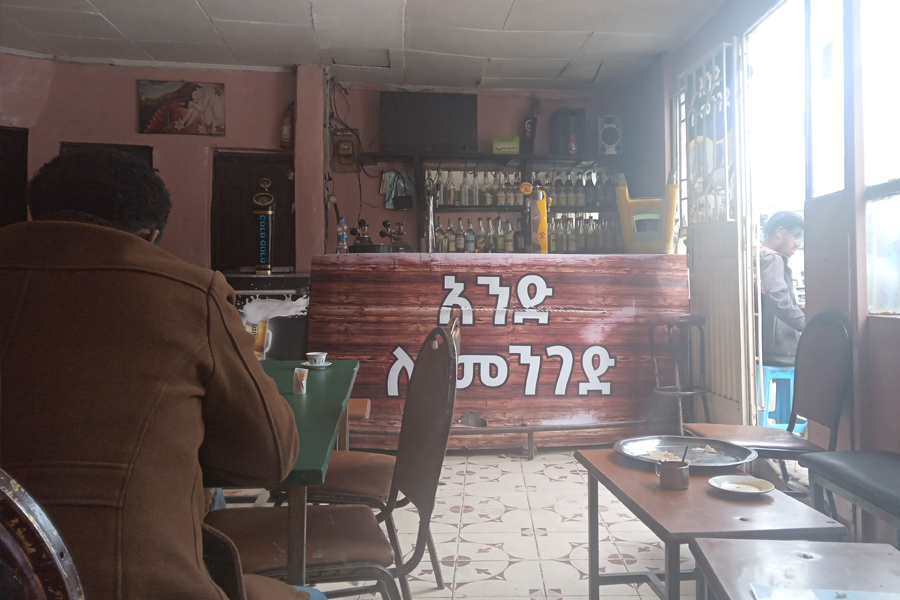
Unhabitual, perhaps too many, Samuel Gebreyohannes, 38, used to occasionally enjoy a couple of beers at breakfast. However, he recently swit...
Jul 13 , 2024 . By AKSAH ITALO
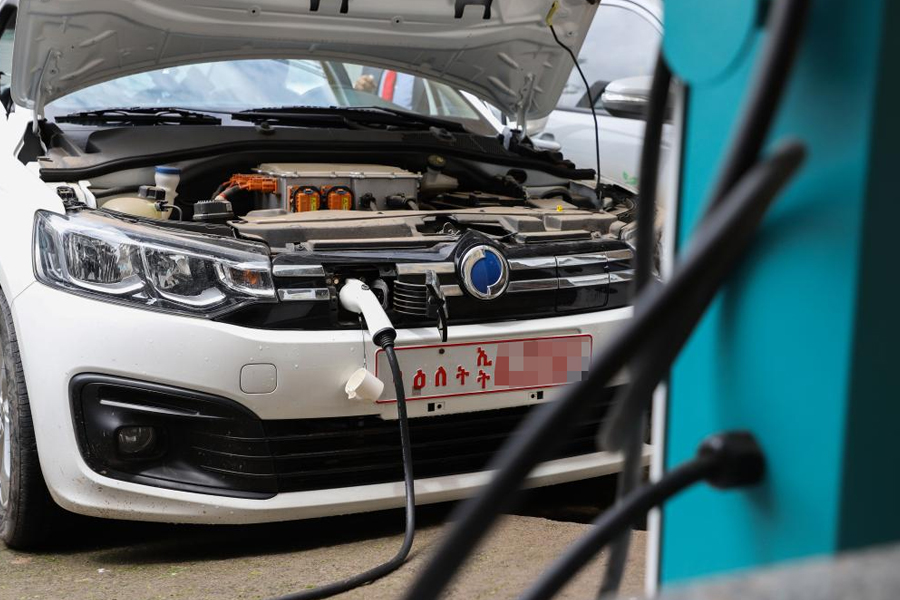
Investors who rely on tractors, trucks, and field vehicles for commuting, transporting commodities, and f...
Jul 31 , 2026
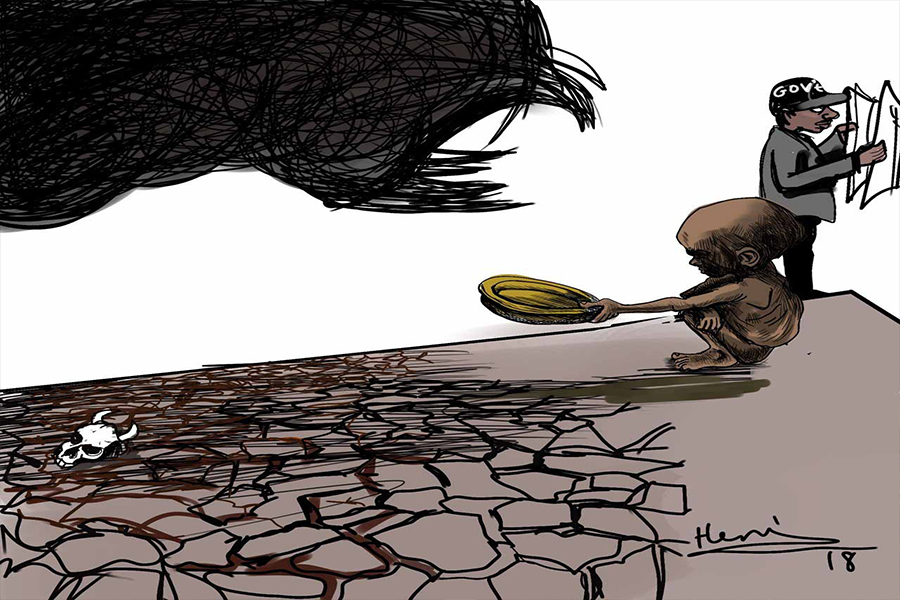
Weldu Yiheysh has not read the Pacific temperature charts. He does not need to. In Shibta District of Enderta Wereda, in...
Jul 25 , 2026
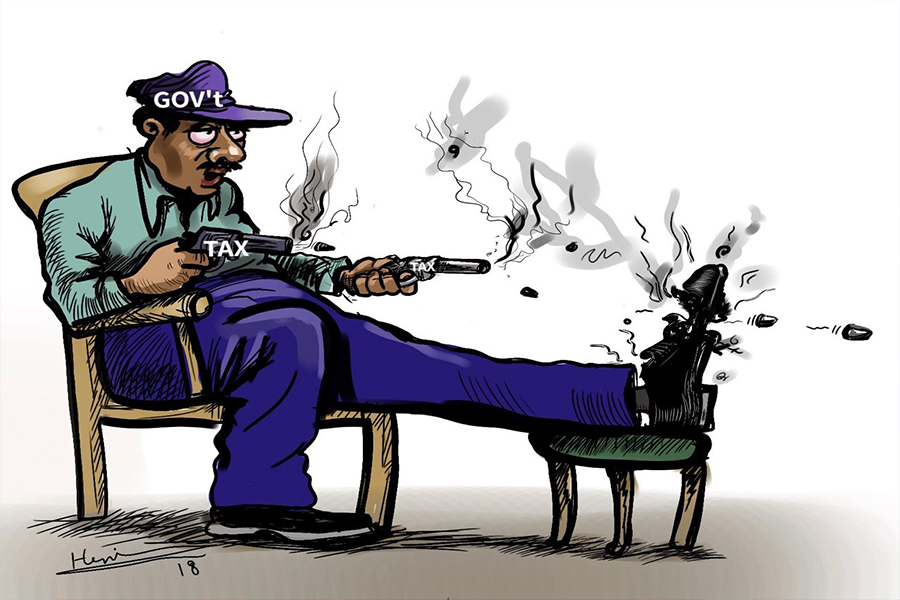
Ideally, citizens who have paid income tax all year should not have to reach for thei...
Jul 18 , 2026
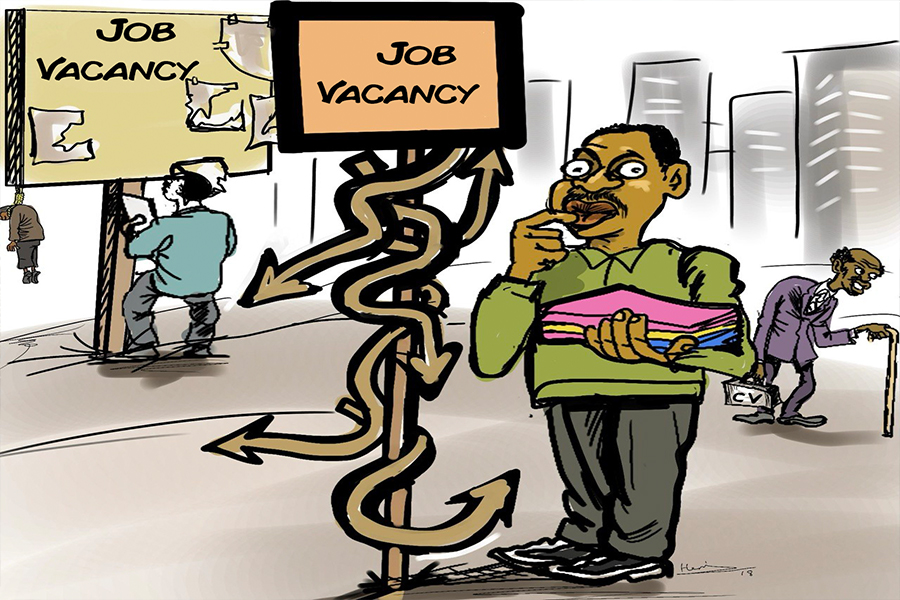
Pressed in Parliament on jobs and household incomes, Prime Minister Abiy Ahmed (PhD)...
Jul 11 , 2026
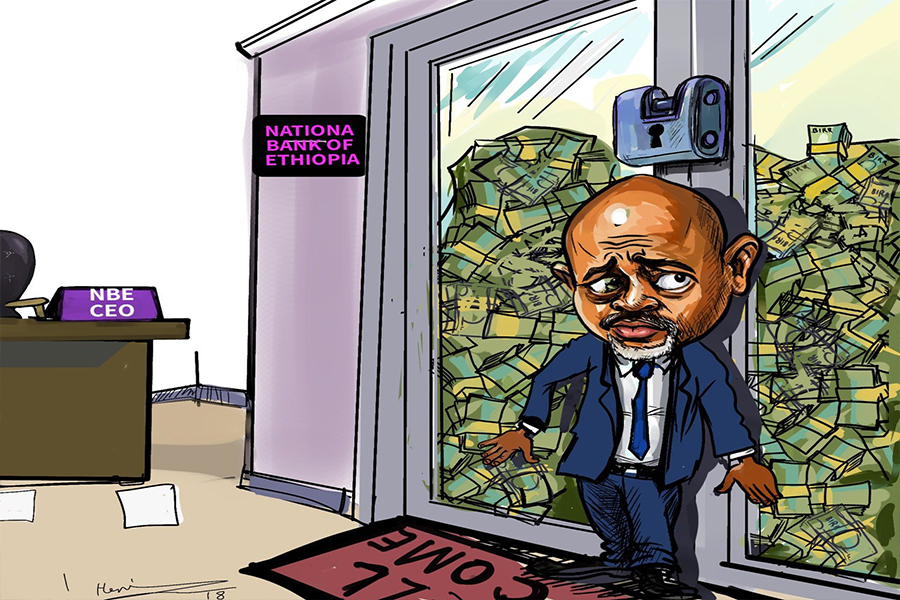
At a market stall, reform arrives without a communique. It comes as a higher transpor...
Aug 1 , 2026 . By NAHOM AYELE
Addis Abeba University set out to win its institutional autonomy. Two years in, that...
Aug 1 , 2026 . By NAHOM AYELE
The state-owned Ethiopian Shipping & Logistics (ESL) unveiled its most ambitious...
Aug 1 , 2026 . By BEZAWIT HULUAGER
The Ethiopian Airlines Group (EAG) will take delivery of eight Boeing 777 and Airbus...
Aug 1 , 2026 . By NAHOM AYELE
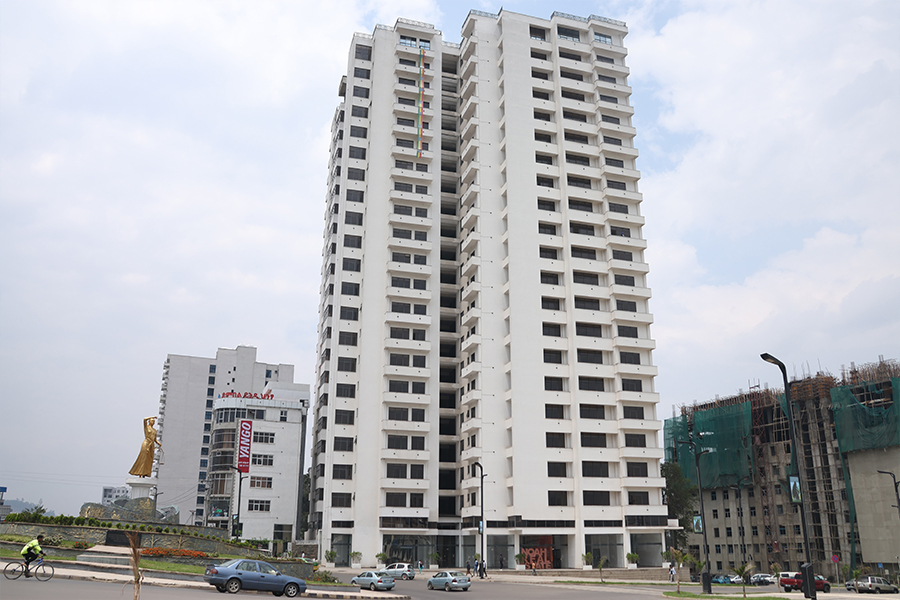
Judges at the Federal High Court have ordered that 27 apartments at Noah Victory Apar...






 Loading your updates...