
Sunday with Eden | Dec 04,2020



Feb 1 , 2020
By Etenat Awol
There was significant debate around the country when Abiy Ahmed (PhD) became Prime Minister. In public transport, family gatherings or in offices and college campuses, people talked about reforms, solidarity, justice and forgiveness.
There was a great deal of differences of opinion. What there was not a debate about was who to blame - it was the government and the officials who occupied elected office. Corruption, unemployment, fragmentation, extremism and poverty was the fault of poor government conduct. The people, in almost every case, were the victims.
This is not to say that they did not play a part, but they acted as if they had glimpsed the problem all along and tried to speak up. People acted as if some of them were not a part of the problem and as if they had not played a part in everything that had been done to the country.
The funny thing was that no one complained in the current suffocating, oppressive state they still found themselves in after the supposed “liberation”. As long as everyone was sharing the same status, people did not seem too bothered by it.
It is outrageous that as long as we see ourselves in the same level of oppression, we come up with the kind of shield that rationalises the view that the vulnerability of our lives is caused by an external body. We as a nation are convinced that while oppression belongs to “us”, the maladministration, social injustice and poverty is caused by “them”.
While there are other factors for our multifaceted problems, our sense of moral and collective consciousness contributes a considerable amount. Whether this has left us with a strong sense of awe or guilt, what we do at the individual level really matters. The truth is that we, as a society, prefer to use every position to further our interests.
Maybe our status is varied and we do not possess equal power. But our collective endeavour is toward finding scapegoats to externalise our problems in the hope that we do not have to blame ourselves for our own failures.
In this case, how are we different from the government?
Maybe we can find solace blaming all our problems on the government and other elements such as Western imperialists.
But can we as individuals and communities remain completely oblivious to this for generations? Are we not the ones who watered, fed and grew our underdevelopment and instability? Is it not ourselves who popularised and lived by terms such as sishom yalebala sishar yikochwal, roughly translating to “those that do not take while in power will regret it when out of office”?
We are only emphasising what we have been made to lose instead of how we have contributed to that loss. We feel entitled to everything and yet are averse to take any blame.
We have forgotten that even the tiniest effort goes a long way. We have left things unsaid and tasks undone. We have no intention of moving forward, because we believe that whatever the task, it would be too insufficient to matter. We have long stopped seeing the big picture, which is community and country.
We need to note that the means to addressing our problems is not through blaming others and utter pessimism. We need to take responsibility for every action we take, however tiny it may be, and look at the big picture. As we demand accountability and transparency, we also have to ask ourselves how much responsibility we are willing to shoulder. We need to learn to take responsibilities and learn to be fair in what we do.
A redefinition is needed for how we see ourselves and others. We need to untangle our view that we are perpetual victims and cease externalising blame onto everyone else but ourselves.
PUBLISHED ON
Feb 01,2020 [ VOL
20 , NO
1031]

Sunday with Eden | Dec 04,2020

My Opinion | Apr 16,2022
My Opinion | Feb 24,2024
Sunday with Eden | Oct 26,2019
Covid-19 | May 14,2020
Viewpoints | Mar 25,2023
Sunday with Eden | Nov 22,2025
Viewpoints | May 08,2021
Radar | Sep 10,2021
Commentaries | Aug 10,2019

Photo Gallery | 193706 Views | May 06,2019

Photo Gallery | 183601 Views | Apr 26,2019

Photo Gallery | 180444 Views | Oct 06,2021
My Opinion | 145852 Views | Aug 14,2021





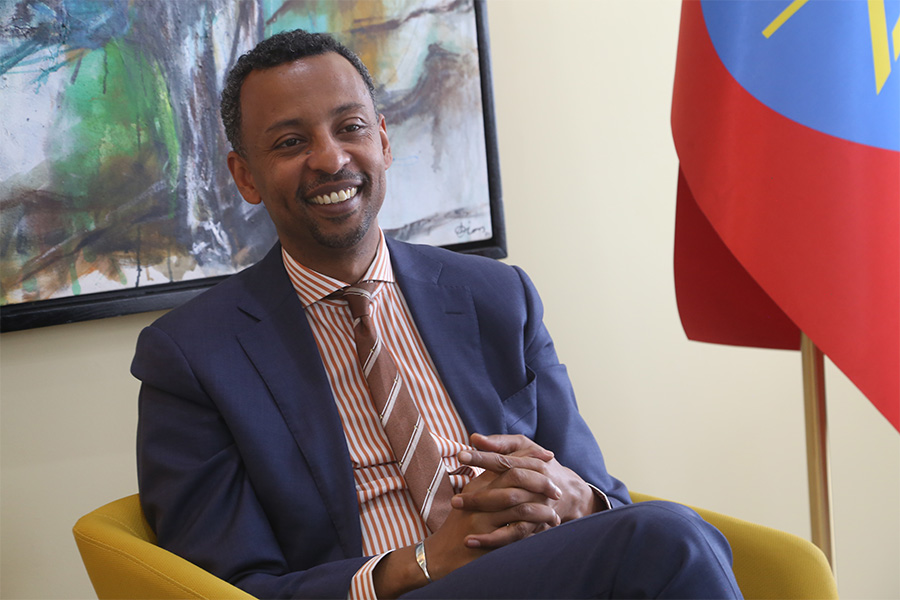
Dec 22 , 2024 . By TIZITA SHEWAFERAW
Charged with transforming colossal state-owned enterprises into modern and competitiv...
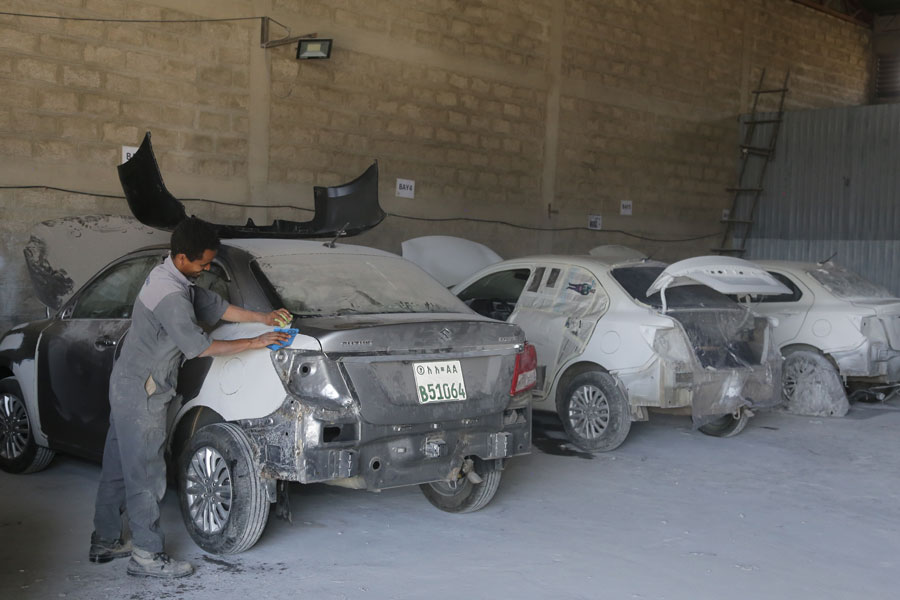
Aug 18 , 2024 . By AKSAH ITALO
Although predictable Yonas Zerihun's job in the ride-hailing service is not immune to...
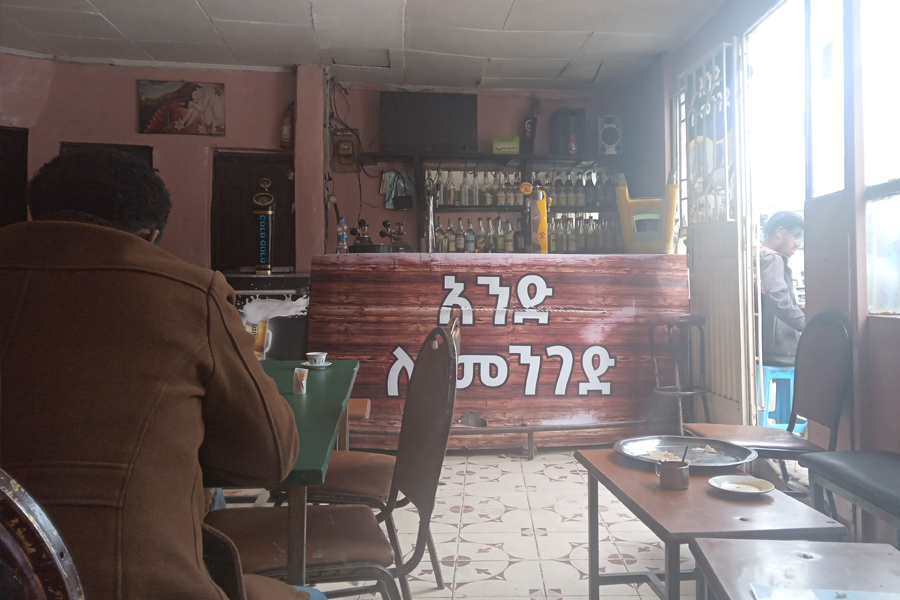
Jul 28 , 2024 . By TIZITA SHEWAFERAW
Unhabitual, perhaps too many, Samuel Gebreyohannes, 38, used to occasionally enjoy a couple of beers at breakfast. However, he recently swit...
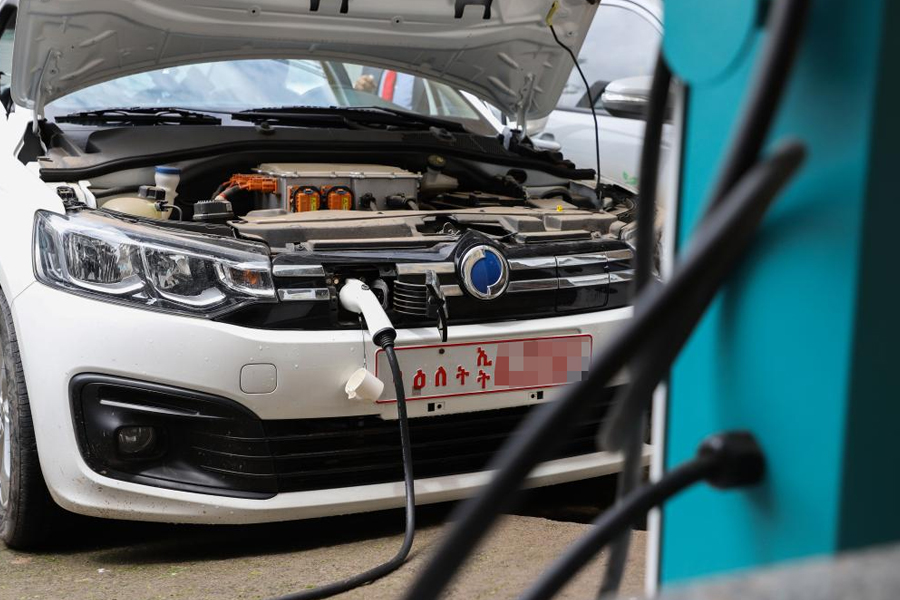
Jul 13 , 2024 . By AKSAH ITALO
Investors who rely on tractors, trucks, and field vehicles for commuting, transporting commodities, and f...
Aug 22 , 2026
A record is a strange thing to worry about. Federal trade officials have booked the b...
Aug 14 , 2026
Aschalew Fetene, known as “Ardi” and admired for his poetic depth, has built a ti...

Aug 8 , 2026
The World Bank asks readers to picture a mother in rural Ethiopia who has never held...

Jul 31 , 2026
Weldu Yiheysh has not read the Pacific temperature charts. He does not need to. In Shibta District of Enderta Wereda, in...
Aug 22 , 2026 . By BEZAWIT HULUAGER
The forthcoming strategy for interest-free finance will place Sharia-compliant financ...
Aug 22 , 2026 . By NAHOM AYELE
Wegagen Capital Investment Bank (WCIB) has completed its first full year in profit an...
Aug 25 , 2026 . By NAHOM AYELE
Judges at the Federal High Court, sitting on a limited basis to hear only urgent matt...
Aug 22 , 2026 . By BEZAWIT HULUAGER
Federal authorities are about to find out whether they can make a single payment wind...






 Loading your updates...