

My Opinion | Apr 13, 2025



Jul 4 , 2026
By Thompson Ayodele
In Nigeria, a cancer diagnosis is often a death sentence. Nearly 130,000 Nigerians receive one each year, and nearly 80,000 die of the disease. An average of 33 women a day in Nigeria are infected with cervical cancer, and 22 women a day die from it.
The problem is not that interventions do not exist, but that Nigerians, and developing-economy patients more broadly, lack access to them.
Breakthroughs in cancer treatment, especially immunotherapy, have drastically reduced the disease’s mortality in recent decades. A mere generation ago, the idea that the immune system could be trained to fight cancer sounded like science fiction. Today, it represents the most promising front in cancer research, with more than 30 immunotherapies treating 25 different forms of cancer now approved by the US Food & Drug Administration (FDA).
The results speak for themselves. Patients with advanced melanoma were once expected to survive a mere 16 weeks. They now have a one-in-three chance of living for a decade or longer. Likewise, for some lung cancer patients, prognoses that were once measured in months are now measured in years.
But Nigerian patients rarely have access to immunotherapies or other innovative treatments. Even at major hospitals in Lagos and Abuja, doctors routinely find themselves unable to prescribe what they know could help their patients. So, while cancer patients in rich countries live longer than ever, Nigerians, like patients in many developing countries, continue to die.
Some believe that the best way to close this gap is to weaken intellectual-property protections for medical innovations and force drugmakers to give away their treatments at little or no cost. They argue that patent rules and high prices create unfair barriers to healthcare. But this well-intentioned argument overlooks an inescapable reality. Without strong incentives for innovation, advanced treatments like immunotherapy would not exist at all.
The development of new cancer therapies requires immense investment and carries staggering risk. Since most new prospective drugs never succeed, the few that do should make up for the costs of the failures. Nigeria, like many developing countries, does not yet have the economic or scientific infrastructure required to develop its own cancer breakthroughs at scale. It remains dependent on discoveries made in countries like the United States.
If we dismantle the system that rewards their innovative activities in the name of faster access, progress will slow, and future patients in rich and poor countries alike will suffer as a result.
Patents expire, and when they do, low-cost generic versions emerge. In the meantime, several pharmaceutical companies and NGOs have launched initiatives designed to expand access to medicines in developing countries. The system might not be perfect, but at least it allows the breakthroughs to keep coming.
The biggest barriers to access to accurate cancer diagnosis and effective treatment in developing countries are not patents at all, but regulatory delays, weak healthcare infrastructure, and poverty. Instead of attempting to dismantle incentives for innovation, governments should work on reducing bureaucratic red tape, speeding up approvals for imported medicines, and expanding healthcare infrastructure and capacity, which is particularly in short supply in rural areas.
Policymakers should also take action to improve overall living standards. Expanding trade and liberalising markets are among the most effective ways for developing countries to boost economic growth and dynamism. Faster growth, in turn, would enable higher investment in infrastructure and healthcare, while creating job opportunities that increase household incomes.
When lifesaving medicines are out of reach, calls for quick solutions are understandable. But a short-sighted approach risks turning today’s tragedy into tomorrow’s catastrophe. Weakening the incentives that underpin medical innovation will slow the pace of progress. And it is progress that is essential to prevent a cancer diagnosis from becoming a death sentence.
PUBLISHED ON
Jul 04,2026 [ VOL
27 , NO
1366]

My Opinion | Apr 13, 2025
Editorial | Apr 26,2025
Commentaries | Jun 06,2026

Life Matters | Jan 15,2022
Advertorials | Sep 18,2025

Fortune News | Nov 11,2023
View From Arada | Jun 07,2025

Advertorials | Feb 12,2024

Agenda | Jun 08,2025

Viewpoints | May 16,2020

Photo Gallery | 190628 Views | May 06,2019

Photo Gallery | 180371 Views | Apr 26,2019

Photo Gallery | 177047 Views | Oct 06,2021
My Opinion | 142752 Views | Aug 14,2021







Dec 22 , 2024 . By TIZITA SHEWAFERAW
Charged with transforming colossal state-owned enterprises into modern and competitiv...
Aug 18 , 2024 . By AKSAH ITALO
Although predictable Yonas Zerihun's job in the ride-hailing service is not immune to...

Jul 28 , 2024 . By TIZITA SHEWAFERAW
Unhabitual, perhaps too many, Samuel Gebreyohannes, 38, used to occasionally enjoy a couple of beers at breakfast. However, he recently swit...
Jul 13 , 2024 . By AKSAH ITALO
Investors who rely on tractors, trucks, and field vehicles for commuting, transporting commodities, and f...
Jul 4 , 2026
In the goldfields of the Benishangul-Gumuz Regional State, Ethiopia's balance-of-paym...
Jun 27 , 2026
The federal legislative house rushed through one of the country's most contentious ho...
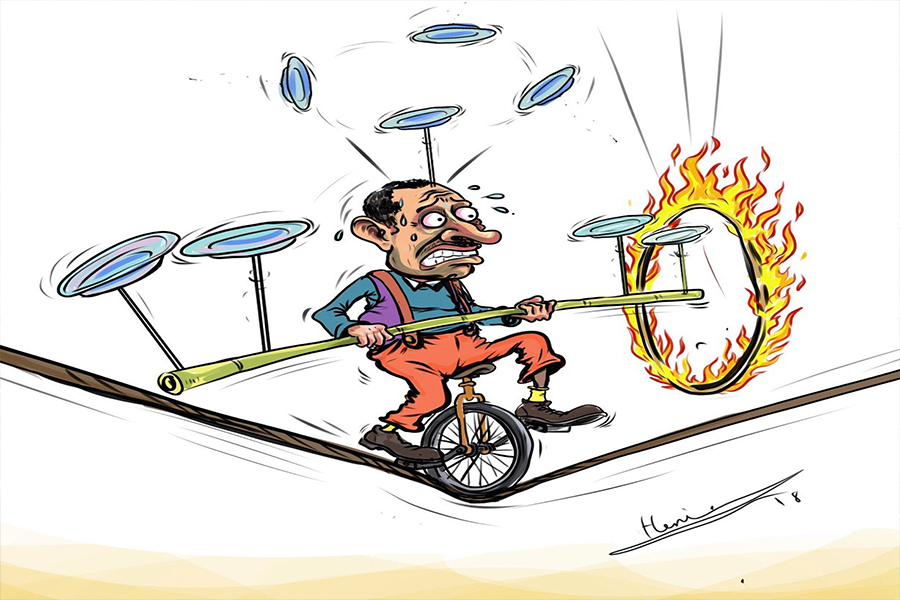
When Parliament takes up the appropriation bill, federal legislators will receive a d...

Jun 13 , 2026
The recent policy decision to fully open freight forwarding to foreign capital may be...
Jul 4 , 2026
Addis Abeba's renters and property owners are waiting on a city government decision that will set how far rents can rise...
Jul 4 , 2026 . By BEZAWIT HULUAGER
The Ethiopian Airlines Group is preparing to place a firm order for 25 aircraft next...
Jul 4 , 2026 . By BEZAWIT HULUAGER
Ethio telecom's shares have climbed to 852 Br in secondary over-the-counter trading,...

Jul 4 , 2026 . By NAHOM AYELE
A lawsuit at the federal courts has turned a quiet quarrel between one of the country...





 Loading your updates...