

Fortune News | Dec 05,2018



Jun 6 , 2026
By Paula C. Pereda
Local free-riding incentives, which frequently intensify when geopolitical conflicts elevate domestic energy security priorities, can be structurally counteracted. Once regulatory frame-works correct market failures, corporate markets find efficient pathways to comply. In this commentary provided by Project Syndicate (PS), Paula C. Pereda, a professor of economics at the University of São Paulo and president of the Brazilian Econometric Society, argued that global coordination mechanisms include carbon border adjustments to penalise non-participating countries, climate clubs to incentivise carbon reductions, and technology transfers to lower compliance costs for poorer countries.
As wars reshape global energy markets, short-term priorities, from securing fossil-fuel supplies to subsidising energy consumption, are increasingly clashing with long-term decarbonisation goals.
After Russia's full-scale invasion of Ukraine, Europe scrambled to find alternative sources of liquefied natural gas, boosting investment in new fossil-fuel infrastructure. The closure of the Strait of Hormuz has led other countries, such as those around the Atlantic Basin, to expand domestic oil and gas production.
These decisions, while understandable, illustrate how global shocks can entrench carbon-intensive systems. Beyond the issue of increased emissions, any fossil-fuel infrastructure built today will operate for 30–40 years, raising the risk of stranded assets and the costs of future decarbonisation efforts. The disruption caused by recent conflicts has also shifted political attention away from climate commitments.
Seen in this light, climate change is a problem of incentives and trade-offs. When drivers fill up their gas tanks, they pay for the fuel, but not for its negative externalities, such as global warming and its effects on vulnerable communities and future generations. Because emitters do not bear the full costs of their choices, they emit more than is collectively desirable. Left unaddressed, markets will under-provide climate stability, as they do for other public goods like clean air or healthcare.
Policymakers can correct this market failure mainly through pricing mechanisms like carbon taxes, emissions trading systems, or command-and-control policies. These measures seek to influence individual and corporate choices. Market-based instruments allow businesses and households to find the cheapest way to cut emissions, while regulatory constraints impose standards or limits (and can therefore be easier to enforce).
The benefits of these climate policies are shared globally, but their costs are borne locally and nationally. This creates an incentive to free ride on others' efforts to reduce emissions, which becomes stronger when geopolitical pressures make energy security the overriding priority. In such a context, the difficult task of designing policies and mechanisms that realign incentives takes on new importance.
Brazil's experience shows that well-designed climate policies with reliable metrics and standards, as well as consequences for non-compliance, can have a big impact.
In the 1980s, a spike in the number of infants born with anencephaly in the Brazilian city of Cubatão was attributed to uncontrolled industrial pollution. In the wake of this and other public-health crises tied to extreme pollution, the national Environmental Ministry devised the PROCONVE program, a vehicle-emissions standard that required automakers to produce significantly cleaner cars. After implementing the policy, Brazil observed a substantial reduction in vehicular emissions. A command-and-control policy worked as intended, setting a clear standard, applying it uniformly, and measuring the results.
Brazil also found a way to alter incentives in the Amazon, which, by 2004, had already lost roughly 15pc of its rainforest (an area the size of Ukraine), owing to insufficient monitoring and enforcement activities. The federal government began using satellite imagery from the National Institute for Space Research to reliably measure deforestation, enabling enforcement almost in real time. This formerly lawless zone became governable. The result was a roughly 85pc decline in Amazon forest-clearing rates within less than a decade, cutting national emissions substantially.
In addition to pricing and regulation, information-based policies are a powerful tool for raising awareness about the social and environmental costs of individual choices and making social norms visible. Brazilian data show that substituting fish for meat one day per week could reduce household food-related emissions by 11pc without increasing costs, information that could reduce total national emissions if it were internalised by households.
Moreover, a 2014 study conducted in the United States found that home energy reports based on social comparison substantially reduced households' consumption.
When policy sets constraints, whether through carbon pricing, performance standards, regulatory frameworks, or public investment, markets find the most efficient way to meet them. Markets are not the problem; unregulated externalities are. So is the lack of global coordination, which can be solved by carbon border adjustments that penalise free riding, climate clubs that reward participation, and technology transfers that lower the cost of compliance for poorer countries.
Once policymakers correct these failures, markets become the solution.
The political headwinds against climate action have intensified, even as global temperatures reach record highs. Every year of delay compounds the costs of decarbonisation. But because some countries are stepping back, it does not mean others should give up. The future of the planet will be shaped by millions of individual and collective decisions. Change is still possible. The central challenge for policymakers is whether they are willing to design the incentives that make it inevitable.
PUBLISHED ON
Jun 06,2026 [ VOL
27 , NO
1362]

Fortune News | Dec 05,2018

Radar | Jun 19,2021

Verbatim | Oct 05,2024

Commentaries | Aug 16,2025

Viewpoints | Jan 16,2021

Radar | Nov 02,2025

Commentaries | Jun 04,2022

Exclusive Interviews | Apr 15,2023
Commentaries | Jun 18,2022

Photo Gallery | 192013 Views | May 06,2019

Photo Gallery | 181764 Views | Apr 26,2019

Photo Gallery | 178497 Views | Oct 06,2021

My Opinion | 144029 Views | Aug 14,2021






Dec 22 , 2024 . By TIZITA SHEWAFERAW
Charged with transforming colossal state-owned enterprises into modern and competitiv...

Aug 18 , 2024 . By AKSAH ITALO
Although predictable Yonas Zerihun's job in the ride-hailing service is not immune to...

Jul 28 , 2024 . By TIZITA SHEWAFERAW
Unhabitual, perhaps too many, Samuel Gebreyohannes, 38, used to occasionally enjoy a couple of beers at breakfast. However, he recently swit...

Jul 13 , 2024 . By AKSAH ITALO
Investors who rely on tractors, trucks, and field vehicles for commuting, transporting commodities, and f...
Jul 25 , 2026
Ideally, citizens who have paid income tax all year should not have to reach for thei...
Jul 18 , 2026
Pressed in Parliament on jobs and household incomes, Prime Minister Abiy Ahmed (PhD)...
Jul 11 , 2026
At a market stall, reform arrives without a communique. It comes as a higher transpor...
Jul 4 , 2026
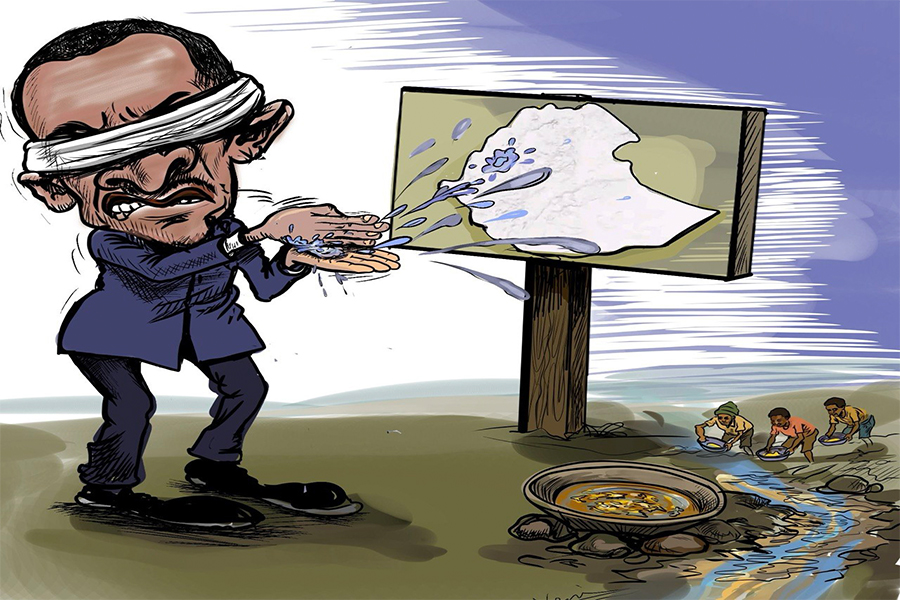
In the goldfields of the Benishangul-Gumuz Regional State, Ethiopia's balance-of-paym...
Jul 25 , 2026 . By BEZAWIT HULUAGER
Global Bank's Board of Directors have overhauled top management, after suspending sev...

Jul 25 , 2026 . By NAHOM AYELE
Judges at the Federal High Court have overturned the National Lottery Administration...

A newly enacted regulation by the Council of Ministers lets eligible producers pledge...
Jul 25 , 2026 . By FITSUM TADESSE
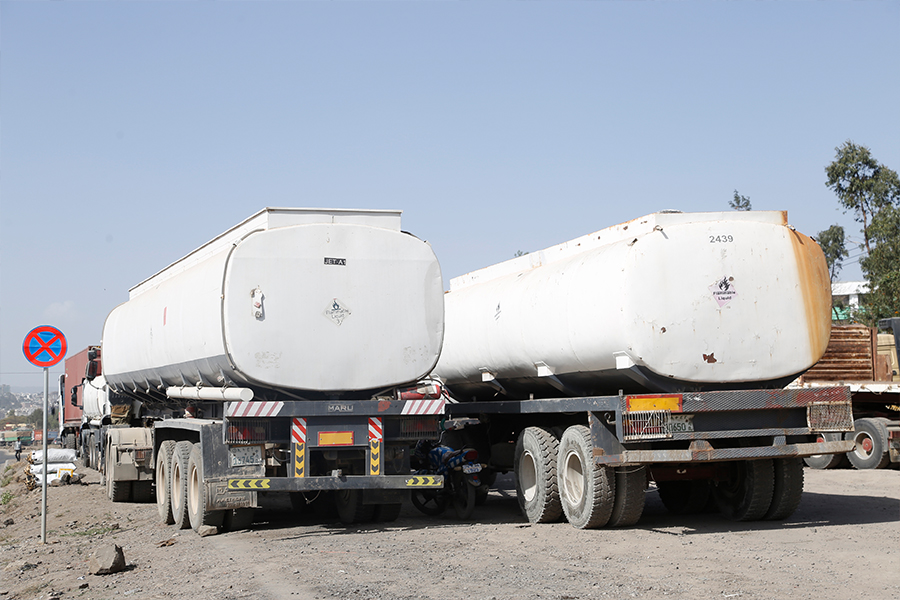
A fuel tanker carrying tens of thousands of litres was confiscated after its driver a...









 Loading your updates...