

Fortune News | Sep 08,2024



May 9 , 2026
By Eden Sahle
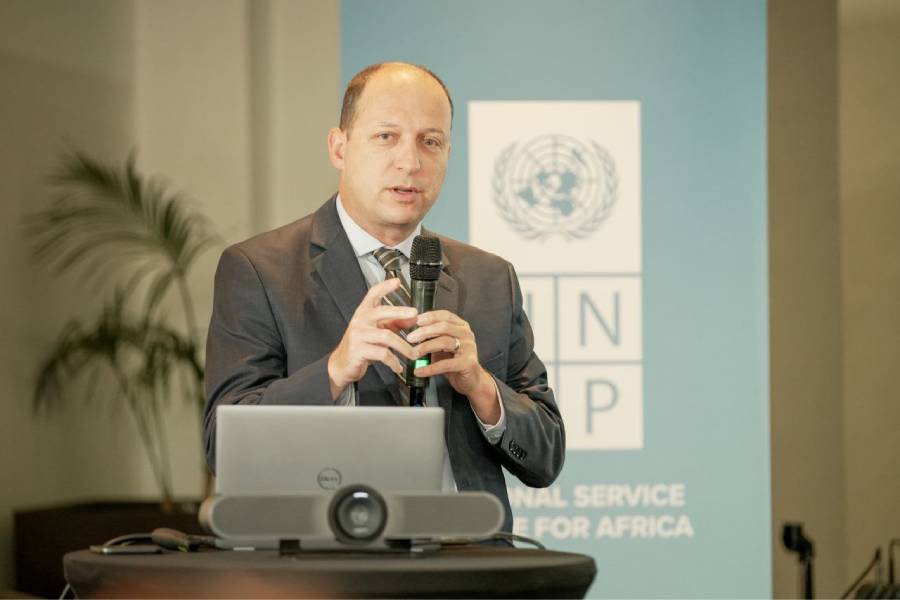
The most striking part of a recent conference in Canada was not the voting process, but the willingness to confront problems publicly. Leaders were questioned directly about transparency, communication gaps, and organisational shortcomings. Instead of resisting scrutiny, they engaged with it openly. The atmosphere demonstrated how accountability can build trust even in disagreement. The experience highlighted the difference between institutions that protect outcomes and those that protect hierarchy.
A few days ago, I attended a virtual conference in Canada that stayed with me, not because of the agenda alone, but because of how people spoke to each other. I expected a structured gathering where leaders present reports, participants listen quietly, and decisions move forward with minimal friction. What I witnessed instead was something far more demanding and far more honest.
Over several hours, the atmosphere shifted from formality to accountability in real time. A mentor of mine, who later secured the global mission Executive Director position, was among the candidates. The voting process brought together staff from diverse regions and experiences. Early on, the tone changed. It stopped feeling ceremonial and started feeling real.
Participants began raising direct concerns. They spoke about weak communication, withheld information, financial opacity, and a broader sense of neglect in parts of leadership. These were not softened remarks or carefully coded suggestions. They were precise, pointed, and at times uncomfortable.
What stood out was not that leaders were challenged. It was how they responded. There was no deflection or dismissal. They listened. They acknowledged gaps. More importantly, they were pressed not only on what went wrong, but on what concrete steps were being taken to fix it, and how recurrence would be prevented. The underlying message in the room was clear: authority does not cancel responsibility, and position does not provide immunity from scrutiny.
For hours, the discussion continued with intensity but also discipline. Participants insisted on clarity. Leaders were expected to move beyond vague reassurance and offer grounded, actionable responses.
As I listened, I kept comparing it to meetings I have attended in other contexts, both locally and internationally. The contrast was hard to ignore. In many local settings, meetings begin with structure and end with fatigue, often without altering outcomes.
Time is spent on long speeches that circle familiar phrases, while the real issues remain unspoken or only lightly touched. There is often an unspoken rule that discomfort should be avoided, especially when it involves questioning authority.
In such environments, honesty carries a quiet cost. People learn quickly that pointing out problems can be read as disrespect rather than contribution. Over time, behaviour adjusts. Issues are not raised early. Errors are tolerated. Decisions that clearly fail are endured rather than challenged. What forms is not harmony, but stagnation dressed as stability.
What I witnessed in the Canadian conference was the opposite. It was not conflict for its own sake. It was structured honesty. Disagreement was treated as participation, not disloyalty. Leaders were not weakened by scrutiny. If anything, their credibility strengthened as they engaged directly with criticism instead of avoiding it.
That distinction matters. When leadership is insulated from critique, it drifts away from reality. When people are discouraged from speaking, problems do not disappear; they simply move underground. Eventually, they surface in ways that are harder and more expensive to resolve. By then, the cost of correction has multiplied.
In contrast, systems that normalise accountability tend to respond faster and adapt better. Mistakes are identified earlier. Solutions are tested openly. Trust is built not on perfection, but on transparency. The expectation is not flawlessness, but responsibility.
My experience working with international organisations has reinforced this pattern. In those environments, the emphasis is less on protecting hierarchy and more on protecting outcomes. Meetings are judged not by how smooth they feel, but by whether they produce clarity and direction. When something is wrong, it is named. When something is unclear, it is questioned. When decisions fail, they are reviewed without fear of personal retaliation.
One of the most important effects of this culture is psychological safety. People speak up because they know their input will not cost them their place in the system. That safety is not softness. It is structure. It allows truth to surface early, when it is still useful, instead of late, when it is costly.
Watching that conference made me reflect on what this means in contexts like Ethiopia, where institutional culture often struggles with openness. The real challenge is not whether problems exist. It is how systems respond when they are named. When speaking up leads to punishment rather than progress, silence becomes rational. And when silence becomes normal, problems compound.
Change in this area requires a shift in how leadership is understood. Leadership cannot remain a position to defend; it must function as a responsibility to serve. A strong leader is not one who avoids criticism, but one who absorbs it, responds to it, and acts on it. A strong organisation is not one where everyone agrees, but one where people can disagree without fear and still remain part of the system.
What I witnessed was not perfection, but something more valuable: a willingness to confront problems in real time. That honesty created trust even in disagreement. It showed that accountability does not weaken leadership; it strengthens it. When truth is allowed to surface freely, systems do not collapse. They correct themselves.
Looking back at past meetings I have attended, I realise how much energy is often lost not because people lack effort, but because openness is restricted. Time is spent protecting image instead of solving problems. Effort goes into avoiding discomfort instead of producing clarity. People leave meetings unchanged, only more exhausted.
The alternative is not complicated, but it is demanding in practice: speak clearly, listen fully, address problems directly, and accept that leadership is accountable to those it serves, not above them. These are simple principles that become difficult only when fear and hierarchy dominate the culture.
When people commit to honest engagement, even when it is uncomfortable, the quality of decision-making changes. Conversations become sharper. Outcomes become more grounded. Institutions become more responsive to the people they are meant to serve.
Real change rarely begins with grand declarations. It begins in moments like that conference, where a different standard quietly takes hold: truth is not delayed, accountability is not optional, and leadership is measured not only by authority, but by the willingness to carry responsibility in full view.
PUBLISHED ON
May 09,2026 [ VOL
27 , NO
1358]
Fortune News | Sep 08,2024

In-Picture | May 18,2024
Radar |

Viewpoints | Oct 23,2021
Radar | Mar 18,2023
View From Arada | Jul 17,2022

Sunday with Eden | Sep 10,2022
Viewpoints | Dec 13,2025
Viewpoints | Oct 11,2025

Advertorials | Jul 24,2024

Photo Gallery | 193375 Views | May 06,2019

Photo Gallery | 183260 Views | Apr 26,2019

Photo Gallery | 180069 Views | Oct 06,2021

My Opinion | 145501 Views | Aug 14,2021








Dec 22 , 2024 . By TIZITA SHEWAFERAW
Charged with transforming colossal state-owned enterprises into modern and competitiv...

Aug 18 , 2024 . By AKSAH ITALO
Although predictable Yonas Zerihun's job in the ride-hailing service is not immune to...

Jul 28 , 2024 . By TIZITA SHEWAFERAW
Unhabitual, perhaps too many, Samuel Gebreyohannes, 38, used to occasionally enjoy a couple of beers at breakfast. However, he recently swit...

Jul 13 , 2024 . By AKSAH ITALO
Investors who rely on tractors, trucks, and field vehicles for commuting, transporting commodities, and f...

Aug 14 , 2026
Aschalew Fetene, known as “Ardi” and admired for his poetic depth, has built a ti...

Aug 8 , 2026
The World Bank asks readers to picture a mother in rural Ethiopia who has never held...

Jul 31 , 2026
Weldu Yiheysh has not read the Pacific temperature charts. He does not need to. In Shibta District of Enderta Wereda, in...

Jul 25 , 2026
Ideally, citizens who have paid income tax all year should not have to reach for thei...
Aug 15 , 2026 . By NAHOM AYELE
Federal prosecutors have charged seven defendants over a set of foreign-trade deals t...
Aug 15 , 2026 . By BEZAWIT HULUAGER
Ethio-post is preparing to turn its thousands of branches into banking agents, allowi...
Aug 18 , 2026 . By BEZAWIT HULUAGER
Kassahun Gofe (PhD), minister of Trade & Regional Integration (MoTRI), is prepari...

Aug 16 , 2026 . By NAHOM AYELE
Justices at the Federal Supreme Court widened the shield they are holding over lawyer...




 Loading your updates...