

Fortune News | Dec 05,2018



Apr 18 , 2026
By Gomez Agou
African economies will not be able to meet their development goals unless they can mobilise their own resources. But to do that, policymakers should confront a fundamental question.
Where are the investment platforms that are needed to effectively channel domestic savings into productive investment?
Africa's problem is not a shortage of savings. Across the continent, pension funds, insurers, sovereign wealth funds, and banks already hold about one trillion dollars in long-term capital, and those pools are growing steadily. Nor is it a lack of appetite. African institutional investors would welcome credible, well-structured opportunities to invest at home. What is missing is the pathway that connects savings to productive investment. Without them, capital gravitates toward the simplest instruments available.
In most African markets, that means short-term sovereign bonds. However ambitious investors may be, their options remain limited by the financial architecture.
This distinction matters. Much of the debate about mobilising domestic savings assumes that capital must somehow be "unlocked." But these savings are not idle. They are channelled primarily into government debt, accounting for approximately 60pc to 70pc of pension fund portfolios in many African countries because no scalable alternatives exist. Prudential rules, rigid regulatory frameworks, and the near-total absence of diversified, credit-enhanced long-term instruments leave pension funds with little choice but to invest heavily in government securities.
Over time, this dynamic creates a deeper structural vulnerability. When domestic savings primarily finance government deficits, the balance sheets of financial institutions and governments become tightly intertwined. Fiscal stress quickly becomes financial stress. A deterioration in sovereign creditworthiness then ripples through pension portfolios, bank holdings, and insurance reserves, concentrating risk rather than dispersing it.
Financial sovereignty is not merely the capacity to borrow domestically. It requires diversified domestic balance sheets that channel long-term savings into productive assets rather than amplify systemic fragility. An economy where savings circulate primarily between the government and financial institutions is not truly sovereign. Breaking the pattern requires deliberate institutional design. Development banks are uniquely positioned to lead this effort, as they work simultaneously with finance ministries, central banks, regulators, global asset managers, and project funders. That vantage point enables them to align the regulatory, fiscal, and financial conditions that enable new asset classes to emerge.
Fulfilling that mandate requires action on three fronts.
The first is regulatory alignment. Across much of Africa, prudential frameworks were written at a time when sovereign bonds were the only realistic long-term asset available to institutional investors, and most countries have yet to catch up. The issue is not preferential treatment for sovereign debt, which is standard practice globally, but rather the creation of new instruments before regulatory categories can adapt. Without clear classifications, even well-structured, investment-grade instruments compete on unfavourable terms with government bonds that regulators already know how to handle.
Working alongside regulators and finance ministries, development banks can help ensure that regulatory frameworks keep pace with new instruments and that credit-enhanced instruments become as familiar to pension supervisors as sovereign bonds. This work, while painstaking, is precisely what separates functional capital markets from shallow ones.
The other challenge is platform construction. Institutional investors do not invest in individual projects but in assets that are recognisable, standardised, and scalable, with clear risk profiles. A single infrastructure project, however well designed, does not constitute an asset class. A programmatic platform that aggregates projects under common standards, shared risk structures, and consistent regulatory treatment does. That is the difference between a one-off transaction and a market.
Kenya's Dhamana Guarantee Company offers a useful model. Established as a privately incorporated, non-bank institution, with equity from the African Development Bank (AfDB), the UK-backed Private Infrastructure Development Group, and Nairobi's County Pension Fund, Dhamana provides irrevocable, unconditional credit guarantees for local-currency infrastructure bonds across East Africa. By enhancing the bonds' creditworthiness, these guarantees help bring them into the investment-grade range required by pension and insurance regulations.
Critically, these guarantees are private, nonsovereign instruments designed to reduce reliance on government balance sheets. The presence of a domestic pension fund among Dhamana's founding shareholders is not incidental. It was a signal that changing the instrument changes where savings flow.
Less visible, but equally constraining, is the analytical gap facing domestic investors. A Ghanaian pension fund manager or an Ivorian insurer does not have the research infrastructure of a global asset manager. They cannot independently underwrite infrastructure bonds, model the cash flows of securitised loans to small and medium-sized enterprises, or stress-test local-currency green bonds against macroeconomic scenarios. In the absence of that capacity, sovereign bonds - familiar, rated, and liquid - become the default.
Development banks can serve as a shared analytical infrastructure for domestic markets. They can produce standardised credit assessments of emerging asset classes, publish sector-specific risk frameworks that institutional investors can use as underwriting anchors, and convene forums for trustees and chief investment officers to engage directly with regulators and project funders. By lowering transaction costs, this institutional plumbing channels capital flows into productive assets rather than sovereign bonds.
To be sure, regulatory alignment, platform construction, and shared analytical capacity all depend on macroeconomic discipline. Sovereign risk influences capital costs in every economy, but where financial institutions hold a large volume of government bonds, fiscal stress quickly spreads through the financial system. Guarantees or blended-finance instruments, if designed in isolation from sovereign-debt management, risk shifting fragility rather than reducing it.
Integrating sovereign balance-sheet discipline and domestic capital-market design is therefore essential. Development banks have a clear comparative advantage here, since they can bring economists, policymakers, and investors under a unified framework where success is judged not by the volume of loans but by the quality, scale, and resilience of the capital they help mobilise. The question, then, is not whether Africa can mobilise the capital needed to finance its economic development. Much of it already exists within its own financial system.
The task ahead is to build the institutional architecture that allows domestic savings to flow where they are needed most.
PUBLISHED ON
Apr 18,2026 [ VOL
27 , NO
1355]
Fortune News | Dec 05,2018

Editorial | Jan 03,2026

Viewpoints | Sep 17,2022

Advertorials | Aug 29,2025

My Opinion | Sep 01,2024

My Opinion | Sep 18,2021
Sunday with Eden | Jan 11,2020
Viewpoints | Dec 04,2021
Radar | May 13,2023
Fortune News | May 13,2023

Photo Gallery | 190992 Views | May 06,2019

Photo Gallery | 180776 Views | Apr 26,2019

Photo Gallery | 177449 Views | Oct 06,2021
My Opinion | 143086 Views | Aug 14,2021





Dec 22 , 2024 . By TIZITA SHEWAFERAW
Charged with transforming colossal state-owned enterprises into modern and competitiv...

Aug 18 , 2024 . By AKSAH ITALO
Although predictable Yonas Zerihun's job in the ride-hailing service is not immune to...

Jul 28 , 2024 . By TIZITA SHEWAFERAW
Unhabitual, perhaps too many, Samuel Gebreyohannes, 38, used to occasionally enjoy a couple of beers at breakfast. However, he recently swit...

Jul 13 , 2024 . By AKSAH ITALO
Investors who rely on tractors, trucks, and field vehicles for commuting, transporting commodities, and f...
Jul 4 , 2026
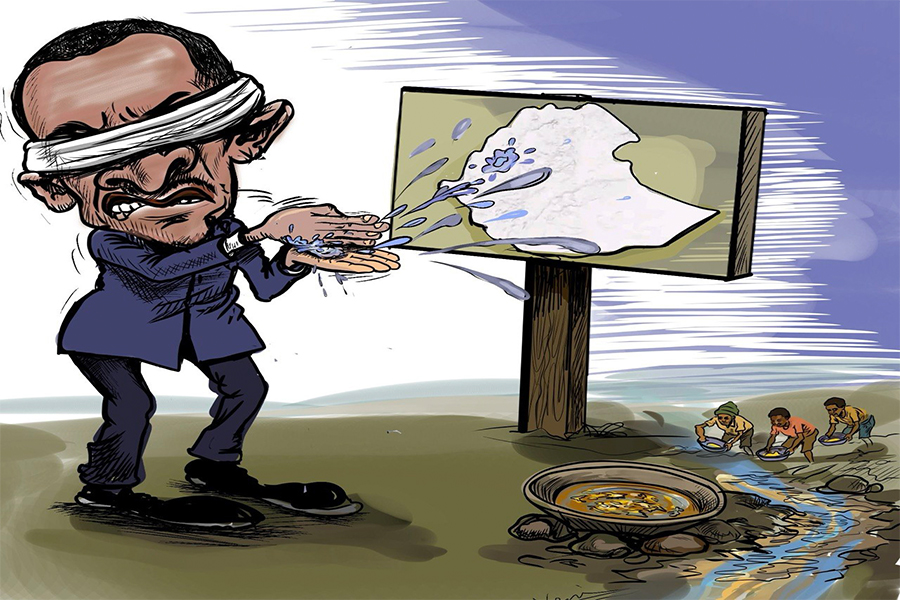
In the goldfields of the Benishangul-Gumuz Regional State, Ethiopia's balance-of-paym...
Jun 27 , 2026
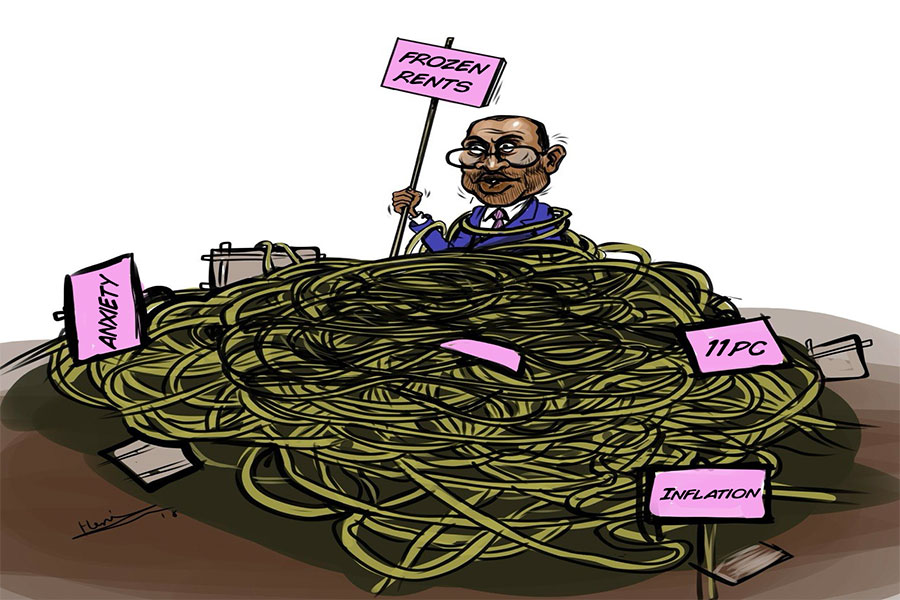
The federal legislative house rushed through one of the country's most contentious ho...
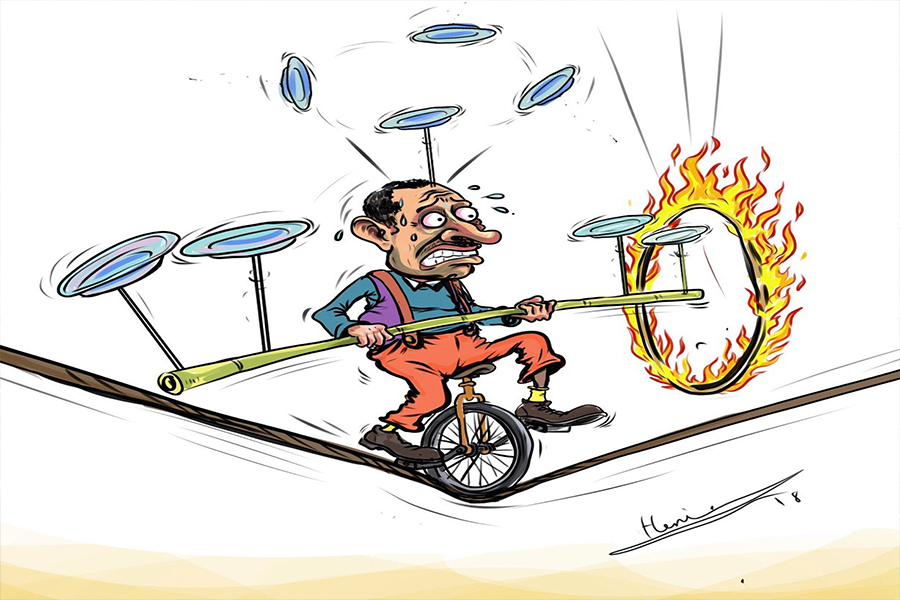
When Parliament takes up the appropriation bill, federal legislators will receive a d...

Jun 13 , 2026
The recent policy decision to fully open freight forwarding to foreign capital may be...
Jul 7 , 2026
The health sector remains underprovided despite rising public spending, Prime Ministe...
Jul 7 , 2026
Prime Minister Abiy Ahmed (PhD) delivered one of his bluntest rebukes yet to the coun...

Jul 7 , 2026
Prime Minister Abiy answered his critics with a mix of gratitude and edge, thanking l...

Jul 7 , 2026
A ruling-party lawmaker, Mohammed Ahmed, called the Chamber to its feet for Prime Min...







 Loading your updates...