

My Opinion | Aug 12,2023



Mar 7 , 2026
By NAHOM AYELE ( FORTUNE STAFF WRITER )
Federal tax officials have begun shifting profit-tax collection onto a quarterly calendar under the revised income tax law that took effect last July, turning what used to be a once-a-year settlement into a recurring claim on business cash. The schedule requires taxpayers to pay 25pc of the total tax they paid in the previous tax year as an advance payment, due within 30 days after the end of each quarter, starting from the month they are required to declare income.
Federal tax officials have begun shifting profit tax collection onto a quarterly calendar under a revised income tax law that took effect last July, converting what used to be a once-a-year settlement into a demand on business cash.
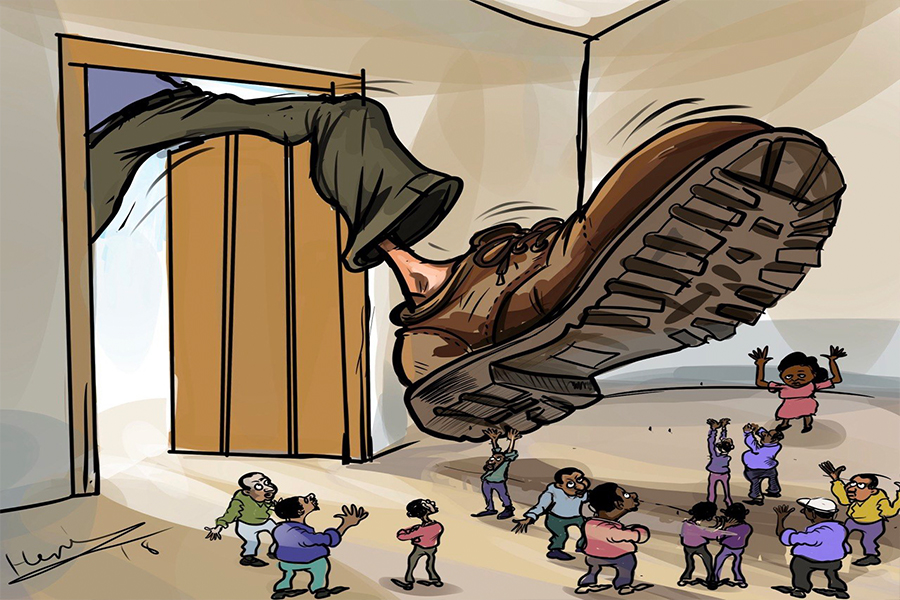
The law's authors believed that income is earned throughout the year and should be taxed accordingly. However, now on its second quarter, many businesses are feeling the squeeze as working capital is pulled out of operations right away and as confidence in the government's willingness to reconcile and refund overpayments is tested.
For federal officials, the change is part of a broader effort to raise tax and customs revenue as a share of GDP from its current single-digit level. The federal government plans to lift tax and duty contributions by one percentage point each year, aiming to bring the tax-to-GDP ratio to 11pc within four years. The amended law creates new categories of taxpayers, adjusts monthly employment and rental income tax rates, extends taxation to digital content creators, introduces a Minimum Alternative Tax (MAT), changes dividend taxation, and revises profit tax payment.
Among these measures, the new profit-tax schedule has become the flashpoint because it affects liquidity immediately.
Revenue Minister Aynalem Nigussie and an army of her taxmen and women argue the annual model created a long gap between collections and then a surge that rarely matched monthly spending, leaving the treasury short of cash. Quarterly instalments, they say, stabilise the government’s cash position and make receipts more predictable. They also argue that annual payments often arrive when taxpayers’ cash is tight because the money has already been spent on other purposes.
The federal government had a cumulative profit tax of up to 485 billion Br over the five years beginning in 2020, amounting to close to 95 billion Br a year. The share of tax revenues within the broader income and profits category was 18pc.
Businesses reject the premise that predictability for the treasury equals relief for taxpayers. Working capital is the cash that buys inventory, covers wages, and bridges the timing mismatch between sales and receipts. A quarterly tax pull accelerates money out of firms, shifting liquidity risk onto businesses, especially those that operate on credit. Meeting a fixed deadline can mean shrinking purchasing cycles, delaying inputs, or tightening daily operations.
Under the revised law, taxpayers are required to pay 25pc of the total tax they paid in the previous tax year as an advance payment. This should be paid within 30 days after the end of each quarter, starting from the month in which they are required to declare their income. Last year’s liability becomes this year’s quarterly benchmark. But it can also be blunt, detaching payments from current-year conditions and forcing firms to pre-fund liabilities before profits are actually measured.
Mintesinot Lemma is the CEO of Mintu Investment Group, which produces speciality coffee, honey, oilseeds, pulses, wheat flour, fruit juice, instant noodles and edible oil. A former President of the Ethiopian Plastics & Rubber Manufacturers Association, he depicted the approach as “cruel,” arguing that under the guise of collecting taxes, the government is stripping businesses of the working capital that keeps them operating.
"The shift feels punitive for firms that keep proper accounts and report accurately," he told Fortune.
Mintesinot's criticism focuses on quarterly payments based on last year’s results. He argues the government should strengthen oversight of accounting practices rather than impose quarterly payments keyed to past figures. He sees the policy discouraging proper accounting and punishing responsible businesses. The law's enforcement landed as other costs, such as electricity tariffs, bank interest rates, and living costs, galloped, prompting him to adjust wages and production costs.
"Quarterly profit tax payments exacerbate the strain and risk eroding confidence among factories that hire many people and seek to replace imports," Mintesinot said.
Yohannes Hailu is a major shareholder of Berhan Bank and a business advisor. He raised a different alarm where reconciliation may fail in practice, even when instalments are paid on time. He questioned whether refunds would arrive when due.
"Quarterly payments may not match the final tax bill," he said. “From experience, it is extremely difficult to recover money from the government.”
The law provides a year-end reconciliation. If the total tax owed is less than what has been paid, taxpayers are supposed to receive a refund; if it is more, they should pay the difference. Officials portray quarterly instalments as a stabiliser for the treasury, aspiring to generate close to 24 billion Br each quarter.
Businesses portray it as a liquidity transfer that leaves them financing the state while carrying the risk of delayed refunds.
Yohannes's experience with tax collectors is that they often scrutinise reported profits to find faults and avoid refunding excess payments. That fear turns the quarterly payment into an asymmetric bet where cash goes out on a schedule, but any return is uncertain. For businesses operating on credit, liquidity may not be available at quarter-end, heightening cash-flow stress and disrupting operations.
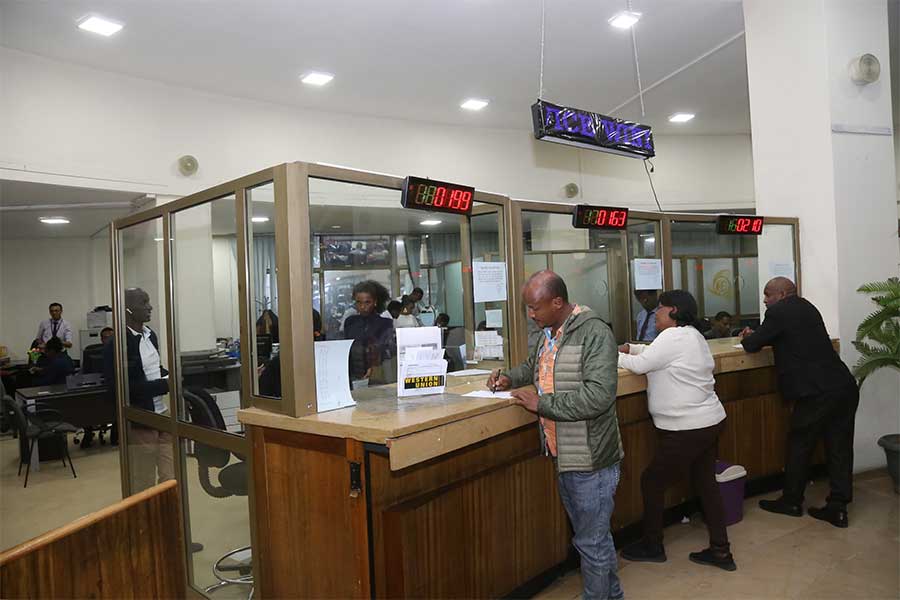
For loss-making firms, the amended law adds pressure through an alternative tax. Companies that reported losses last year are still obliged to pay a 2.5pc alternative tax calculated on gross sales, with 25pc of that liability settled each quarter. The design ensures some payment even when declared profit is negative, but it also means tax can be due on turnover despite reported losses. When taxpayers visit the tax office to settle quarterly dues, withholding tax paid during the year is credited as an expense, though complaints persist even with that treatment.
Tax officials acknowledge the backlash but insist they are enforcing the law as written.
The Western Addis Abeba Low-Income Taxpayers Office has begun implementing the amended law. According to Worku Ganta, a tax expert, he hopes future regulations or directives will be more flexible and considerate of businesses’ challenges, as he sees collection has only started. Yet, many taxpayers have not come to pay.
"Those who did come were unhappy with the new method," Worku told Fortune,
Business groups say they will challenge the rollout. According to Aychiluhim Kebede, vice president of the Addis Abeba Sectoral Association, plans are underway to formally challenge the implementation with a petition, arguing that the law fails to distinguish between businesses that can handle quarterly payments and those that cannot.
"Companies in the service sector may manage quarterly payments without difficulty," he said. "Construction companies, wholesalers and factories often struggle with cash flow."
Dawit Kejela, a former auditor at the Ministry of Revenue and now a private tax advisor, supported that view. Sectors such as construction and wholesale, he says, face real cash flow problems and cannot reliably pay every three months. He argued that the system should allow voluntary payments or be applied on a sectoral basis, warning that forcing taxpayers to use working capital to meet quarterly obligations ultimately harms businesses and government revenue.
PUBLISHED ON
Mar 07,2026 [ VOL
26 , NO
1348]
My Opinion | Aug 12,2023

Viewpoints | Jun 06,2026
Agenda | Dec 14,2019

Agenda | Dec 08,2024

Agenda | Jun 08,2025
Viewpoints | Aug 10,2025
News Analysis | May 17,2026
Agenda | Mar 14,2026
Radar | May 17,2026

Sunday with Eden | Apr 18,2026

Dec 22 , 2024 . By TIZITA SHEWAFERAW
Charged with transforming colossal state-owned enterprises into modern and competitiv...

Aug 18 , 2024 . By AKSAH ITALO
Although predictable Yonas Zerihun's job in the ride-hailing service is not immune to...

Jul 28 , 2024 . By TIZITA SHEWAFERAW
Unhabitual, perhaps too many, Samuel Gebreyohannes, 38, used to occasionally enjoy a couple of beers at breakfast. However, he recently swit...

Jul 13 , 2024 . By AKSAH ITALO
Investors who rely on tractors, trucks, and field vehicles for commuting, transporting commodities, and f...
Jul 4 , 2026
In the goldfields of the Benishangul-Gumuz Regional State, Ethiopia's balance-of-paym...
Jun 27 , 2026
The federal legislative house rushed through one of the country's most contentious ho...
When Parliament takes up the appropriation bill, federal legislators will receive a d...
Jun 13 , 2026
The recent policy decision to fully open freight forwarding to foreign capital may be...










 Loading your updates...