

Editorial | Apr 20,2024



Aug 23 , 2025
By Asegid Getachew
In Ethiopia, boardrooms, especially in family-owned firms and state-owned enterprises, tend to be tight-knit circles, often populated by insiders and long-serving affiliates. While such configurations offer speed and familiarity, they can come at the cost of strategic detachment and independent oversight.
That structure can deliver the rapid decisions needed in a fast-changing economy, but it limits the use of outside expertise. As the government establishes a capital-market authority and local businesses seek global capital, pressure is building to expand, diversify, and professionalise boards in line with international best practices.
Effective governance depends on matching numbers and talents to the company’s strategic needs while maintaining true independence and unwavering commitment. Whether the directors occupy five seats or 15, success ultimately rests on the quality of those individuals and their collective resolve to prioritise shareholders' interests. Undoubtedly, the size of a board of directors matters, but it should never be considered in isolation.
Take, for instance, Enron’s spectacular implosion at the start of the century. The Houston-based utility company put corporate governance squarely in the spotlight, reminding investors that strong guardrails are the best antidote to managerial self-interest. Enron’s spectacular collapse in the early 2000s demonstrated how even sophisticated firms can implode when directors abdicate their duty to challenge management, a risk that is all the more present in markets where independent oversight remains an afterthought.
The question that still sparks heated debate in boardrooms from New York to Addis Abeba is how many directors should occupy those seats.
Proponents of large boards argue that numbers equal breadth. More directors bring a wider range of professional backgrounds and life experiences, and that mix can lead to fresher ideas, livelier debate and sharper oversight. A larger group also offers wider external networks, which are valuable when a company needs to tap into expertise or open doors. Workloads can also be spread, so no single director is overwhelmed.
But size is no free lunch. As Harvard’s Martin Lipton and Jay Lorsch warned years ago, large groups invite “free-riding” and “social loafing,” fancy terms for directors who sit back and let others shoulder the task. Coordination costs rise. Discussions stretch. Factions form. By the time a consensus emerges, opportunities can be lost, and squabbles may leave lasting scars that linger long after the vote.
Fans of smaller boards see those drawbacks as proof that tight is right. Fewer chairs mean faster meetings, crisper decisions and a better chance that directors know one another well enough to hold frank exchanges without the theatre. Accountability is clearer. When something goes wrong, it is harder to hide behind anonymity. A nimble board, the argument goes, can grab openings before rivals even schedule a committee session.
That agility, though, comes at a price. A compact board may miss viewpoints that only a larger pool can supply. With fewer shoulders to carry the load, members risk being dragged deep into operational details, leaving less time for big-picture thinking or the networking that often adds real value.
Scholarship gives no single answer. Some researchers recommend no more than five seats; others are comfortable with a dozen. In practice, companies worldwide tend to cluster near the midpoint. A recent Spencer Stuart global survey found that average board size has held steady between nine and 11 directors, even as oversight duties have increased.
Still, directors and investors alike increasingly accept that head count alone does not determine quality. A board comprising the right expertise, independence, gender balance, and work ethic can outperform a larger rival that merely ticks the numbers box.
Nowhere is the trade-off between size and makeup more visible than in emerging markets. Many African corporations operate in settings where ownership is concentrated in families, the state or small investor blocs. In such firms, insider-dominated boards may move quickly, but independence can be thin. South Africa offers a contrasting model. Guided by the King IV Report, companies there tend to seat larger boards to ensure room for independent voices and to meet racial and gender goals set in the post-apartheid era.
Highly diversified or heavily leveraged companies often require broader advisory skills and therefore opt for bigger boards. Simpler firms may prize the speed a lean body provides. Academic Jeffrey and colleagues capture the nuance. More debt, more products and more geography all tilt the balance toward adding extra heads.
Context is king. Ethiopia’s companies should calibrate their board structures to reflect strategic realities, striking a balance between agility and independence, as well as speed and diversity. As the country edges toward a capital market era, governance will become more than a compliance issue. It will be a competitive advantage.
PUBLISHED ON
Aug 23,2025 [ VOL
26 , NO
1321]

Editorial | Apr 20,2024

My Opinion | Nov 19,2022

Radar | Dec 01,2024
Commentaries | May 21,2022

Radar | Apr 24,2021

Fortune News | Apr 30,2021
Life Matters | Apr 19,2025
Commentaries | Oct 11,2025
Money Market Watch | May 03,2026
Commentaries | Nov 07,2020

Photo Gallery | 192031 Views | May 06,2019

Photo Gallery | 181786 Views | Apr 26,2019

Photo Gallery | 178522 Views | Oct 06,2021
My Opinion | 144050 Views | Aug 14,2021






Dec 22 , 2024 . By TIZITA SHEWAFERAW
Charged with transforming colossal state-owned enterprises into modern and competitiv...

Aug 18 , 2024 . By AKSAH ITALO
Although predictable Yonas Zerihun's job in the ride-hailing service is not immune to...

Jul 28 , 2024 . By TIZITA SHEWAFERAW
Unhabitual, perhaps too many, Samuel Gebreyohannes, 38, used to occasionally enjoy a couple of beers at breakfast. However, he recently swit...

Jul 13 , 2024 . By AKSAH ITALO
Investors who rely on tractors, trucks, and field vehicles for commuting, transporting commodities, and f...

Jul 25 , 2026
Ideally, citizens who have paid income tax all year should not have to reach for thei...
Jul 18 , 2026
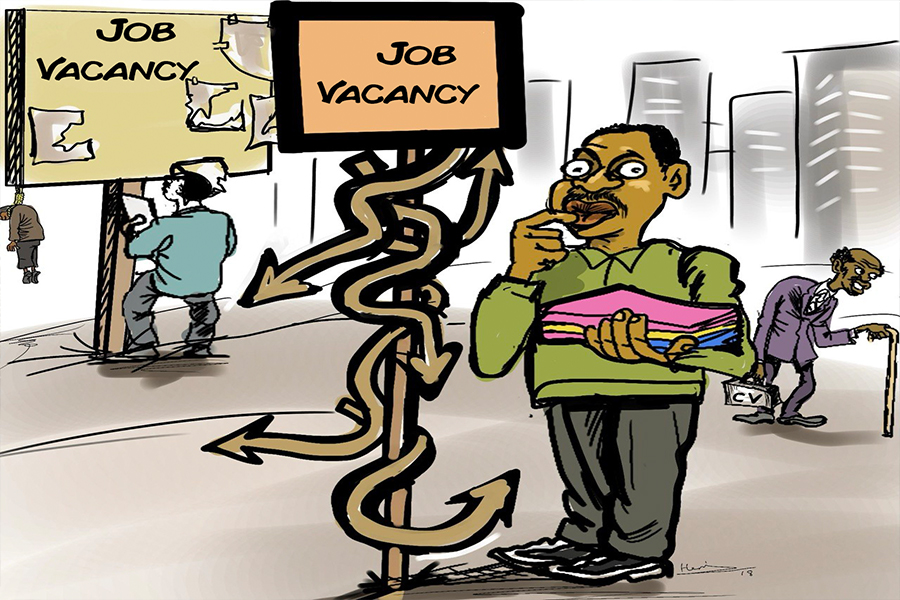
Pressed in Parliament on jobs and household incomes, Prime Minister Abiy Ahmed (PhD)...
Jul 11 , 2026
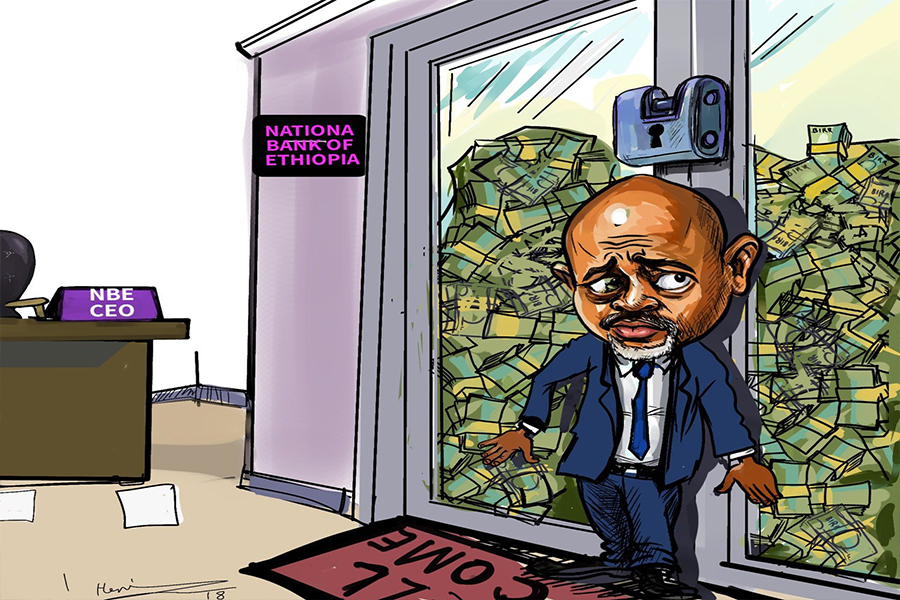
At a market stall, reform arrives without a communique. It comes as a higher transpor...
Jul 4 , 2026
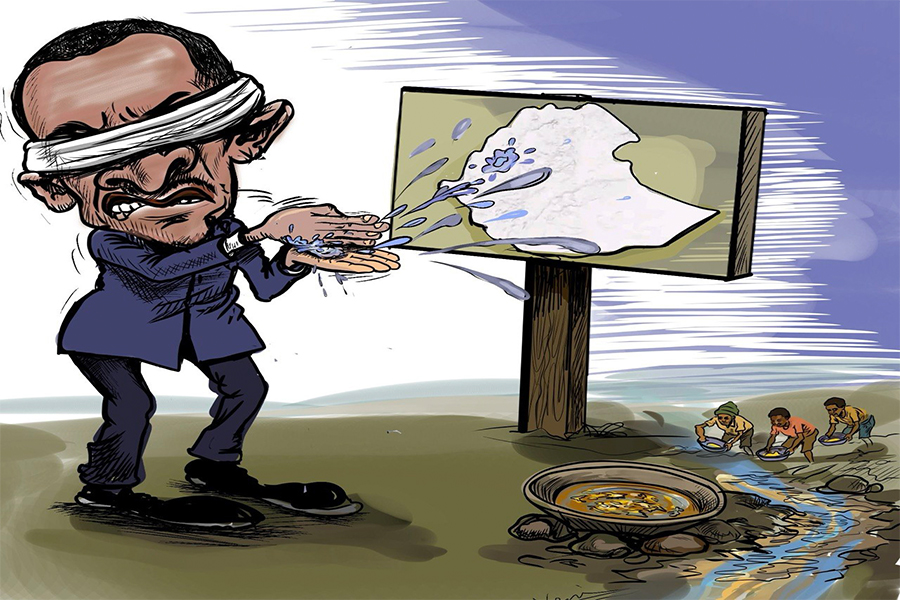
In the goldfields of the Benishangul-Gumuz Regional State, Ethiopia's balance-of-paym...
Jul 25 , 2026 . By BEZAWIT HULUAGER
Global Bank's Board of Directors have overhauled top management, after suspending sev...

Jul 25 , 2026 . By NAHOM AYELE
Judges at the Federal High Court have overturned the National Lottery Administration...

A newly enacted regulation by the Council of Ministers lets eligible producers pledge...

Jul 25 , 2026 . By FITSUM TADESSE
A fuel tanker carrying tens of thousands of litres was confiscated after its driver a...








 Loading your updates...