


Dec 30 , 2023
By Austine Sequeira , Andrea Sequeira
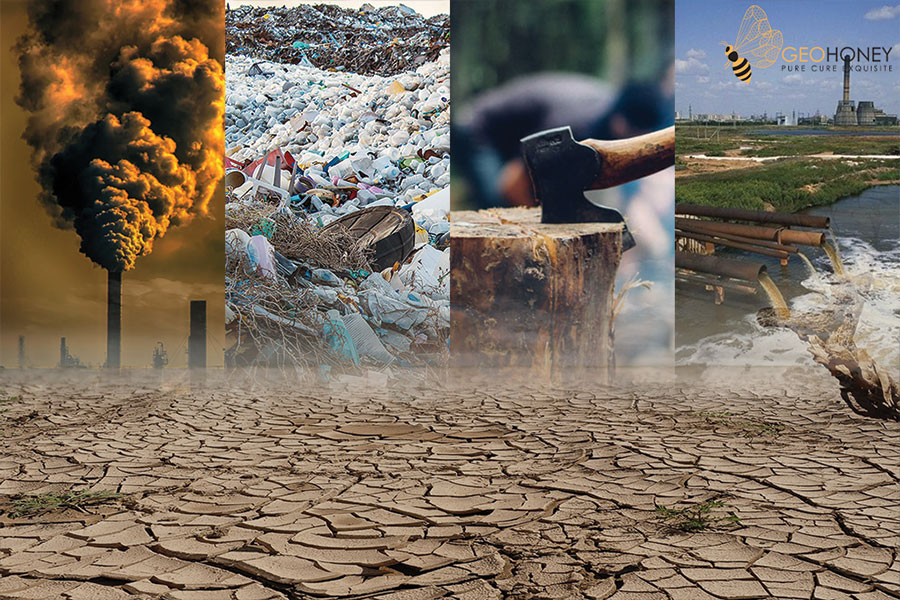
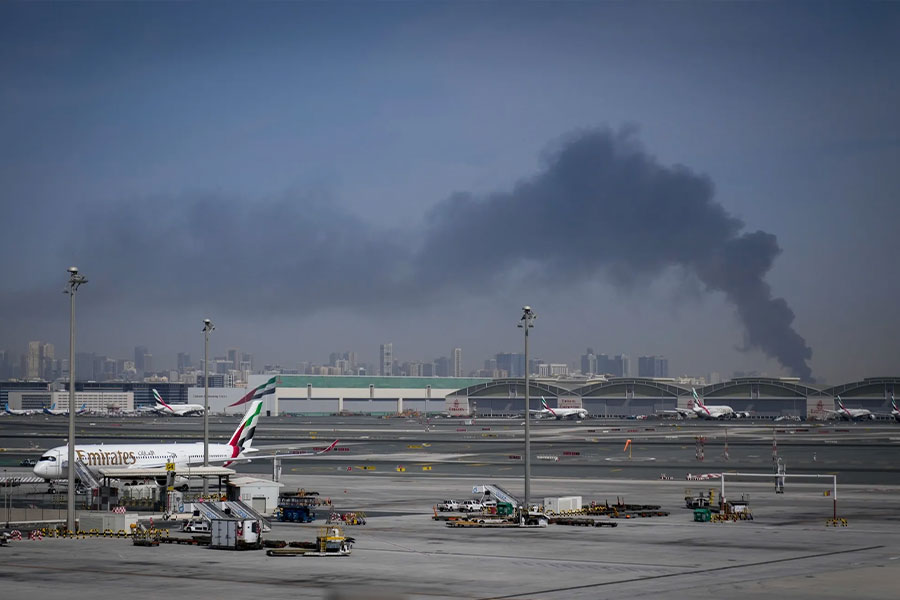
The Conference of Parties (COP) summits have been fixtures since their inception in the mid-1990s. The recent COP-28, held in the United Arab Emirates (UAE), has captured attention not only for its efforts in addressing climate change but also for the criticism it faces, particularly from the global press, labelling it as the “hypocritic show on earth.”
This moniker reflects a growing scepticism about the effectiveness and sincerity of these conferences, especially in the context of the developed world's approach to fossil fuel consumption and greenhouse gas emissions.
The COP summits have historically focused on advocating for a comprehensive phase-out of fossil fuels, including oil and gas. Predominantly championed by developed Western nations, a corresponding reduction has not matched their respective fossil fuel usage and trade. Interestingly, the recent reductions in fossil fuel usage in these countries, primarily attributed to the COVID-19 pandemic-induced lockdowns and the disruption of oil and gas supply chains due to the Ukraine war, have provided them a platform to vocalise more vigorously at the conference in Dubai.
The central issue at stake remains the balance between reducing carbon footprints and the economic development needs of underdeveloped and developing economies.
Developed nations, including the United States (US), United Kingdom (UK), France, and Germany, have historically prospered due to the availability of low-cost energy, contributing significantly to greenhouse gas emissions since the 1890s. The development in OPEC Block countries is similarly tied to the fossil fuel trade. While developing countries have generally supported COP declarations, they have maintained a degree of flexibility in their commitments.
Notably, India and China, two major emerging economies, forborne the signing of the COP-28 declaration but agreed to adopt the rulebooks agreed in Paris for a paced transition to low-carbon energy options.
A report by the Centre for Global Development (CGD) uncovered an imbalance in historical carbon emissions, with developed countries responsible for 79pc, led by the US, the European Union (EU), and China. In contrast, the entire African continent contributes less than four percent, a discrepancy raising questions about the equitable distribution of responsibilities and burdens in global climate efforts.
Sub-Saharan Africa, in particular, has consistently tussled with energy shortages, significantly impacting its economic development. Due to investment constraints, the region's inability to utilise its natural resources, such as Mozambique's coal reserves, exemplifies these constraints. Oil discoveries and exports have been crucial for the economies of countries like Ghana, Angola, Algeria, Gabon, and Nigeria. Imposing restrictions on fossil fuel exploration and exports could thus precipitate an economic crisis in these nations.
The current focus of the developed world on future-oriented energy policies contrasts sharply with the immediate energy needs of sub-Saharan Africa.
The African Development Bank (AfDB) reports that the electricity access rate in African countries is a little over 40pc, the lowest globally. A sub-Saharan African consumes a mere fraction of the energy an American or European uses, a disparity attributed more to energy availability than income levels. The lack of sufficient energy access in Africa is not only a barrier to economic prosperity but also a health hazard, with reliance on wood-burning stoves for cooking causing numerous deaths.
Its renewable and hydroelectric power potential further complicates Africa's energy landscape. However, the exploitation of these resources has been impeded by substantial investment requirements, environmental concerns, and socio-political challenges. For instance, the Cahora Bassa Dam in Mozambique has not been expanded since its construction in 1974, despite its potential, due to these impediments.
The situation raises the question of whether Africa could benefit more immediately from utilising its fossil fuel resources.
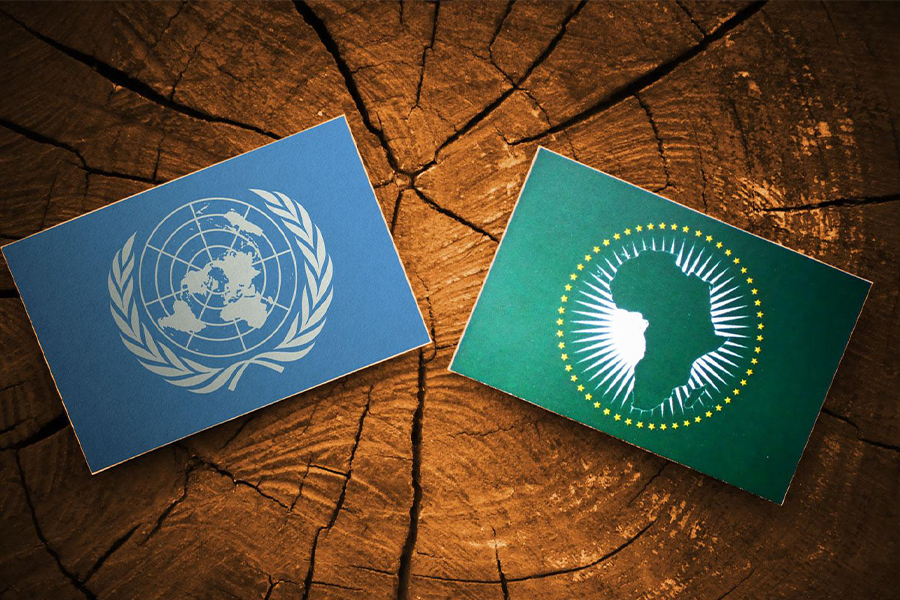
The future of COP declarations will undoubtedly impact energy access in sub-Saharan Africa. The role of developed world non-state entities in influencing international financial institutions against funding fossil fuel projects in Africa adds another layer of complexity. They are also advocating for the creation of voluntary carbon markets on the continent, where they intend to "buy" African carbon credits in exchange for continued emissions in developed countries.
While acknowledging the environmental impact of fossil fuels, particularly coal and diesel, Africa's energy needs and carbon emission profiles differ significantly from those of the developed world. The continent's leadership now faces the urgent task of consolidating a unified position on energy policy, balancing immediate needs with long-term sustainability, before it becomes too late to effectively influence the global climate agenda.
PUBLISHED ON
Dec 30,2023 [ VOL
24 , NO
1235]
Commentaries | Nov 27,2018
View From Arada | Aug 09,2025
Commentaries | Oct 21,2023
Commentaries | Nov 15,2025
Radar | May 03,2026

Viewpoints | Dec 16,2023

My Opinion | Apr 22,2023
Viewpoints | Sep 17,2022
Viewpoints | Sep 01,2024
Commentaries | Mar 21,2026

Photo Gallery | 193424 Views | May 06,2019

Photo Gallery | 183319 Views | Apr 26,2019

Photo Gallery | 180128 Views | Oct 06,2021

My Opinion | 145555 Views | Aug 14,2021








Dec 22 , 2024 . By TIZITA SHEWAFERAW
Charged with transforming colossal state-owned enterprises into modern and competitiv...

Aug 18 , 2024 . By AKSAH ITALO
Although predictable Yonas Zerihun's job in the ride-hailing service is not immune to...

Jul 28 , 2024 . By TIZITA SHEWAFERAW
Unhabitual, perhaps too many, Samuel Gebreyohannes, 38, used to occasionally enjoy a couple of beers at breakfast. However, he recently swit...

Jul 13 , 2024 . By AKSAH ITALO
Investors who rely on tractors, trucks, and field vehicles for commuting, transporting commodities, and f...

Aug 14 , 2026
Aschalew Fetene, known as “Ardi” and admired for his poetic depth, has built a ti...

Aug 8 , 2026
The World Bank asks readers to picture a mother in rural Ethiopia who has never held...

Jul 31 , 2026
Weldu Yiheysh has not read the Pacific temperature charts. He does not need to. In Shibta District of Enderta Wereda, in...

Jul 25 , 2026
Ideally, citizens who have paid income tax all year should not have to reach for thei...
Aug 15 , 2026 . By NAHOM AYELE
Federal prosecutors have charged seven defendants over a set of foreign-trade deals t...
Aug 15 , 2026 . By BEZAWIT HULUAGER
Ethio-post is preparing to turn its thousands of branches into banking agents, allowi...
Aug 18 , 2026 . By BEZAWIT HULUAGER
Kassahun Gofe (PhD), minister of Trade & Regional Integration (MoTRI), is prepari...

Aug 16 , 2026 . By NAHOM AYELE
Justices at the Federal Supreme Court widened the shield they are holding over lawyer...







 Loading your updates...