



May 29 , 2021
By Christian Tesfaye
There is an old Ethiopian joke that demonstrates how pathetic – mind the French – African countries are.
Here is the story, with some embellishments. An immortal deity goes around various countries, picking individuals and asking them what they would like. One says a palace, another a private jet, and yet another a yacht. All of the wishes, he is happy to fulfil until he comes to Ethiopia.
“And what would you like?” He asks an Ethiopian.
“I would like to live well into old age to witness the prosperity of Ethiopia,” says the man.
The immortal deity looks at him, and with pity in His tone, says, “My dear child, even I won’t be able to live that long.”
Technically, this is wrong. The Economistestimates that it would have taken a 170 years for today’s developing countries to halve the income gap with rich nations at current catch-up rates. This means that it would take an African country such as Ethiopia, on average, 340 years to close the gap with that of rich nations. We are staring at several subsequent generations of poverty, lack of access to potable water, basic electricity, and health services.
This situation will be limited to the Middle East, Latin America and, of course, sub-Saharan Africa. These three have been falling further behind since 2013, especially compared to the emerging Asian and East European countries.
Let us take countries such as Ethiopia and Nigeria. Both boast a promising market, especially in the information technology sphere where takeoff has been sustained and demonstrable. Both also have a modest but yet impressive record of lifting populations out of poverty. Unfortunately, they also get hit by events such as COVID-19.
In Ethiopia's case, over the past year, it has been battered by restrictions from the pandemic, locust invasions, political instability and flooding, all in one year. Two million more people are estimated to fall into poverty while individuals under the Productive Safety Net Programme are expected to rise by six million to 15 million this year, according to the World Bank. It is not a pretty picture.
Miraculously, the economy has survived all of this and is expected to grow by about two percent this year, according to the IMF, making Ethiopia one of the few countries globally to have not sunk into recession as a result of the pandemic. It also opened up its telecom sector to much promise – in a deal that would see a million jobs created – boasts an eclectic up-and-coming garments industry and is undergoing an urban renewal in its capital, Addis Abeba.
No matter, it is a sub-Saharan African country – it can never go too long without having its prospects dashed. It is now staring down the barrel of US and EU sanctions that, if egregious enough, would pull down millions more into poverty with, sadly, very little prospects of addressing the ongoing crisis in the Tigray region.
Nigeria is another example. Flick the news on the country and one would find an orgy of alarming reports – media institutions portraying it as a typical conflict-torn, hopelessly failed nation; as a very African country.
There is news of the country’s army chief being killed in a plane crash recently. There is also an insurgency by Boko Haram and the Islamic State West Africa Province, which has displaced about two million people and killed more than 30,000 over a decade. Kidnappings for ransom is a modest market in itself, as is fighting between farmers and cattle herders.
And, of course, as any African country worth its salt, its army is also fighting a separatist movement - the old Biafrans trying to make a comeback. More importantly, its economy went into recession in 2016 and has only been growing at about two percent over the past years, a meagre rate for a developing country.
As I said, the circumstance of sub-Saharan Africa is dire and depressing. Unfortunately, this may worsen. The rich world prefers to bloat such countries with more aid money than investments and trade (which create sustainable economic development), a population boom that strains resources is in the offing and there is global warming. The last one is the price Africans pay for the industrialisation of the Global North and will mean more extreme weather events that worsen food insecurity. Indeed, all of these will translate into more violence and conflicts.
Good luck, Africa.
PUBLISHED ON
May 29,2021 [ VOL
22 , NO
1100]

Exclusive Interviews | Dec 11,2021

Radar | Oct 18,2025

Verbatim | Feb 21,2026
Commentaries | Feb 17,2024

Sunday with Eden | Jun 29,2019

Commentaries | Nov 23,2019
Commentaries | Sep 07,2019

View From Arada | Apr 20,2025
Viewpoints | Jul 27,2019

Radar | Apr 19,2025

Photo Gallery | 192832 Views | May 06,2019

Photo Gallery | 182735 Views | Apr 26,2019

Photo Gallery | 179495 Views | Oct 06,2021

My Opinion | 144980 Views | Aug 14,2021








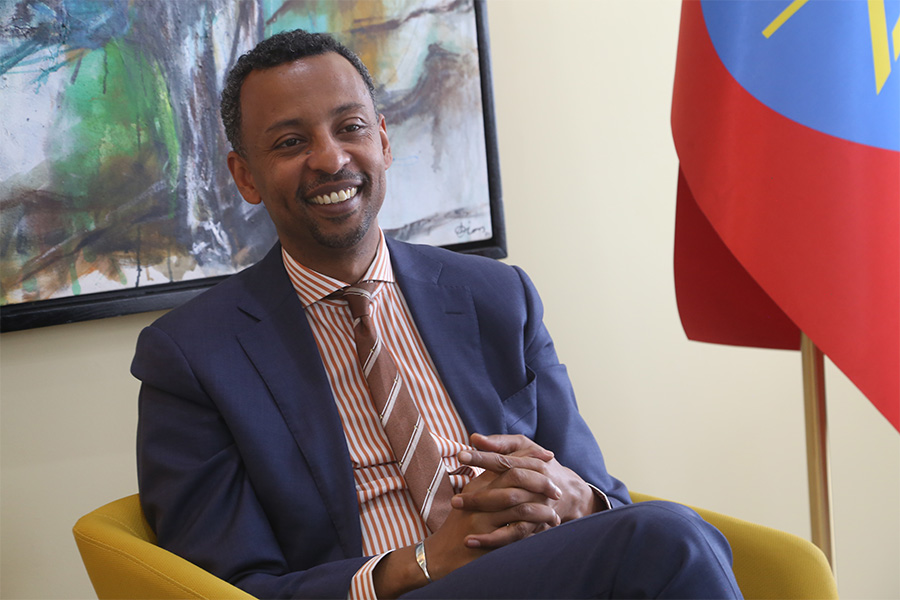
Dec 22 , 2024 . By TIZITA SHEWAFERAW
Charged with transforming colossal state-owned enterprises into modern and competitiv...
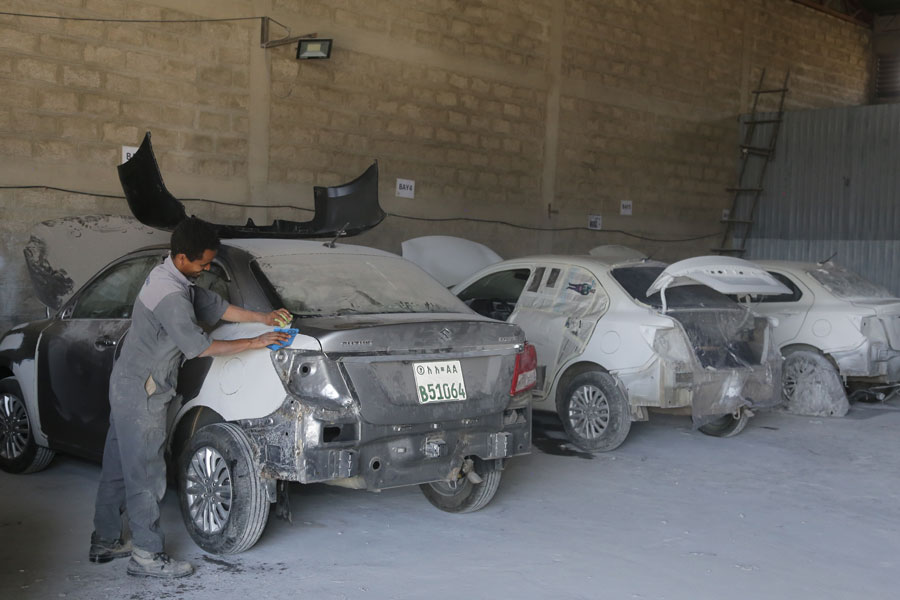
Aug 18 , 2024 . By AKSAH ITALO
Although predictable Yonas Zerihun's job in the ride-hailing service is not immune to...

Jul 28 , 2024 . By TIZITA SHEWAFERAW
Unhabitual, perhaps too many, Samuel Gebreyohannes, 38, used to occasionally enjoy a couple of beers at breakfast. However, he recently swit...
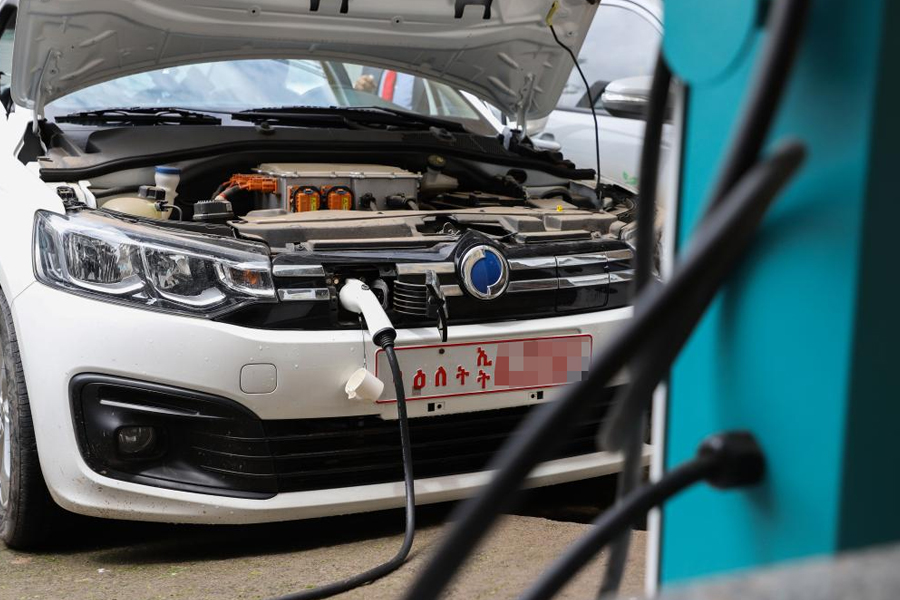
Jul 13 , 2024 . By AKSAH ITALO
Investors who rely on tractors, trucks, and field vehicles for commuting, transporting commodities, and f...

Aug 8 , 2026
The World Bank asks readers to picture a mother in rural Ethiopia who has never held...

Jul 31 , 2026
Weldu Yiheysh has not read the Pacific temperature charts. He does not need to. In Shibta District of Enderta Wereda, in...

Jul 25 , 2026
Ideally, citizens who have paid income tax all year should not have to reach for thei...
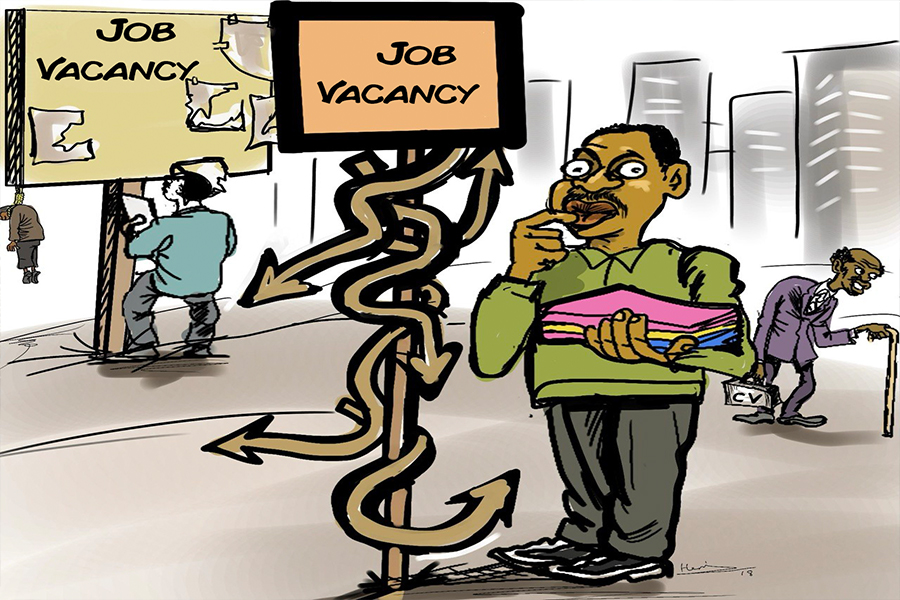
Jul 18 , 2026
Pressed in Parliament on jobs and household incomes, Prime Minister Abiy Ahmed (PhD)...
Aug 9 , 2026 . By NAHOM AYELE
Anbesa Bank has elected an entirely new board of directors, nine months after the Boa...
Aug 9 , 2026 . By NAHOM AYELE
Ethiopia Hotel, one of the country's oldest hospitality establishments and a landmark...
Aug 9 , 2026 . By FITSUM TADESSE
The excise-tax reform on alcohol and tobacco has done much of what it was made to do...

Aug 9 , 2026 . By BEZAWIT HULUAGER and ABDUREUF JUHAR
Three inter-city transport companies have spent 450 million Br on new vehicles to mee...








 Loading your updates...